|
Getting your Trinity Audio player ready...
|
By Mary Mwendwa
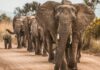
African elephants living on Mount Elgon in Kenya appear to seek out specific plants when they are unwell—and may even administer plant-based “medicine” to their calves, according to a new study published in Scientific Reports.
The research, led by Dr Fabien Schultz of the Bernhard Nocht Institute for Tropical Medicine (BNITM) in Hamburg, documents for the first time a systematic body of evidence suggesting that wild African elephants use medicinal plants, a behaviour scientists call “putative self-medication.”
This study draws on decades of first-hand observations from eight local experts from the Sabaoet Indigenous community, who have lived and worked alongside Mount Elgon’s elephants for more than 20 years. Their accounts were combined with botanical identification, ethnomedicinal research, and a review of existing pharmacological literature.
Key findings at a glance
-
35 plant species and 4 types of soils, minerals, or clays were reported by local experts as being consumed by elephants.
-
34 of these resources (87%) were explicitly identified by the experts as having a traditional human medicinal use.
-
25 resources were perceived by the experts as having a medicinal function for elephants.
-
8 plant species provided the strongest evidence of possible medicinal behaviour, with experts linking them to a specific therapeutic purpose in a sick or vulnerable elephant, or describing mothers administering plant material to their offspring.
-
Of the 10 plant species most frequently cited, 9 had previously been reported in the scientific literature as having pharmacological activity—including antibacterial, anti-inflammatory, or antiparasitic properties.
-
5 resources were identified in reports of mother-calf allo-medication, where one elephant appears to provide a medicinal resource to another.
-
10 plants were described as medicines for elephants but without a specified health context.
-
7 plants were explicitly reported as medicines used by or administered to sick elephants and have local ethnomedical use, but the particular illness or purpose was not identified.
The eight plant species meeting the study’s strongest criteria for possible medicinal use include Aloe arborescens, Bersama abyssinica, and Ficus natalensis. Several interviewees described elephants traveling long distances directly to a particular tree without feeding along the way, solely to consume its bark or leaves.
Among the most striking accounts were reports of mother elephants chewing certain leaves, barks, and roots, mixing them with breastmilk, and feeding the resulting plant-milk mixture to their calves—possibly as a form of natural immunisation or treatment for digestive problems.
Researchers stress that the findings do not prove the plants have a therapeutic effect in elephants. The study did not directly observe or experimentally verify the reported behaviours, nor does it demonstrate that consuming the identified plants produces a therapeutic outcome. The authors therefore describe the behaviour as “putative self-medication.”
Deliberately, the study stops short of classifying the elephants’ famous cave-mining behaviour as medicinal. Mount Elgon’s elephants are renowned for venturing up to 160 metres into caves and using their tusks to mine mineral-rich rock. All interviewees confirmed that elephants consume clay and mineral-rich rock in the caves, but emphasised their role primarily as sources of minerals and for digestive protection—not as medicine.
A One Health issue
The overlap between human and elephant medicinal-plant knowledge at Mount Elgon—87%—points to a shared ecological knowledge base developed over generations, the researchers say.
Dr Fabien Schultz, lead author of the study, said: “Our results show how closely the plant life of Mount Elgon is linked to the health of both elephants and people. Reports that elephants use some of the same plants that local communities use in traditional medicine make protecting these habitats a One Health issue. In the coming years, together with our partners, we want to investigate whether and how these behaviours are learned or socially transmitted, and which plants and locations may be particularly important to protect.”
Kennedy Ngiyio Chemoywo, one of the local Sabaoet experts, said: “Before there were roads, schools, or researchers on this mountain, our people were already learning from the forest. I am one of them. We have watched elephants since childhood. We know where they travel, how they behave and even the plants they choose when they are unwell. The forest speaks, and if you spend enough time in it, you learn how to listen. Scientists study nature, and we respect their work. We study nature by being part of it. When these two kinds of knowledge come together, both become stronger.”
Christopher Powles, Chair of the Mount Elgon Foundation and a co-author of the study, said: “The longer we spend with Mount Elgon’s remarkable elephants, the more we realise how much we still have to learn about them. This research gives us a fascinating glimpse into the complexity of their lives—and another reason to do all we can to protect both them and the extraordinary landscape on which they depend.”
Conservation implications
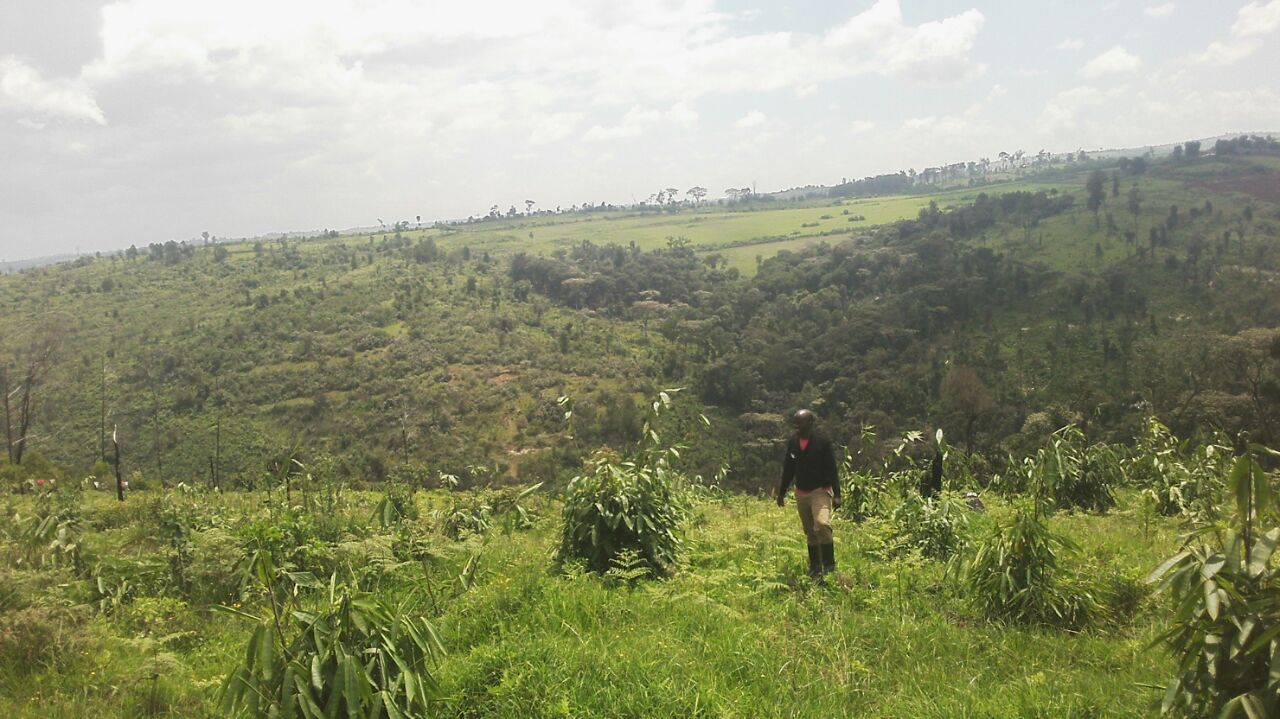
African elephants are considered threatened, and habitat loss and human-wildlife conflict place enormous pressure on their populations. If elephants depend not only on food plants but also on specific medicinal plants, then deforestation represents not just a loss of food resources but potentially the loss of part of their “pharmacy.”
The study was carried out in close collaboration with the Mount Elgon Foundation (MEF), Neubrandenburg University of Applied Sciences, the East African Wildlife Society – Mount Elgon Elephant Project (EAWLS-MEEP), the National Museums of Kenya, and other local partners.
The Mount Elgon Foundation has documented 55 caves used by elephants, some of which they enter up to 160 metres. The elephants live in high-altitude forest on an extinct volcano straddling the Kenya-Uganda border, rising to 4,321 metres.
Future research could seek to observe the reported behaviours directly and investigate the pharmacological properties and potential therapeutic effects of individual plants. This presents a considerable challenge because Mount Elgon’s elephants live in dense forest and can be extremely elusive.
Further work may also help researchers understand whether particular resources are deliberately selected when elephants are unwell and whether such behaviours may be learned or transmitted between elephants.
Dr Elodie Freymann, co-corresponding author and an expert on self-medication in great apes, said: “Most of the time the people who live in close proximity to animals have known their secrets for generations. Our job as scientists is now to start asking the right questions.”