|
Getting your Trinity Audio player ready...
|
BUNGOMA, Kenya —Chicken is a favourite on family tables and a centrepiece at celebrations across Western Kenya. That steady demand should be good news for rural farmers, but many struggle to turn it into income. Feed prices keep climbing, a large share of chicks die before they mature, and market prices swing from one season to the next, often leaving farmers with little or nothing to show for their effort.
In Bungoma County, members of the Bungoma County Youth Sacco (BUKO) are turning these challenges on their head. Using an innovative approach known as “mother brooding,“ they raise improved kienyeji chicks through their most vulnerable first 30 days before selling them to local farmers for further rearing.
Alongside this, they have expanded into broiler production, supplying hotels, restaurants, and market traders with ready-to-eat chicken. For BUKO, the turning point came when a local hotel placed an order for 50 chickens at KSh900 each.
“That order showed members that poultry could bring in steady income, not just put food on the table,” says Julian Simiyu, chairperson of BUKO Sacco. “That was when we started looking at poultry as a serious business.”
The Power of Mother Brooding
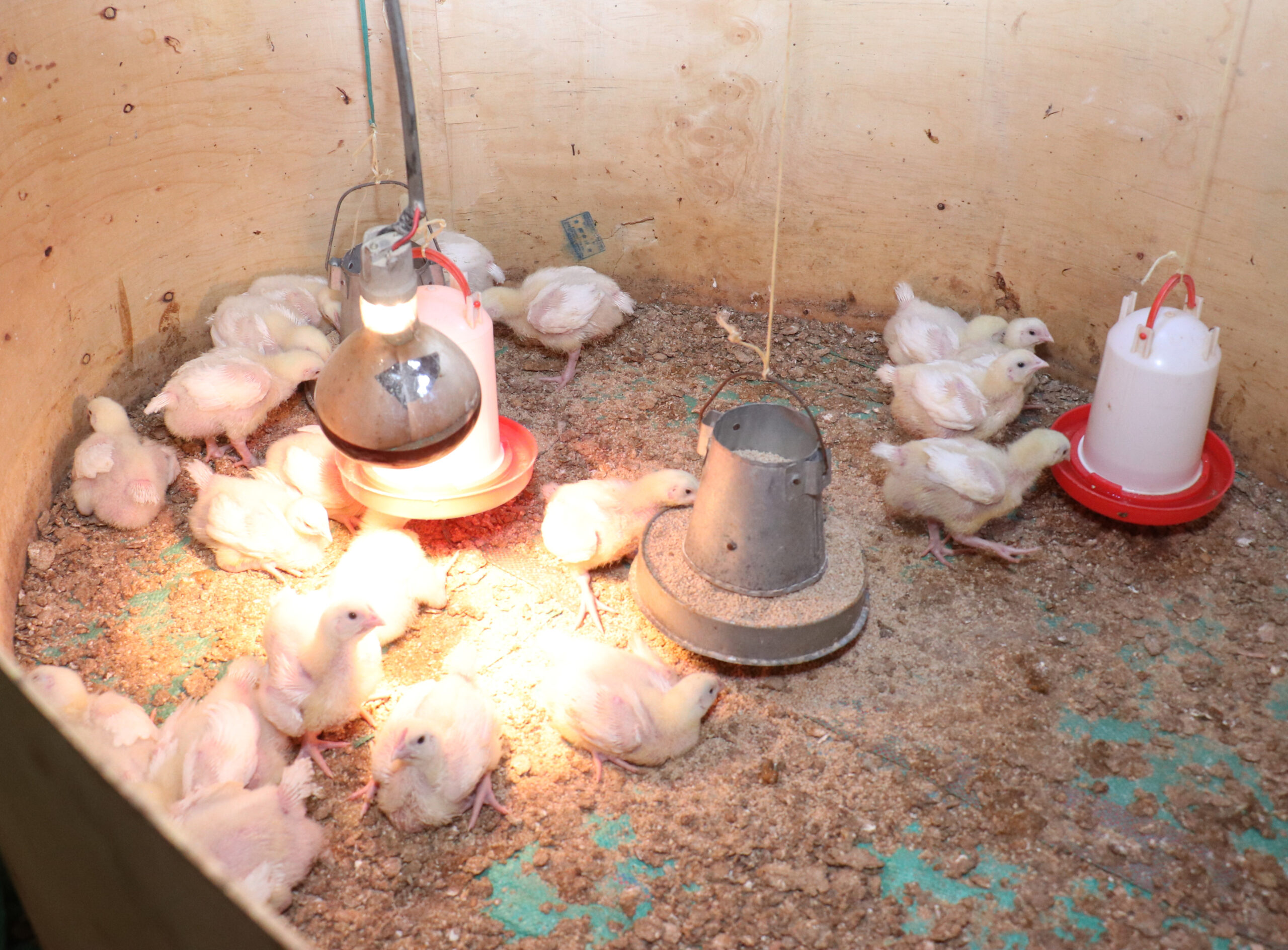
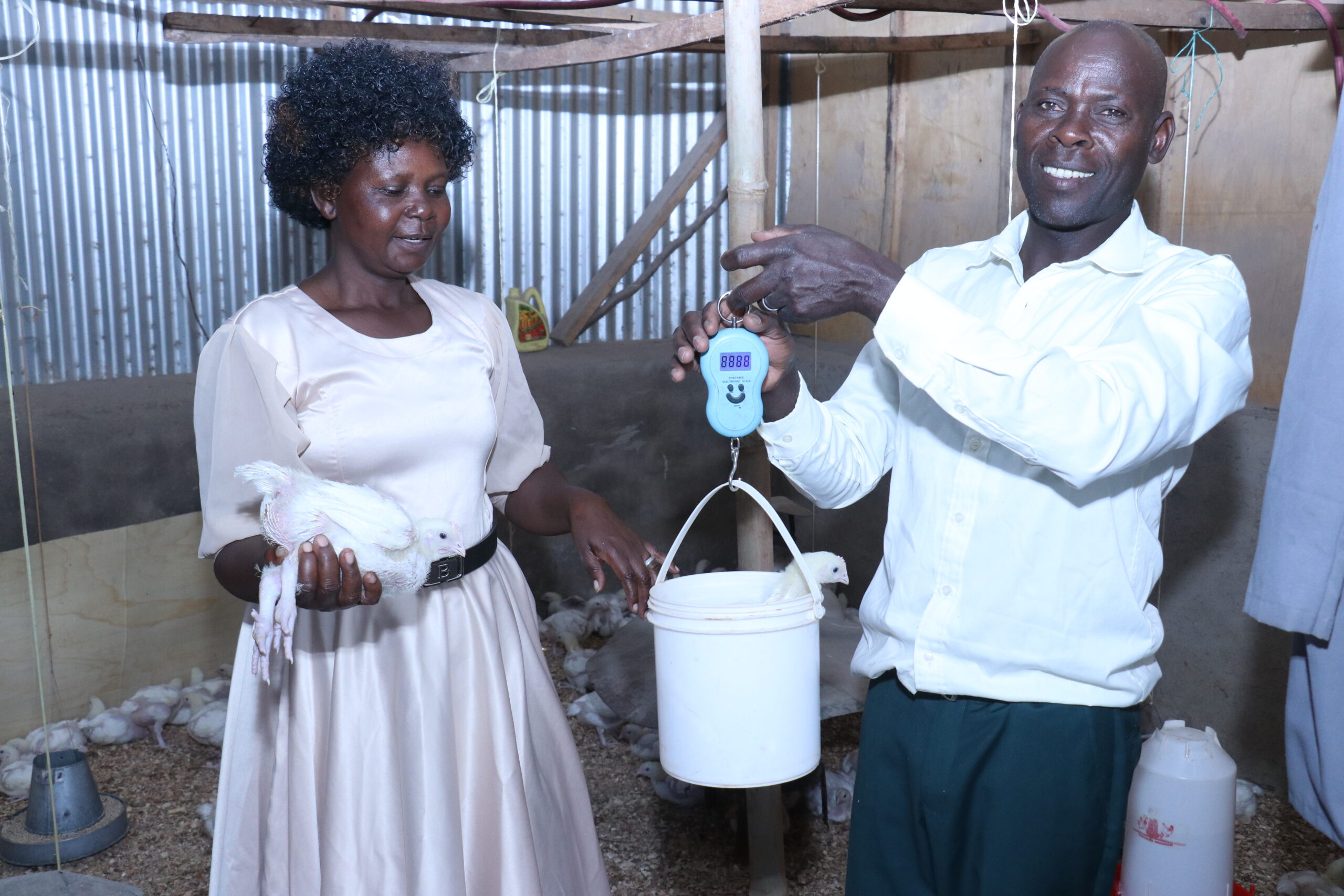
Under the mother brooding model, the Sacco buys day-old chicks from hatcheries and nurtures them through their most fragile four weeks, providing continuous warmth, balanced feed, and clean water. Vaccinated chicks are then sold to surrounding farmers who rear them to maturity, eliminating the heartbreak and heavy losses beginners often experience.
“At this early stage, chicks are extremely delicate,” Simiyu explains. “Even the water matters. If you start them on rainwater, you must continue with that until they are sold.”
The Sacco has scaled rapidly from brooding small batches of 100 or 200 chicks to handling 300 to 2,500 birds, with some experienced members managing up to 1,000 at a time.
“Some of our members received gas brooders and heaters. That allowed us to start producing in bulk,” adds Simiyu. Of the 12 members dedicated to improved kienyeji brooding, five use gas systems, while others rely on charcoal or solar heat.
This community-level model is supported by Heifer International through the Kenya Livestock Market and Resilience Project (KLMP), which focuses on poultry and red meat value chains to strengthen farmer livelihoods across Western Kenya, the North Rift, and arid regions.
Dr. Dennis Ogaso, a project coordinator at Heifer International, explains why poultry is such a powerful economic driver for rural households:
“Poultry is an inclusive value chain because it requires little space and relatively low start-up capital,” says Dr. Ogaso. “This makes it accessible to women and young people and creates livelihood opportunities for many households. It also employs different stages of the value chain.”
Dr. Ogaso points out that mother brooding directly solves a critical hurdle identified during baseline surveys: “The KLMP project supported the mother brooding model where selected farmers with the capacity to brood chicks received heating systems to raise them until they are about one month old,” Dr. Ogaso explains.
“This enables farmers who cannot brood chicks themselves to buy healthy, month-old birds. The model has been successful because farmers can purchase the number of chicks they can manage, ranging from 10 to 50. By the time the chicks reach one month, they have received the required vaccinations and treatments. This has improved chick survival, reduced mortality, and increased profitability for farmers.”
Dr. Ogaso notes that the project has already surpassed its original outreach targets: “The project targeted 38,000 households, about 32,000 of them in the poultry value chain. We have surpassed our target, working with farmer organizations in Bungoma, Busia, Trans Nzoia, Uasin Gishu, and Nandi counties.”
Cutting Chick Mortality and Securing Quality Feed
When BUKO started operations in 2024, keeping chicks alive was a difficult battle.
“At first, the mortality rate was too high; it went beyond 10 per cent,” recalls Paul Wabomba Mutambo, BUKO’s extension service provider. “If a farmer had 100 chicks and lost 10, that was a huge financial blow.”
With training and gas brooders supported by Heifer International, chick losses dropped dramatically. “With gas, the chicks get a steady, uniform supply of heat all through the night, from 10 pm to 6 am,” Wabomba explains.
Feed supply was another bottleneck. In the past, farmers bought whichever brand local agro-dealers had on their shelves. Constantly switching feed formulas disrupted digestion and stunted bird growth.
“Our baseline survey showed that farmers were struggling with production, mainly because of difficulties accessing inputs, both in terms of cost and availability,” notes Dr. Ogaso. “To address this, the project worked to strengthen links between producers and input suppliers. We also supported farmer organizations to become stronger business entities and linked them to suppliers where they could access quality feeds at negotiated rates.”
Acting on this strategy, BUKO signed a memorandum of understanding with a commercial feed manufacturer. “The company supplies feed regularly and delivers directly to the Sacco, reducing transport costs and ensuring consistent quality,” says Wabomba.
“With poultry, you don’t buy the birds first and then search for feed. You ensure the feed is already on the farm before the chicks arrive.”
Access to day-old chicks has also sped up. While an individual farmer ordering directly from hatcheries might wait up to 21 days, BUKO’s bulk arrangement guarantees deliveries within seven days.
To ensure smallholder neighbours do not miss out due to travel costs, BUKO expanded the mother brooder network. “We trained five mother brooders in surrounding communities,” Wabomba says. “They raise chicks from day one to day thirty and supply the farmers right around them.”
To keep the system moving, Heifer International provided extension training and supported the purchase of a motorbike under a cost-sharing deal, allowing extension staff to deliver feed, transport chicks, and monitor farm biosecurity.
Moving into the Broiler Meat Market
With their brooding system running smoothly, BUKO spotted an untapped opportunity: raising fast-maturing broilers for the meat market.
The idea gained traction after Sacco members met a trader roasting chicken at Chwele market. The vendor was importing chickens from Kiminini, Kakamega, and Webuye because local supply was scarce. “We realized this was a massive local business right on our doorstep,” says Wabomba.
The Sacco started with a pilot of 100 broilers and quickly expanded. Today, 10 youth members raise broilers. While improved kienyeji chicks are sold at one month old for other farmers to rear and eat, broilers are raised purely for slaughter, giving the group two distinct revenue streams.
“Eateries in Chwele alone need around 60 chickens every day,” Wabomba says. “People eat in hotels daily, and they buy roasted chicken at the market every day. That demand never stops,” adds Simiyu.
By contrast, demand for kienyeji birds fluctuates, peaking between March and August and rising again during December festivities. In October and November, sales often dip, leaving unharvested birds eating expensive feed. Broilers bridge that seasonal gap, providing cash flow all year round.
To keep buyers from looking elsewhere, BUKO staggers production schedules so members don’t flood the market at once. “We order broiler chicks every week so we never break the supply chain,” Wabomba explains. “If you cannot supply a customer consistently, they will find someone who can.”
Counting Costs and Reaping Returns
While broilers offer quicker payouts, they require more upfront capital. Wabomba estimates that starting 100 broilers requires about KSh40,000 for feed and chicks, excluding pens and equipment.
To help young members start without running into debt, BUKO is rolling out a revolving chick-share arrangement where established farmers contribute chicks to help a beginner start their first flock of 100.
In terms of margins, Wabomba calculates that rearing 100 improved kienyeji chicks to one month costs about KSh25,000. Selling the batch at KSh300 per chick yields KSh30,000, leaving a modest profit after factoring in risks. On the other hand, a well-managed flock of 100 broilers can generate around KSh10,000 in gross profit in just 26 to 28 days.
“Broilers require more capital, but they pay faster. Improved kienyeji requires less capital, but takes longer,” Wabomba explains.
The mother brooding model has also opened doors for individual youth like Christine Wafula, 24, from Mahele village in Sirisia Sub-County, who is also a member of the BUKO Sacco.
In November 2025, Wafula used KSh17,250 saved from coffee farming to buy her first 100 chicks from BUKO. Today, she has scaled up to batches of 200 birds and accumulated nearly KSh50,000 in savings to build a larger poultry house.
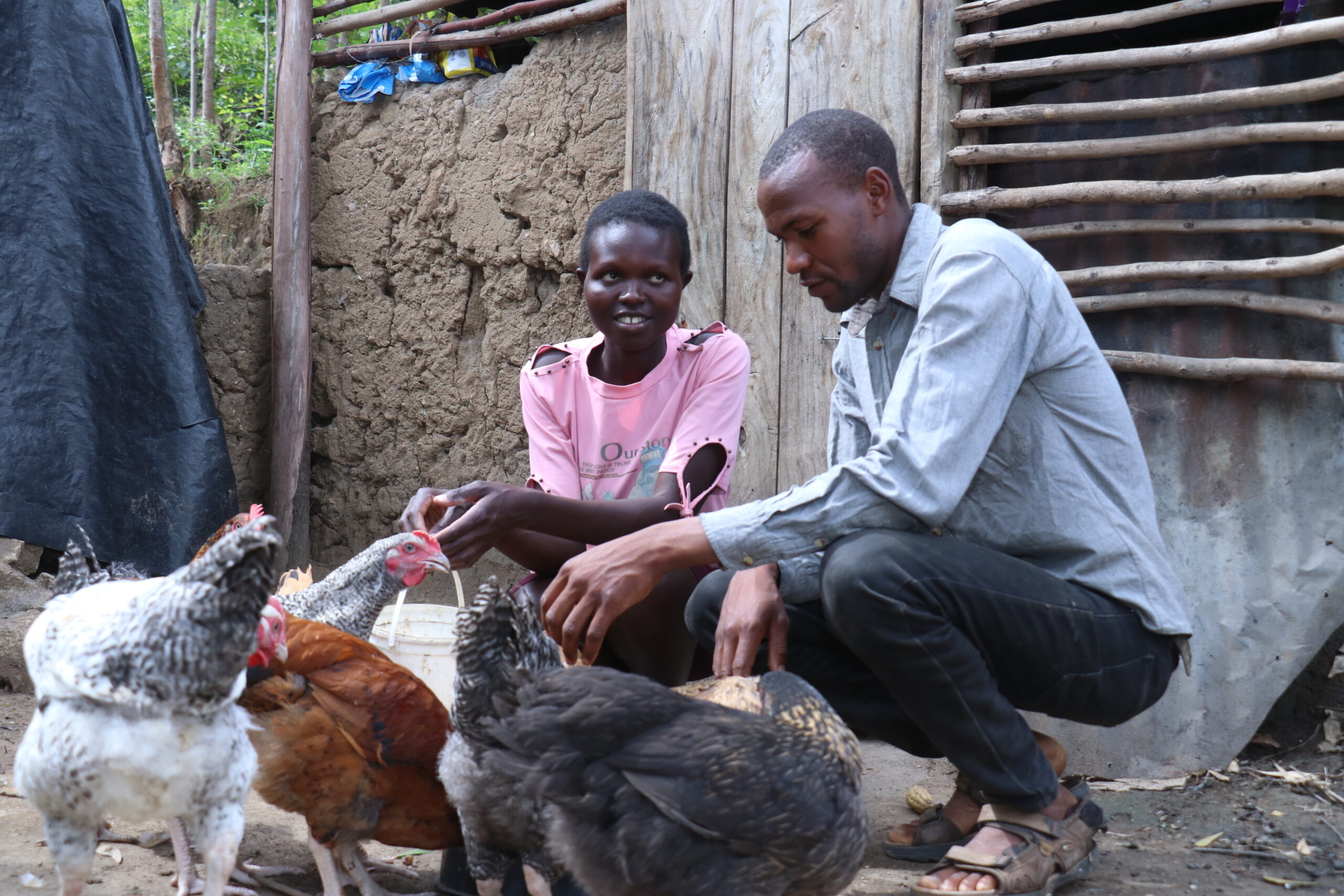
“I didn’t plan on rearing chickens, but the training I received from BUKO motivated me,” Wafula says. “I sell one-month-old birds at KSh300, two-month-old birds at KSh650, and older ones up to KSh800. Farming coffee was a struggle, but now I love rearing chickens.”
BUKO’s poultry work doesn’t stop with feathers and meat. Members collect poultry droppings, decomposing them into rich organic compost for kitchen gardens. The Sacco has already sold 3.5 tonnes of composted manure to commercial vegetable growers.
“The food we eat depends on the health of the soil,” Wabomba emphasizes. “If your soil is depleted, even synthetic fertilizers won’t give you a harvest.”
Challenges like poor rural roads, delayed customer payments, and disease risks still demand constant vigilance. Yet, by pooling money for bulk vaccines, negotiating direct feed deliveries, and training youth across the value chain, BUKO has turned backyard poultry into a thriving commercial venture.
“The KLMP project began in 2023 and runs until 2027,” Dr. Ogaso reiterates. “Even though the project came to an end in Bungoma, the producer organizations we have supported have undergone a significant transformation. They are becoming stronger businesses, working directly with market actors, connecting members to reliable buyers, and providing sustainable services.”
From Christine Wafula’s thriving flock in Sirisia to BUKO’s communal brooding pens, mother brooders in Western Kenya are proving that mastering the first 30 days is the secret to unlocking wealth, saving chicks, and feeding communities.