|
Getting your Trinity Audio player ready...
|
By Victoria Musimbi
Nairobi, Kenya: To enhance disease surveillance, mitigate emerging health hazards, and foster community resilience, experts in human health, veterinary medicine, and environmental science are advocating for robust interdisciplinary cooperation.
This framework acknowledges the fundamental connection between human, animal, and ecosystem health. Consequently, it emphasizes the necessity of unified, proactive efforts to detect risks early and avert major public health crises.
Speaking during the East Africa One Health Conference in Nairobi, experts called for increased investment in laboratory services, stronger community health systems, improved disease surveillance and sustainable financing to translate the approach into practical interventions.
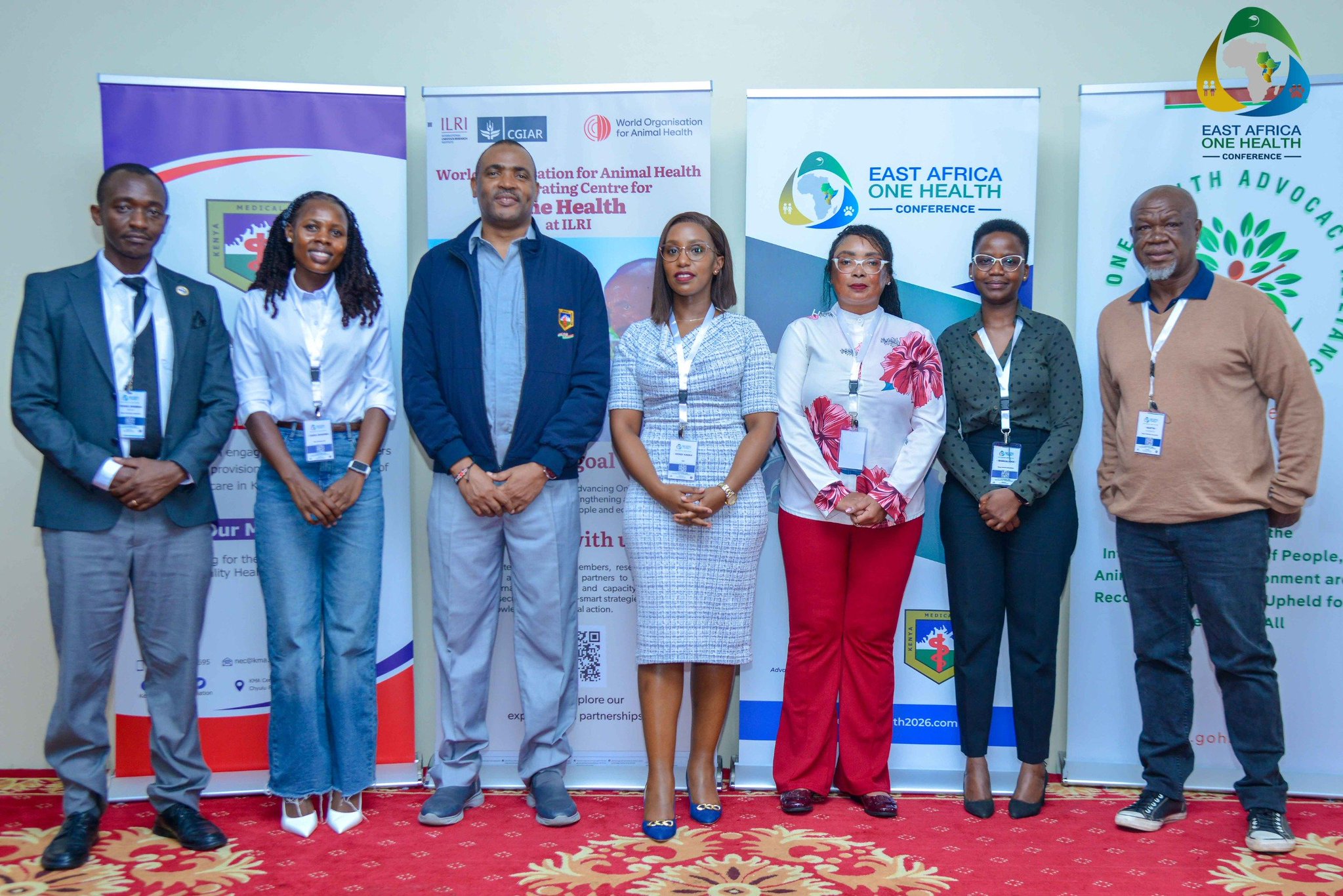
The three-day conference, held from November 3 to 5 under the theme One Health, One Future: Advancing Human, Animal and Environmental Well-being, brought together professionals, policymakers, researchers and development partners to explore solutions to emerging infectious diseases, antimicrobial resistance (AMR), food safety and climate-related health risks.
Strengthening Professional And Community Collaboration
Dr. Amina Gulied, Treasurer General of the Kenya Medical Association (KMA), said the association supports closer collaboration with the Kenya Veterinary Association to address diseases that affect both humans and animals.
She noted that many diseases affecting humans originate from animals or are influenced by environmental factors, making early collaboration essential to preventing outbreaks.
“Before a disease reaches the hospital, we should already be aware of it and prepared to respond. If vaccines are needed, we should be ready. We should not wait until a crisis occurs to start looking for solutions,” she said.
Dr. Gulied emphasised that the approach should complement existing public health systems by expanding the focus to include animal and environmental health.
She also called for greater investment in community health systems, cautioning against assigning additional responsibilities to Community Health Promoters without first providing the necessary training and support.
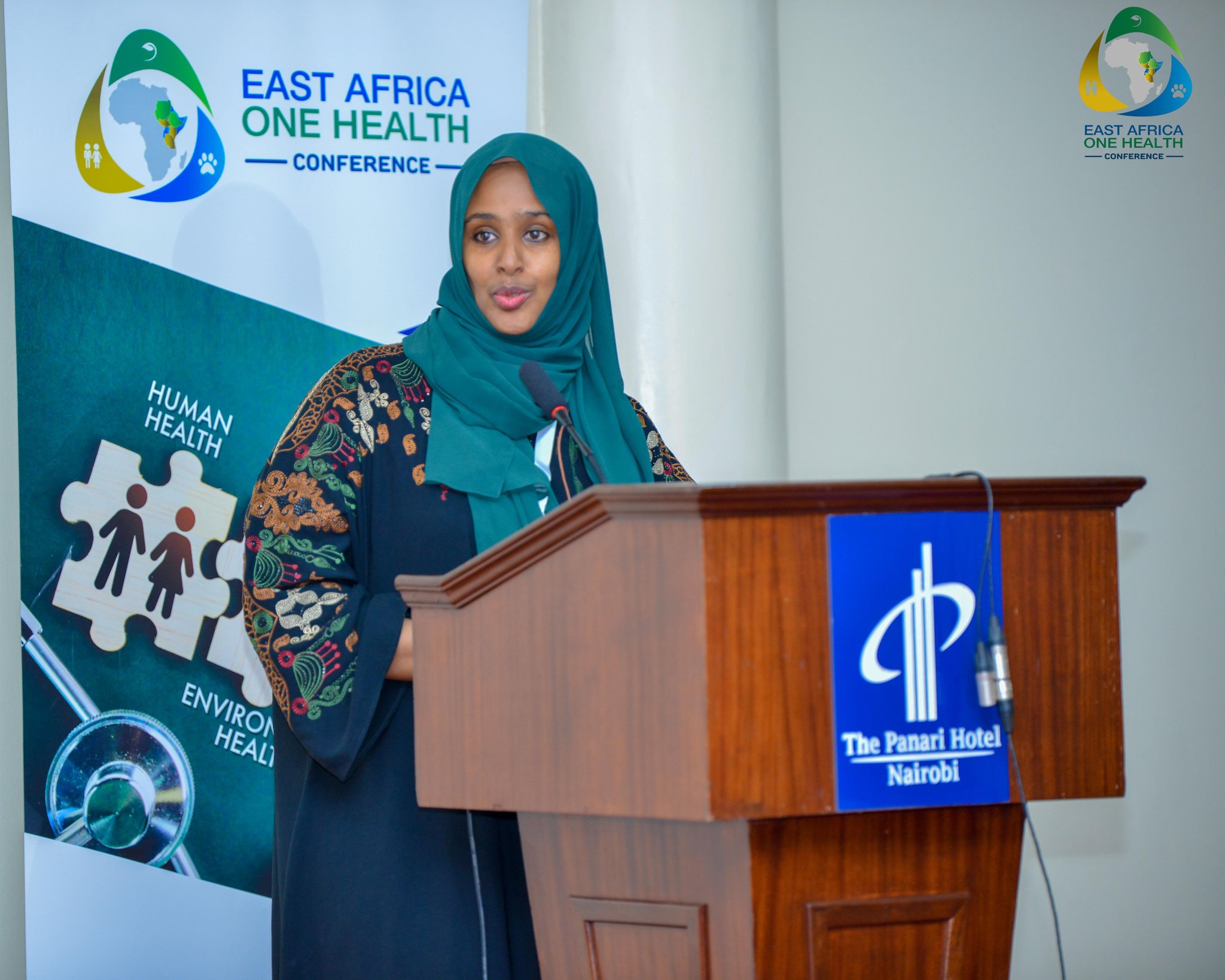
“Before we empower them, we have to empower ourselves. We need to strengthen the people who are already working at the community level so that they can effectively contribute to this agenda,” she said.
To sustain the collaboration, she proposed establishing a technical working group within KMA, potentially in partnership with the veterinary association, to ensure that conference discussions translate into continued professional engagement and action.
Building Regional Partnerships to Tackle Health Threats
Dr. Cynthia Chamonges, a consultant pathologist and secretary of the East African One Health Collaborative, said the initiative provides a platform for professionals across the region to jointly address health threats that cut across different sectors.
She explained that the collaboration began through joint activities between KMA and the Kenya Veterinary Association during World Rabies Day in 2024 before developing into the Kenya One Health Collaborative and subsequently expanding its regional focus.
“The emerging health threats we face cannot be addressed by one sector alone. We need experts in medicine, veterinary science, agriculture and environmental management working together as a united front,” she said.
The conference explored practical interventions, including improved vaccination access in pastoralist communities, digital disease surveillance, geospatial modelling of antimicrobial resistance and the use of artificial intelligence in early warning systems.

Other discussions examined food safety, the donkey skin trade, human-elephant conflict in Samburu County and integrated medical and rabies awareness campaigns.
Dr. Chamonges said the long-term goal is to establish a sustainable regional platform that strengthens technical capacity, knowledge-sharing and coordinated responses among professionals in the three sectors.
“We want to move away from working in silos and build a common platform where the human health, animal health and environmental sectors can collaborate in tackling emerging threats, including antimicrobial resistance,” she said.
She called on professional associations and stakeholders across East Africa to join the initiative, with the long-term ambition of establishing an Africa-wide collaborative platform.
Expanding Access To Animal Disease Diagnosis
Dr. Jacqueline Kasiiti Lichoti of the Directorate of Veterinary Services said strengthening animal disease surveillance and laboratory services is essential to identifying infections early and preventing their spread to humans.
She explained that the Directorate oversees animal health, welfare and food safety, including ensuring that products from animals are safe for human consumption.
Although the country has a network of veterinary laboratories, including a National Reference Laboratory and regional facilities, access remains a challenge, particularly in arid and semi-arid areas where livestock production is high.
The cost of laboratory testing also discourages some farmers and veterinary practitioners from submitting samples, resulting in treatment based on clinical signs rather than confirmed diagnoses.
Dr. Lichoti said this can contribute to inappropriate use of medicines and undermine efforts to address antimicrobial resistance.
“When you treat blindly, you may not achieve the desired results. But when you use laboratory testing, you are able to establish exactly what you are dealing with and prescribe the right treatment,” she said.
She called on county governments to invest in veterinary laboratories to bring diagnostic services closer to farmers and practitioners, while increasing awareness of the importance of laboratory testing.
Dr. Lichoti also emphasised the need for integrated disease surveillance, noting that information from wildlife, livestock and human health systems can help authorities identify potential threats before infections spread to people.
Sharing surveillance data would also help different sectors coordinate field activities, maximise limited resources and avoid duplication of efforts.
On financing, she called for greater domestic investment and the institutionalisation of the approach within government systems to reduce dependence on donor funding.
“When we institutionalise One Health, it becomes easier to secure government funding. We need to translate the recommendations into policy so that governments can recognise the importance of this approach and allocate resources towards it,” she said.
Integrating Environmental Governance Into One Health
Dr. Selly Kimosop, Environment Secretary, said environmental management must be integrated into health governance to address the growing burden of zoonotic diseases, antimicrobial resistance, food safety risks and climate-related health vulnerabilities.
She noted that Article 42 of the Constitution guarantees every person the right to a clean and healthy environment, making environmental protection central to public health.

She said the Ministry of Environment, Climate Change and Forestry is reviewing the National Environment Policy, 2013, to incorporate emerging issues, including environmental and health considerations. The ministry is also developing a National Chemical Policy and a National Circular Economy Strategy.
Dr. Kimosop urged stakeholders to contribute to the review of the draft National Environment Policy, 2026, and called for the finalisation of the draft National One Health Policy.
She further highlighted the importance of coordinated biosafety and biosecurity governance across human health, animal health and environmental institutions, particularly in preventing and responding to biological threats.
She said strengthening the proposed national One Health Memorandum of Understanding to include the Ministry of Environment, Climate Change and Forestry and the Ministry of Tourism and Wildlife would improve coordination across government sectors.
She called for conference recommendations to be translated into concrete action plans, stronger institutions and measurable results.
“The success of One Health initiatives will be measured by the number of both human and animal lives saved, ecosystems restored, livelihoods improved and communities made more resilient,” she said.