By Naomi Kago
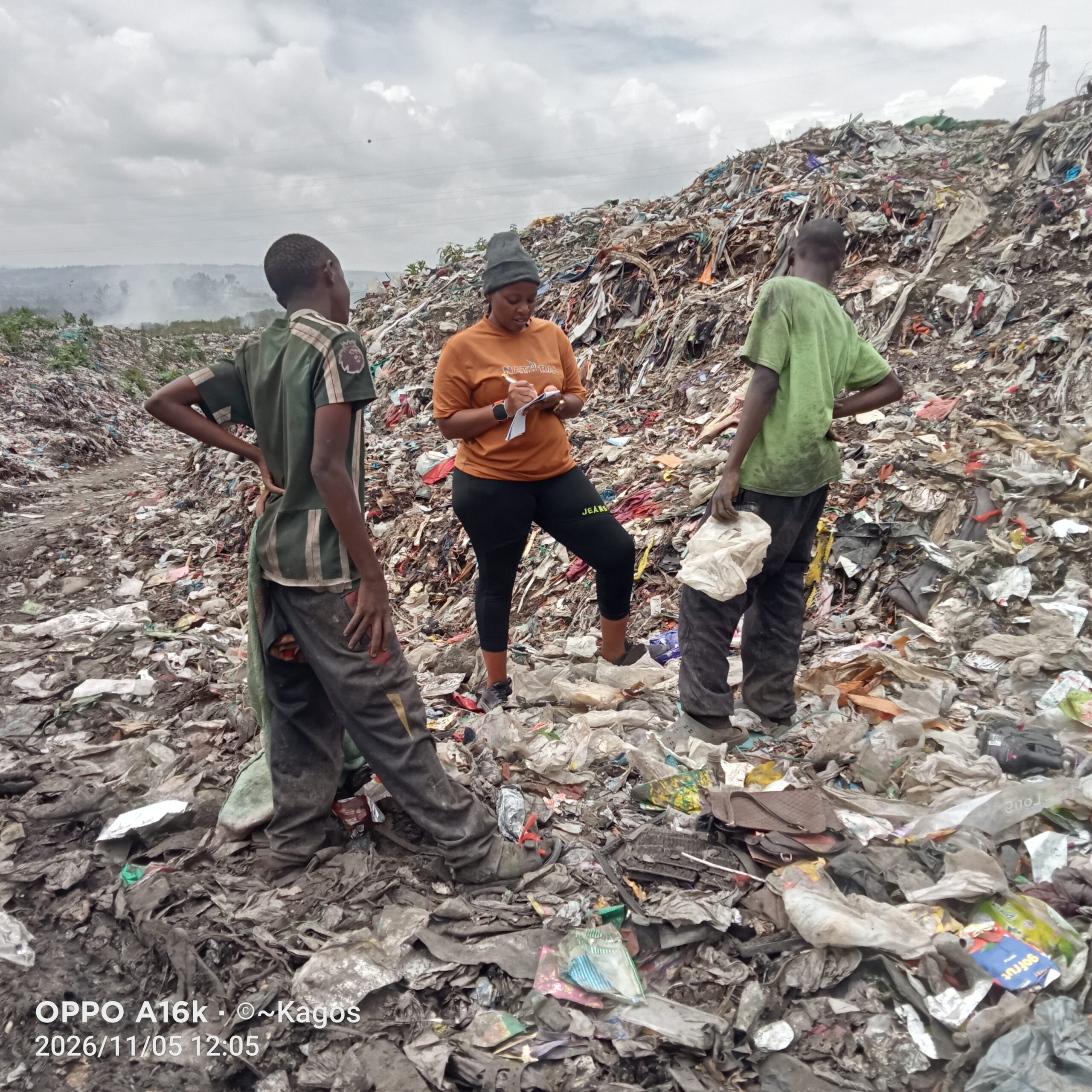
Nakuru, Kenya: Under the vast, stretching skies of Nakuru, Kenya’s vibrant fourth city, lies the Gioto dumpsite, a sprawling 40-hectare landmark of urban consumption that hums with an unexpected pulse of vitality. Established in 1972, this massive site sits in the Hilton area of London Ward within the Nakuru West constituency, a mere 2.3 kilometers from the bustling Central Business District.
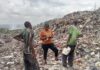
Every day, Gioto absorbs an overwhelming 250 to 300 tons of regional waste. Yet, where a casual observer might see only a mountain of discarded refuse, a resilient community of local youth has uncovered a marketplace of survival. Midst the rising smoke and sorted plastics, stories of remarkable grit, solidarity, and generational renewal are being written anew each day.
To walk into Gioto is to witness an unofficial economic ecosystem powered by the sheer willpower of Nakuru’s youngest citizens. For many school going children and teenagers from low income households in the Hilton area, the dumpsite is not a symbol of despair, but a lifeline against devastating poverty.
Seventeen-year-old David Kamau stands amidst the colorful fragments of sorted plastics, his eyes reflecting a maturity far beyond his years. Kamau is the fourth born in a family of five children. His relationship with Gioto began when he was just a boy in Grade 1, learning to navigate the terrains of waste alongside older collectors. Today, he is a Grade 10 student, but his weekends and school holidays are strictly dedicated to the grind of plastic collection.
“On a fair day,” Kamau says, adjusting a heavy sack of sorted plastics, “I can make not less than 700 shillings. When the market is slow or the weather isn’t favorable, I still manage to take home between 300 and 400 shillings.”
For Kamau, this is no aimless hustle. Every coin earned is carefully calculated. While some of his daily earnings go toward helping his parents settle household bills, Kamau has achieved something extraordinary: he has independently saved KSh 3,000 up to this point. This hard earned fund is already locked away for a singular, sacred purpose: his Term One school fees for next year, when he proudly steps into Grade 11 at Nakuru West Senior School.
A short distance away, working with a matching rhythm, is 14-year old Gabriel Amkoya. Like Kamau, Amkoya’s journey started early, back in Grade 1. Now in Grade 8, the second born of four siblings uses his earnings with a deep sense of pride.
“I use the money to buy my own clothes and personal effects, and whatever is left goes to help my mother with the house bills,” Amkoya shares, flashing a bright, hopeful smile. Next year, he looks forward to joining Grade 9 at Lenana Primary School. For these boys, Gioto is the bridge between their current hardships and their future classrooms.
The raw determination of these youths has not gone unnoticed. Recognizing the planned vulnerabilities that surround the Hilton neighborhood, grassroots organizations have stepped into the gap to provide a safety net, transforming Gioto’s immediate edge into a zone of human restoration.
Foremost among these sanctuaries is the Maisha Mapya Learning Centre. For over 14 years, this institution has acted as a lighthouse for the community, currently serving over 400 active beneficiaries. Maisha Mapya does not simply witness the struggle; it actively lightens the load. The center offers completely free education from Pre-Primary 1 (PP1) all the way through to Grade 9, ensuring that children do not have to choose between working to survive and getting an education.
Beyond the blackboard, Maisha Mapya tackles the harsh physical realities of waste reclamation. The center routinely helps bail out emergency hospital expenses for children who suffer injuries most commonly deep cuts from broken glass hidden in the waste as well as those battling respiratory illnesses brought on by the inhalation of toxic fumes and dust. Furthermore, the center runs robust rehabilitation programs, guiding youths away from the emotional traumas of poverty and the snare of substance abuse.
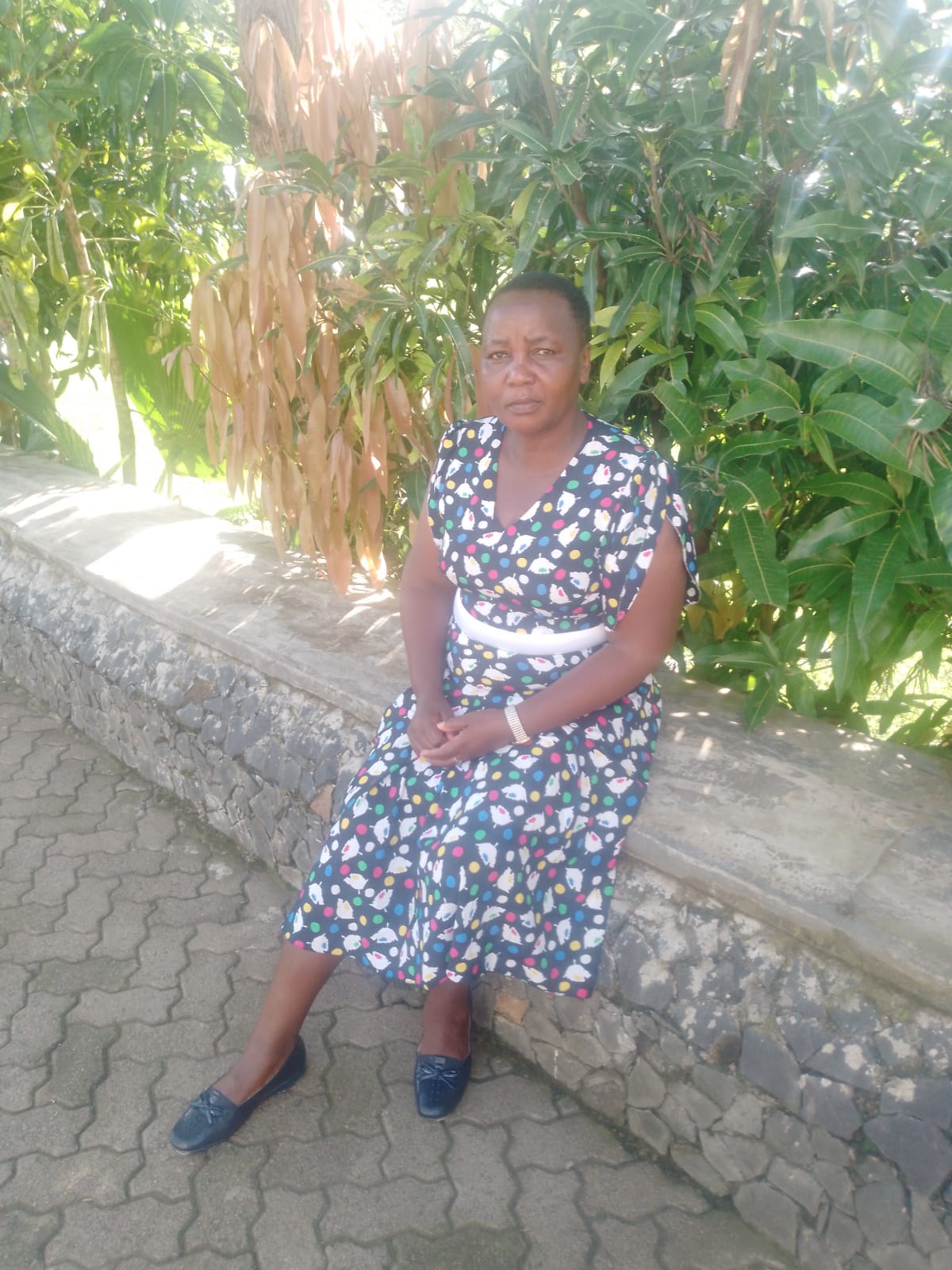
Complementing this institutional support is the tireless work of local community health champions. Muthoni Gachau, a dedicated Community Health Promoter (CHP) in London Ward, understands the delicate social fabric of the area better than anyone.
“Many of these children come from extremely low-income environments,” Gachau explains. “Over the years, various well-meaning organizations have partnered with us to rescue kids from the immediate hazards of the dumpsite by sponsoring them into boarding schools. Getting them into a boarding environment breaks the cycle of early income exposure, which is often the biggest driver pulling children away from school and dragging them into premature drug use.”
One of the most compelling insights from the ground reveals how the Hilton community handles crisis management. Because of intense economic constraints, the majority of families do not and cannot seek healthcare from nearby private dispensaries or hospitals.
Instead, a unique logistical lifeline has formed around the Nakuru Prison Medical Centre. Because this facility provides healthcare services free of charge, it has become the default sanctuary for injured or ailing waste collectors.
However, this reliance on an external, informal tracking system creates a profound data gap. “Because they seek treatment at the prison facility, it is incredibly difficult for local public health systems to officially track their health trends,” notes Gachau. “Accidents from the workplace, deep puncture wounds, and long term respiratory complications go largely unrecorded in community health databases. We see the healing happening, but we need systematic ways to protect them before they get hurt.”
To transform the narrative of Gioto from one of survival to one of sustainable prosperity, Nakuru City can implement actionable, community led frameworks. The goal is not to eliminate the livelihoods of these resilient families, but to elevate them into safe, dignified, and formalized green careers.
Currently, youth like Kamau and Amkoya sell their plastics to informal middlemen, capturing only a fraction of the material’s true value. By organizing these young collectors into formalized, legally registered Youth Cooperatives, they can bypass brokers.
These cooperatives can partner directly with major manufacturing and recycling plants in Nakuru and Nairobi, guaranteeing stable, premium prices per kilogram. This structural shift would instantly double their income, allowing them to work fewer hours while securing higher financial returns for their education.
To address the health tracking challenges raised by Muthoni Gachau, the Nakuru County Department of Health can establish a dedicated, localized health desk closer to Hilton, or form an integration program with the Nakuru Prison Medical Centre.
By introducing localized community health ledgers, CHPs can systematically track respiratory health and injury frequencies. Furthermore, corporate social responsibility (CSR) initiatives can provide high grade Personal Protective Equipment (PPE) including puncture resistant gloves, steel-toed boots, and heavy-duty filtration masks directly to the youth to eliminate glass cuts and respiratory risks.
Building on David Kamau’s inspiring habit of saving for his own tuition, local government and private corporate partners can launch a “Waste-to-Tuition” matching fund. Under this model, for every shilling a student saves from recycling into an verified educational account (via mobile money platforms like M-Pesa), a corporate sponsor matches it double. This would ensure that children like Kamau and Amkoya have their high school and tertiary education fully funded, completely breaking the cycle of generational poverty.
As the sun sets over Nakuru, casting long, golden shadows across the hills of Gioto, the smoke clears to reveal a profound truth: David Kamau, Gabriel Amkoya, the teachers at Maisha Mapya, and health workers like Muthoni Gachau are not victims of their environment. They are the unsung environmental pioneers of Nakuru City.
Every single day, these boys clean up tons of plastic waste that would otherwise choke the drainage systems of the city or pollute the fragile ecosystem of nearby Lake Nakuru. They are turning environmental hazards into school uniforms, text books, and a brighter tomorrow.
With the right structural support, cooperative formalization, and health safeguards, the youth of Gioto will continue to prove that hope cannot be buried under rubbish. From the heart of London Ward, they are recycling their hardships, refining their ambitions, and forging a golden path toward a clean, educated, and successful future.