|
Getting your Trinity Audio player ready...
|
By Alex M. Odongo
The handling of fresh evidence in the corruption case involving former Kakamega Governor Wycliffe Oparanya has come under renewed scrutiny, with a coalition of civil society organizations asking the Ethics and Anti-Corruption Commission (EACC) to establish whether critical material presented to prosecutors was independently investigated.
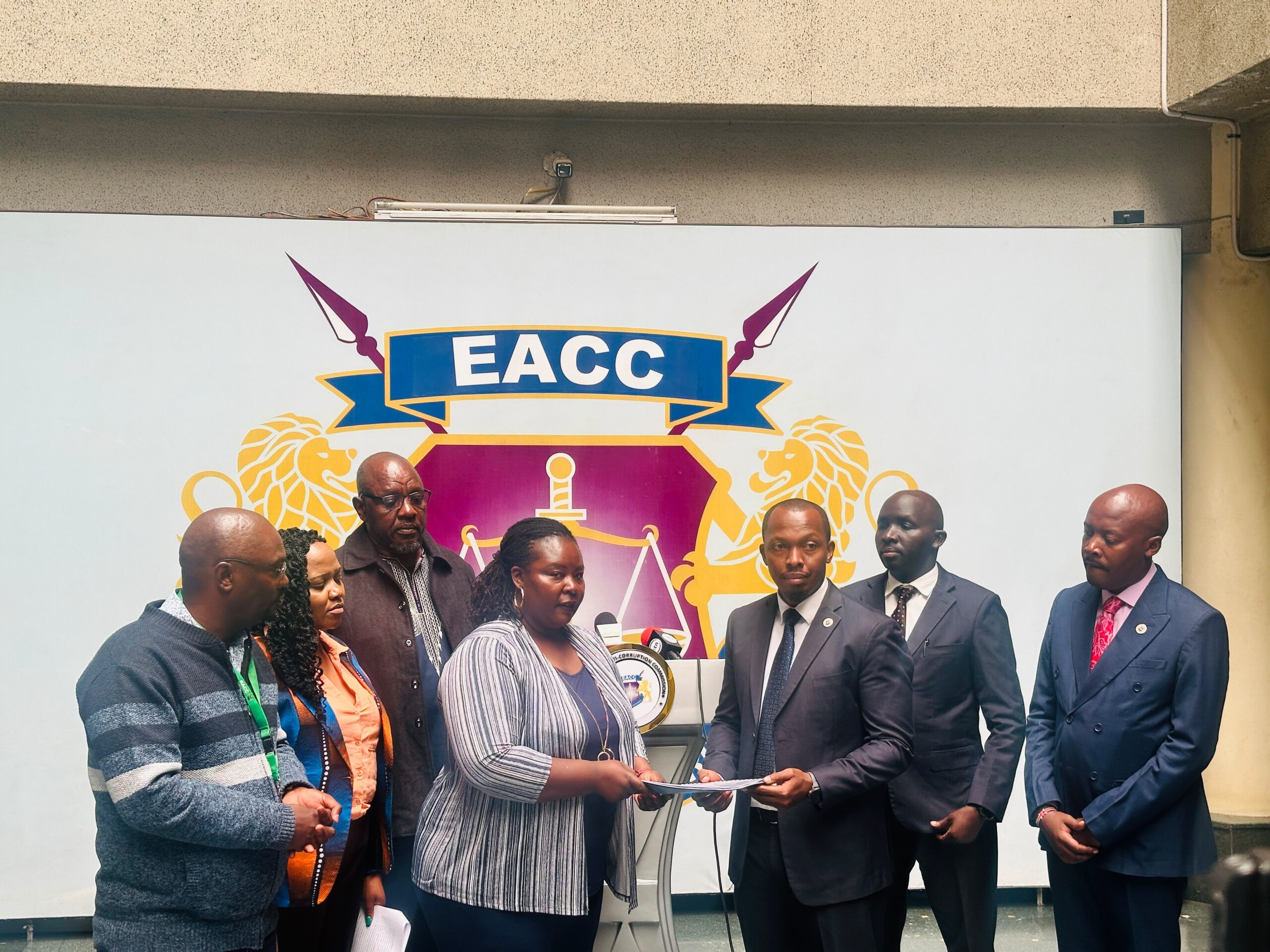
The National Integrity Alliance (NIA), which brings together Transparency International Kenya, Inuka Kenya Ni Sisi!, the Kenya Human Rights Commission and the Institute for Social Accountability, has petitioned the commission following a High Court judgment that raised questions about how additional evidence was handled by the Office of the Director of Public Prosecutions (ODPP).
At the centre of the petition is a judgment delivered on October 2, 2026, in Constitutional Petition No. E004 of 2024, Fredrick Mulaa v Office of the Director of Public Prosecutions & Others. The case examined the ODPP’s decision to review its earlier position on charging Oparanya over allegations of conflict of interest, abuse of office, money laundering and conspiracy to commit corruption-related offences.
The High Court found that the ODPP had considered fresh evidence without referring it to the EACC for further investigation. That observation has now become the basis of NIA’s demand for greater accountability over the investigative process.
The coalition argues that the issue goes beyond the decision to charge or not to charge an individual. It raises a fundamental question about whether evidence in corruption-related cases is subjected to proper independent scrutiny before prosecutorial decisions are made. In particular, it wants the EACC to establish whether the additional material was examined, verified and assessed for its evidentiary value.
NIA has asked the commission to determine the nature of the evidence, how it reached the ODPP and whether investigators had previously considered it. Where gaps are identified, the coalition wants further investigations, including the examination of relevant records and independent verification of information.
The petition also seeks to clarify the working relationship between the EACC and the ODPP, whose constitutional responsibilities are distinct but closely connected. While the EACC is mandated to investigate corruption and economic crimes, the ODPP exercises independent prosecutorial authority. The coalition’s position is that prosecutorial consideration of new material should not be treated as a substitute for the investigative process needed to establish its authenticity and reliability.
Importantly, NIA stops short of claiming that the fresh evidence establishes wrongdoing by Oparanya or any other person. It argues that the High Court’s findings should not automatically trigger a reopening of investigations, but neither should they be ignored without an independent assessment by the institution responsible for investigating corruption allegations.
This distinction is significant in a country where public confidence in the fight against corruption often depends not only on the outcomes of high-profile cases but also on whether investigative and prosecutorial decisions can withstand public and judicial scrutiny.
The coalition has therefore asked the EACC to explain whether the evidence was referred to it, what action has been taken and whether further investigations are necessary. It wants a written response within 14 days of receipt of the petition, subject to legal restrictions on the disclosure of confidential investigative information.
The petition ultimately puts the focus on institutional accountability rather than a predetermined legal outcome. For NIA, the central concern is whether the questions raised by the court will receive a clear, evidence-based response.
How the EACC responds could provide an important indication of how judicial findings involving the handling of corruption evidence translate into action by the institutions mandated to investigate and prosecute such cases.