|
Getting your Trinity Audio player ready...
|
By Victoria Musimbi
Nairobi, Kenya: Access to clear information on government borrowing, financing agreements and public spending remains a challenge for journalists. Regular briefings, clear response timelines and designated contacts within public institutions could help journalists obtain information, report accurately and enable the public to better understand financial decisions.
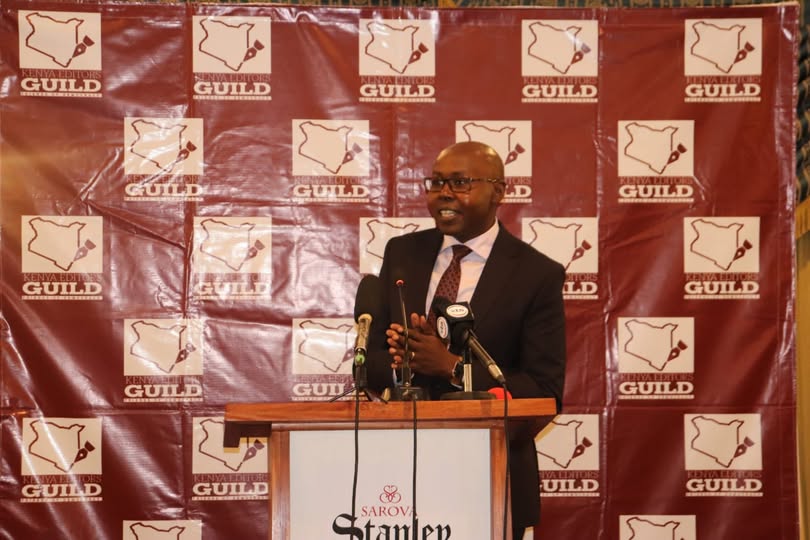
The Kenya Editors Guild (KEG), in partnership with the International Republican Institute (IRI), convened the second institutional dialogue on the role of the media in oversight and reporting of complex and high-risk public financing instruments in Nairobi.
The dialogue brought together editors, journalists, public institutions and accountability experts to discuss access to debt records and loan agreements, confidentiality in bilateral financing, institutional responses to accountability concerns, and safety and professional safeguards for journalists.
The conversations unfolded against a sobering fiscal backdrop. Kenya’s public and publicly guaranteed debt reached 13.01 trillion shillings at the end of June 2026, up 9.2 percent from 11.81 trillion shillings a year earlier, according to the National Treasury’s Fourth Quarter Economic and Budget Review Report. Domestic debt accounted for 7.33 trillion shillings (56.3 percent), while external debt stood at 5.68 trillion shillings (43.7 percent).
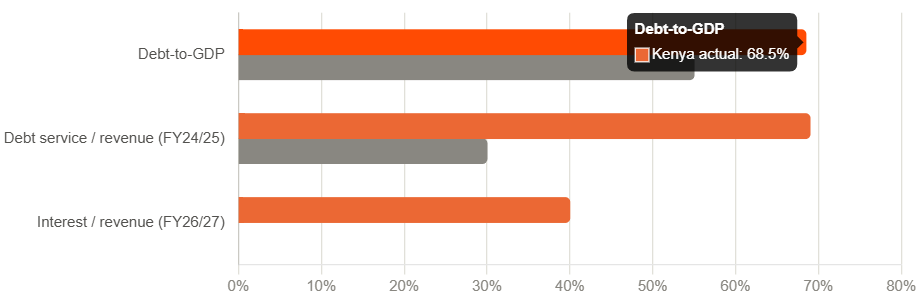
The debt-to-GDP ratio stood at approximately 68.5 percent, well above Parliament’s statutory 55 percent anchor. In the fiscal year 2024/25, Kenya spent 1.72 trillion shillings on debt service—equivalent to roughly 69 percent of ordinary revenue collected, more than double the IMF’s 30 percent threshold. For FY 2026/27, the approved budget allocated 2.22 trillion shillings for public debt service, with interest payments alone consuming approximately 40 percent of ordinary revenue.
Turning concerns into action
The Kenya Editors Guild president, Zubeidah Kananu, said public finance may appear technical, but government borrowing, financing agreements and expenditure decisions affect the services Kenyans receive, the taxes they pay and obligations passed on to future generations.
She stressed that journalists must be able to explain what the government is committing citizens to, why particular financing options are chosen, the risks involved, the eventual cost, and whether Kenyans are getting value for their money.
“We now have a 24-item Issues, Referral and Follow-up Matrix. But behind those 24 items are real questions that journalists are asking on behalf of the Kenyan public,” she said.
However, difficulties in accessing records, conflicting figures from government institutions, scattered information and highly technical documents continue to make this work difficult.
Kananu called on institutions to move beyond identifying challenges by providing clear responses, responsibilities and timelines. Where information is available, she urged them to indicate where and how it can be accessed, while questions requiring further clarification should be assigned to the relevant institution for follow-up.
On confidentiality in bilateral and government-to-government financing, she called for clarity on what information can legitimately be protected and what should be disclosed when public resources and obligations are involved.
“There must be a balance between legitimate confidentiality and the public’s right to know,” she said.

Kananu cited public discussion around the Dangote refinery agreement as an example of the questions that arise over government commitments, confidentiality and citizens’ right to know.
She also challenged institutions to improve how information is communicated, arguing that citizens should not have to navigate hundreds of pages of technical documents, scattered government websites and complex financial language to understand decisions made on their behalf.
“Access to information cannot simply mean uploading a document somewhere and ticking a box. It must enable citizens to understand decisions being made on their behalf, participate meaningfully and ultimately hold institutions accountable for how public resources are managed,” she said.
The KEG president further raised concerns about the safety and professional security of journalists reporting on sensitive debt, infrastructure and financing matters. She called for an environment where they can ask difficult questions without intimidation, legal threats or retaliation, while maintaining editorial independence.
“Dialogue is important, but dialogue without follow-through will not take us very far,” she said.
She noted that the success of the engagement should be measured by what changes afterwards, including improved access to information, clearer institutional responses and greater accountability.
Asking the right questions
Francis Rogers, Regional Resident Director at the International Republican Institute (IRI), commended the Kenya Editors Guild for its work in promoting public finance accountability, describing its programmes as a potential benchmark for other actors in the region.
He said the organisation had demonstrated strong programme management and created opportunities for others to learn from its approach, while urging greater engagement and visibility.
“The issue has always been around why, how and who we are borrowing from,” he said, noting that the question was not simply whether borrowing was right or wrong, but whether governments had clear and sustainable models for repaying the money borrowed.
Rogers noted that government borrowing had become a global concern, with high levels of debt affecting societies through their impact on the cost of living.
He urged stakeholders to remain objective when engaging with government on financial matters, saying such engagement can deliver important benefits when grounded in facts and accountability.
Rogers also praised the Kenya Editors Guild for seeking clarity by engaging relevant actors and obtaining information that enables the public to better understand and verify concerns surrounding government finances.
“I believe we should all come together, ask the right questions, pose them to the right people, get the answers and engage further, so that we are able to meet the right actors and engage them to do the right things,” he said.
He said IRI was committed to strengthening its partnership with the Kenya Editors Guild and expressed appreciation for its work in advancing informed public finance discussions.
Making audit findings accessible
Audit reports provide an important basis for assessing whether government projects and programmes are achieving their intended results and using public funds effectively.
FCPA Edwin Kamar, Deputy Auditor-General from the Office of the Auditor General, called for greater media coverage of performance audits to ensure their findings reach Parliament and receive the attention they deserve.
He explained that performance audits examine whether public resources are used economically, efficiently and effectively to achieve their intended results. They can help establish whether government projects deliver value for money and meet the objectives for which funds were allocated.
“We undertake performance audits to establish whether public resources are delivering the intended results. We need greater media coverage of these audits to ensure that the findings reach Parliament and receive the attention they deserve,” he said.
Kamar said wider reporting of audit findings could inform parliamentary discussions and help citizens understand how government spending is managed, including issues that may require corrective action.
He added that the Office of the Auditor-General had strengthened its engagement with the media through sensitisation programmes and training to improve journalists’ understanding of the audit process and their ability to interpret findings accurately.
“One of the things we have done in working with the media is to sensitise and train journalists. We have also developed a handbook on reporting audit findings, which is available on our website to guide journalists in their reporting,” he said.
The handbook is intended to support accurate reporting on audit reports, expenditure and accountability, helping journalists explain technical findings to wider audiences.
Protecting constitutional oversight
Senator Okiya Omtatah, Senator for Busia County and Member of the Senate County Public Accounts Committee, said public finance was not just a technical issue but a constitutional principle in Kenya.
He said the Constitution established institutions to safeguard public financial management, but the concentration of political and financial power could undermine Parliament’s role in protecting public money.
“If you look at constitutions around the world, very few make public finance a constitutional principle. I have come across about 24 constitutions that expressly include public finance in their constitutions. They include Morocco, the Philippines, South Korea and Kenya,” he said.
Omtatah said Parliament must exercise its oversight role effectively, with proper scrutiny of how public resources are raised, allocated and spent.
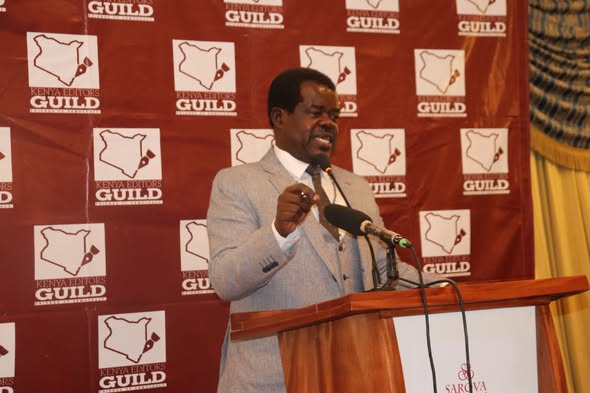
He noted that Chapter 12 of Kenya’s Constitution provides for key institutions involved in public financial management, including the Commission on Revenue Allocation, Controller of Budget, Auditor-General, Central Bank of Kenya and the National Treasury. These institutions are intended to support checks and balances rather than allow financial decisions to be concentrated in one centre of power.
“When you mix executive power and money, you do not get a servant; you get an emperor,” he said.
He also stressed the importance of distinguishing pending bills from public debt when reporting on government finances. Pending bills arise from expenditure that has already been incurred but remains unpaid, and should not automatically be classified as public debt.
“The law is clear: you should not spend money that you do not have, and you should not procure when there is no money available. Incurring expenditure without the funds to pay for it creates the problem of pending bills,” he said.
Omtatah urged journalists to go beyond reporting budget allocations and borrowing figures by examining actual government revenue and expenditure against the approved budget. This, he said, helps establish whether public funds have been used as Parliament authorised and whether spending decisions comply with the law.
“The development agenda cannot trump the law. You cannot say you are doing development, therefore you do not have to comply with the law,” he said.
He further cautioned against creating structures that bypass constitutional institutions responsible for managing and overseeing public finances.
“You cannot create a parallel Treasury and expect the constitutional institutions to remain relevant,” he said.
Omtatah said understanding Kenya’s constitutional financial framework was essential for journalists covering taxation, borrowing and expenditure, as it enabled them to question decisions from a legal perspective.
“We do not have another country. Kenya is the only country we have, and we must protect its resources and its constitutional order,” he said.