|
Getting your Trinity Audio player ready...
|
By Winnie Kamau
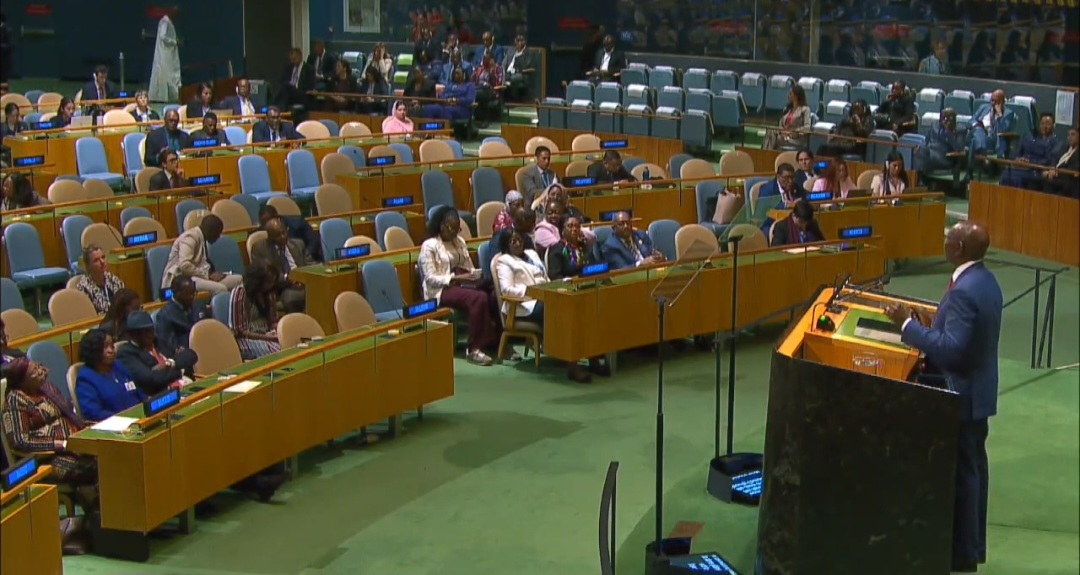
Nairobi, Kenya: President William Ruto used his address to the 81st session of the United Nations General Assembly (UNGA) to renew Kenya’s push for a permanent African seat on the UN Security Council, arguing that the continent’s exclusion from the body’s highest table has become “increasingly difficult to ignore.”
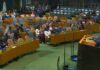
Speaking before the General Assembly, Ruto invoked the founding promises of the UN Charter, signed in San Francisco 81 years ago, and argued that those promises remain unfulfilled for Africa.
“Mr. President of the General Assembly, Mr. Secretary-General, Excellencies, Ladies and Gentlemen. Eighty-one years ago, the nations gathered in San Francisco spoke from the ruins of war. They resolved to save succeeding generations from its scourge. They reaffirmed faith in human dignity and in the equal rights of nations, large and small. And they pledged social progress, better standards of life, and the economic and social advancement of all peoples. These were not mere words. They were the foundations of a new global order: peace over war, law over force, sovereign equality over dependency, cooperation over division, and human dignity over ambitions of power” President Ruto made his case in his opening statement.
“Every nation in this hall has one vote. Every nation is sovereign and equal under the Charter,” he said. “Yet on the gravest question of war and peace, five nations possess a permanent power that the other 188 do not. The equality proclaimed in this Assembly ends at the doors of the Security Council.”
Ruto framed the imbalance as a relic of a bygone era. “That imbalance might have reflected the world of 1945,” he told delegates. “It does not reflect the world that we know today.”
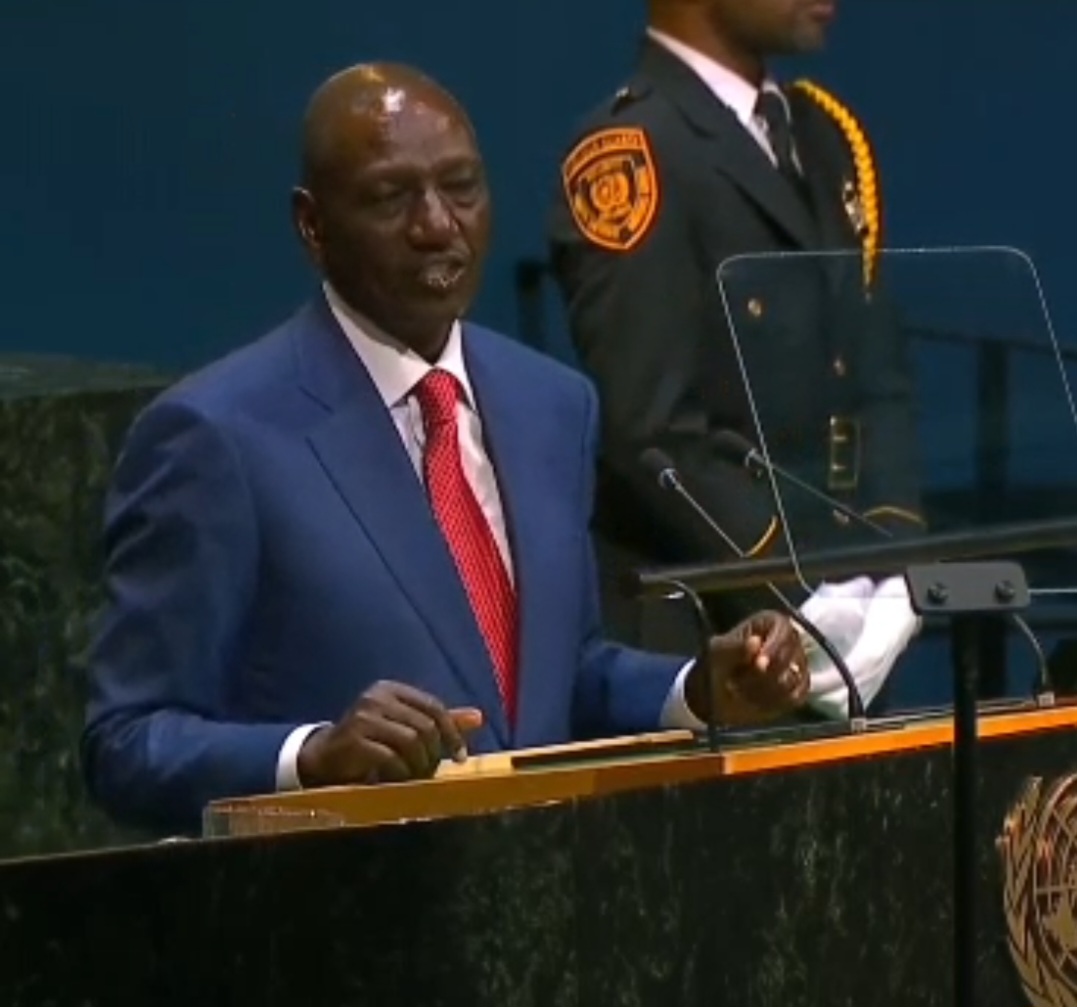
Ruto noted that Africa now accounts for 54 of the UN’s member states, more than a quarter of the General Assembly, yet it has no permanent representation on the Security Council, the body charged with maintaining international peace and security. “We are frequently the subject of its decisions,” he said. “Permanently discussed, yet permanently excluded.”
A History Lesson From Kenya’s Own Seat
Ruto grounded his appeal in Kenya’s own history at the UN, recalling that the country took its seat in the General Assembly on 16th December 1963 just four days after independence. “We arrived with one vote, and the same sovereign rights as every other state,” he said. “The promise made in San Francisco now belonged to us as well.”
He traced that promise back further, noting that when the UN was founded in 1945, roughly 750 million people worldwide lived under colonial rule, and only four African countries were represented at the San Francisco conference that created the Charter. Decolonization, he said, replaced “Colonial subjugation with self-determination, as peoples once governed from afar took their place in this Assembly as sovereign equals.”
Trust, Not Declarations
Much of Ruto’s speech turned on the erosion of trust in international law and institutions. He cited figures showing 65 state-based armed conflicts recorded globally last year with the highest number in eight decades of tracked data with 13 reaching the scale of war and nearly a quarter of a million people killed in organized violence.
“Trust cannot be restored by declaration,” Ruto said. “It must be earned by consistent application.” He argued that selective enforcement of international law carries a lasting cost. “International law cannot be invoked loudly in one crisis, cautiously in another, and disregarded when convenient. Every perceived double standard carries a price, and that price is trust.”
He linked the failures of collective security directly to human suffering, pointing to “Children driven from their classrooms, children who go to sleep hungry, children who learn the sound of gunfire before they know the safety of peace.” Peace, he said, “This is not separate from development, it is its precondition.”
A Proposal, Not A Plea
Ruto closed by pivoting from grievance to leverage, arguing that Africa’s economic weight strengthens its claim to a seat at the table. “Our continent does not come to plead. We come with a proposal,” he said.
Pointing to Africa’s mineral wealth, agricultural potential, renewable energy resources and a market of over 1.5 billion people increasingly linked through the African Continental Free Trade Area.
“We are a market of more than 1.5 billion people, increasingly connected through the African Continental Free Trade Area. These are not merely African assets. Properly developed, they are part of the answer to the world’s search for food security, clean energy, resilient supply chains, and a new source of growth” he said.
Kenya’s position echoes the African Union’s long-standing Ezulwini Consensus, which calls for at least two permanent seats for Africa on an expanded Security Council, with veto power, plus additional non-permanent seats. Ruto’s remarks add Kenya’s voice to a chorus of African leaders who have used this year’s General Assembly session to press the reform question, amid renewed but so far inconclusive discussions on Security Council enlargement.