
|
Getting your Trinity Audio player ready...
|
By Mercy Kachenge
Nairobi, Kenya: More than 27 million women experience postpartum haemorrhage (PPH) every year, according to the World Health Organization, making excessive bleeding after childbirth one of the world’s leading causes of maternal death.
WHO estimates that PPH causes nearly 43,000 maternal deaths annually, with the greatest burden falling on women in low- and middle-income countries. In Kenya, the danger is particularly stark.
In Kenya, postpartum haemorrhage (PPH) is the leading cause of maternal mortality, accounting for about 40% of maternal deaths, according to Kenya Health Information System data cited by the World Health Organization. The Ministry of Health’s EWENE initiative puts the wider annual toll from preventable pregnancy-related causes at approximately 5,000 maternal deaths
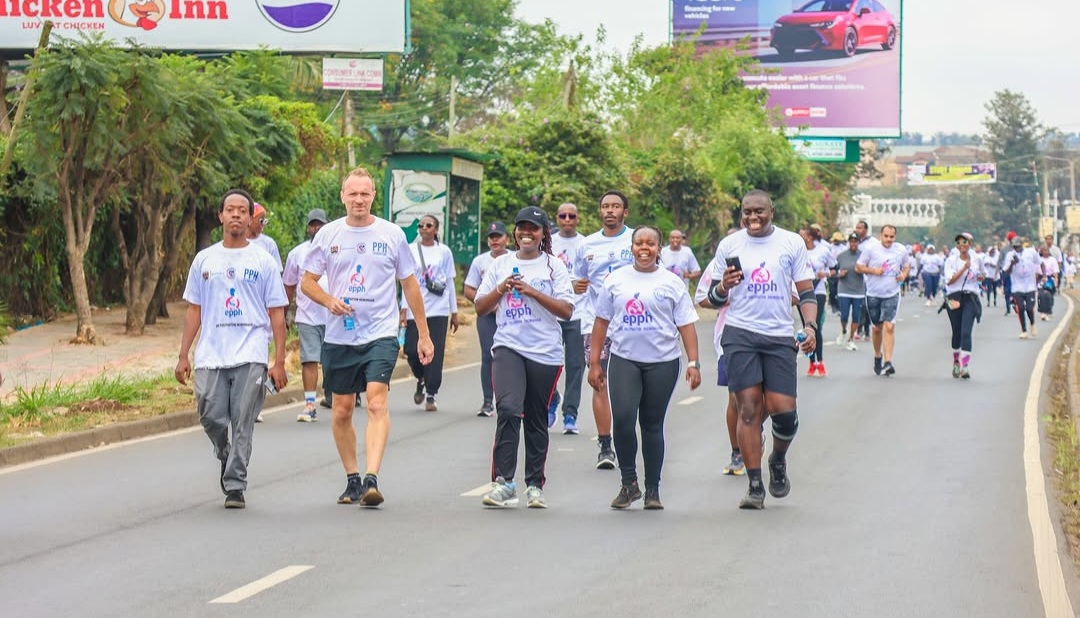
That is the reality behind the runners who recently took to the streets for the End PPH Run for Her. Among them was Ann Odhiambo, a mother who did not attend simply as a spectator.
She came with an understanding of what postpartum haemorrhage means, having researched the condition herself before giving birth. To Ann, PPH means excessive bleeding after childbirth, bleeding that can become dangerous and potentially life-threatening if not treated quickly.
Her understanding was tested soon after she delivered. Ann experienced mild bleeding, and health workers responded quickly, attended to her and reassured her as she recovered. For her, the episode ended safely. But her experience also revealed something important about the fight against PPH: knowing the condition exists is not the same as knowing what happens when it strikes.
 During antenatal care, Ann had been counselled about heavy bleeding after childbirth, although the health workers did not specifically use the term postpartum haemorrhage. She was also advised to eat well and maintain her blood levels.
At her first clinic visit, her haemoglobin level was 10.8g/dl, and she was given medication to improve it. Still, she says she would have wanted more information about how PPH is managed in hospitals and why immediate treatment is critical.
That gap between awareness and preparedness is where the race against PPH becomes far more complicated. The Run for Her can make people talk about postpartum haemorrhage, encourage blood donation and put maternal deaths back into public conversation.
But once the runners cross the finish line, the real test begins. If a woman starts bleeding at midnight, who gets her to hospital? If the nearest facility cannot manage the emergency, how quickly can she be referred? When she arrives, are trained health workers ready, and are lifesaving medicines and equipment available? And if she needs blood, is compatible, tested blood available without delay? These questions determine whether awareness translates into survival.
Dr. Edward Serem, Head of the Division of Reproductive, Maternal, Newborn, Child and Adolescent Health at the Ministry of Health, says knowledge gaps and delayed referrals remain among the contributors to maternal deaths. For women living far from referral hospitals, distance can become a medical emergency of its own. A woman may first reach a dispensary, only to be referred to a higher-level facility.
By then, another journey begins, sometimes without reliable transport or a readily available ambulance. Serem says the country is therefore working to strengthen the health workforce, infrastructure, equipment, training and availability of lifesaving commodities.
 The Ministry has also been expanding the role of community health promoters, who can identify pregnant women, encourage antenatal care and connect communities with the formal health system. But the existence of these interventions does not erase the gaps. It raises another question: how effectively do all the pieces work together when a woman needs them most?
Professor Anne Beatrice Kihara, a gynaecologist and maternal health specialist, argues that the prevention of PPH must begin long before childbirth. A woman who arrives at a labour ward already anaemic has fewer reserves to withstand significant blood loss. That is why Kihara links PPH prevention to nutrition, infection prevention, pregnancy spacing and antenatal care.
For her, maternal health cannot begin at the moment a woman walks into the delivery room. It starts before conception, continues through pregnancy and extends into the community, where women need information they can understand and act upon.
She believes technology can help close some of these information gaps, particularly through mobile phones and teleconsultation. But technology alone is not enough. Information must be communicated in languages and forms that women understand, because a health message that reaches a woman but is not understood is not necessarily a lifesaving intervention. This is where the media and health workers intersect, Kihara says, arguing that effective health communication cannot be left to clinicians alone.
The community is another critical link. Community health promoters can identify pregnant women and help connect them to health facilities. They can also recognise circumstances surrounding a pregnancy, including food insecurity, gender-based violence and harmful practices. But their role is part of a larger chain, and if one link breaks, the woman may still be at risk.
The same applies to blood. Professor Moses Obimbo, project lead for the End PPH initiative and Run for Her, says blood donation is one of the practical interventions accompanying the awareness campaign.
The initiative has launched a roaming blood donation programme intended to bring donation closer to communities, with a target of collecting more than 2,000 units of blood. The reasoning is straightforward: when a woman loses a dangerous amount of blood, awareness cannot replace what her body has lost. A functioning blood supply is therefore not an optional addition to PPH care but part of the emergency response.
Serem says Kenya has 11 regional blood banks responsible for recruiting donors, processing blood and supplying facilities, and that nearly KSh1 billion has been allocated in the current financial year to strengthen blood availability. Yet having a national blood programme is different from guaranteeing that blood will be available at the precise facility, and at the precise moment, a mother needs it.
 Health-worker training presents a similar challenge. Obimbo says one persistent problem is the gap between knowledge and practical skills. A health worker may know what PPH is but still need repeated practice to respond effectively under pressure.
He argues that healthcare should learn from sectors such as aviation and the military, where emergency drills and simulations are routinely used to prepare people before crises happen. His initiative is exploring technologies including virtual reality, gamification and telepresence mentorship to help maternity teams practise emergency responses. The philosophy is simple: do not wait for a mother to start bleeding before discovering whether the system is ready.
That idea shifts the conversation about PPH. The question is no longer simply whether women know about postpartum haemorrhage, but whether the entire system is prepared to act when knowledge meets an emergency. Ann’s experience shows why the distinction matters.
She had done her own research and received information during antenatal care, and when she bled after delivery, health workers responded quickly. She was fortunate to reach care and receive timely attention. Many women face additional barriers, including distance, transport, referral delays, shortages of blood or commodities, and inadequate emergency preparedness.
WHO says PPH can progress rapidly and that early detection and prompt treatment are essential. Its recent recommendations emphasise objective assessment of blood loss and rapid treatment to prevent women from deteriorating.
That makes the Run for Her more than a symbolic event. The runners are drawing attention to a problem that does not end when the event does, and the blood donation drives, community education, antenatal care, emergency drills and health-worker training are the less visible parts of the same race.
Perhaps that is where the real measure of the campaign lies: not in how many kilometres were covered, how many people wore the campaign T-shirts, or even how many people heard the message, but in what happens the next time a mother begins to bleed.
Will she recognise that something is wrong? Will someone get her to care quickly? Will the facility be ready, the health worker skilled and the blood available? For Ann, the answer was yes. She received prompt attention and recovered. But a national response cannot depend on individual luck.
The race to end PPH must continue through every antenatal clinic, community health visit, referral road, maternity ward, blood bank and emergency training session. Because when the Run for Her ends, a much more important race continues: the race to make sure that when a mother starts bleeding, the health system is already running towards her.