
|
Getting your Trinity Audio player ready...
|
By Juliet Akoth
Nairobi, Kenya: Ahead of the upcoming Global Flyways Summit scheduled for September 11th in Nairobi, Her Imperial Highness Princess Hisako Takamado of Japan has urged greater international collaboration to safeguard migratory bird species.
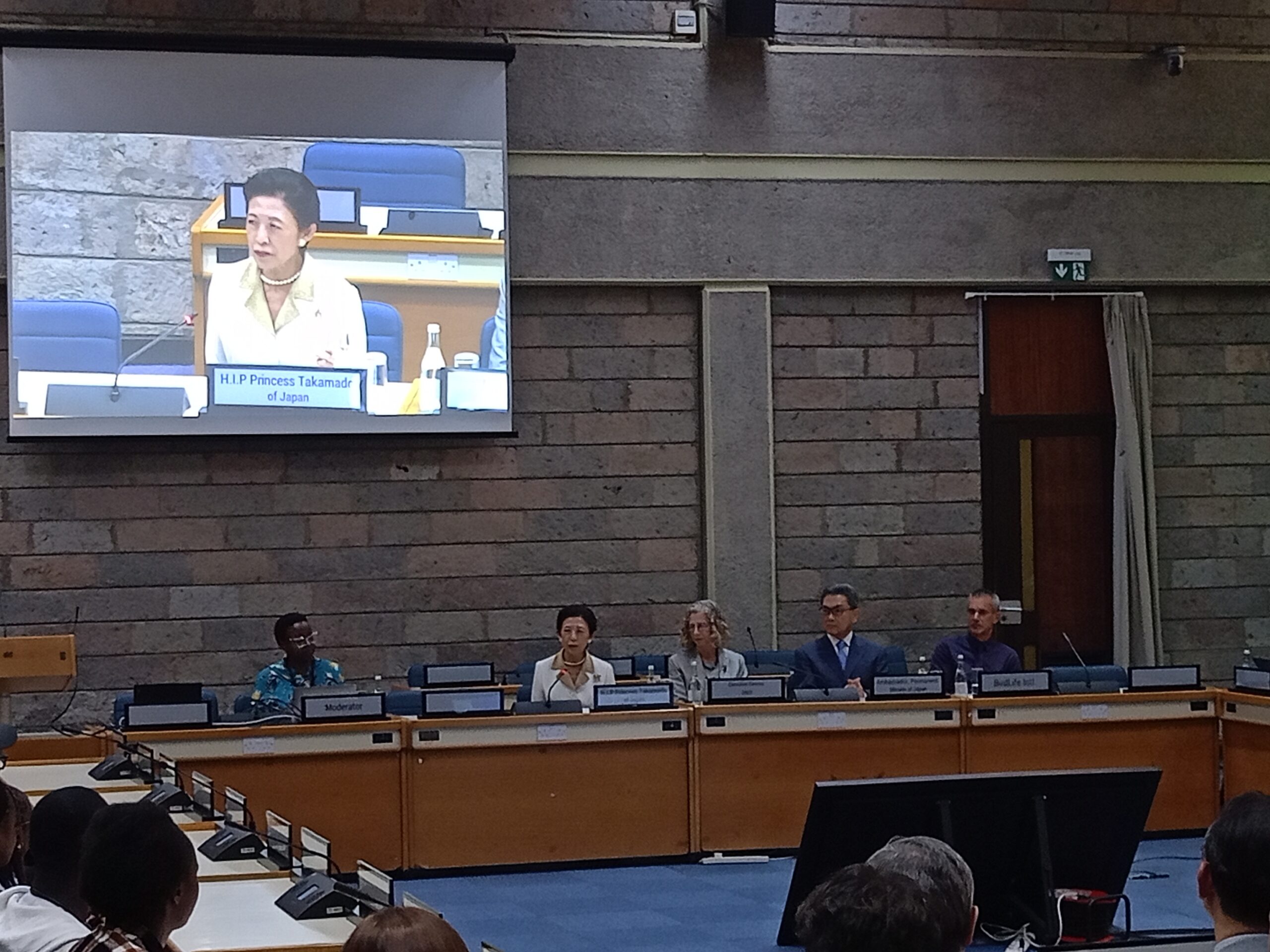
Addressing attendees at the United Nations Office in Nairobi on Monday, September 7, Princess Takamado noted that this journey, her first to Kenya since 1999 is tied to her ongoing role as honorary president of BirdLife International, a position she has held since 2004.
UNEP Executive Director Inger Andersen greeted the Japanese princess, emphasizing the critical role birds play as indicators of overall ecosystem health. Andersen remarked on the rich biodiversity surrounding UNEP’s Nairobi headquarters, noting how its urban and peri-urban environment provides a vital sanctuary for wildlife.
“It is an honor to have you here with us, and we are very pleased to welcome you to UNEP,” Andersen told the gathering, while praising Princess Takamado for using photography and birds to inspire conservation action.
The summit will feature the official release of the State of World’s Birds report. It will convene governments, researchers, conservation groups, financial leaders, enterprises, and local communities to formulate strategies for safeguarding critical migratory corridors.
Birds That Cross Borders
For Princess Takamado, the international nature of bird migration makes cooperation between countries essential.
“Birds have been migrating long before we started to develop national borders, and they continue to move across these boundaries in search of food and suitable conditions,” she said, stressing that conservation measures must take account of the long and complex journeys made by migratory species.
Princess Takamado further noted that birds can pass through several countries during a single migration, meaning that protecting a habitat in one country may not be enough to safeguard a species if other important sites along its route are degraded.
Kenya is strategically positioned along the Africa-Eurasia flyway, one of the major migration routes used by birds travelling between breeding and wintering grounds. Princess Takamado said the country’s position makes it an important part of international efforts to conserve migratory birds.
She said BirdLife International’s Global Flyways programme seeks to bring governments, businesses, financial institutions, scientists and local communities together to address threats along these routes.
“The Global Flyways programme is about bringing together different people and institutions because no single country or organization can protect migratory birds on its own,” she noted.
Princess Takamado also stressed the importance of scientific data in determining where and how conservation resources should be directed.
She described BirdLife’s global data resources as tools that can help governments, ministries, international organizations and non-governmental organizations make decisions affecting biodiversity and ecosystems.
“Science directs our actions, and without reliable scientific information, it becomes difficult to know where conservation efforts are most urgently needed or whether the measures we are taking are working,” she said.
She cited the collapse of vulture populations in India as an example of how changes in bird populations can have consequences beyond wildlife.
According to the princess, the decline demonstrated the close links between birds, ecosystems, sanitation and human health. She warned that several vulture species in Africa are also facing serious threats, making their conservation an issue with implications beyond individual species.
The example also illustrated her broader argument that birds can provide signals of changes taking place in the environment, while their decline can sometimes expose risks to people and ecosystems.
Conservation Must Involve Communities
Princess Takamado said conservation efforts also need to recognize the people who live alongside biodiversity.
She argued that indigenous peoples, local communities and young people should be involved in conservation and should have opportunities to benefit from environmentally responsible economic activities.
“Conservation cannot succeed if we ask communities to protect nature without considering their livelihoods and their future,” she said. “We need to create opportunities that allow people to benefit from protecting the ecosystems around them.”
Her comments are particularly relevant to migratory bird conservation because important habitats can extend beyond formally protected areas into wetlands, agricultural landscapes and other places where communities depend on natural resources.
The princess said conservation should therefore not be left solely to environmental organizations. Governments, businesses, scientists and communities all have roles to play in protecting biodiversity.
Climate Change Raises the Stakes
Princess Takamado also placed bird conservation within the wider challenge of climate change, arguing that environmental problems require countries to work together rather than respond in isolation.
“Climate change is our common foe, and it is a challenge that no country can solve alone,” she said.
Adding “We have to work together across borders and across sectors if we are to prevent environmental damage from becoming even more difficult and costly to reverse.”
Environmental changes alter the habitats, food sources, and crucial resources that migratory birds rely on, compounding the strains on species already threatened by habitat destruction and other pressures.
Emphasizing the necessity of joint efforts, Princess Takamado noted that international agencies, governments, corporations, and non-profits are composed of individuals who hold the power to shape environmental outcomes.
“International cooperation is of paramount importance because the challenges we face are shared, and protecting biodiversity requires people and institutions to work together rather than separately,” she said.
Her message comes as Nairobi prepares to host the Global Flyways Summit, putting Kenya at the center of discussions on migratory birds, biodiversity and the wider environmental pressures affecting ecosystems and the people who depend on them.