|
Getting your Trinity Audio player ready...
|
By Henry Owino
Meru, Kenya: In Kenya, Anthony Kinoti Mugambi is virtually synonymous with dragon fruit, having pioneered its cultivation in the country. While traditionally cultivated across Asia, Europe, and the United States, this exotic crop is now taking root locally through Mugambi’s initiative.
A trained ICT professional, Mugambi first encountered large-scale dragon fruit farming while living in the US and his visit to China. He was drawn to the fruit not only for its commercial potential, but also for its exceptional health and nutritional attributes.
Mugambi emphasizes that dragon fruit transcends ordinary produce, serving as a functional staple in a healthy diet.
“Dragon fruit is not just any fruit, it is food as well,” he said. “It belongs to a category of foods known as functional foods. These are foods that have both nutritional and pharmaceutical properties.”
Visiting Mugambi’s farm reveals how these distinct benefits motivated him to initiate its cultivation locally following his journeys across the East and West.
With completely different climatic conditions, topography and soil type in Kenya, Mugambi never got discouraged from attempting to grow dragon fruits back in the village.
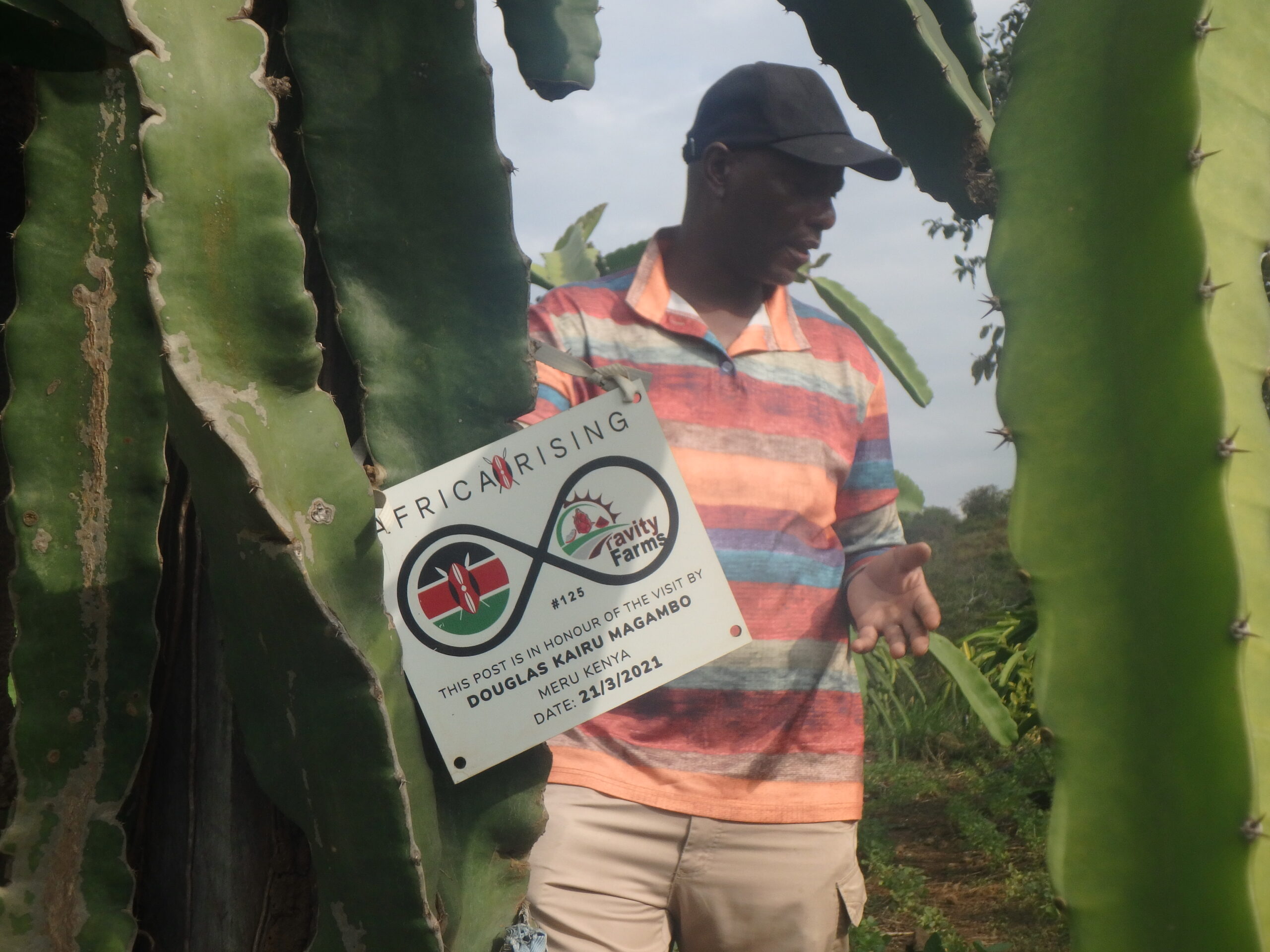
Born and raised in Central Imenti, Meru County, Mugambi gave dragon fruit a try in his home village Kathuure at Kiagu Ward. This was in 2012, when he reserved a piece of land for dragon fruit farm experimentation.
“It took me eight years from nursery to seedbed to the first mature dragon fruit harvest in my farm. This is because I used seeds to sprout seedlings which took a bit of time for transplanting to the main seedbed,” Mugambi explains.
Challenges
Mugambi admits of several mistakes he made in the initial stages, delaying the dragon fruits to sprout in time. Too much watering was a major blunder; the other was shade. As a result, he lost everything and he had to order other fruit seeds from a friend in China at a cost.
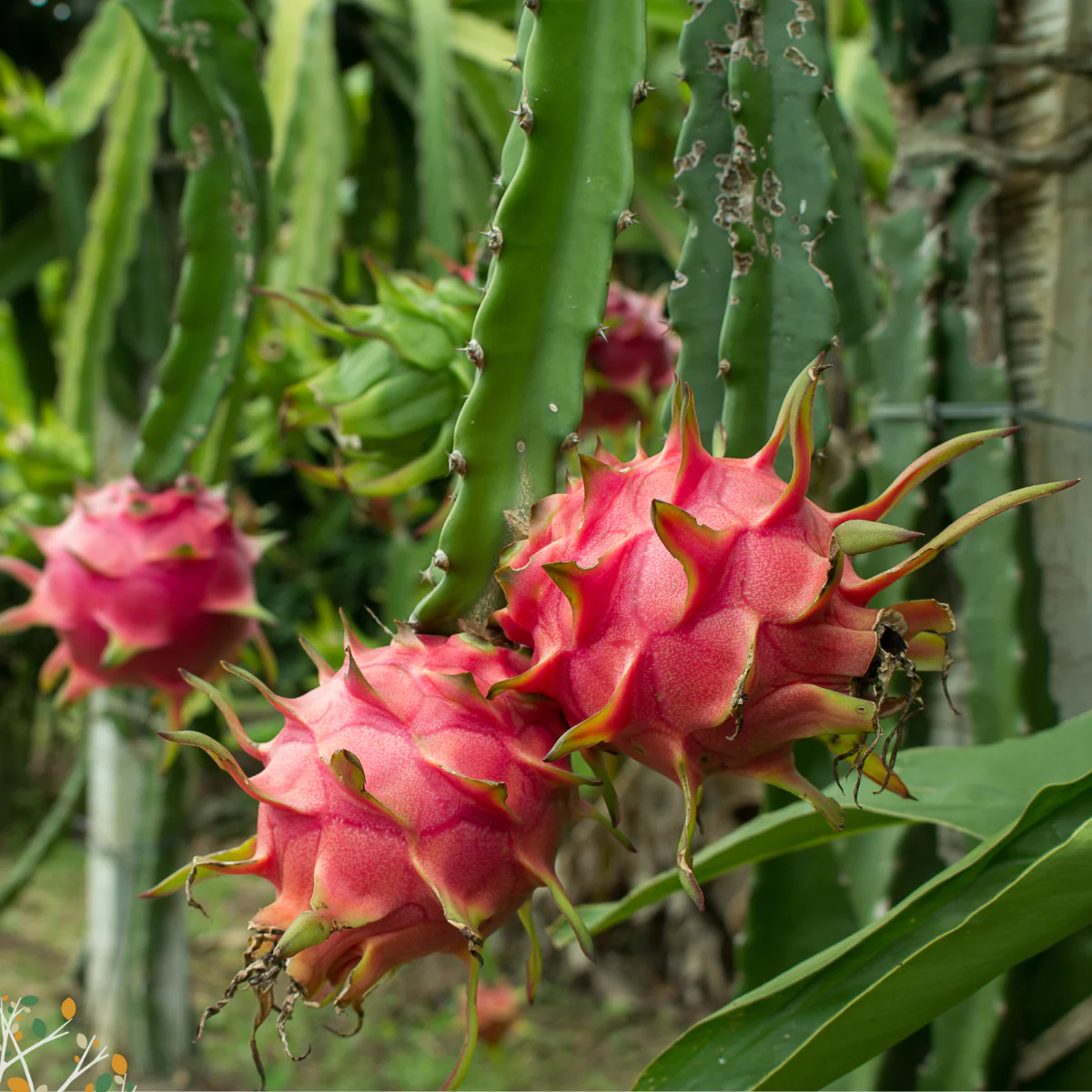
Dragon fruits belong to the family of cactus plants and require minimal water hence can withstand dry-spell. According to Mugambi, they grow faster in hot and dry weather compared to wet and humid conditions. It is generally fruit meant for semi-arid and arid regions.
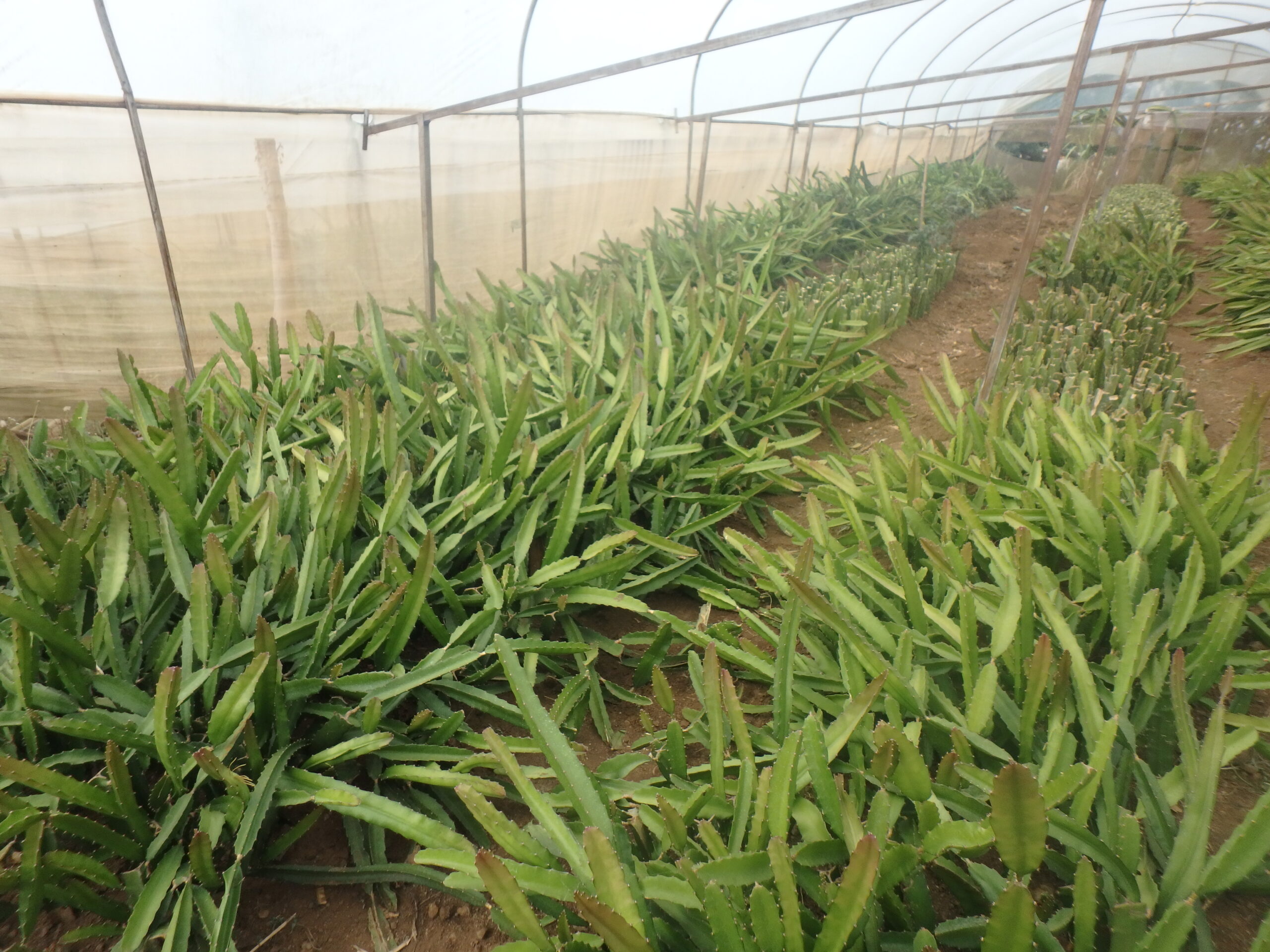
“Today, farmers venturing into dragon fruit farming are very much lucky. There are suckers which are now being used as stem-cuttings taking a shorter time compared to seeds,” Mugambi says.
Adding “Depending on the climate of a place, you can grow a new dragon fruit plant by taking a 6-to-12-inch stem cutting or sucker from a mature, healthy parent plant and rooting it in well-draining soil,” he explains.
His farming efforts to grow the fruits did not miss criticisms and discouragement from the community. Many openly told him the fruits belong and are meant for westerners not Africa with polluted air, soil, water and harsh weather.
“Remember to select a healthy stem thus a firm, bright green stem or sucker that is at least one year old and free of disease. Cut a 6- to 12-inch section using clean, sharp shears.” King of Dragon Fruit advises.
“It can take between 3-5 years for it to mature for the first harvest. Again, the period varies with climatic condition and the type of soil,” he emphasizes.
Mugambi says all sorts of criticisms never discouraged him since his focus was on the bigger picture; dragon fruit farming. He wanted to prove a point that despite geographical and climatic condition differences; dragon fruit can thrive in Africa.
Achievements
What Mugambi began as an experiment in Meru County, today has become a major fruit with demand across Kenya. People come from East Africa and several parts of Africa to; bench-mark, purchase the fruits and special orders from organizations.
As the pioneer of dragon fruit growers in East Africa, Mugambi is nicknamed as “King of Dragon Fruit” farming in Africa.
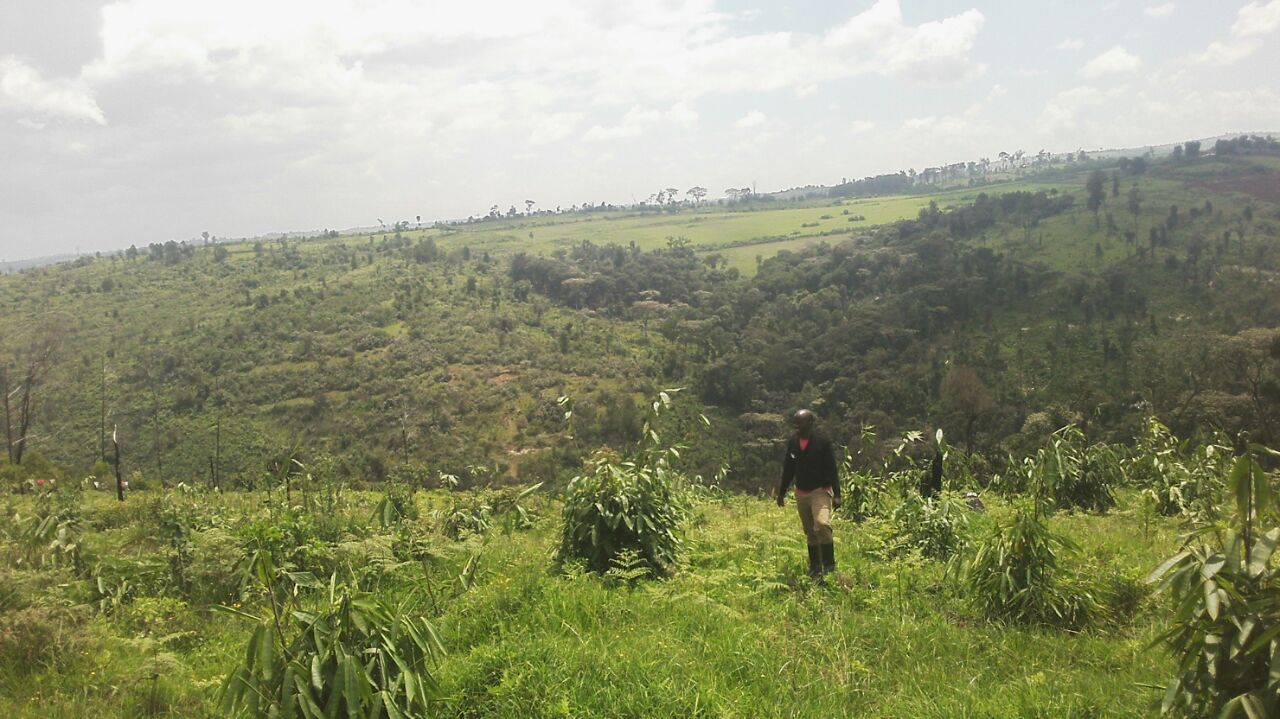
Owing to high demand of the dragon fruits across the continent, Mugambi bought more land totaling to 20 acres. Here, there are 40 thousand dragon fruit trees growing together with other unique and rare fruit trees.
“Currently, I have done 40 thousand dragon fruit trees but my target is 100 thousand. I still have a deficit of 60 thousand trees. In two years’ time from now, this place will be a forest of various fruit trees,” he anticipates.
Mugambi has employed 10 workers in the farm to manage everything in his absence and also help him in achieving his vision. He has also influenced and trained villagers who grow the fruits in their respective farms.
“Villagers are always heard saying; “people who work in that dragon fruit farm are all rich, living in modern permanent houses,” he disclosed. Adding that is true, because the fruits fetch good money and there is a ready market.”
Nutritional Benefits
Dragon fruit provides a rich package of antioxidants, fiber, and essential minerals that support overall health. The fruit continues to gain popularity among health-conscious consumers.
While all dragon fruits are highly nutritious, red, white, and yellow varieties differ significantly in their flavor, sugar content, and specific health perks.
The primary differences across the three major types focus on their nutritional strengths and unique internal qualities. Here are the detailed benefits by type:
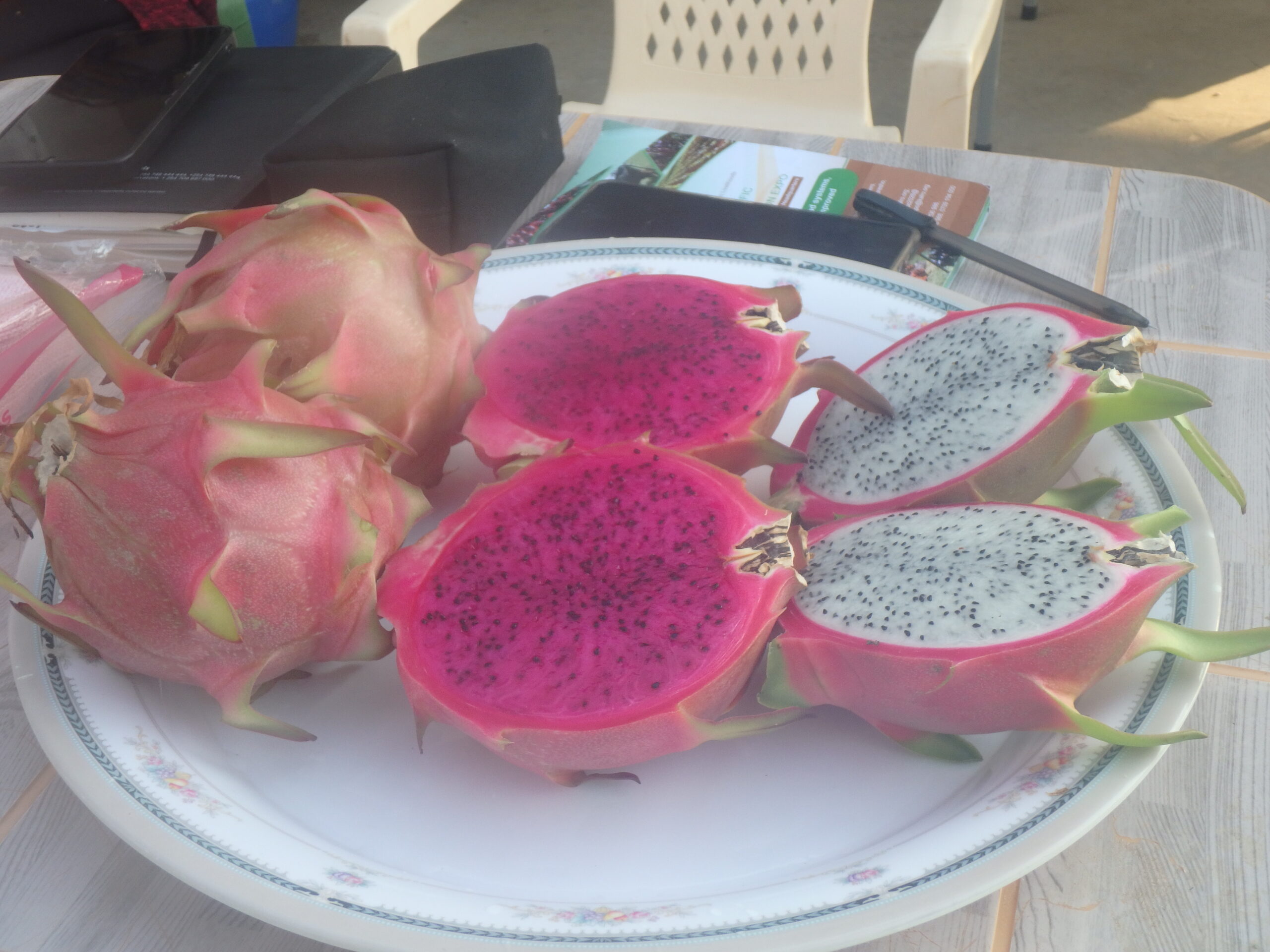
White Dragon Fruit (The “Weight-Loss Warrior”): Because it has the lowest sugar and calorie profile, this variety is highly recommended by experts for managing blood sugar levels or supporting a weight-loss diet. It provides a crisp, deeply hydrating, and cooling effect.
Red Dragon Fruit (The “Antioxidant Powerhouse”): The deep magenta color comes from betalains and anthocyanins, which are powerful antioxidants that protect blood vessels, boost heart health, and fight off premature aging. It also typically contains a bit more iron than the white variety.
Yellow Dragon Fruit (The “Digestive Aid”): Yellow dragon fruit acts as a potent natural laxative. Its larger seeds and dense prebiotic fiber make it exceptionally fast and effective at relieving constipation and sweeping clean the digestive tract.
Mugambi says his dragon fruit farm is always busy with visitors. Several individuals, groups, organizations, students all over the country, East Africa and parts of West Africa visit the farm to; buy fruits, sucker-cuttings, learn and study, do research, be trained, or just adventure.
Benchmarking Visits
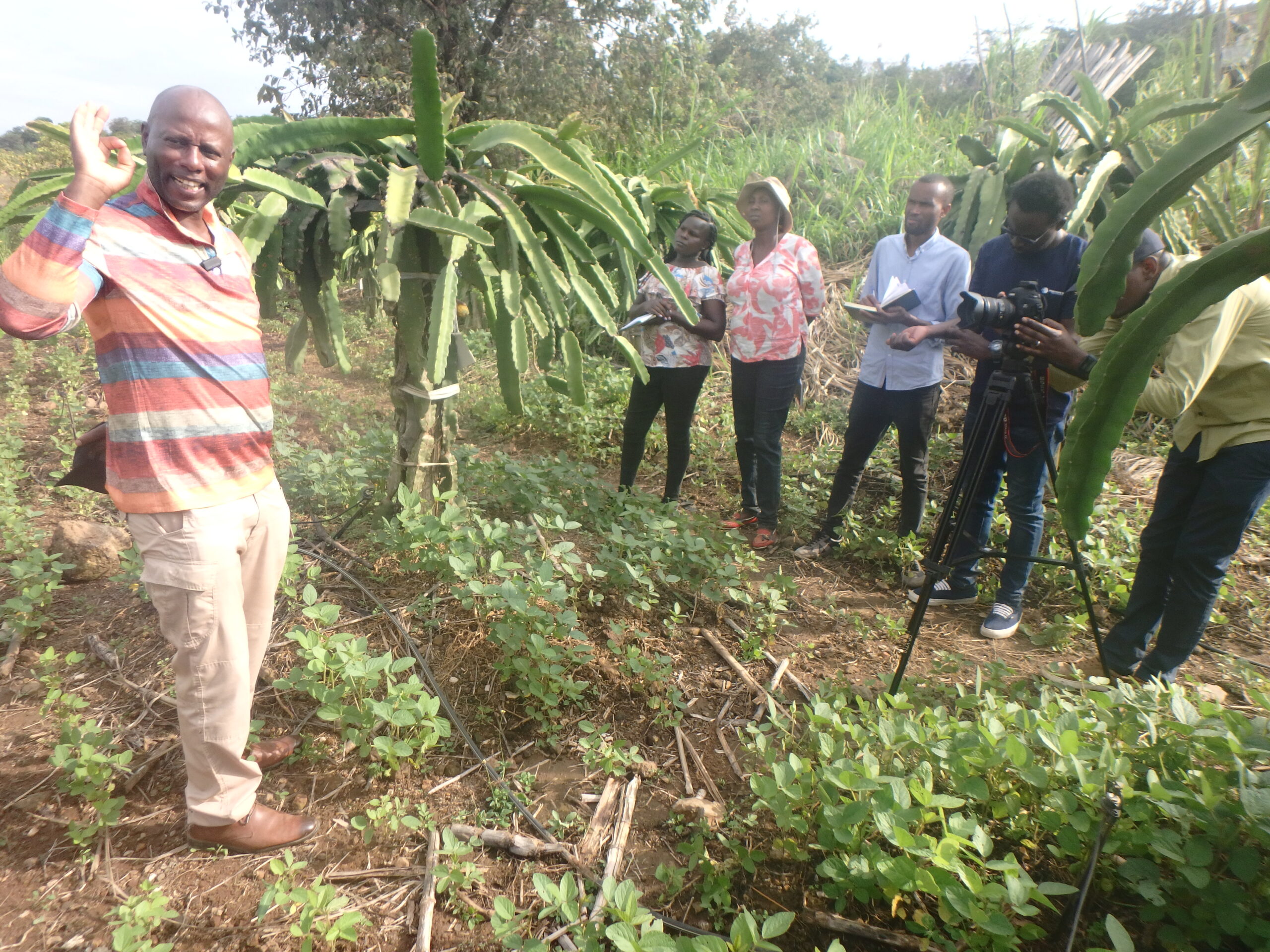
As Talk Africa journalists visited the farm, a team from KALRO and KEFRI were also visiting the farm plantation to explore more on dragon fruits farming in Meru County. It is a rare fruit which is becoming more popular yet even major Agricultural research organizations in Kenya have never thought of growing it.
 “People come from as far as from; Mali, Senegal, Malawi, Ghana, Zimbabwe, and I also travel far and wide training other interested farmers. So, my schedule is always extremely tight and overbooked which includes conferences, seminars, workshops, talk-shows, village consultations,” Mugambi discloses.
One thing Mugambi tells every guest he receives in his farm is that; “patience and determination pay back.” Again, nobody has ever become a millionaire in a day or a year, or even five years but gradually through effort.
Therefore, his caution to young farmers hoping to succeed in agriculture is that “success does not come overnight” and they should always work hard.
He advises young people to try dragon fruit farming or any other agriculture instead of staying idle after school. But one point they should keep in mind is that farming is not a short-term enterprise. It involves many uncertainties such as climate change, drought, floods, diseases among losses.
For example, he got lots of criticism from villagers including professional farmers among other ups and downs but he never lost hope. His dream of dragon fruit becoming a mainstream crop in Kenya and bigger East Africa kept him going even when the journey proved difficult.
“I believed in my potential of introducing a new crop in my motherland and across East Africa hence driving forces behind my journey to becoming one of the pioneers of dragon fruit farming in East Africa,”
Today, more than a decade later, the experiment that started in a simple crate has grown into a large-scale venture. Mugambi concludes that those who remain committed in anything they do will eventually reap the rewards.