|
Getting your Trinity Audio player ready...
|
By Lenah Bosibori
Trans Nzoia & Busia, Kenya: When hotels began asking for up to 60 chicken a day, Janet Bakasa and other poultry farmers in Trans Nzoia County realized that keeping hundreds of birds was not enough. They needed a reliable way to raise enough chickens, keep them healthy, and deliver them to buyers on time.
“We thought even if you have 200 chicken, you have enough to go to the market,” says Bakasa, chairperson of the Ushindi Poultry and Marketing Cooperative. “We didn’t know that production was also an issue.”
A single farmer could sell all 200 birds within days, then struggle to meet the next order. High cost of feeds, diseases, and buyers offering low prices added to the pressure. Farmers who had long raised chickens individually were beginning to see the limits of working alone.
In 2020, Bakasa and other farmers formed Ushindi by bringing three community groups together. Their goal was to make poultry farming more organized and help members respond to market demand as a group.
In neighboring Busia County, farmers followed a similar path. Bumala Banana Producers began as a small self-help group before registering as the Ibanda Agribusiness Cooperative Society in December 2022, following advice from a cooperative officer.

Together, the two cooperatives reflect a shift in poultry farming in western Kenya. Instead of leaving each farmer to manage production, poultry health and marketing alone, they are pooling resources, sharing knowledge and building links with buyers. The approach is helping farmers move from keeping chickens mainly at household level towards a more organized commercial business.
Keeping Chicks Alive and Stronger Production
One of the first challenges the cooperatives faced was the high number of chicks that died during their early weeks. Young chicks need warmth, appropriate feed, good hygiene, and close attention. Without proper brooding facilities, cold weather and disease can cause heavy losses before farmers recoup their investment.
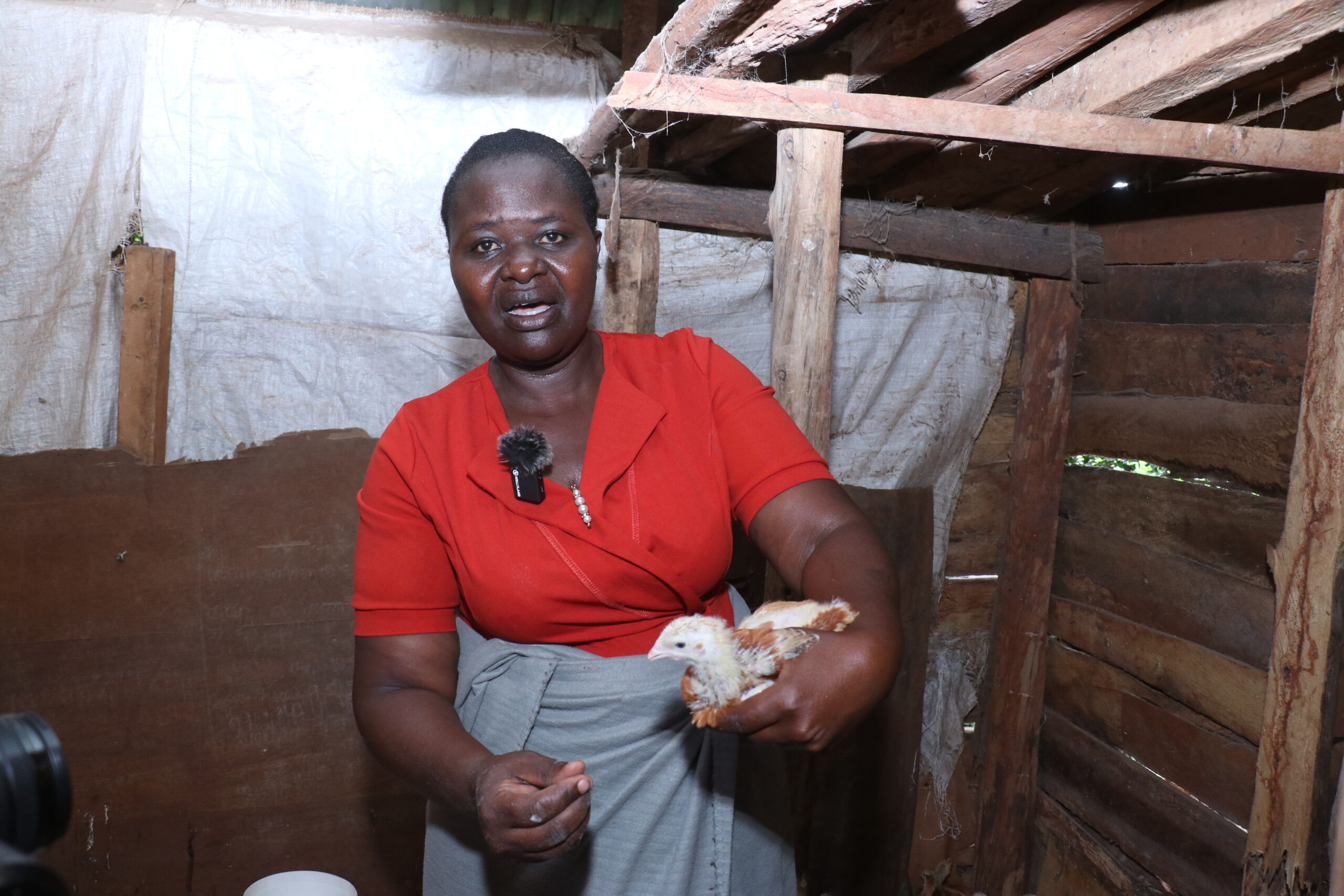
With support from Heifer International, both cooperatives introduced the mother brooder system. Selected members specialized in raising young chicks during their most vulnerable weeks before selling them to other cooperative members to grow.
Ushindi has expanded its network to 10 mother brooders, while Ibanda has nine. The system gives farmers an opportunity to specialize, while those buying the chicks can begin with older birds that are better able to withstand the challenges of early rearing.
Alice Akinyi, vice secretary of Ibanda Agribusiness Cooperative Society, said Heifer International supported the cooperative in several ways, including training members in chick rearing and providing chicks to help them grow their poultry business. The mother brooder system has also created an income opportunity for members who raise chicks before selling them to other farmers.
“Heifer International trained us on how to raise chicks from day old until they are three months old. Once the chicks reach that age, we sell them to other farmers so we can continue raising new batches,” she said.
The organization also provided 2,500 improved kienyeji chicks to the cooperative’s five mother brooders, with each receiving 500 chicks. “We started with the mother brooder system, and the chicks helped us grow our poultry business and strengthen the cooperative. The support helped us a lot,” Akinyi said.
A mother brooder is a poultry rearing system where selected farmers raise young chicks in warm, well-managed facilities during their first few weeks, providing proper feeding, warmth, and care before selling them to other farmers when they are stronger
The cooperatives have also recognized that successful poultry farming requires more than keeping chicks warm. Farmers need reliable advice on feeding, vaccination, disease prevention, and farm hygiene.
Ibanda employs Patricia Achieng as a business extension service provider. She helps coordinate chick orders, advises farmers on poultry management and works to connect them with markets for mature birds.
“I ensure the chickens are vaccinated, train farmers on how to care for their chicks, and coordinate chick orders for cooperative members,” said Achieng.
Reaching farmers scattered across rural communities can be difficult, so the cooperative uses a motorbike to support field visits. Achieng says the transport has made it easier to visit farms and provide advice when needed.
Winning farmers’ trust can take time, especially when older farmers are accustomed to managing their flocks in their own way. Regular visits and practical guidance help demonstrate the value of improved poultry practices.

Beyond production, the cooperatives are learning that working together also requires good leadership and clear rules. At Ushindi, disagreements among board members once slowed operations and affected the cooperative’s work.
With support from governance advisers and county cooperative officers, members reviewed their responsibilities and bylaws and worked to improve decision-making. Bakasa, building a cooperative that can survive beyond its founders has become an important lesson. “We came out with a solution that we want this cooperative to live beyond us,” she says.
Connecting Farmers to Markets and Finance
As the cooperatives improve production, they are also working to give farmers better access to buyers. For small-scale poultry farmers, raising healthy birds is only half the battle. They must also find customers willing to pay fair prices and ensure they can supply enough chickens when orders come in.
In Busia, Ibanda supplies birds to Wema Hotel and Breeze Hotel. According to Achieng, mature improved indigenous chickens can sell for between KSh800 and KSh1,000 each. These direct links give farmers an alternative to relying entirely on middlemen.
Ushindi has also explored ways to sell chicken directly to local customers, including through roadside roasting outlets. Such initiatives allow the cooperative to look beyond selling live birds and explore opportunities to earn more from its poultry.
However, securing a buyer does not automatically mean farmers can fulfil an order. The cooperative must coordinate production across its members and ensure there are enough chicks, feed, money and workers to raise the required number of birds.
Ushindi experienced these difficulties when it tried to fulfil a large order involving farmers across several cooperatives. Limited chick supplies, high feed costs, inadequate finances, and staff shortages made it difficult to guarantee consistent deliveries.
Access to finance remains another challenge. Farmers need money to buy chicks and feed, construct poultry shelters and expand their flocks, but many struggle to obtain loans from conventional financial institutions.
Ushindi is developing a savings and credit cooperative, commonly known as a SACCO, to help poultry farmers access financing. Ibanda, meanwhile, has not yet reached the stage of offering loans to its members.
Despite these hurdles, both groups have grown. Ushindi has 1,258 registered members, about 350 of whom are active poultry producers. Ibanda has expanded from a small self-help group to a cooperative with around 270 members, according to the interview.
The cooperatives still face high feed costs, limited access to finance and difficulties meeting some large orders. But their experience shows how collective action can help farmers tackle problems that are harder to solve individually.
By sharing expertise, specializing in chick rearing, strengthening farm management and seeking markets together, poultry farmers in western Kenya are changing how they do business. The backyard chicken remains central to rural livelihoods, but through cooperatives, it is increasingly becoming part of a more organized and market-driven enterprise.