|
Getting your Trinity Audio player ready...
|
By Victoria Musimbi
Nairobi, Kenya: Concerns regarding government expenditure, rising tax burdens, and growing national debt in Kenya have reignited demands for enhanced fiscal transparency and public accountability.
To help citizens evaluate financial policies and understand their impact on daily life and public service delivery, media professionals and oversight bodies are being urged to foster stronger collaboration.
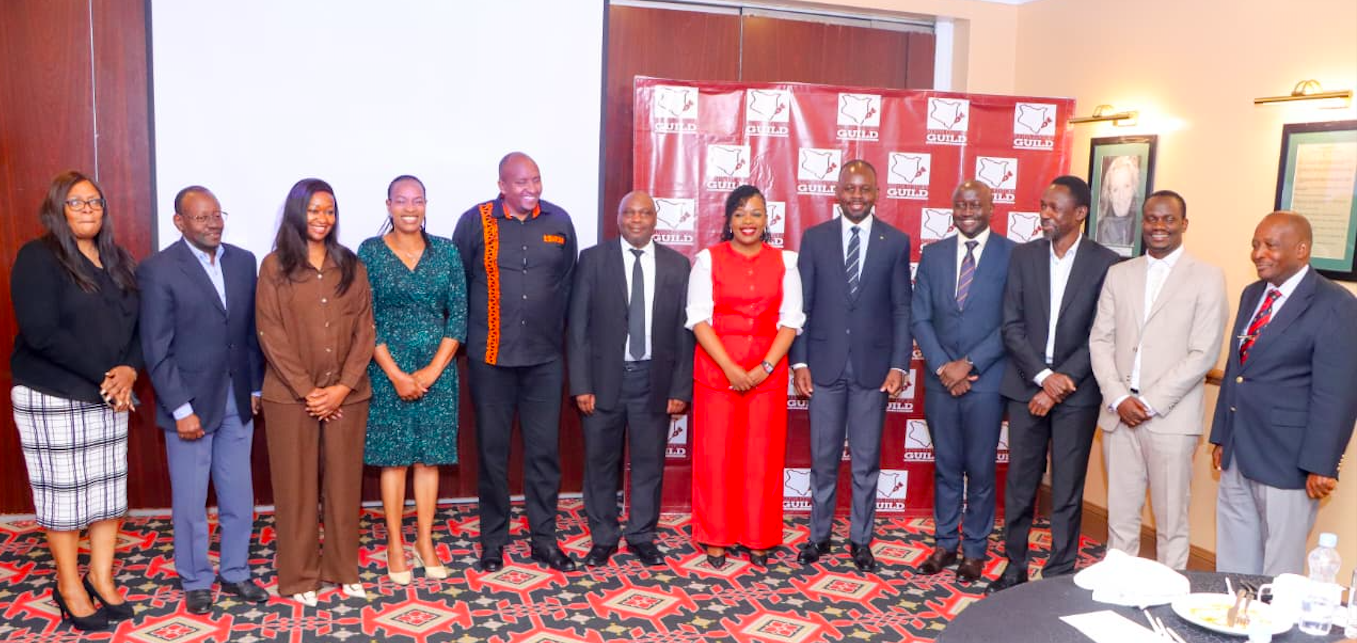
These priorities were highlighted at an institutional dialogue convened by the Kenya Editors Guild (KEG) alongside the International Republican Institute (IRI). Bringing together senior journalists, editors, and key oversight officials, the forum focused on overcoming obstacles in coverage of complex and sensitive financial management topics.
KEG President Zubeidah Kananu said access to information remains a major challenge for journalists covering public debt and finance.
Kananu said journalists must ask how much the country is borrowing, the terms of loans, who approves borrowing and how the money is eventually spent.
“Too often, borrowing remains opaque. Even more troubling is the lack of clarity around how borrowed money is eventually spent,” she said.
 She also raised concerns about increased taxation and the high cost of living, saying Kenyans deserve to know whether public expenditure delivers value for money and responds to their needs.
Kananu called on Parliament, the Office of the Auditor-General, the Controller of Budget, investigative and anti-corruption agencies and the Judiciary to strengthen accountability mechanisms and engage more openly with journalists.
She urged journalists to maintain accuracy and evidence-based reporting when covering complex financial issues, saying credibility is essential to effective accountability journalism.
Reliable Information for Public Accountability
IRI Country Director Francis Rogers said public debt remains a major concern among young people, yet many lack complete, accurate and contextualised information to understand the issue.
He said this creates a democratic challenge because public concern must be matched with reliable information, informed analysis and constructive accountability.
“Public accountability is not simply about the size of the debt. It is about the quality of the decisions behind borrowing, the transparency of financing arrangements, the effectiveness of institutional oversight, and the public value ultimately being generated,” Rogers said.
He said journalists must interrogate, verify and explain complex financing issues accurately, while public institutions should provide reliable information and respond to legitimate questions.
Rogers warned that fragmented, inaccessible or highly technical information can create a vacuum easily filled by speculation, misunderstanding and misinformation.
Establishing a Factual Baseline
Kwame Owino, CEO of the Institute of Economic Affairs (IEA-Kenya), urged journalists to establish a common factual baseline when reporting on public debt by relying on credible and authoritative sources.
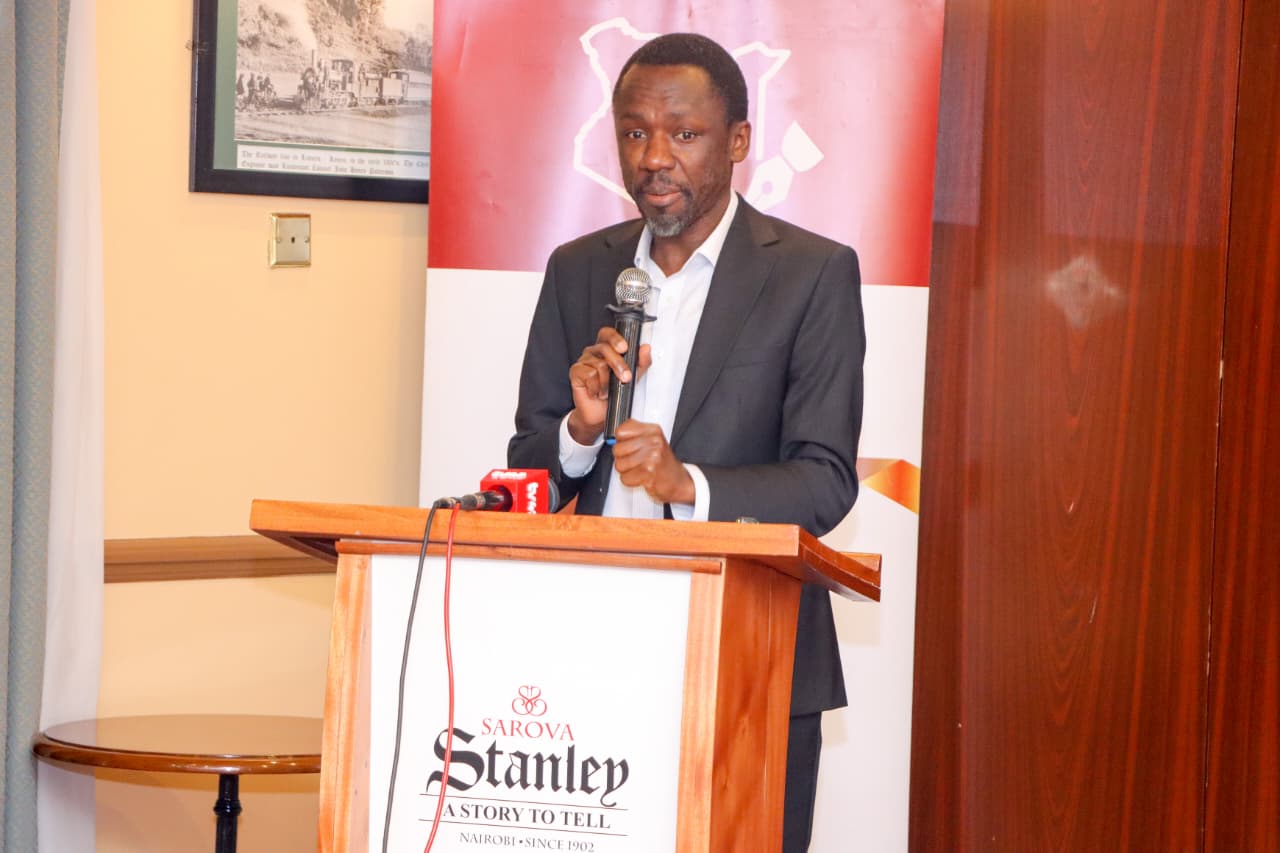
He said the National Treasury should be the primary source, followed by the Controller of Budget, Parliamentary Budget Office, Auditor-General and Central Bank of Kenya. International institutions such as the IMF and World Bank, he said, should complement rather than replace government reporting.
Owino said Kenya’s public and publicly guaranteed debt stood at about Sh13.2 trillion, with the debt-to-GDP ratio at roughly 68%–70%, depending on the period and methodology. He cautioned journalists to distinguish between nominal debt and net present value, particularly when reporting on concessional loans.
He noted that Parliament has set a public debt threshold of 55% of GDP based on net present value, yet Kenya remains above that level. Debt servicing, he said, consumes about 64%–70% of ordinary government revenue, while interest payments alone are estimated at about Sh1.1 trillion in the current financial year.
Owino urged journalists to examine the composition and risks of borrowing. About 55% is domestic debt and 45% external debt, with domestic borrowing generally carrying higher interest costs and external borrowing exposing the country to currency risks.
He also challenged the narrative that counties are the main cause of Kenya’s debt crisis, saying county allocations account for less than 1.5% points of GDP compared with the much larger national deficit.
Strengthening County Oversight
Homa Bay Senator Moses Otieno Kajwang’, Chair of the Senate Public Accounts Committee, called for stronger oversight of county governments, urging journalists to go beyond financial figures and show how public finance decisions affect citizens.
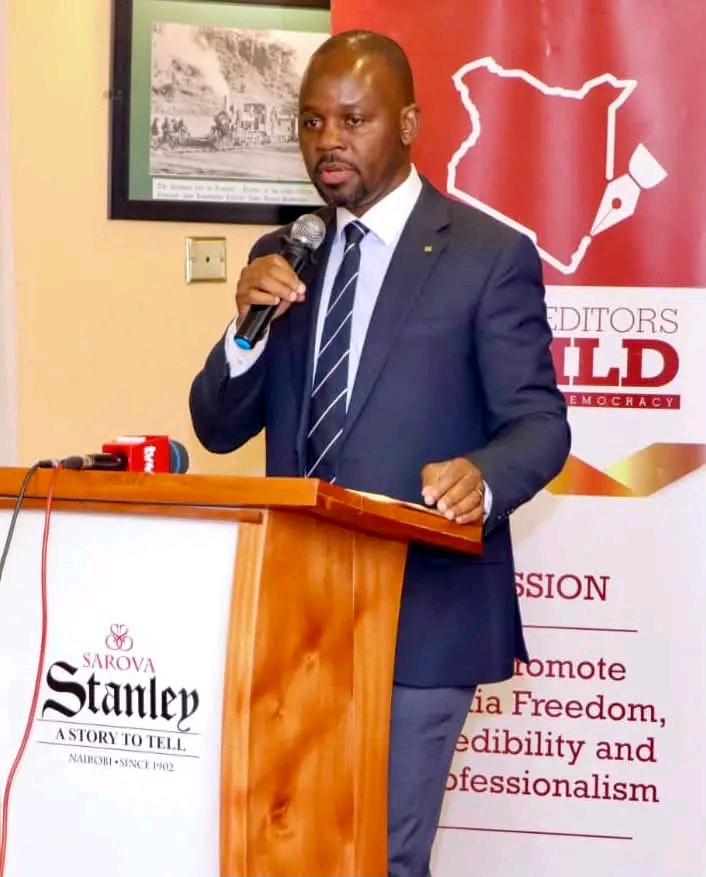
Kajwang’ identified weak county assemblies as a major gap in devolved oversight, noting that they are responsible for scrutinising county budgets, appointments, development plans and expenditure. He urged journalists to engage assemblies and give their oversight work greater prominence.
He called for clearer follow-up to audit findings, saying Parliament should act on professional audits conducted by the Auditor-General’s Office rather than reopen them.
Kajwang’ cited a county that spent Sh3 billion on goods and services, with Sh100 million unsupported, meaning the accuracy and completeness of the expenditure could not be ascertained.
“If Sh100 million could not be supported, tell us what should be done. Tell us who should be held to account,” he said.
He called for stronger coordination between Parliament, the Ethics and Anti-Corruption Commission, the Directorate of Criminal Investigations and the Office of the Director of Public Prosecutions to improve investigations and prosecutions arising from parliamentary recommendations.
Kajwang’ also highlighted counties’ pending bills, which he said had reached about Sh181 billion by June 2024, alongside rising wage bills, unremitted employee deductions and pension contributions, and weaknesses in own-source revenue collection.
He also urged counties to strengthen financial management, record-keeping and revenue systems while directing resources towards service delivery and infrastructure.
On national finances, Kajwang’ challenged claims that Kenya had averted a debt-default trap, questioning whether the country had resolved its debt challenges or merely postponed Eurobond repayments.
He said Kenyans are willing to pay taxes when they can see services being delivered and public funds protected from leakages.
“No Kenyan has a problem paying taxes, as long as there are no leakages,” he said.
Kajwang’ warned that Parliament risks becoming an extension of the Executive if it fails to exercise effective oversight, stressing that parliamentary independence is essential for accountability.
He said the Senate Public Accounts Committee had reduced its audit backlog and developed a Fiduciary Risks Report consolidating financial risks across county governments, assemblies, corporations and funds. He urged Parliament to establish a dedicated online portal where accountability reports can easily be accessed by journalists.
Kajwang’ challenged journalists to put a human face to financial misappropriation rather than simply reporting amounts lost.
“Let’s not just say that Sh100 million was stolen. Let’s see what that Sh100 million could have done in terms of hospitals, education, facilities and delivering services to the people from whom we are collecting money,” he said.
He added that borrowing is not inherently harmful when it finances productive projects and infrastructure capable of generating long-term economic benefits, but warned against borrowing to finance waste and government extravagance.