|
Getting your Trinity Audio player ready...
|
By Lenah Bosibori
Nairobi, Kenya: In Kenya and most African countries, getting an ambulance quickly can mean the difference between life and death. Yet for many families, especially those in low-income communities, emergency medical services remain either too expensive or out of reach.
The COVID-19 pandemic was one of the defining moments in Kenya and across Africa that exposed deep weaknesses in emergency care systems. Studies show that only about one-third of African countries have formal Emergency Medical Services (EMS).
According to the state of Emergency Medical Services (EMS) Systems in Africa, EMS systems exist in one-third of African countries. Injury and obstetric complaints are the leading African prehospital conditions. Only a minority (<9.0%) of Africans have coverage by an EMS system. Most systems were predominantly BLS, government-operated, and fee-for-service. The State of Emergency Medical Services (EMS) Systems in Africa – PubMed
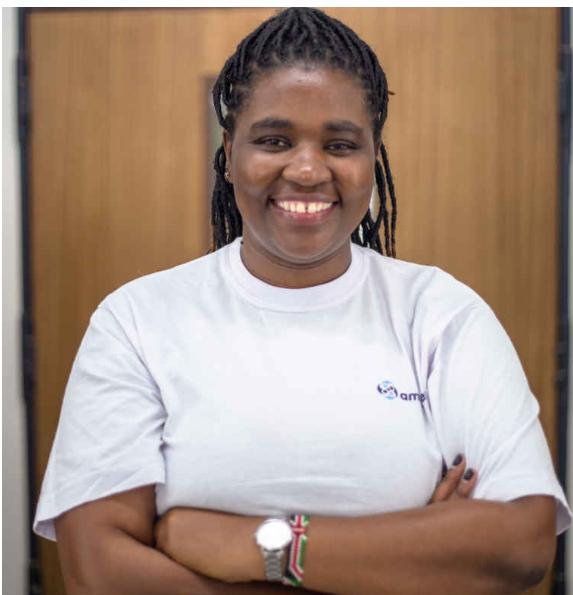
For Judith Awuor Oketch, this gap is exactly what she set out to fix, initially focused on responding to gender-based violence cases. Oketch soon realized the challenge was much broader and deeply systemic.
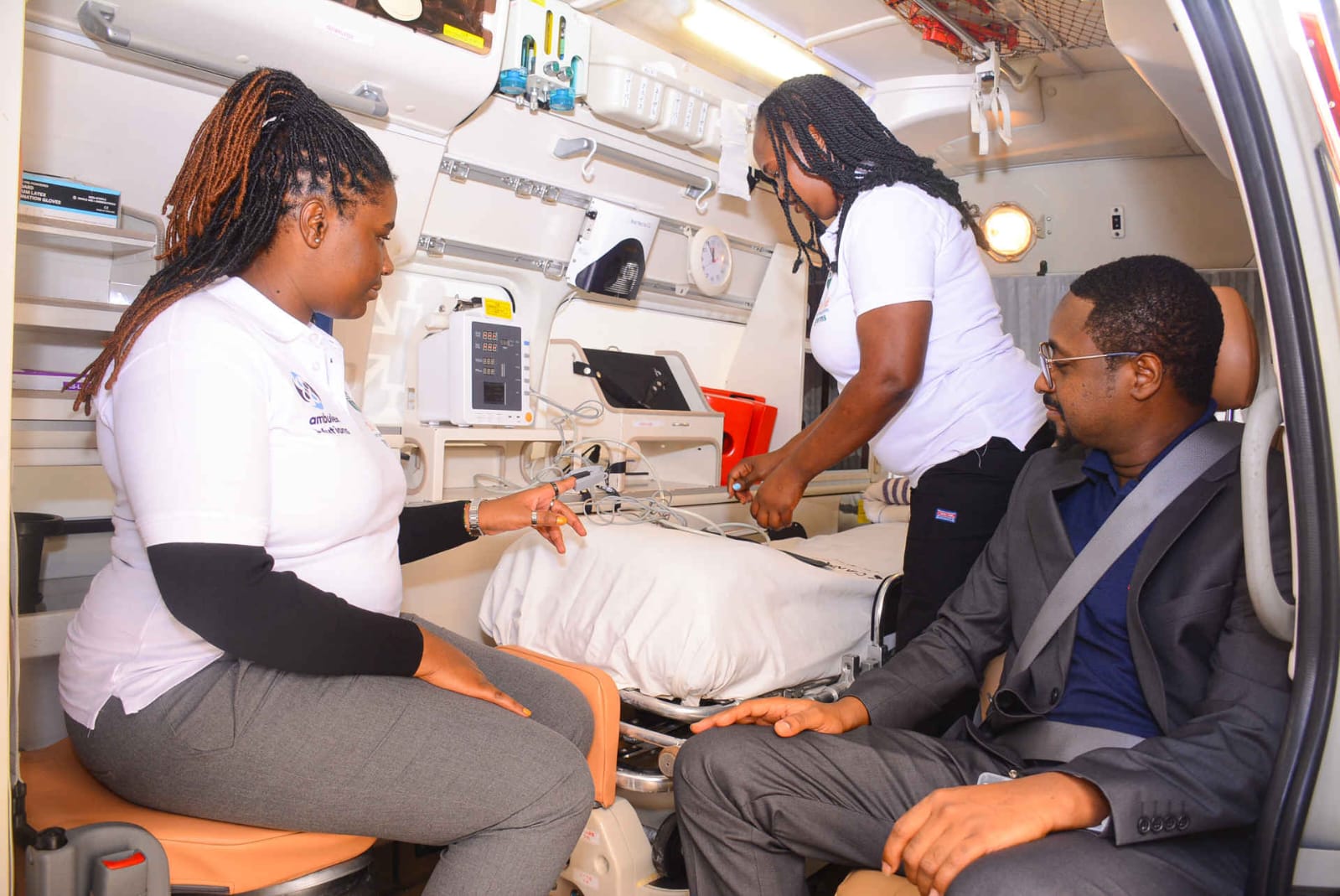
She is the founder and CEO of Ambulex Solutions Limited, a health tech company working to make emergency response faster, simpler, and affordable across Kenya. At its core, the idea is straightforward: anyone, anywhere, should be able to call an ambulance and get help in time.
Experts estimate that less than 10% of Africa’s population has access to organized ambulance systems, meaning many patients still rely on family members, taxis, or boda bodas during life-threatening situations. People across Africa have to travel far to get to a hospital. We worked out how far – World | ReliefWeb.
Ambulex began in 2019 and became fully operational in 2021. Today, it has reached hundreds of thousands of users through subscriptions and has responded to more than 10,000 emergency cases. The company operates in about 27 counties in Kenya with plans to expand to other countries, also with a network of roughly 300 ambulances.
Instead of owning ambulances, Ambulex runs a digital dispatch system similar to Uber and other online taxi services, mostly based in towns. When a request comes in, the nearest available ambulance is sent to the patient, and in some cases, where the place is not easily accessible, they send a motorcycle commonly known as a bodaboda. “We connect people to the closest ambulance available even if it is a motorcycle,” Oketch explains.
To keep services affordable, families pay as little as Kshs 200 ($1.55) per year. This small subscription gives access to emergency transport that would otherwise cost between 6,500 ($50-$1,160) and 150,000 shillings, depending on distance and urgency.
Ambulex also integrates emergency medical technicians and motorbike responders, especially in hard-to-reach areas. In rural regions, boda boda riders help bridge the last mile where roads are poor or inaccessible.
The service runs 24 hours a day, seven days a week. It is also accessible through phone calls and USSD codes, ensuring that even those without smartphones or internet can request help.
Once a call is made, Ambulex determines the most appropriate facility. In most cases, patients are first taken to the nearest health facility for stabilization before being transferred to their preferred hospital if necessary.
But in the world of emergencies, timing is everything, and not all calls come in time. “Most of the time, Kenyans call when the person is already dead,” Oketch says.
In such cases, the ambulance team does not transport bodies. Families are instead advised to involve law enforcement authorities to handle the matter appropriately.
One of the most painful cases she recalls involved a three-year-old child in Urumu. The child was severely burned during a domestic violence incident and left unattended for days. By the time help arrived, the injuries had become infected. Ambulex rushed the child to the hospital and coordinated further care.
Beyond registered users, Ambulex also runs a community support model where donors sponsor emergency care for vulnerable families who cannot afford subscriptions.
The idea behind Ambulex was born during the COVID-19 pandemic, a period when access to healthcare became even more difficult. Initially focused on gender-based violence response, Oketch soon realized the challenge was much bigger.
Kenya, she notes, still lacks a strong centralized emergency system similar to 911. At the same time, high costs and system gaps continue to lock many people out of urgent care.
Hospitals can also request Ambulex services directly. Registered members are prioritized, while non-members are served at standard market rates.
Despite its growing impact, the journey has not been without challenges. Funding remains a major hurdle, especially for women-led enterprises in the health and tech space.
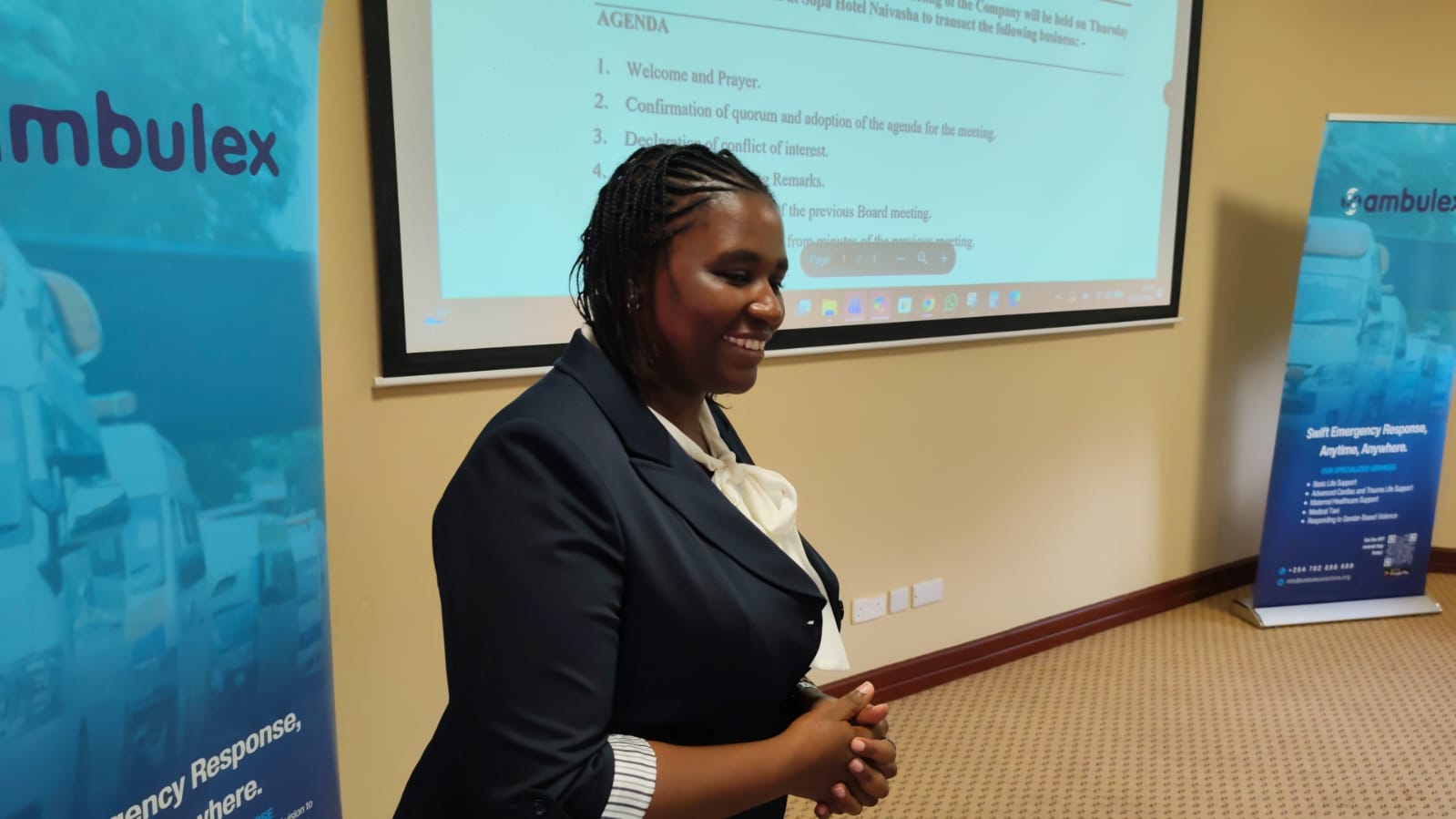
At one point, the company was just one week away from signing a $100,000 (Kshs 10 million) grant contract, before the funding was abruptly cancelled. “It was devastating, but we keep on pushing for another day,” Oketch reflects.
But the setback reinforced a key principle for the company. Ambulex is not an NGO, but a social enterprise built for sustainability. Instead of relying on grants, it survives through multiple revenue streams, including subscriptions, service calls, training programs, corporate partnerships, and insurance collaborations.
“We have never depended on grants,” she says. “We have built different income streams to sustain the work.” Partnerships with organizations such as Reckitt Benckiser Kenya and insurance providers have also helped strengthen its operations and reach.
Still, awareness remains a challenge. Many Kenyans are still unsure when or how to call an ambulance. Others only think of emergency services too late.
However, change is slowly taking shape. More road users are now giving way to ambulances, and public awareness around emergency response is gradually improving.
Ambulex currently operates in 27 counties, with plans to expand to all 47 counties across Kenya, a step toward building a truly national emergency response network.
For Oketch, the mission remains clear and deeply personal: no Kenyan should lose their life simply because help arrived too late or was too expensive.
Despite the difficult balancing act in the male-dominated space that sometimes brings her job at risk by men asking for sexual favors so as to collaborate with her, Oketch says her greatest joy lies in the growing number of “Ambulex babies” born since 2021. She says that every maternal health emergency handled through Ambulex has resulted in a successful outcome.
Today, about 60% of requests received through the platform come from expectant women, while gender-based violence cases and road traffic accidents closely follow.