
|
Getting your Trinity Audio player ready...
|
By Omondi Rodgers
Busia – Cross-border trade stakeholders from Kenya and Uganda are calling for a no-stop border system at the Busia One Stop Border Post, aiming to speed up the movement of goods, end clearance delays and boost trade between the two countries.
The proposal would move inspections to the point of origin, digitise clearance procedures and remove duplicated processes between Kenyan and Ugandan agencies, so that goods cross the border with minimal delay.
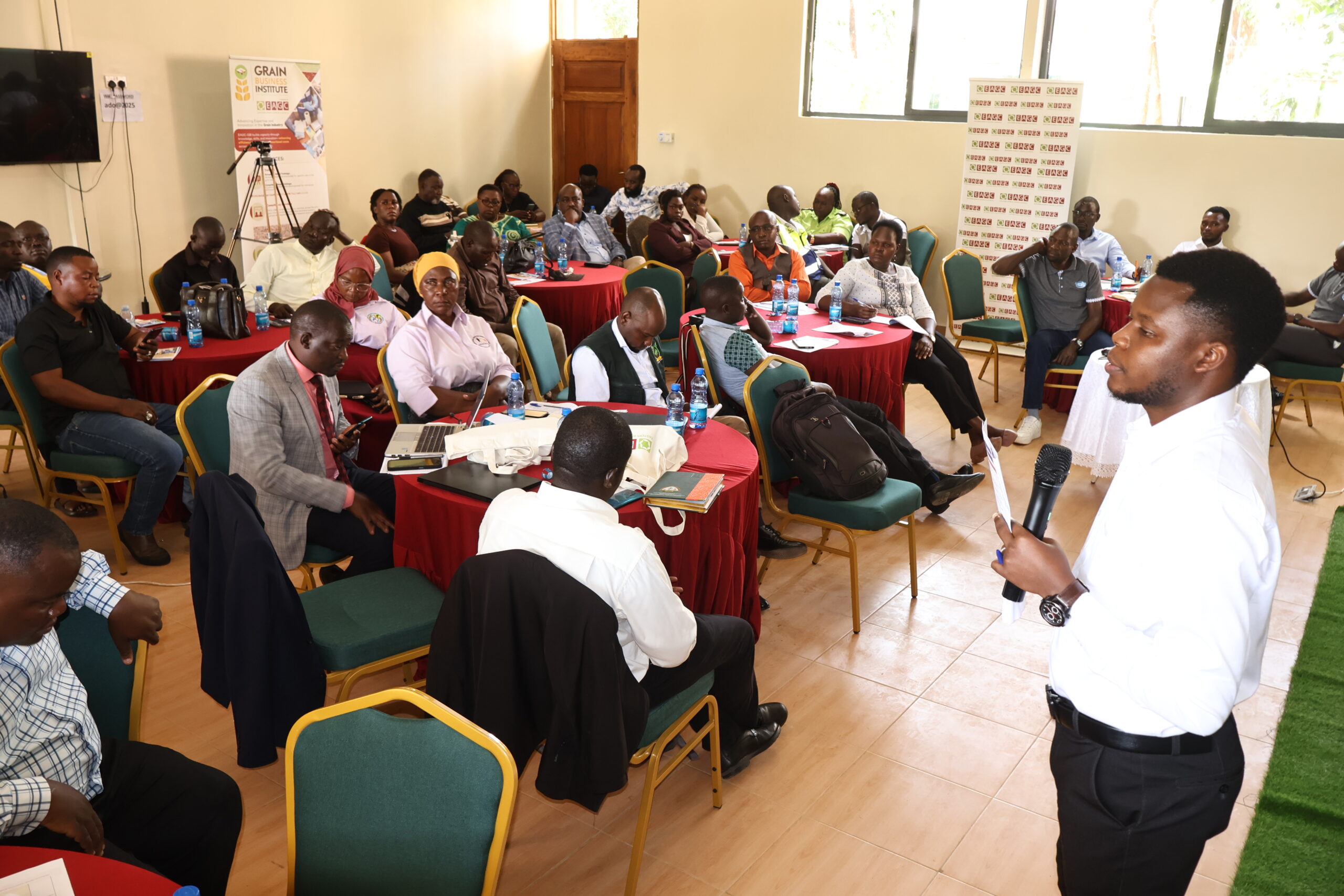
The call came at a Kenya-Uganda cross-border policy dialogue in Busia, Kenya, which brought together public and private sector representatives and traders from both countries.
Paul Ochola of the Eastern Africa Grain Council said integrating inspection and clearance systems would improve efficiency and quality assurance.
“The no-stop border post needs to become more efficient. We need to integrate the private and public sector systems so that inspections of grains are done at the source to improve quality assurance. This will also help in getting a certificate of conformity, which remains the key ingredient for trade across borders,” he said.
Ndung’u Njeru of Danish Industry named non-tariff barriers and bureaucracy as the major obstacles to trade in the region.
“One challenge we have had as East African countries is non-tariff barriers, including the bureaucracy associated with moving goods from one country to another. We need to move from a one-stop border post to a no-stop border. Goods are more competitive when they move seamlessly across the border without bureaucracy,” he said.
Simon Konzolo of TradeMark Africa said ending duplicated inspections and clearance procedures would significantly cut delays and improve the competitiveness of businesses operating across the border.
“We need to work with agencies to ensure that duplication of processes at the border is no longer experienced. Much of the clearance and inspection should be done well before the truck arrives, so there is no delay when it gets to the border. There is also a need to improve road infrastructure, including widening on both sides,” he said.
Doreen Rukuuba, an inspector with Uganda’s Ministry of Agriculture who is in charge of the Busia border point, said joint inspections at the source with the Kenya Plant Health Inspectorate Service (KEPHIS) would reduce duplication and speed up movement.
“When we do clearance at the source, we eliminate a lot of bottlenecks. We will do inspection together with KEPHIS, our counterpart from Kenya, and this will help eliminate duplication of work and ease trade movement. Inspectors at the source and at the border will also be able to share information easily, making it easier for trucks to pass when they get to the border,” she said.
Rukuuba added that the system would lower costs for traders and truck drivers who currently wait for inspections. She noted that about 80 per cent of consignments are inspected at the border, creating a heavy workload for inspectors.
Kenyan trader Rose Mwaura welcomed the proposal, saying a unified digital documentation platform would cut the time traders spend dealing with multiple agencies and help them avoid losses from delays and currency fluctuations.
“We need a one-stop document platform so that we don’t have to go through so many agencies for documentation at the border. As traders, we are badly affected when goods are delayed. Currency fluctuations affect the landing price and our business. Faster movement of goods will be a big accelerator of trade,” she said.
Mariam Babu, chairperson of the Busia Women Cross-Border Cooperatives in Uganda, said small-scale traders still struggle with limited information on documentation requirements and clearance procedures, particularly for goods subject to standards inspections.
“As small-scale traders, we face information gaps on the documents and procedures required to clear produce across the border. Customs has simplified its clearance procedures for small-scale businesspeople, but the standards sector has not. We have to present many documents for standards inspection and tests, which is costly and delays the crossing of consignments,” she said.
Babu said a no-stop system would reduce the time and cost of moving goods, especially for women, who make up about 80 per cent of small-scale cross-border traders and are most affected by non-tariff barriers.
“I desire a borderless East Africa where I will do my clearance before I get to the border and, once there, I will just cross,” she said.