
|
Getting your Trinity Audio player ready...
|
By Winnie Kamau
Nairobi, Kenya: Kenya is racing against time to prepare for what could be a punishing October-November-December (OND) rainy season, with the government warning that up to 1.5 million people could be affected by floods, landslides and other climate-related hazards.
An estimated 500,000 people could be displaced by flooding, while another 450,000 could face exposure to mudslides, rockfalls and landslides, particularly in areas with steep terrain and unstable soils.
But officials say the biggest danger may not be the rain itself. It is what happens when warnings fail to become action.
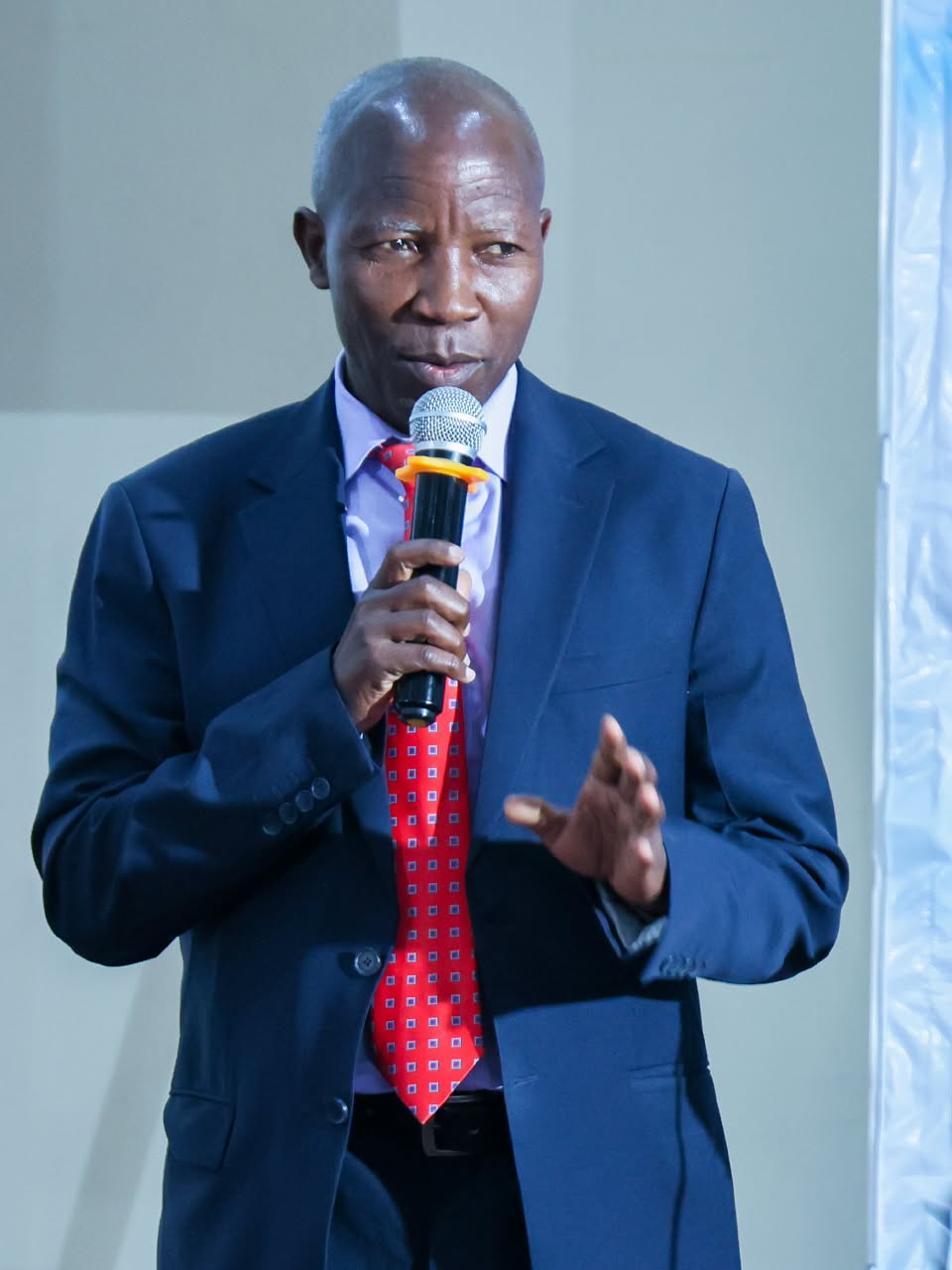
“The focus on this point does not save a life. It cannot protect lives lost or prevent loss,” said Eng. Festus Ng’eno, Permanent Secretary in the State Department for Environment and Climate Change.
“Its value is realized when it reaches the people and institutions that need it in time and when it informs action.”
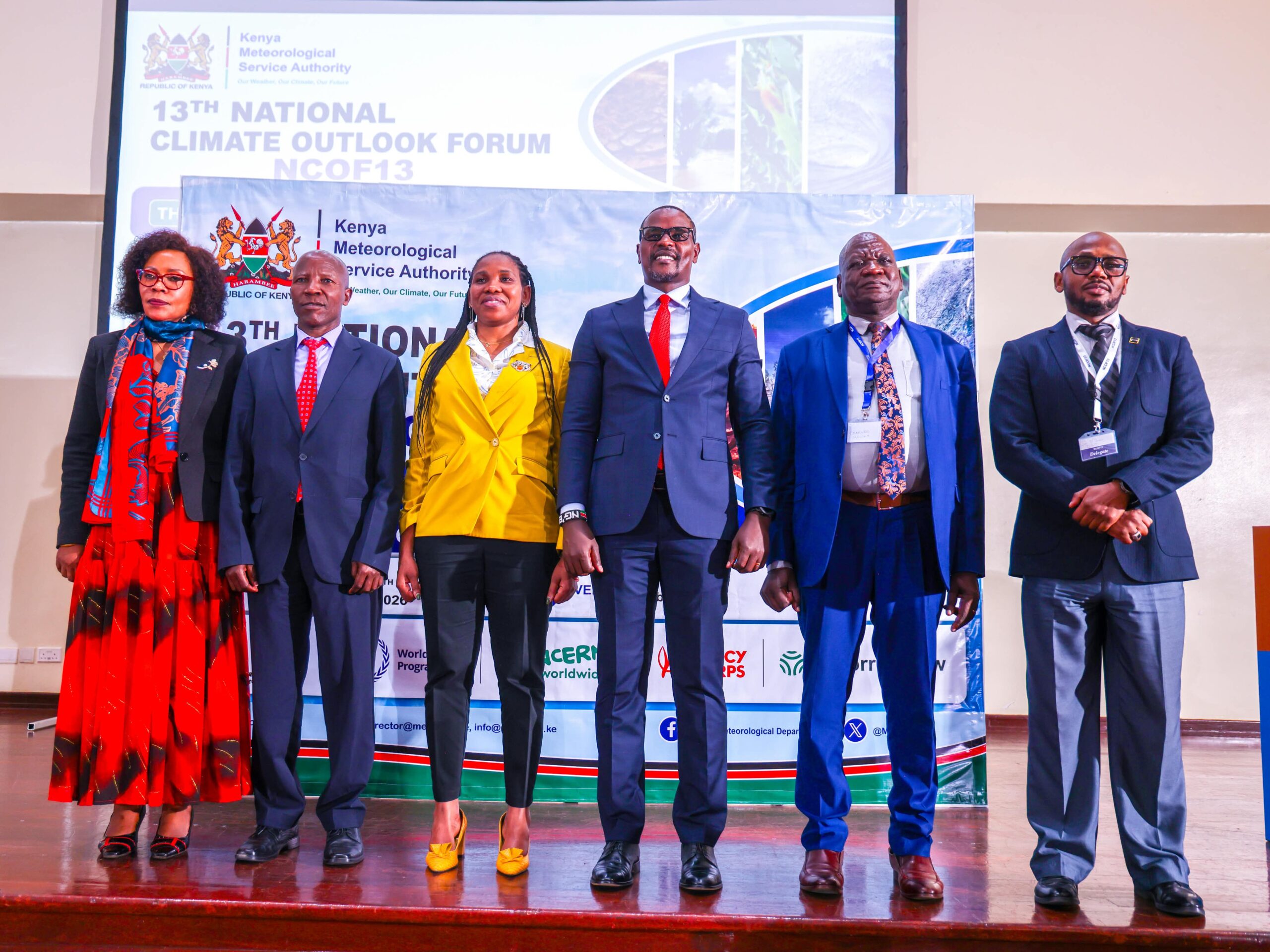
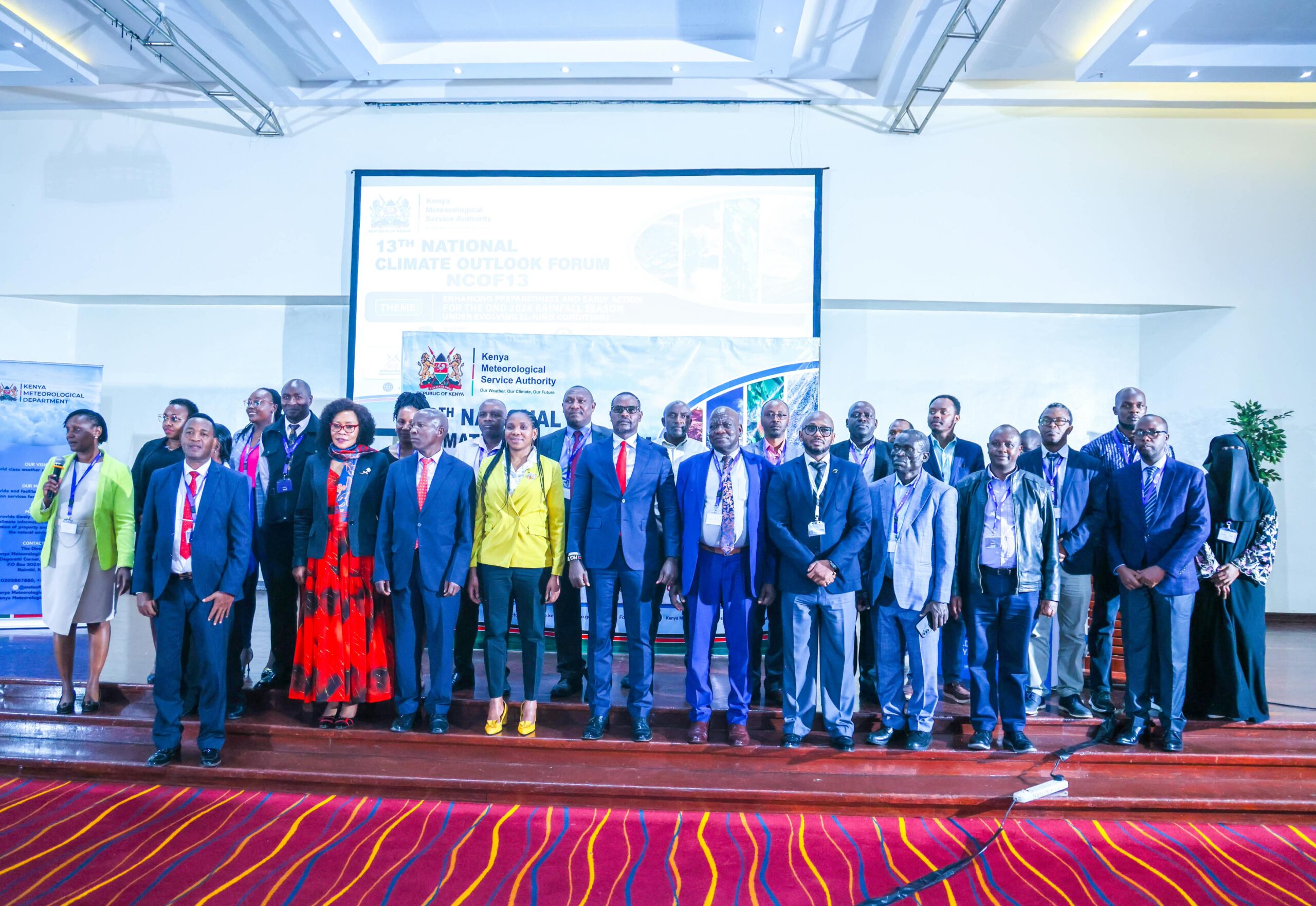
His message was relayed at the closing of the 13th National Climate Outlook Forum and was blunt: Kenya has the forecasts. Now it must use them.
“We must move from climate information to early action,” Eng. Ng’eno said.
That shift is becoming increasingly urgent as meteorologists warn that the 2026 El Niño event is intensifying, raising the prospect of enhanced rainfall during the OND season.
El Niño Gathers Strength
The Kenya Meteorological Service Authority says above-average rainfall is expected across large parts of the country during October, November and December.
 The outlook points to above-average rainfall in counties including Baringo, Bomet, Bungoma, Busia, Embu, Garissa, Homa Bay, Isiolo, Kajiado, Kakamega, Kericho, Kiambu, Kilifi, Kisumu, Kitui, Kwale, Laikipia, Lamu, Machakos, Makueni, Mandera, Meru, Migori, Mombasa, Nairobi, Nakuru, Nandi, Narok, Nyandarua, Nyeri, Siaya, Taita/Taveta, Tana River, Tharaka-Nithi, Trans Nzoia, Uasin Gishu, Vihiga and Wajir.
Parts of West Pokot, Samburu and Marsabit are also expected to receive above-average rainfall.
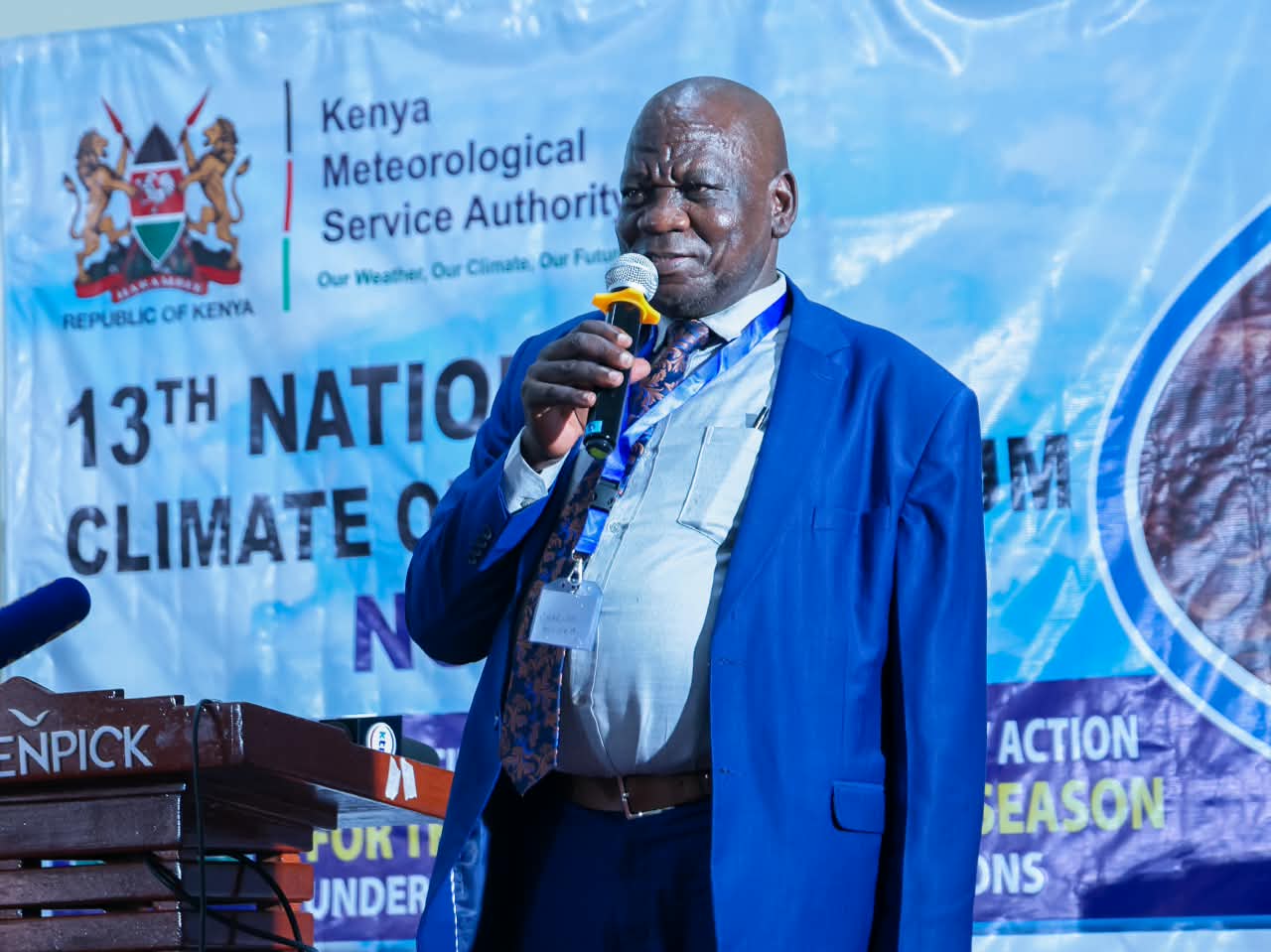
Dr. Charles Mugah, Acting Director General of the Kenya Meteorological Service Authority, said the climate signals behind the forecast are being closely monitored.
“The ongoing strong El Niño event also enhances rainfall when it occurs concurrently with a positive IOD,” the meteorological outlook says.
The Niño 3.4 index reached +1.51°C during May-July 2026, rose to +2.03°C in July, and hit +2.7°C in the week centered on August 12.
“These observations indicate that El Niño is strengthening further and evolving toward a very strong event,” the outlook states.
The Indian Ocean Dipole is currently neutral, but meteorologists expect it could cross into positive territory from September.
The OND rains are expected to be fairly well distributed over much of the country, although Turkana and Samburu could experience poorer rainfall distribution. The season is also expected to bring prolonged wet spells and isolated storms.
And because weather conditions can change quickly, KMSA is warning Kenyans not to treat the seasonal forecast as the final word.
“It is therefore imperative to stay up to date with subsequent forecasts and updates,” the authority says.
The 1.5 million at Risk
For the National Disaster Operations Centre (NDOC), the forecast is already being translated into preparedness plans.
Col. (Rtd) David K. Samoei, Director of NDOC, said the government has adopted what he described as a proactive and anticipatory approach.
“The Government is taking the forecast seriously and has adopted a proactive, coordinated and anticipatory approach to preparedness,” Samoei said.
Adding “Our priority is to act early, strengthen response capacity and ensure that resources are available before the onset of the rains.”
A Multi-Agency Emergency Response Team is meeting weekly at the NDOC to track emerging risks and coordinate preparedness.
Search-and-rescue teams are being positioned in identified hotspots, with boats and other equipment earmarked for areas including Garissa, Gamba, the Coast region, Baringo, Naivasha, Kisumu, Turkana and Busia.
The government is also pre-positioning relief food and other supplies, with adequate relief food expected to be available by the end of September. In northern Kenya, where flooding could cut off roads, authorities are preparing to use air assets to deliver essential supplies.
 County Commissioners have been asked to ensure that airstrips are serviceable, while the Kenya Defence Forces have been placed on standby to assist with search-and-rescue and casualty evacuation.
Baringo and Bogoria: An ecological time bomb?
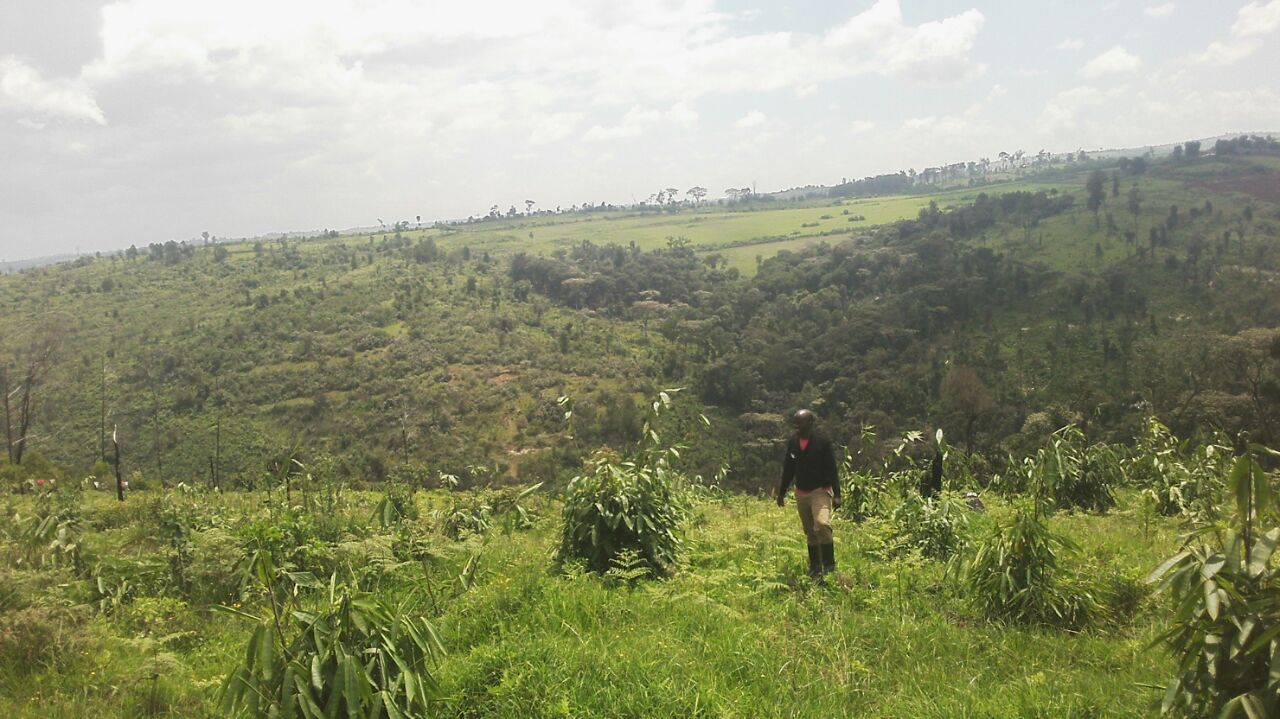
Perhaps nowhere is the warning more dramatic than in the Rift Valley. Lake Baringo and Lake Bogoria are getting closer, noted Eng. Ng’eno described the potential convergence of the two lakes as an “ecological disaster.”
“In 2020, 2021, the distance separating the two lakes was around 15 kilometres. As we speak, we are talking about less than nine kilometres separation between the two lakes,” he said.
The shrinking distance has intensified concern over what could happen if the lakes eventually meet. Beyond the immediate threat to communities and infrastructure, the convergence could have consequences for the distinct ecosystems of the two lakes.
Eng. Ng’eno said the government is aware of the threat and has stepped up preparedness. The situation is part of a wider pattern of rising water levels affecting several Kenyan lakes, putting communities, infrastructure and economic activities at risk.
When Cities Become Traps
Flooding is not only a rural problem. Kenya’s rapidly expanding urban centres are increasingly vulnerable when heavy rain overwhelms drainage systems and water has nowhere to go.
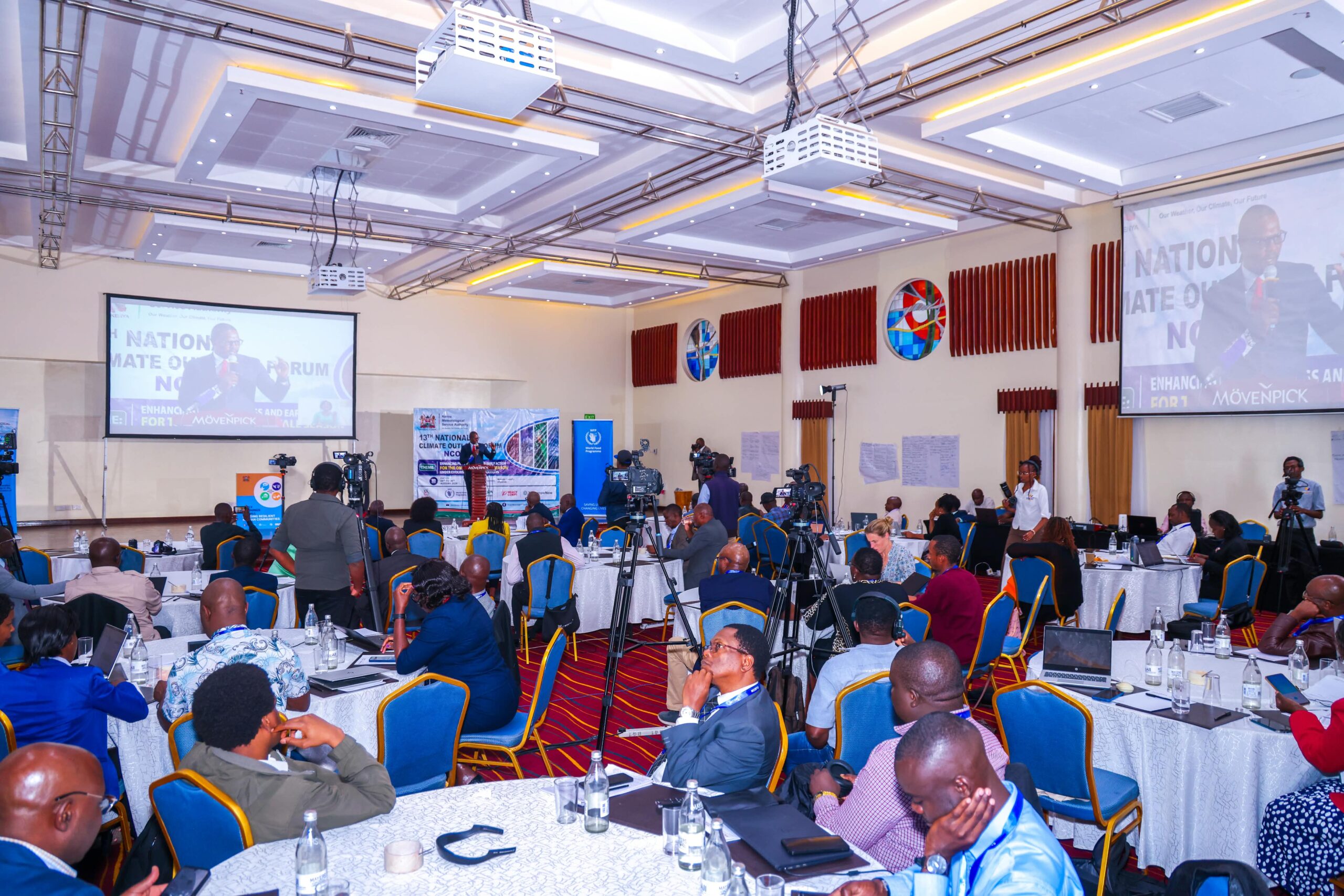
Ng’eno challenged county governments and urban planners to rethink how towns are designed.
“Let’s design our urban centres which are sponge cities kind of a thing to be able to trap these waters,” he said.
The idea is simple: instead of allowing every drop of heavy rainfall to rush through concrete channels and overwhelm drainage systems, cities should be designed to absorb, retain and manage water.
NDOC has asked counties to urgently clear drainage systems and storm-water channels and inspect vulnerable buildings and structures. The public has also been urged not to dump waste into drains, rivers and waterways.
“Proper waste management is essential in reducing the risk and impact of urban flooding,” Samoei said.
Farmers Need More Than a Forecast
For Kenya’s farmers, the coming rains are both a threat and an opportunity.
Above-average rainfall could replenish water sources, improve pasture and support agricultural production. But too much rain could also destroy crops, erode soils, damage roads and disrupt markets.
Geoffrey Wanjala of the Cereal Growers Association stressed the need for farmers to receive information they can actually use to make decisions about planting, crop management, inputs and protection against climate risks.
For pastoralists, the challenge is equally practical.
John Mutua of the International Livestock Research Institute (ILRI) focused on how forecasts and impact-based early warnings can be converted into decisions that help livestock-keeping communities prepare ahead of climate impacts.
The question is no longer whether climate information exists.
 It is whether it reaches the farmer, pastoralist, fisher, trader or household early enough to change what they do. Eng. Ng’eno said communication will be critical.
“Climate information must not only be accurate, it must also be timely, accessible, understandable, and trusted,” he said.
He also called for meteorological information to be communicated in simpler language, warning that highly technical forecasts can make it difficult for communities to understand what action they should take.
Roads, Schools and Essential Services at Risk
The government is also preparing for disruptions to transport and essential services.
Among the corridors identified as vulnerable are the Nairobi-Garissa-Wajir-Mandera Highway, Garissa-Tana River-Lamu Road, Isiolo-Wajir Road, Kericho-Kisumu Road, Nairobi-Narok Road and Garissa-Habaswein-Wajir Road.
Authorities are working with counties and national agencies to protect roads, bridges, water systems, power lines, communication networks and railway infrastructure.
Education could also be disrupted and Counties have been advised not to use schools as internally displaced persons camps, particularly during the examination period. Instead, alternative facilities should be identified before emergencies occur.
For businesses in areas such as Wajir and Mandera, authorities are recommending adequate stocks of essential commodities and fuel in anticipation of possible prolonged road disruptions.
Preparedness Before Disaster
The government will hold a National Tabletop Preparedness Exercise in Naivasha on August 28, 2026, to test the readiness of counties and response agencies.
The exercise will seek to expose operational gaps before they become real emergencies.
Col. Samoei, this is the heart of the country’s climate strategy: prepare now, rather than pay later.
“The expected rainfall during the October, November, December season presents both risks and opportunities,” he said.
Adding “Above average rainfall in some areas can contribute to improved water availability for agricultural production, pasture, and recharge of water resources. But at the same time, it can increase the risk of flooding, landslides, disease, damage to infrastructure and disruptions of livelihoods” said Col Samoei
Urging “Our responsibility is to prepare for both.”
No Institution can do it Alone
A central takeaway from the climate forum is that early warning systems cannot operate effectively in a silo.
“No single institution can manage climate risks alone,” PS Ng’eno said.
The meteorological authority can provide the science, but that information must reach the institutions responsible for agriculture, water, health, infrastructure, disaster management, energy and planning.
Counties, humanitarian organisations, development partners, civil society, communities, private companies and the media all have a role.
“We must therefore, ladies and gentlemen, continue strengthening the mechanisms that connect forecast to decisions, decision to action, and action to impact,” Eng. Ng’eno said.
Col. Samoei echoed the message, describing disaster preparedness as a shared responsibility and urging Kenyans in high-risk areas to follow official weather and disaster advisories.
“Where evacuation warnings are issued, communities are encouraged to move promptly to safer locations,” he said.
The government has also provided an NDOC toll-free emergency line, 0800 721 571, for reporting disasters and emergencies.
As Kenya heads into the OND season, the warning is clear.The country cannot stop the rain. It can, however, decide what happens when the rain comes.
In closing PS Ng’eno urged the participants “Let us therefore leave this forum with a shared determination to act early, act together and act at the best available science and knowledge.”