|
Getting your Trinity Audio player ready...
|
By Jasmine Atieno
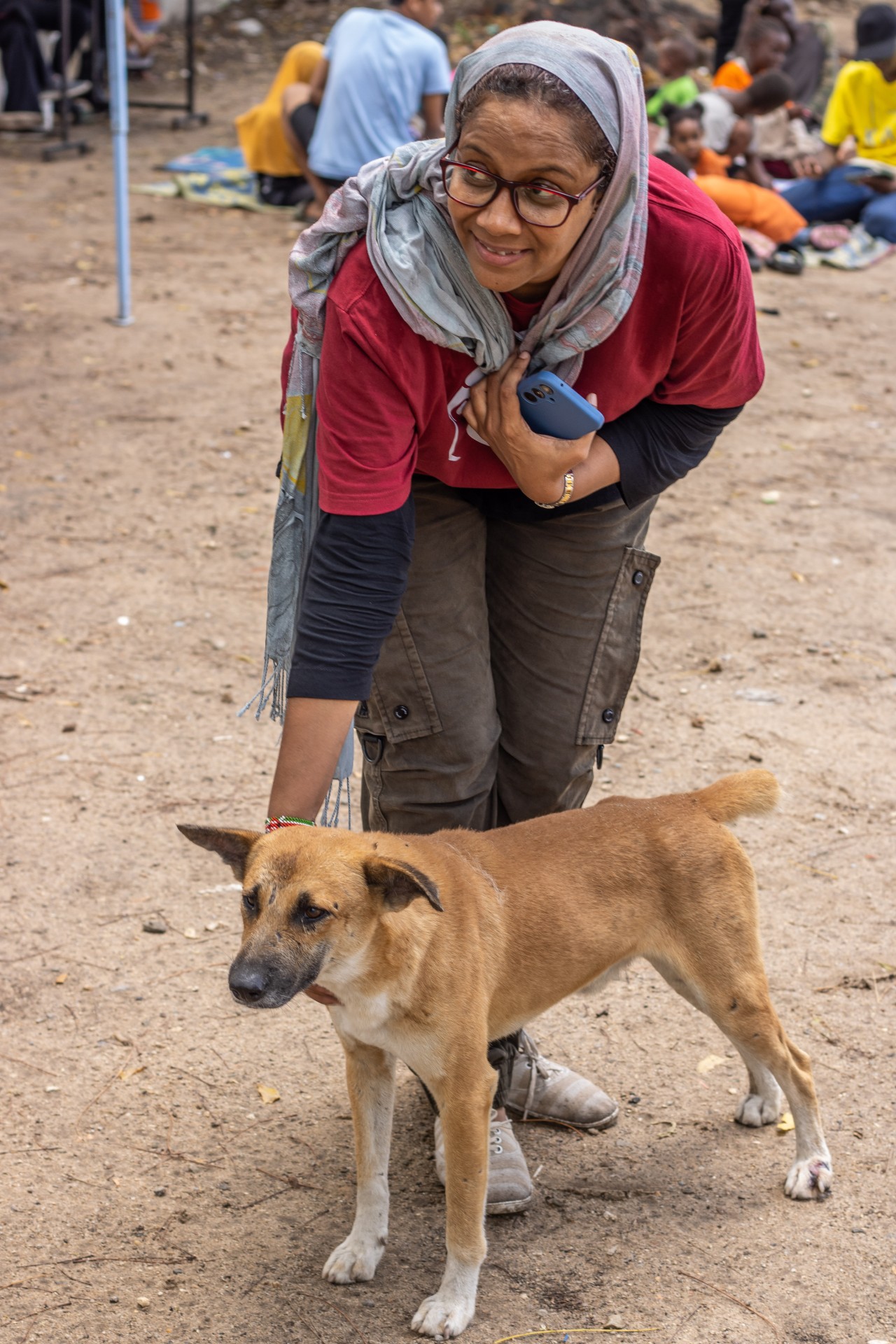
Every year, hundreds of pet owners gather at Makadara Grounds for one of Mombasa’s most anticipated animal welfare events: the Free Rabies Vaccination Camp organised by the Pwani Animal Welfare Organisation (PAW).
This year, the camp coincides with World Animal Day and is expected to draw hundreds of families seeking free rabies vaccinations for their cats and dogs. Organised in partnership with the County Government of Mombasa and the Kenya Veterinary Association under the theme “Stronger Together for a Rabies-Free Mombasa,” it is about much more than vaccines.
For PAW founder Nusrat Mohammed, every vaccination is a chance to change perceptions, save lives and strengthen the link between animal welfare and public health.
“We want people to understand that animal health is human health,” she says. “When you vaccinate a dog or a cat against rabies, you’re not only protecting that animal. You’re protecting children, families and entire communities.”
That philosophy has guided PAW since its founding in 2019, turning a small grassroots initiative into one of the Coast region’s leading animal welfare movements.
A calling that began in Old Town
Long before she became an advocate, Mohammed was a young girl wandering the streets of Mombasa’s Old Town, rescuing whatever creature she could find. She recalls sneaking stray cats home under her dress, carrying injured pigeons, collecting abandoned chicks and adopting animals others dismissed as worthless.
“I would walk with my mother and come across a stray cat or a sick pigeon and I couldn’t leave it behind,” she remembers. “Helping animals was never something I learned later. It’s something I have always done.”
A supportive head teacher encouraged her love for animals at school. She cared for baby mice that were destined to be discarded and even kept a pet snake. What began as a childhood habit eventually became a calling.
Fear, myth and misinformation
As she grew older, Mohammed noticed a troubling pattern in communities across the Coast. Many families felt deep affection for animals, but misinformation was widespread.
Cats that meowed at night were sometimes linked to witchcraft, and black cats were associated with curses and supernatural powers. Dogs faced hostility because of cultural and religious misconceptions, and were deemed najis (ritually impure).
“There was a disconnect between animals and humans,” Mohammed says. “People interpreted normal animal behaviour through fear.”
Of all the misconceptions she has encountered, beliefs about cats have proved the hardest to address. According to Mohammed, cultural myths can place animals directly in harm’s way.
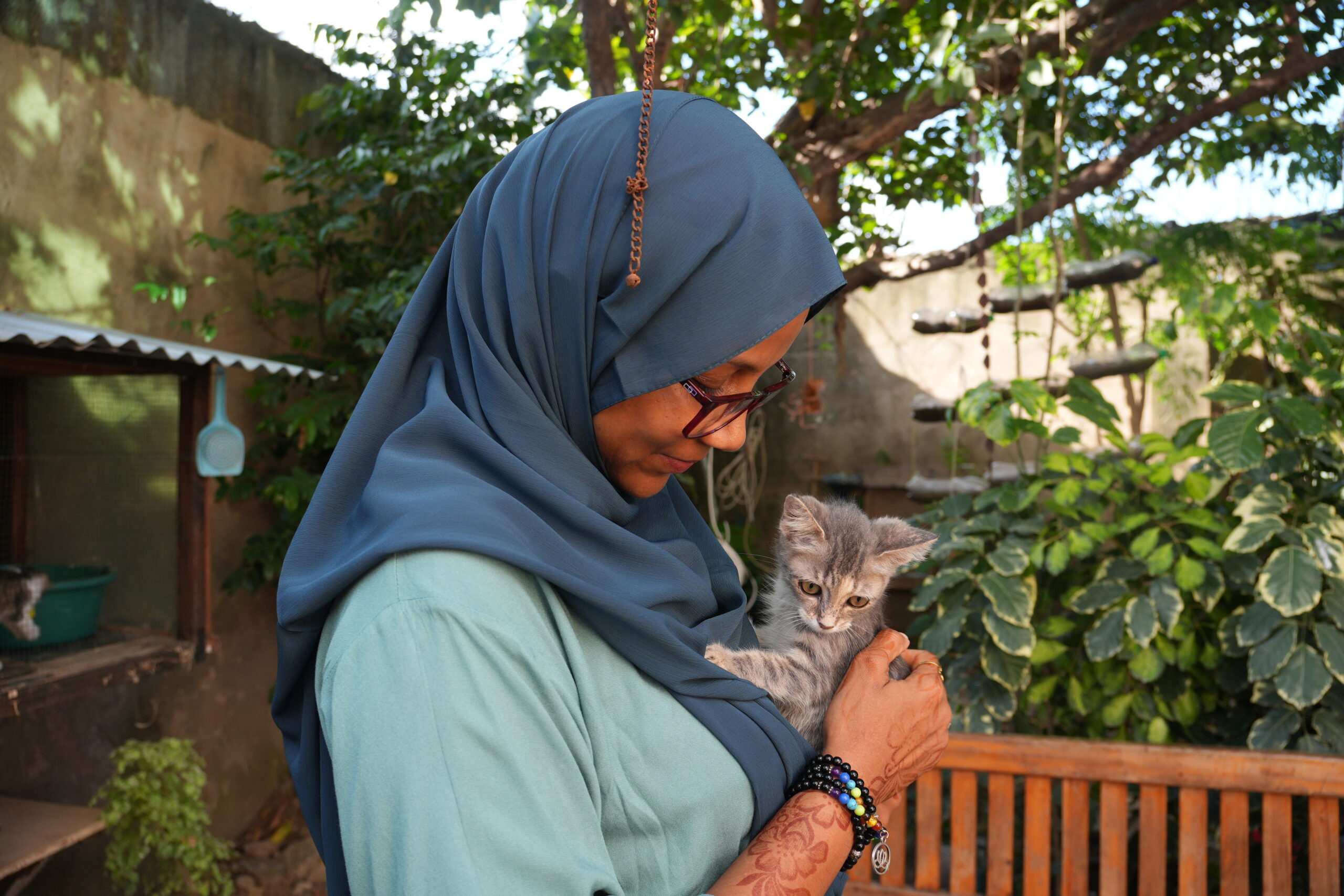
“When people believe a cat can be used for witchcraft, that animal becomes vulnerable,” she says. “It stops being seen as a living creature and starts being viewed through fear and suspicion.”
The consequences can be severe. Over the years, PAW has rescued animals subjected to horrific abuse. Mohammed recalls a kitten brought to the clinic after boiling oil was poured over its head, burning away much of its scalp. Other cats arrived sewn into nets or mutilated for ritual practices, while some bore injuries linked to beliefs about supernatural powers.
Dogs have suffered too. Some have arrived with broken limbs that required amputation, while others were deliberately injured for stealing food.
These experiences convinced Mohammed that rescue work alone would never solve the problem.
“We realised that if we wanted lasting change, we had to spend more time in communities than in shelters,” she says.
Education over shelters
Rather than build a large shelter, PAW invested heavily in education. Three times a week, staff and volunteers visit communities, engage chiefs and local leaders, address myths and teach residents about animal behaviour.
“Education is paramount,” Mohammed says. “If people understand why a cat behaves a certain way or why a dog reacts in a certain way, fear starts to disappear.”
Changing attitudes also meant engaging religious leaders. For years, dogs were particularly vulnerable to mistreatment because of misconceptions about cleanliness and religious practice. Instead of confronting communities, Mohammed chose dialogue, and PAW began working closely with sheikhs and Islamic scholars to encourage discussions about compassion and humane treatment.
“We would ask people a simple question,” she says. “Can God create a creature simply so that it can be harmed?”
The conversations shifted perspectives.
“We explained that someone may choose not to interact with an animal because of their religious beliefs, but that doesn’t mean the animal should suffer,” she says.
Today, one of her proudest achievements is seeing Muslim women, men and young people confidently bringing both cats and dogs to community vaccination events.
“We never wanted to force anyone to change their beliefs,” she says. “Our goal was simply to ensure animals are not harmed because of those beliefs.”
Growing trust, one vaccination at a time
Rabies prevention remains one of PAW’s most impactful programmes, and its annual campaign has grown significantly. In 2019, PAW vaccinated 85 cats and 23 dogs at its first free camp. By 2025, that figure had risen to 266 cats and 43 dogs. This year, the organisation has already vaccinated 308 cats and 69 dogs, a sign of rising public awareness and stronger community trust.
Yet the scene at a vaccination event can mislead visitors. Many expect crowded grounds packed with animals and owners waiting their turn. Instead, the sites often appear remarkably calm. That is by design.
“Animals don’t behave like humans,” Mohammed explains. “They smell each other before they see each other, and when too many unfamiliar animals are gathered in one place, it becomes stressful and unsafe.”
In the early years, dogs fought, cats escaped from baskets, and overwhelmed owners struggled to control frightened animals. PAW adapted by creating a rapid-flow system: owners register, receive services, and leave immediately. Dogs are often vaccinated inside vehicles to reduce stress and prevent confrontations with other animals.
“The quieter the grounds look, the more people assume we’ve done very little,” Mohammed says. “In reality, we may already have vaccinated hundreds of animals.”
Reaching those with the least
PAW’s work extends far beyond owners who can afford private veterinary care. The organisation deliberately targets underserved communities where veterinary services are often out of reach. Many people attending the camps come from low-income households and informal settlements, and some belong to street-connected families.
Mohammed says these are often the people most committed to caring for their animals.
“Some of them don’t know where their next meal is coming from,” she says. “Yet they travel long distances to vaccinate their pets because they genuinely love them.”
As a counselling psychologist, Mohammed also views animal welfare through a mental health lens. She believes pets often provide emotional support to vulnerable people facing poverty, homelessness and isolation.
“Animals offer a kind of unconditional love that is rare,” she says. “A cat will still come and purr around your feet when you have nothing. A dog remains loyal regardless of your circumstances.”
A ripple effect
Seven years after its founding, PAW’s influence extends well beyond the animals it treats directly. The organisation has built networks of community animal caregivers, worked closely with government veterinary officers, collaborated with the Kenya Veterinary Association and formed partnerships with private veterinary practitioners across the region.
Most importantly, Mohammed says, communities are beginning to educate themselves. She now regularly sees pet owners passing on what they learned at PAW’s outreach sessions, sharing information about animal behaviour, vaccination schedules and responsible care.
“Education creates a ripple effect,” she says. “One person learns, then teaches a neighbour, and that neighbour teaches someone else.”
For Mohammed, that ripple effect is the future of animal welfare on the Coast.
“We don’t just rescue animals,” she concludes. “We rebuild relationships between animals and people. When communities understand that every animal deserves compassion, the change lasts far beyond any single rescue.”