|
Getting your Trinity Audio player ready...
|
By Victoria Musimbi
Nairobi, Kenya: Children born with clubfoot can face difficulties walking and participating in everyday activities if the condition is not treated early. Yet lack of awareness and access to trained healthcare providers can prevent some families from seeking timely care.
Health experts and partners are strengthening healthcare workers’ skills and expanding access to quality treatment through an international train-the-trainer programme convened by Clubfoot Care for Kenya in partnership with the Global Clubfoot Initiative, Hope Walks and the Ministry of Health.
The five-day programme brings together healthcare professionals from Kenya and other countries to improve their ability to diagnose and manage clubfoot and share the skills within their health systems.
Building a Global Network for Clubfoot Care
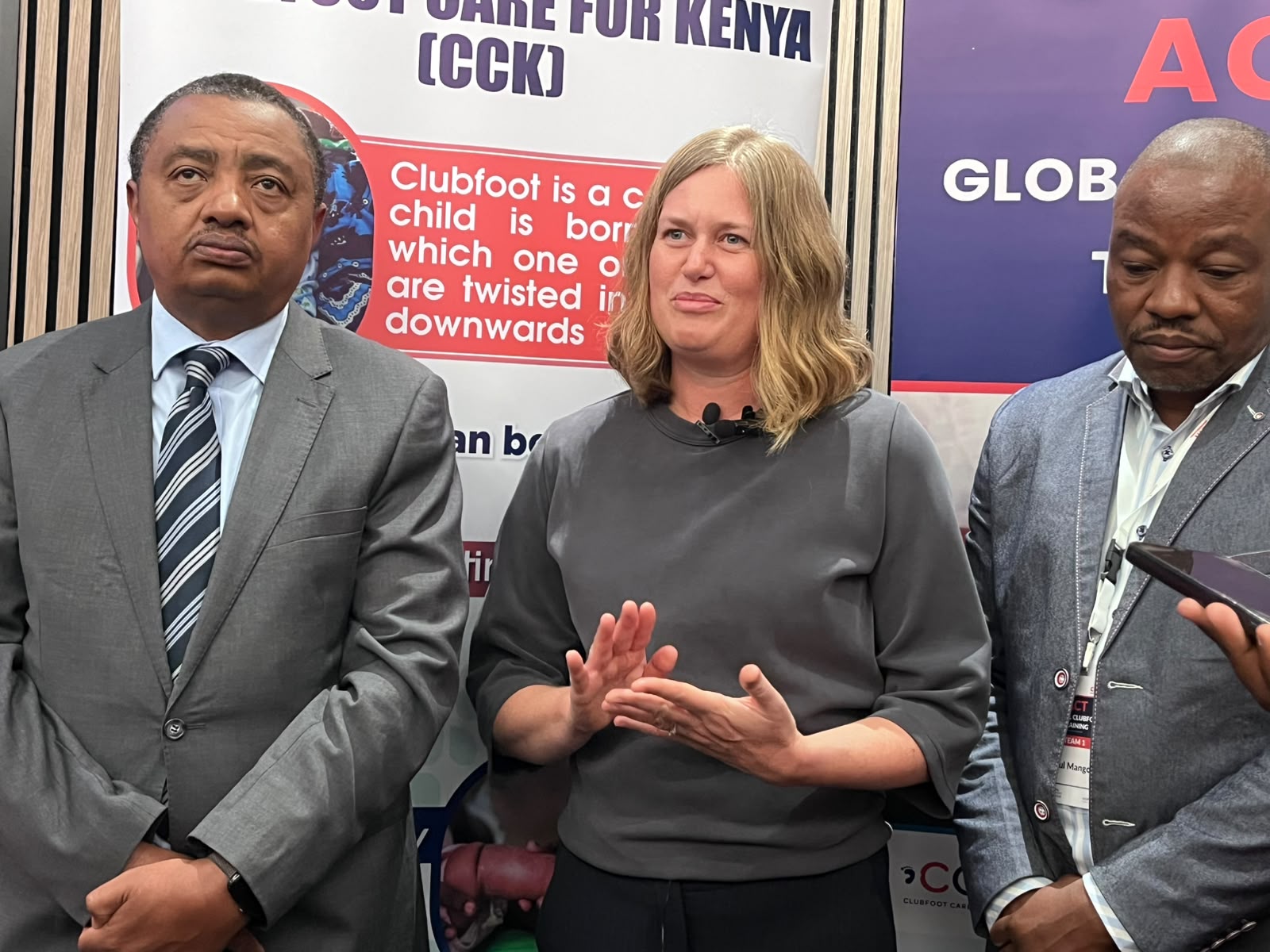
Rosalind Owen, CEO of the Global Clubfoot Initiative, said the programme was an important step in strengthening clubfoot care by building the capacity of healthcare professionals to teach others in their respective health systems.
The Global Clubfoot Initiative is a consortium of 60 organisations working in 70 countries where more than 80% of babies with clubfoot are born.
Owen said the consortium’s vision, known as Run Free 2030, is to ensure every child born with clubfoot receives the treatment they need to thrive, including being able to play with friends, run and go to school.
“This event really embodies the spirit of Run Free 2030,” she said.
The programme has brought together professionals from different countries alongside Kenyan colleagues, including participants from Pakistan, Cambodia, Yemen, Somalia, Zambia, Zimbabwe and Burkina Faso.
Owen said the initiative would help increase awareness and access to treatment, integrate clubfoot care into health systems and promote quality care.
“A training like this helps embed standards for quality care and enables those trained as trainers to take those standards back to their countries and teach them effectively,” she said.
She said Kenya was making progress in clubfoot treatment through its high treatment coverage and advanced national programme.
Early Treatment Offers a Path to Mobility
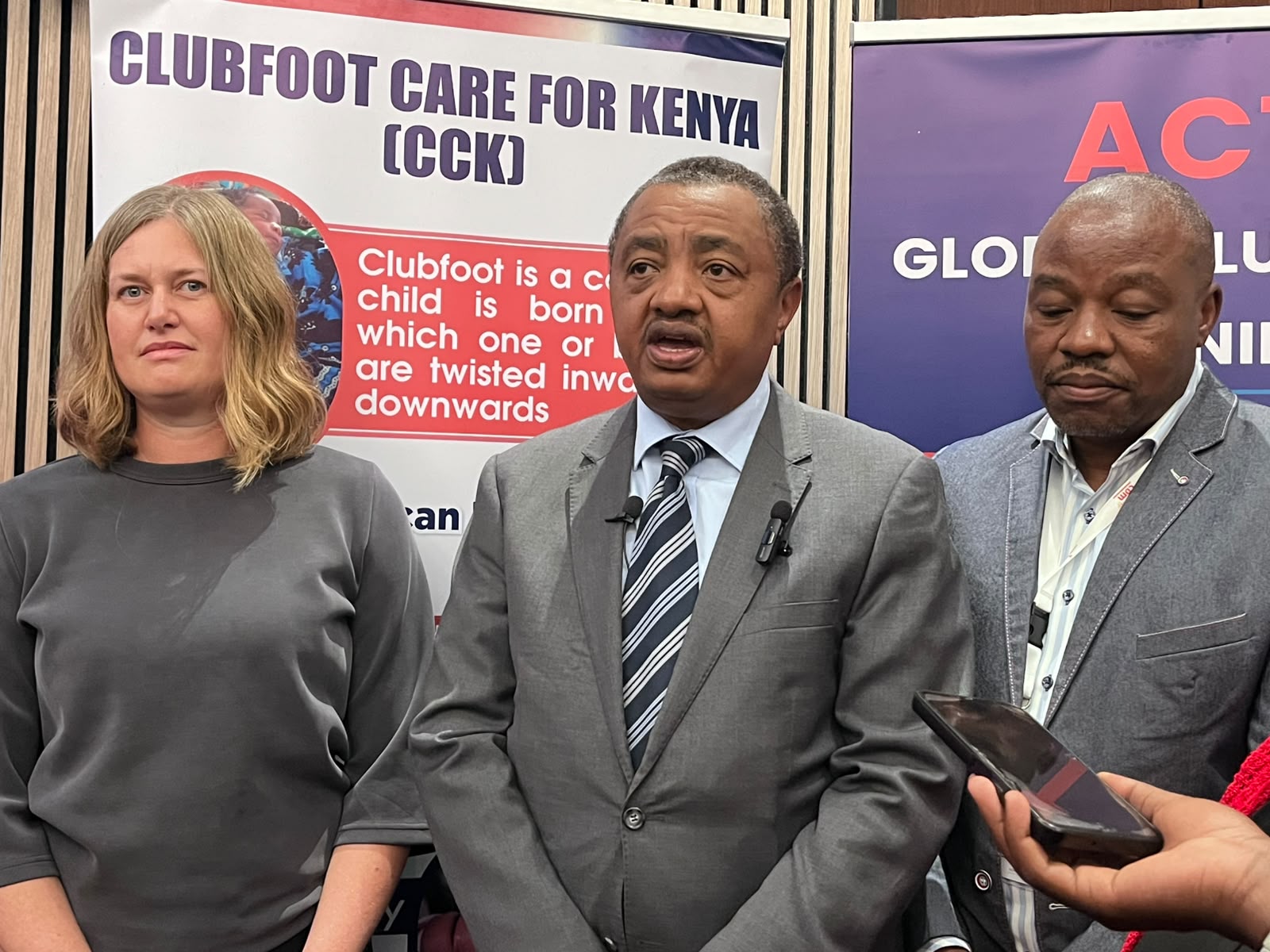
Dr. Paul Mang’oli, Orthopaedic Surgeon at Kenyatta National Hospital and Medical Director of Clubfoot Care for Kenya, said clubfoot is characterised by the foot pointing downwards and inwards and can be corrected without surgery.
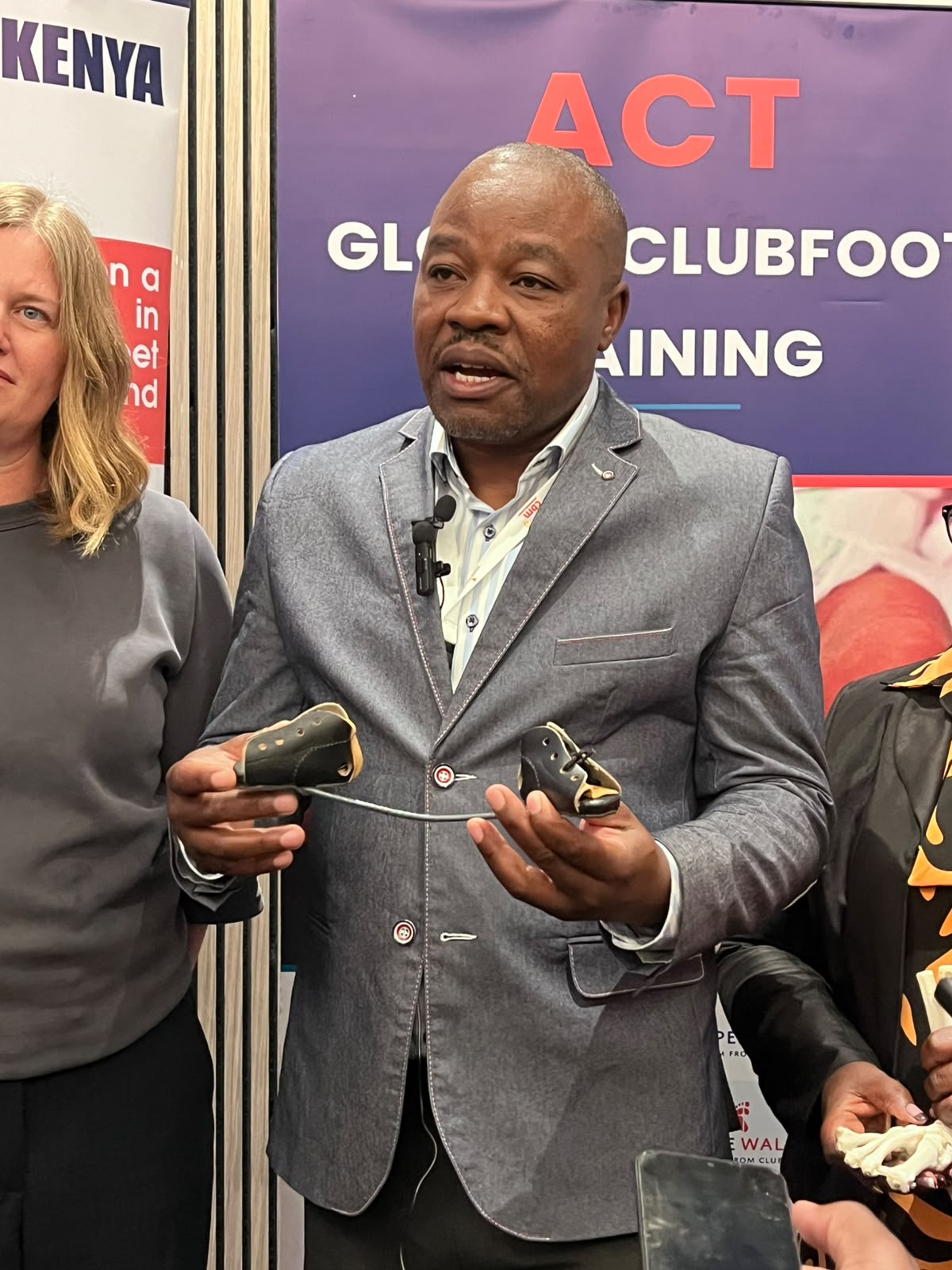
“Clubfoot is a condition we encounter, and part of our work is to create awareness and teach people how to manage it. The foot appears to point downwards and inwards. We correct it using a non-operative method known as the Ponseti method,” he said.
Kenya encounters about 2,000 cases each year, highlighting the need for enough skilled healthcare workers to provide treatment and reach more children.
Treatment should begin as soon as the condition is diagnosed. The child is assessed, and any urgent medical conditions are addressed before treatment starts.
“Once a child is born and diagnosed with clubfoot by a clinical practitioner, treatment should be started immediately. The child is first assessed, and any urgent medical conditions are addressed. If the child is in good condition, treatment can begin from the first day of life,” he said.
The method involves serial manipulation and casting to gradually correct the foot. The child visits the clinic weekly, where the cast is removed, the foot assessed and a new cast applied.
The corrective phase takes about four to eight weeks, depending on the severity. The maintenance phase then begins using an abduction brace to maintain the corrected position.
For the first three months, the brace is worn day and night for an average of 23 hours a day. After that, it is worn at night and during nap time until age five to minimise recurrence.
“We encourage parents to bring children with clubfoot to our clinics as early as possible. Even children who present late, including at one, two or three years of age, can still benefit from the Ponseti method to some extent. However, the best results are achieved when treatment is started early,” he said.
Mang’oli said starting treatment within the first three years has had success rates of about 90%. Surgery can complement treatment where the feet are not fully corrected. The aim is to enable the child to walk with the entire foot touching the ground, known as a plantigrade position, and to wear normal shoes.
“The good thing is that the braces are made locally using locally available materials.”
With support from partners, locally made braces help ensure treatment is not interrupted because of shortages.
Strengthening Government Response
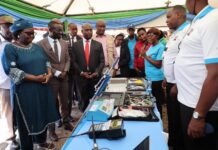
Dr. Andrew Toro, Director of Curative and Nursing Services in the State Department for Medical Services at the Ministry of Health, said the five-day trainer-of-trainers workshop had brought together 50 participants from across Africa and Asia, as well as local healthcare workers and partners.
“We are here for a trainer-of-trainers meeting where we want to build the capacity of healthcare workers in managing clubfoot,” he said.
Toro said the Ministry was mandated to ensure children affected by the condition are identified, treated and supported.
“As a Ministry of Health, we are mandated to ensure that these children are taken care of. We need to identify where they are, intervene and manage the condition,” he said.
He said non-invasive treatment methods were available, allowing children with the condition to undergo rehabilitation and regain mobility over time.
Toro said the Ministry was working with partners to raise awareness among parents and communities that the condition is treatable and children should be brought to health facilities rather than being hidden at home.
“We want to ensure that in every corner of the country, parents and communities have the requisite awareness on what clubfoot is and that it is treatable,” he said.
He said the government was also considering developing policies, guidelines and protocols to provide a structured approach to management.
Toro added that the Ministry was considering incorporating clubfoot treatment into the Social Health Authority (SHA) benefit package to reduce out-of-pocket costs for affected children and their families.
He described the trainer-of-trainers model as a way of expanding the programme despite limited resources.
“We might not be able to train everybody at one time because of resource constraints. Through the trainer-of-trainers model, we can have a ripple effect as participants return to their regions, counties and hospitals and continue with the training,” he said.