|
Getting your Trinity Audio player ready...
|
By June Lance
Nairobi: Media practitioners, civil society groups and international partners have called for a clear, trackable roadmap to ensure Kenya’s 2027 General Elections are peaceful, fraud-free and constitutional, warning that shrinking civic space, digital disinformation and illicit political finance threaten the vote.
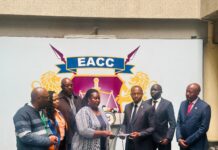
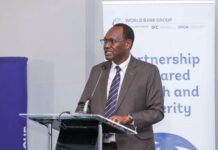
The call came at the 4th Annual Media-CSO Conference, held in Nairobi on November 4-5, 2026, under the theme “Safeguarding Kenya’s 2027 Elections: Media and Civil Society Building an Inclusive, Safe and Resilient Democratic Space.”
Participants included the Kenya Correspondents Association (KCA), Media Council of Kenya (MCK), European Union (EU), The Institute for Social Accountability (TISA/Okoa Uchumi), Commission on Administrative Justice (Office of the Ombudsman), Transparency International Kenya (TI-Kenya), Association of Media Women in Kenya (AMWIK), Defenders Coalition, Kenya National Commission on Human Rights (KNCHR) and the Civic Freedom Forum (CFF).
Early preparation and public trust
Italian Ambassador to Kenya Vincenzo Del Monaco said electoral credibility depends on continuous preparation, not last-minute interventions.
“Elections belong to Kenyans,” he said, adding that international partners play a supporting role through ongoing engagement with local institutions. He urged civil society, the press, security agencies, the judiciary and oversight bodies to build working relationships well before polling day.
Describing journalists as indispensable “witnesses to reality,” Del Monaco warned of AI-generated content, deepfakes and coordinated online disinformation designed to erode trust in democratic institutions. He called for specialized training for journalists on political and legal reporting, digital verification and personal safety.
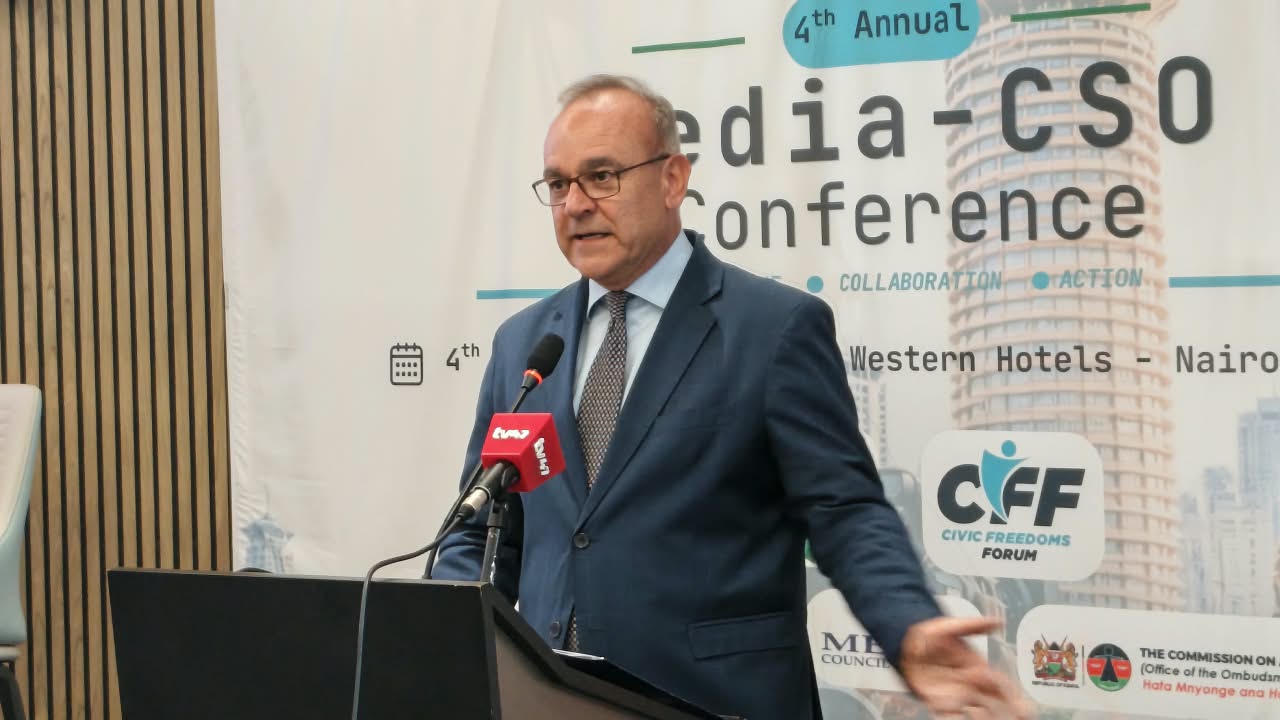
“Public trust is the foundation of electoral legitimacy,” he said, urging authorities and media houses to encourage participation by young people and women and to ensure citizens can vote without fear of intimidation or violence.
Civic space and digital integrity
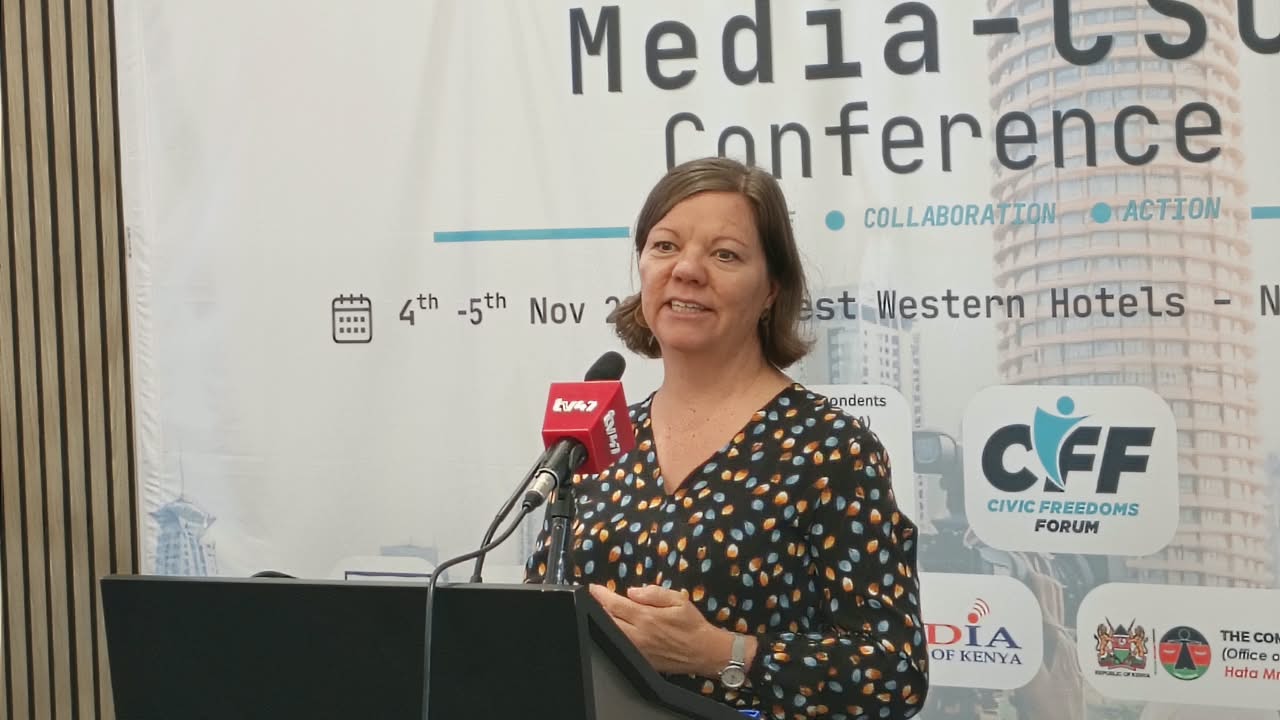
EU representative Line Urban said public discourse is under growing pressure as campaigning intensifies. Journalists and human rights defenders, she said, increasingly face self-censorship, legal pressure and obstacles to working independently. She described Kenya’s 2010 Constitution as a bedrock safeguard that must be vigorously defended.
“The EU supports reforms that enhance democratic integrity, transparency, and credibility,” Urban said. She stressed that polling-station-level results must be publicly accessible, whether they are transmitted electronically or manually.
She also flagged risks from weak political finance regulation, online hate speech and vague legal definitions of political expression that can be used against legitimate dissent. The EU, she said, is committed to funding media monitoring, civic education, investigative journalism training and independent platforms that track intimidation of women political candidates.
Political money and digital manipulation
Gibson Mwaita, chairperson of the National Integrity Alliance and of Transparency International Kenya, called for strict enforcement of existing political finance laws. Unchecked spending, illicit financial flows, voter buying and misuse of public resources, he warned, distort the democratic process.
He urged the Independent Electoral and Boundaries Commission (IEBC) and oversight agencies to proactively disclose information on operational readiness, technology procurement, voter register verification and campaign finance audits.
On technology, Mwaita warned against AI-manipulated content, deepfakes and hyper-partisan, state-sponsored narrative attacks. He called on social media platforms, regulators, civil society and newsrooms to set up rapid verification protocols, fact-checking initiatives and media literacy campaigns before 2027.
“Safeguarding an election requires sustained collective action every single day leading up to the vote, not just on polling day,” he said.
Backsliding and accountability
Davis Malombe, chairperson of the Civic Freedom Forum, cited recent civil society documentation pointing to democratic backsliding and growing state authoritarianism. Journalists and human rights defenders, he said, are the groups most exposed to state violence, physical threats, arbitrary arrests and online bullying.
He proposed a four-point strategy for civil society and media networks:
- Joint violations monitoring: real-time response mechanisms and shared documentation of election-related abuses.
- Public agenda-setting: collaborative investigations, civic awareness programs and joint coverage of presidential and parliamentary debates.
- Solidarity networks: immediate legal and public support when media houses or activists face harassment or raids.
- Economic accountability: documenting the financial damage caused by state-ordered media shutdowns to pursue legal remedies and reparations.