
|
Getting your Trinity Audio player ready...
|
By Lenah Bosibori
Nairobi, Kenya: In the 2000s, many African households gathered around television sets to watch Nigerian films, popularly known as Afro-Cinema. Those stories kept families glued to their screens, sparking debates about love, marriage, betrayal and family.
Two decades later, another form of storytelling is similarly commanding attention.
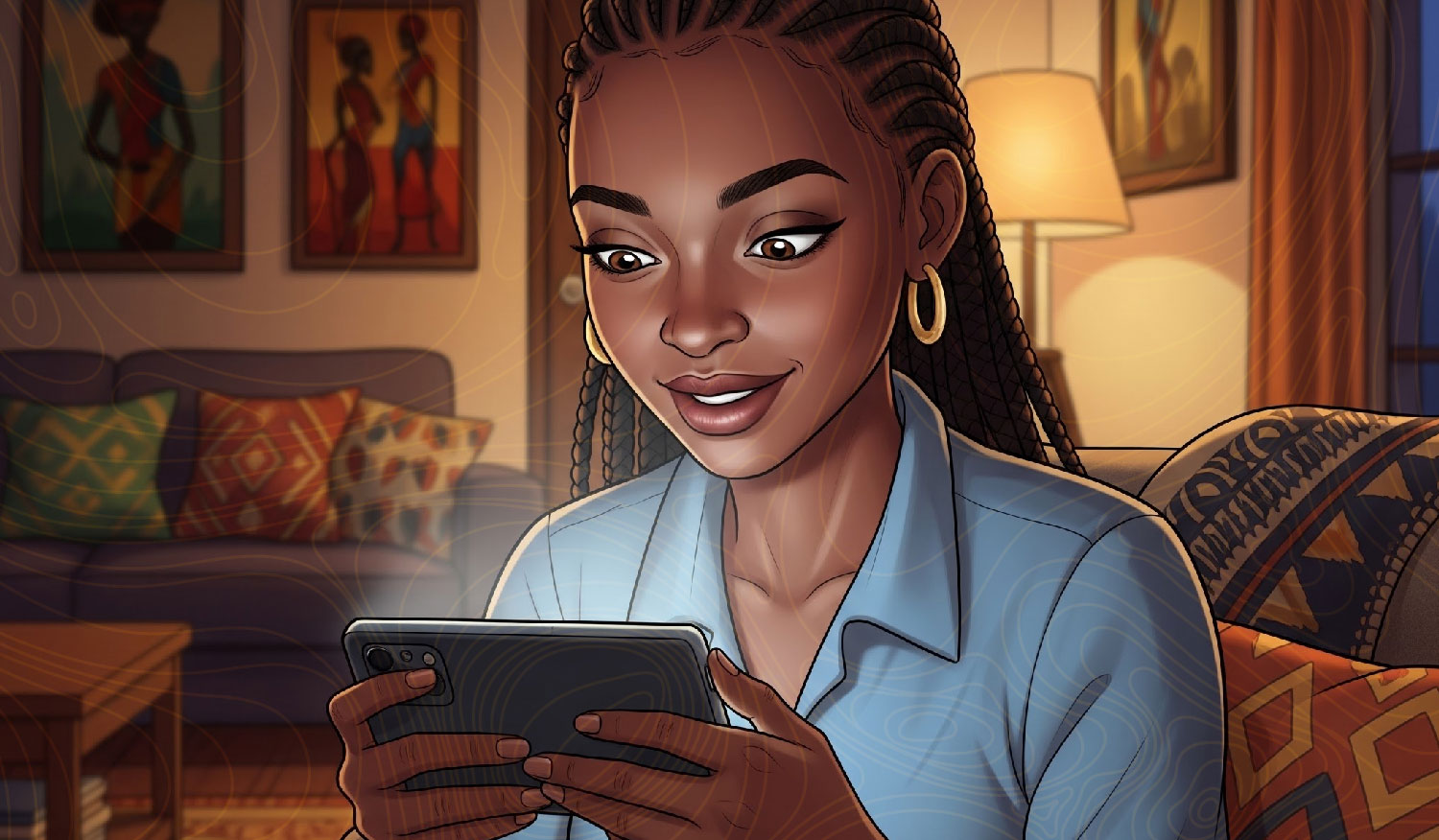
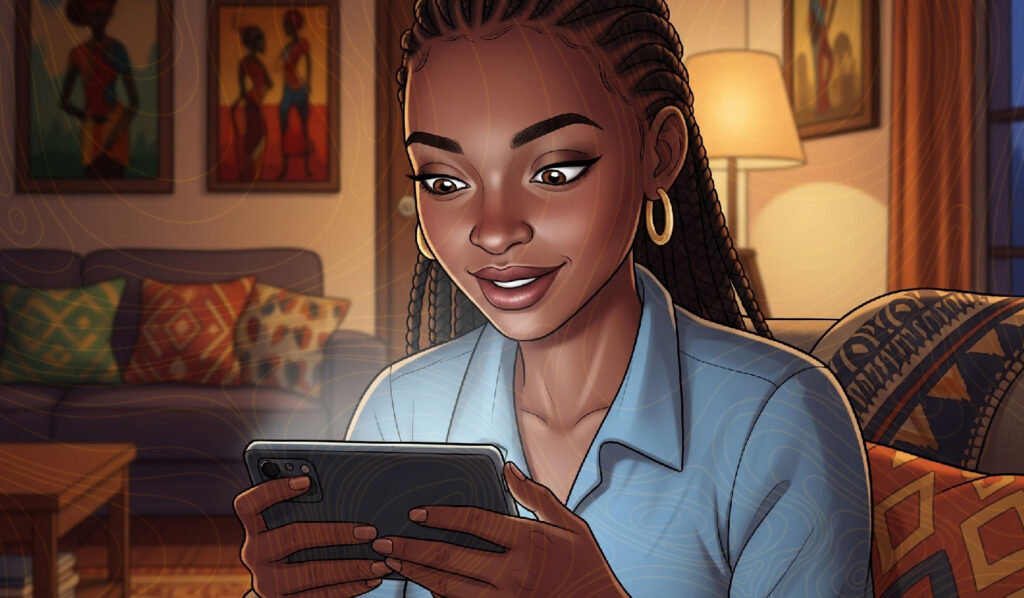
Only this time, audiences are not gathered in crowded living rooms. They are lying in bed, commuting to work, waiting in queues or stealing moments between daily tasks, their eyes fixed on smartphones as they scroll through TikTok.
For many viewers, a three-minute AI-generated romance sets off a loop that keeps them hooked for hours.
One of the creators behind this new wave of storytelling is Nigerian content creator Omonoh Fridah Sadoh, better known on TikTok as TimelessbyFre.
Long before artificial intelligence entered the creative scene, Sadoh was already immersed in stories – writing and reading them. Her academic background in literature exposed her to novels, poetry, and literary analysis, nurturing an interest that would eventually evolve into a digital career. In 2024, she started using AI for storytelling.
“It was not animation,” she recalls. “I would write my stories myself, record my voice, and use AI-generated images that resonated with the story.”
Today, she creates fully animated dramas featuring AI-generated characters that speak, act, and bring her scripts to life on TikTok and YouTube.
The Rise of AI Microdramas
Today’s AI-generated dramas can be traced to China, where short, serialized mobile dramas exploded in popularity between 2018 and 2020 as audiences increasingly shifted toward phone-based entertainment.
“The AI version of these really took off in 2024,” says writer and researcher Ummie Muturi. “By 2025, there had been a huge increase in AI-animated short dramas.”
Unlike traditional productions that rely on actors, studios and production crews, AI microdramas are created using a combination of tools. One tool is for scripts, another for storyboards, while others create characters, synthesize voices, animate scenes and handle post-production.
The biggest difference is speed. An entire AI-generated series can reportedly be completed in about two weeks using specialized platforms designed for this emerging industry. These systems break down scripts into scenes, convert them into storyboards, and export finished episodes ready for distribution.
This has proved especially useful for genres that traditionally require expensive visual effects.
“Werewolves, vampires, angels, magic and fantasy worlds become much easier to create,” says Muturi.
That accessibility has fueled an explosion of AI-generated storytelling across social media platforms, where creators can produce new episodes almost as quickly as audiences consume them.
Growing Audience
While there is little public data on the size of Kenya’s AI microdrama audience, creators and viewers interviewed for this story describe a rapidly growing community driven largely by women consuming relationship-focused content on TikTok, a platform estimated to have 18.4 million adult users in Kenya as of late 2025.
Sadoh’s TikTok analytics show that her audience is primarily women (71%), with most viewers aged between 25 and 34 years (51%), followed by viewers aged 18–24 (26%). Most of the viewers are in Nigeria, Kenya and Ethiopia.
Many of her dramas revolve around marriage, betrayal, heartbreak, revenge and redemption, reflecting familiar gender roles and relationship dynamics. While critics may view some of these narratives as reinforcing stereotypes about women and family life, Sadoh argues that they resonate because they mirror the experiences of many African women.
According to Elishiba Kimani, Professor of Gender, Education and Development in the Department of Sociology, Gender and Development Studies at Kenyatta University, one reason women make up a large share of microdrama audiences is their access to smartphones, which gives them greater autonomy over what they watch.
“In many households, men traditionally control television viewing, while women have greater autonomy over their mobile phones. As a result, smartphones have become women’s primary gateway to information, entertainment, networking, and community,” she explains.
The Women Who Can’t Stop Watching
For Lina Mwamachi, what began as casual viewing quickly became a habit. She discovered the dramas while scrolling through TikTok, and after watching one episode, the platform began serving her more.
On some days, depending on her work commitments, she watches as many as 20 short dramas, and on Friday evenings, she’s glued to the screen.
“I may start watching around 8 p.m. and continue well past midnight. Sometimes I become so absorbed that before I realize it, it is almost morning.”
The episodes are brief enough to encourage continuous viewing and emotionally engaging enough to keep audiences invested.
“These dramas are highly addictive,” Mwamachi says. “Once you start watching, even food can burn while you are distracted by the screen.”
Pauline Tom, a journalist, describes a similar experience.
What started as curiosity after AI-generated videos appeared on her “For You” page soon became a significant part of her screen time. At one point, she was spending as much as nine hours a day on TikTok.
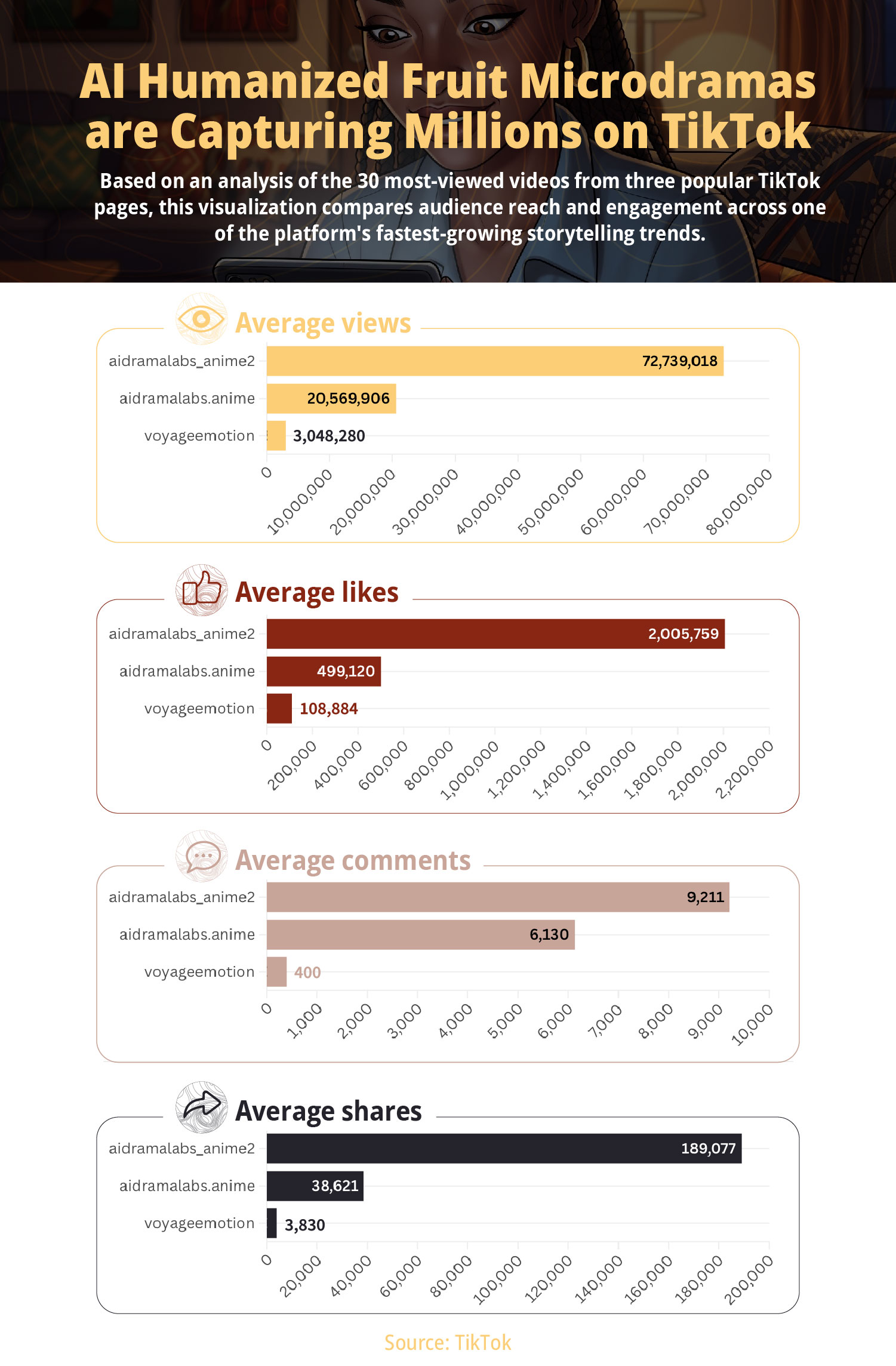
The first AI-generated drama she watched featured humanized fruits — apples, strawberries and other characters transformed into human-like figures.
“The theme hooks you, and you just stay there watching. You feel like you need to keep up,” says Tom.
Behind this growing phenomenon is TikTok’s recommendation algorithm.
It learns from users’ viewing behaviour—including how long they watch a video—not just the posts they like or comment on. Each video watched shapes the “For You” feed, filling it with similar videos that encourage longer watch time.
Creators understand this dynamic too.
“My followers often see the videos first on their ‘For You’ pages, and the algorithm typically promotes videos based on viewer retention,” says Sadoh, who uploads new episodes daily, mostly at night, to keep up with audience demands.
The Questions Behind the Romance
Not everyone views the AI-generated microdrama trend as harmless entertainment.
Muturi worries about the themes and depictions of women that many AI dramas rely on to keep audiences engaged.
“Female characters often face violence or abuse from male leads, which can end up normalizing misogynistic attitudes,” she says. “This kind of storytelling doesn’t just reflect harmful biases; it can also reinforce and legitimize them.”
“The real concern isn’t that AI is telling stories,” continues Muturi, “but whether these stories are being made with any accountability.”
When audiences aren’t encouraged to think critically about what they are watching, the microdrama format, whether AI or live action, can make it easy to avoid deeper reflection.
With AI, the repetitive plots and formulaic characters can be generated quickly at scale, and creators feel pressure to keep producing content that fits algorithmic preferences.
Prof. Kimani says these patterns cannot be separated from the economic incentives of social media platforms that reward this kind of content.
“Controversy has become monetized, with content creators often using sensational stories to attract views, followers, and revenue. Female-centred content, in particular, tends to generate higher engagement.”
“We should examine the broader digital culture that rewards sensationalism; we need to view these issues through a gender-balanced lens rather than one shaped solely by cultural stereotypes,” adds Prof. Kimani.
Who Shapes the Story?
For audiences in Africa and the wider Global South, there are also questions about whose values, aesthetics, and assumptions shape the stories people consume.
“Accessibility does not necessarily mean power is equally distributed,” says Muturi. “Who owns the platforms, controls the data, and determines visibility still matters.”
Tom, meanwhile, has stepped back from the content she once consumed obsessively.
Part of the reason, she says, was concern about prolonged exposure to highly stimulating content. The dramas consumed much of her screen time and affected her sleep, eventually leading her to stop watching them.
For many other women, the screen may have shrunk from the living room television to the smartphone in their hands. Still, the appetite for love, betrayal, revenge and redemption remains unchanged and is now served in a three-minute video.
This article was produced as part of the Gender+AI Reporting Fellowship, with support from the Africa Women’s Journalism Project (AWJP) in partnership with DW Akademie. The journalist used AI-assisted research tools to review and summarise relevant policy and research documents, identify patterns, surface data points for independent verification, and extract key statistics. All reporting, analysis, editorial decisions, fact-checking and final wording were done by the reporter, in line with Talk Africa’s editorial standards.