|
Getting your Trinity Audio player ready...
|
By Victoria Musimbi
Nairobi, Kenya: As terrorism threats continue to evolve across Africa, governments are increasingly strengthening security measures to protect citizens. Yet experts warn that counter-terrorism responses that fail to uphold human rights can erode public trust, shrink civic space and ultimately undermine long-term security.
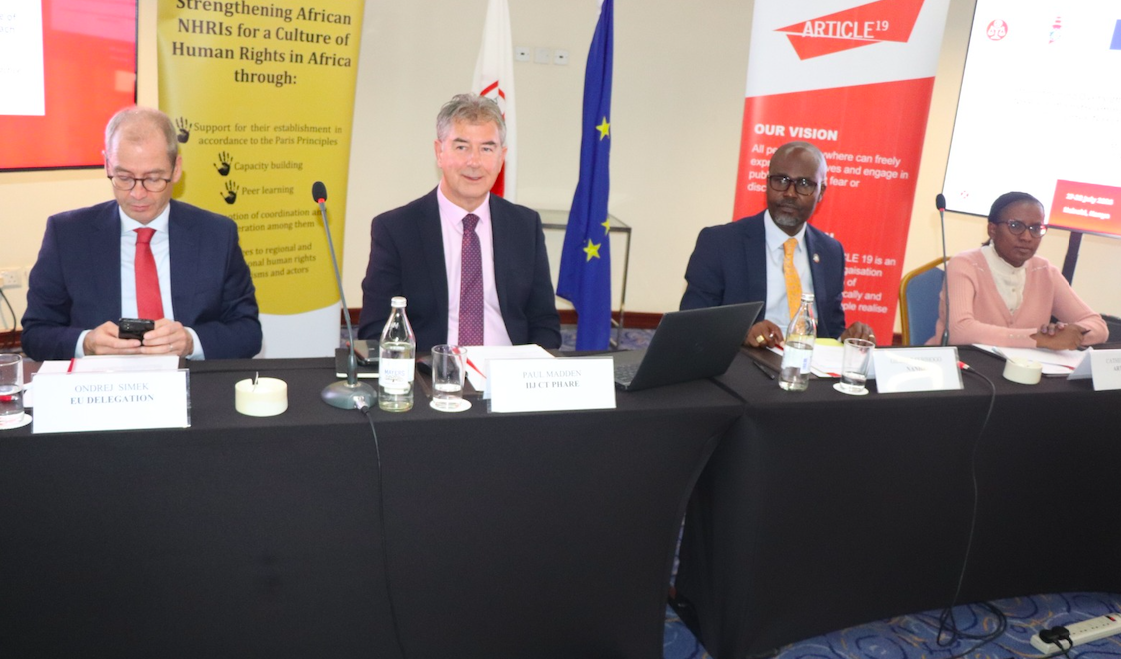
In response, human rights experts, National Human Rights Institutions (NHRIs), civil society organisations and development partners have gathered in Nairobi to strengthen oversight mechanisms that ensure counter-terrorism efforts are both effective and grounded in human rights.
The two-day Workshop on Strengthening National Human Rights Institutions’ Engagement on Counter-Terrorism Oversight in Africa, convened by the Network of African National Human Rights Institutions (NANHRI) in partnership with the International Institute for Justice and the Rule of Law (IIJ) through its Counter Terrorism Platform for Human Rights Engagement (CT PHARE) and Article 19 Eastern Africa, with support from the European Union, is equipping participants with practical tools to monitor counter-terrorism measures while safeguarding fundamental freedoms.
Finding that balance is the central focus of the meeting. For Catherine Mbui, Civic Space Advocate at Article 19 Eastern Africa, strengthening oversight also means ensuring that communities affected by counter-terrorism measures have a voice in shaping responses.
“Our message is that national security and human security must go hand in hand. People should be included in conversations that affect their safety and rights,” Mbui said.
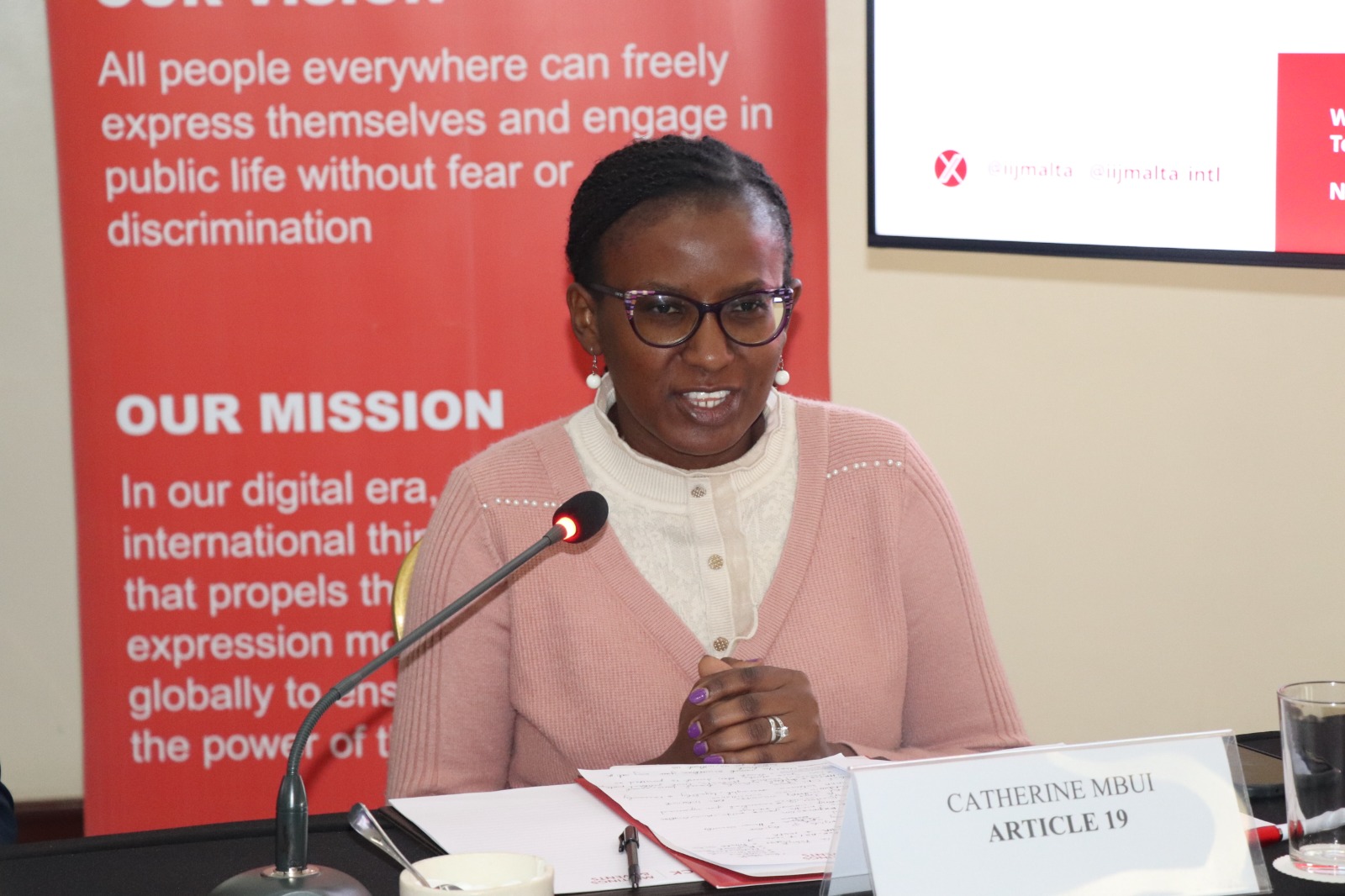
She said Article 19 works alongside human rights defenders, journalists and digital activists whose work has been affected by securitisation and restrictions on freedom of expression. Across Kenya and the wider Eastern African region, she noted, dissenting voices are at times treated as security threats rather than partners in democratic governance, limiting civic space and fundamental freedoms.
“Criticism and opposition should not be viewed as obstacles but as valuable contributions to policymaking,” she said.
Mbui said the discussions are drawing on the Brussels Memorandum, the Paris Principles and the Marrakesh Declaration to explore how internationally recognised good practices can be adapted to African contexts while protecting freedom of expression, access to information and meaningful public participation.
Strengthening Oversight Through Practical Tools
Turning that vision into action is a key objective of the meeting. Paul Madden, Project Lead for the Counter Terrorism Platform for Human Rights Engagement (CTFAR) at the International Institute for Justice and the Rule of Law (IIJ), said the engagement is equipping National Human Rights Institutions with practical tools to strengthen oversight and accountability.
He explained that the IIJ, a Malta-based multilateral institution established in 2014, has trained more than 11,000 judges, prosecutors, police officers, policymakers and other practitioners across Africa, the Middle East, Central Asia, and South and Southeast Asia on criminal justice responses to terrorism grounded in human rights and the rule of law.
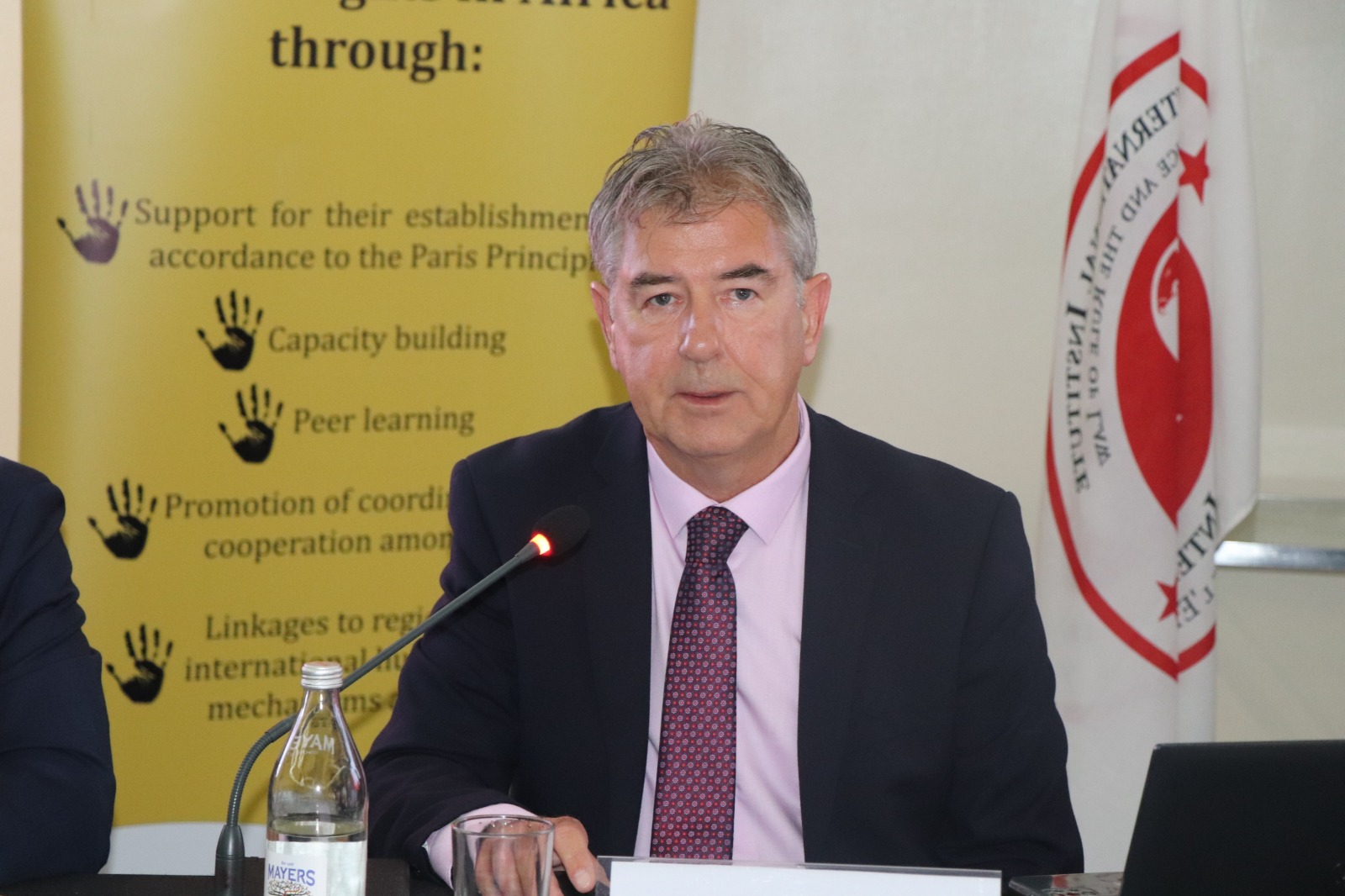
“This workshop is helping National Human Rights Institutions understand how they can independently oversee counter-terrorism measures while applying the Brussels Memorandum within African human rights frameworks,” Madden said.
The initiative, which builds on a virtual session held in June, has brought together participants from ten countries to explore how NHRIs can independently monitor counter-terrorism measures, work with civil society and apply the Brussels Memorandum alongside African Union human rights frameworks.
He said IIJ has also established five working groups focusing on National Human Rights Institutions, civil society organisations, law enforcement, parliamentary oversight and intelligence oversight to support implementation of the memorandum.
“The Brussels Memorandum is a practical, non-binding document that countries can adapt to their national contexts while strengthening oversight and accountability without compromising security,” he said.
Empowering National Human Rights Institutions
NANHRI Executive Director Gilbert Sebihogo said Africa’s changing security landscape demands stronger institutions capable of safeguarding both national security and human rights.
He observed that the Sahel region now accounts for nearly half of all terrorism-related deaths globally, while violent extremist groups are increasingly using drones, encrypted communications and digital financial platforms to evade detection.
“Integrating a Human Rights-Based Approach into counter-terrorism efforts is not optional—it is essential to achieving sustainable peace and security,” Sebihogo said.
He said National Human Rights Institutions have a critical role in independently monitoring detention facilities, reviewing counter-terrorism legislation, strengthening oversight of digital surveillance and working with security agencies to integrate human rights into policies and operations.
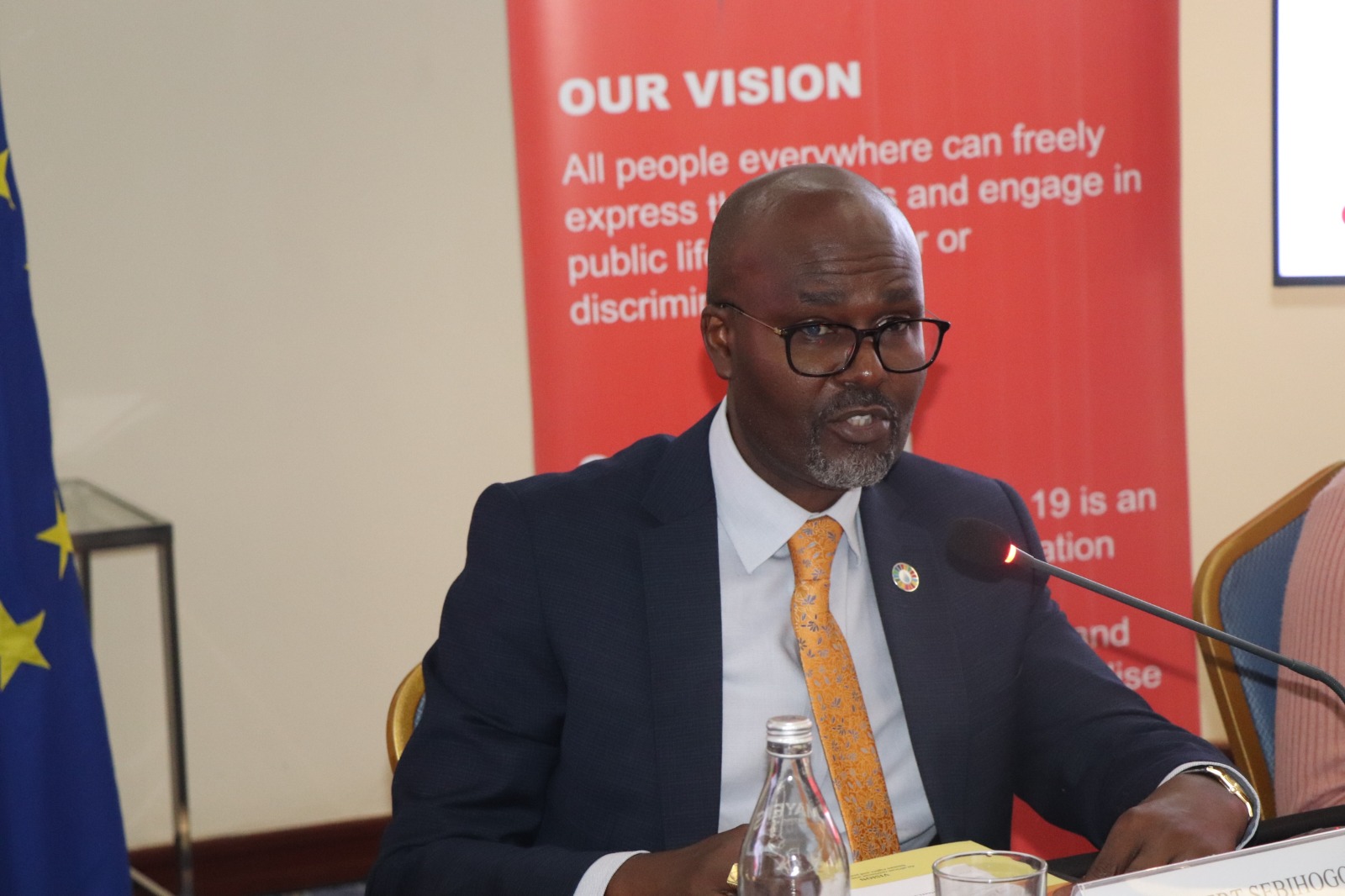
While acknowledging challenges such as limited access to high-security facilities, capacity gaps and emerging technologies, Sebihogo said stronger partnerships and technical expertise would enable institutions to carry out their mandates more effectively.
“By drawing on both international and regional frameworks, we can support our states in ensuring that national security and human rights remain complementary objectives rather than competing priorities,” he said.
African-Led Solutions for Sustainable Security
Deputy Ambassador of the European Union to Kenya Ondrej Simek said Africa’s terrorism threat continues to evolve rapidly, with extremist groups expanding into new regions while exploiting encrypted communications, drone technology and sophisticated financing networks.
He said governments have a responsibility to protect their citizens, but experience from Africa and other parts of the world demonstrates that counter-terrorism measures that undermine human rights ultimately weaken security.
“Arbitrary detention, extrajudicial actions and the erosion of civic space can fuel grievances that violent extremist groups exploit for recruitment,” Simek said.
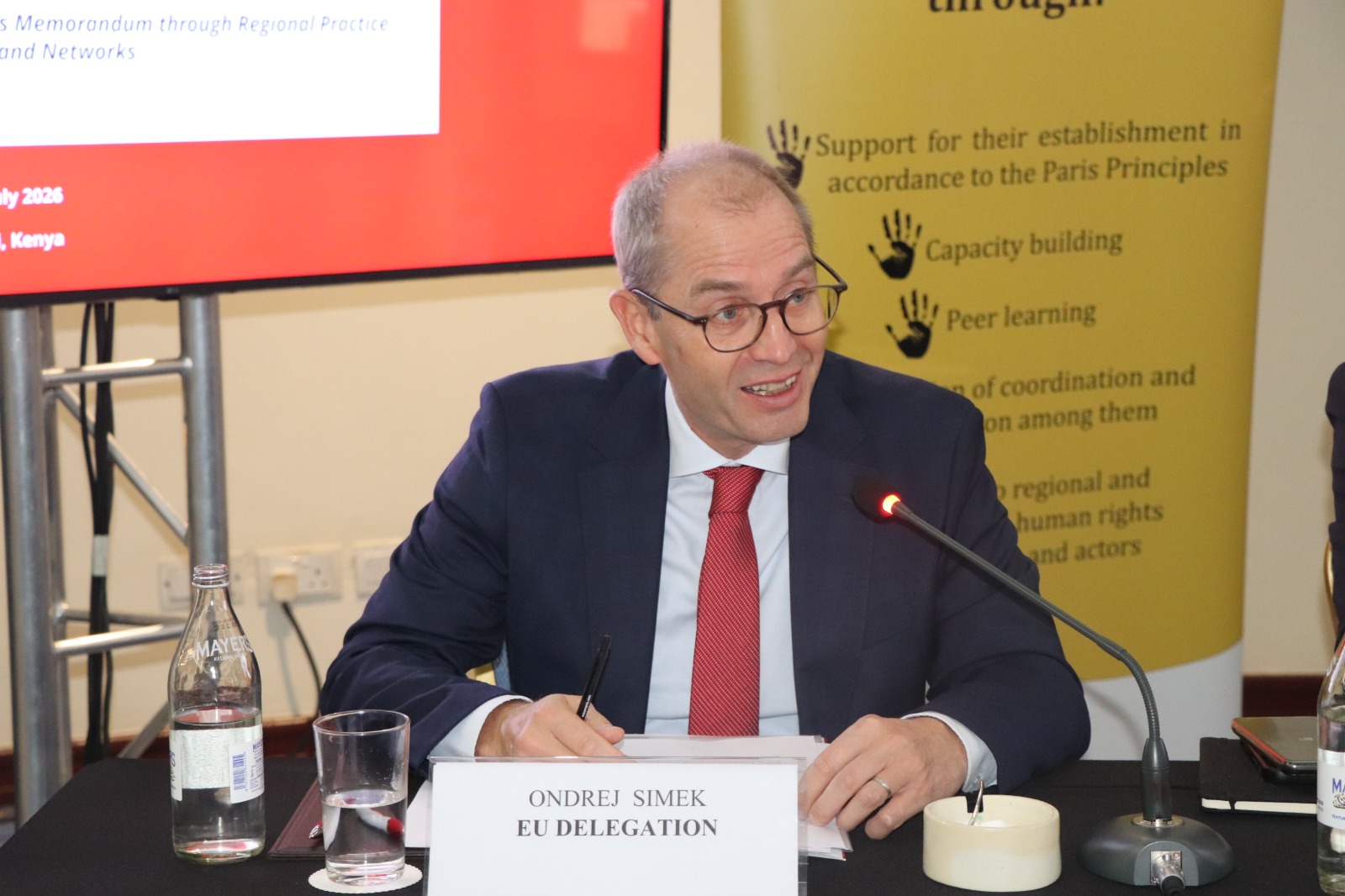
He added that addressing development challenges, including access to education, water and other essential services, remains equally important in tackling the root causes of violent extremism.
Reaffirming the European Union’s commitment to a human rights-based approach to counter-terrorism, Simek said independent oversight and accountability are essential to ensuring security measures remain legitimate, effective and sustainable.
He added that strengthening National Human Rights Institutions through technical support, peer learning and stronger oversight mechanisms would help countries develop solutions that are African-led, African-owned and tailored to each country’s legal and operational context.
As the meeting concludes, participants are expected to return to their respective countries with practical tools, stronger partnerships and a renewed commitment to ensuring that efforts to counter terrorism remain firmly rooted in accountability, the rule of law and respect for human rights.