|
Getting your Trinity Audio player ready...
|
By Mary Mwendwa
For many young Kenyan graduates, the job search means trawling hundreds of company websites, applying without knowing the salary, and watching out for fake adverts that ask for fees. Work.ke, a free job board that gathers more than 1,800 open roles from over 300 sources, was built to solve these problems.
Mary Mwendwa, from TalkAfrica, spoke to the founder, Oleg Cherkas, about what prompted him to start the platform, how it protects users from fraud, which jobs are most in demand, and his plan to reach a million job seekers within two years.
Q: Could you tell us more about work. ke?
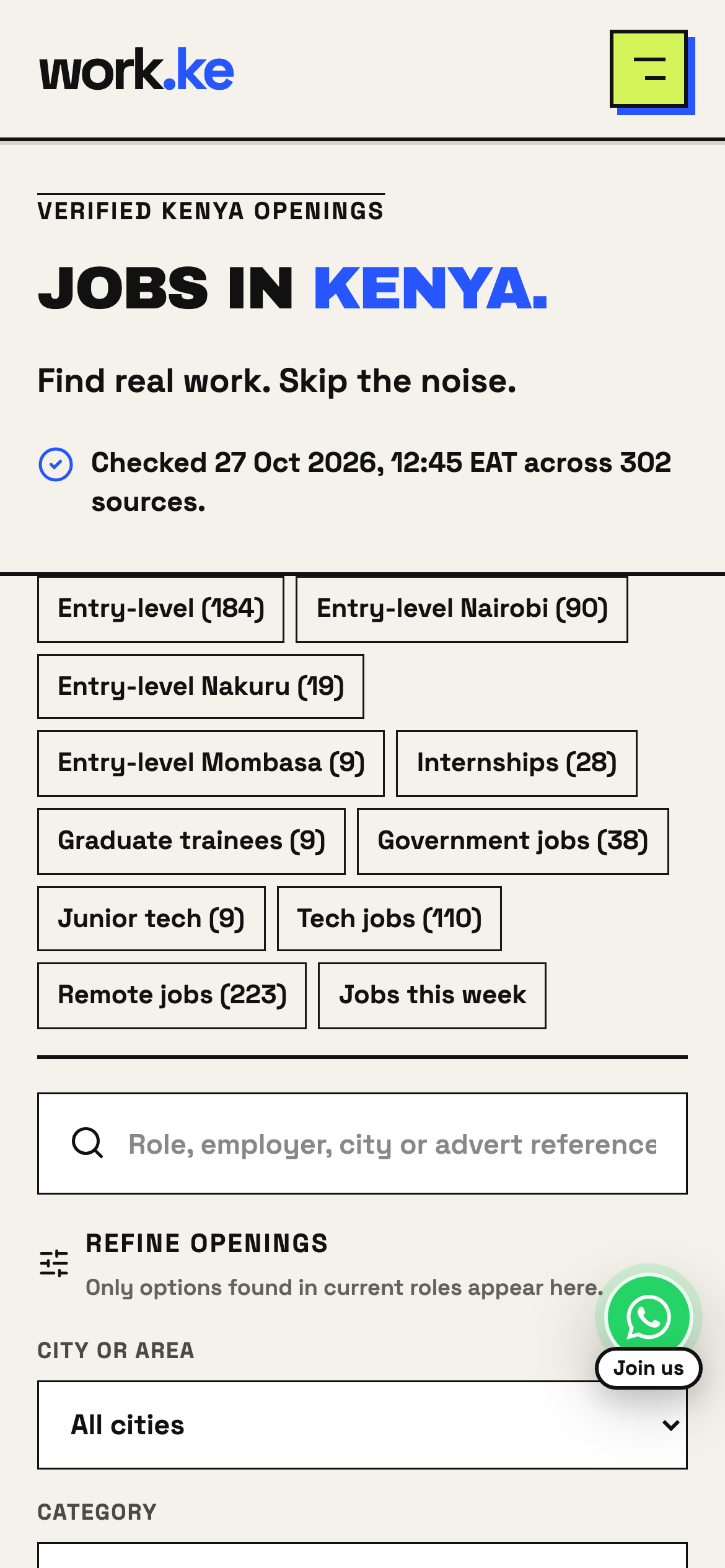
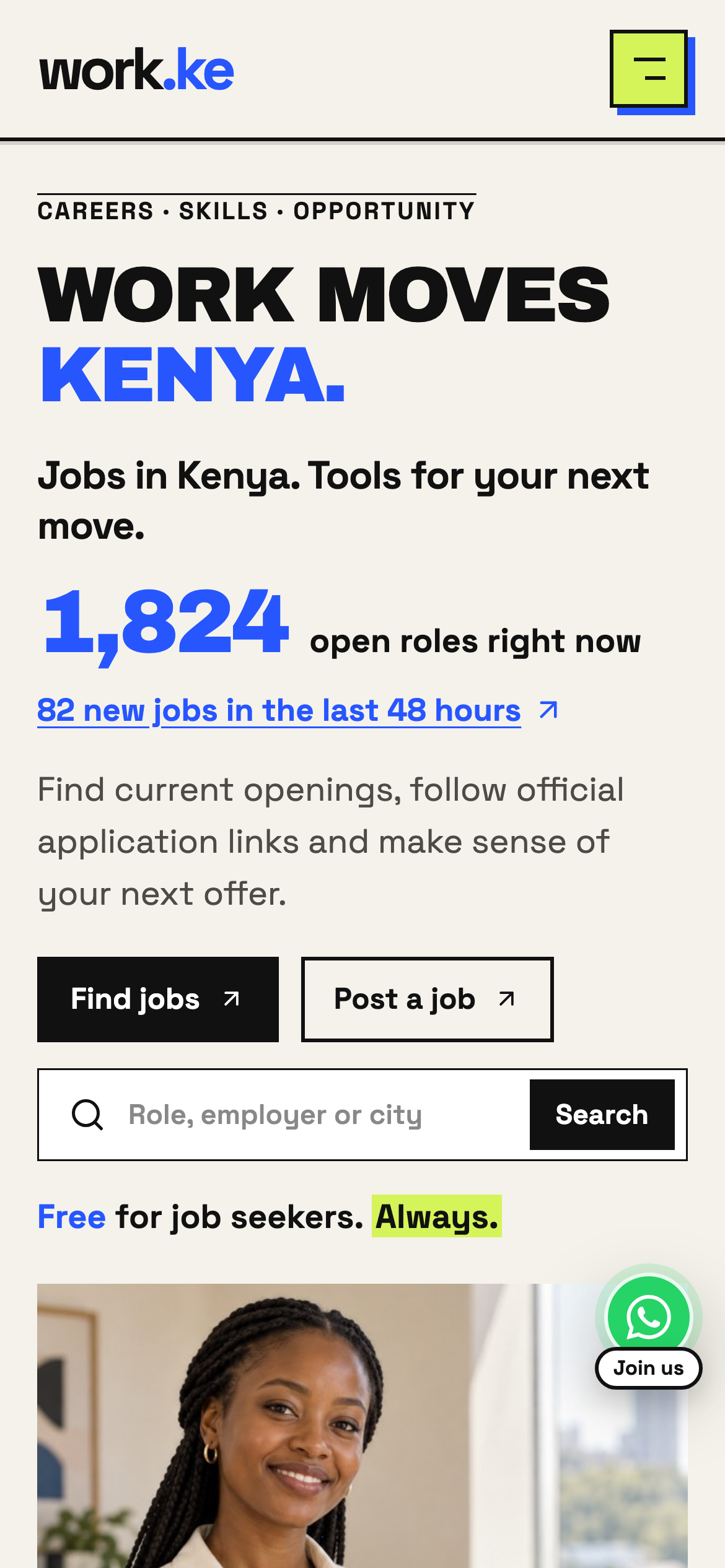
Oleg: Work.ke is a free job board for Kenya. Every day it collects open roles from more than 300 sources, including employer career pages, recruitment agencies and public job boards. It currently lists more than 1,800 jobs. Each advert shows the location, the closing date and, where the employer publishes it, the pay. It then sends you straight to the employer’s official application page. Job seekers never pay and never need an account.
We also send weekly job lists to university career offices and run free career webinars for students and graduates. Our sister sites, work.co.ug and work.tz, do the same for Uganda and Tanzania.

Q:What prompted you to start the platform?
Oleg: I have been to Kenya twice, for three months in total, and saw how hard the job search is for young graduates. Real jobs are spread across hundreds of company websites; many adverts never say what the job pays, and fake adverts ask applicants for money. I wanted one place where every advert leads to the real employer, the pay is shown whenever it is known, and applying is always free.
My personal goal is to help thousands of people in Kenya get hired through work.ke. I love Kenya and Kenyans, and that is the main reason I do this work.
Q: How many job seekers do you intend to reach, and how many have you reached so far?
Oleg: We aim to reach 200,000 job seekers a month by September 2027, and a million within two years.
We are growing fast. In the last 30 days, more than 21,000 people visited work.ke and clicked Apply more than 23,000 times. That is five times more visitors than in September. One weekly job list shared by the University of Nairobi career office brought about 3,000 clicks to apply in three days. Many of our visitors now find us through AI assistants such as ChatGPT, which send us about 12 times more visits than Google search.
Q: Which job categories are most sought after, and why?
Oleg: Entry-level jobs and paid internships get the most attention, because most of our users are students and recent graduates looking for their first job.
By number of openings, sales and marketing lead, followed by operations, finance and accounting, and engineering and IT. Sales is often the easiest door into a first job, because employers hire many people at once and accept graduates from many fields.
Q: How would you describe the current job-seeking environment in Kenya?
Oleg:It is very competitive. Every year many graduates leave universities and colleges, and there are far fewer formal jobs than applicants.
Job seekers also face two problems we can measure. The first is pay. Only about 1 in 7 adverts on work.ke say what the job pays, so people apply without knowing whether the salary will cover rent and transport. The second is trust, as fake adverts that ask for an application or training fee are common.
The good news is that more employers now publish roles on their own websites, and young Kenyans are quick to use online tools, including AI, to find and apply for jobs.
Q: Which technology tools are you currently using?
Oleg: The site is our own, built with Next.js and hosted on Cloudflare, so pages load fast even on a weak phone connection. Automated collectors check our 300-plus sources twice a day, add new roles, and remove closed ones. We use AI to write short, plain-language summaries of adverts and to help us build the site. Google Analytics and Search Console show which jobs people open and apply to. New jobs also go out through our WhatsApp and Telegram channels and on LinkedIn.
Q: How do you track taken jobs and employer retention?
Oleg: We do not collect applications, so a role leaves work.ke when the employer closes it. Our collectors check each advert against the employer’s original page twice a day and remove it when the closing date passes, or the employer takes it down. Recruitment agencies that list with us tell us directly when a role is filled, and we remove it.
For employers and agencies, we track how many people click to apply on each advert and whether they keep sending new roles. Agencies such as Maverick Recruitment and iHR Consulting have their own pages on work.ke with all their open vacancies.
Q: What measures do you take to protect users from online fraud?
- Every advert links to the employer’s official page or email, never to a middleman.
- Applying is always free, and every advert says so. Never pay anyone to get a job.
- We never ask job seekers for CVs, ID numbers, or payments, so there is nothing for scammers to take from them through us.
- Employers who post a job directly are verified by phone or by a reply from their company email before the advert goes live.
- When a recruitment agency hires for a client, the advert names the agency.
We also publish a free guide to safer job searching. Anyone can report a suspicious advert to rafiki@work.ke, and if it is not genuine, we take it down.
Q: What does the future look like for your company?
Oleg: Our main goal stays the same: thousands of people hired through work.ke. We want work.ke in every university and college career office in Kenya, with weekly job lists, a page for each institution, and career webinars for final-year students. We will keep adding direct employers and recruitment agencies and build more tools for employers, while job seekers keep using work.ke for free.
Our sister sites in Uganda and Tanzania are already live, and we plan to take the same model to more African countries. I wish Kenya endless prosperity, and I want work.ke to be a small part of it.