|
Getting your Trinity Audio player ready...
|
By Shaban Makokha
Kakamega- When darkness falls over many Kenyan towns, the glow of streetlights has long symbolised progress. But behind that light lies a growing burden—electricity bills running into billions of shillings that have steadily drained county coffers and diverted funds from development.
Today, from Nairobi to Kakamega, Nakuru to Samburu, a quiet revolution is unfolding. Counties are looking skyward, not just for sunshine, but for financial relief, environmental sustainability, and energy independence. The sun, once simply a natural resource, is becoming one of Kenya’s most valuable development partners.
The shift comes at a time when county governments are struggling with monthly electricity bills amounting to hundreds of millions of shillings. The rising cost of power has forced governors to rethink how public institutions are powered, with solar energy emerging as a practical and lasting solution.
The turning point was perhaps best illustrated in Nairobi, where a public standoff between the county government and Kenya Power over an unpaid Sh1.5 billion electricity bill exposed the financial strain facing devolved units. The dispute, which initially involved a disputed Sh3 billion claim before verification reduced the amount, highlighted just how dependent counties had become on expensive grid electricity.
Today, instead of merely negotiating payment plans, counties are investing in a future where the sun shoulders a growing share of the energy burden.
In Nakuru County, solar panels have been installed on boreholes and street lighting systems, with officials projecting savings of nearly Sh30 million every month—funds that can instead finance roads, health services, and water projects.
Murang’a Governor Irungu Kang’ata believes every shilling saved on electricity should work for wananchi. “We are installing solar energy to save the county government huge power bills and allow my administration to inject more resources into development projects,” he says.
In Samburu County, where electricity costs have reached nearly Sh50 million, Governor Lati Lelelit is betting on solar-powered street lighting and public infrastructure to ease the financial burden while improving security in towns such as Maralal and Archer’s Post.
Kiambu County is pursuing one of the country’s most ambitious transitions after spending approximately Sh1.7 billion annually on electricity for street lighting. Solar energy now offers hope of dramatically reducing one of the county’s largest recurrent expenditures.
Uasin Gishu has embraced the transition not merely as an economic decision but as an environmental commitment. Deputy Governor Evans Kapkea describes the installation of solar panels as a declaration that the county is embracing a cleaner and more sustainable future. “By harnessing solar power, we not only save costs but also embrace an environmentally friendly approach that will significantly decrease our carbon footprint,” he says. County Environment Executive Dr. Sam Kottut adds that renewable energy is becoming essential for resilience, especially as climate change increasingly threatens energy security.
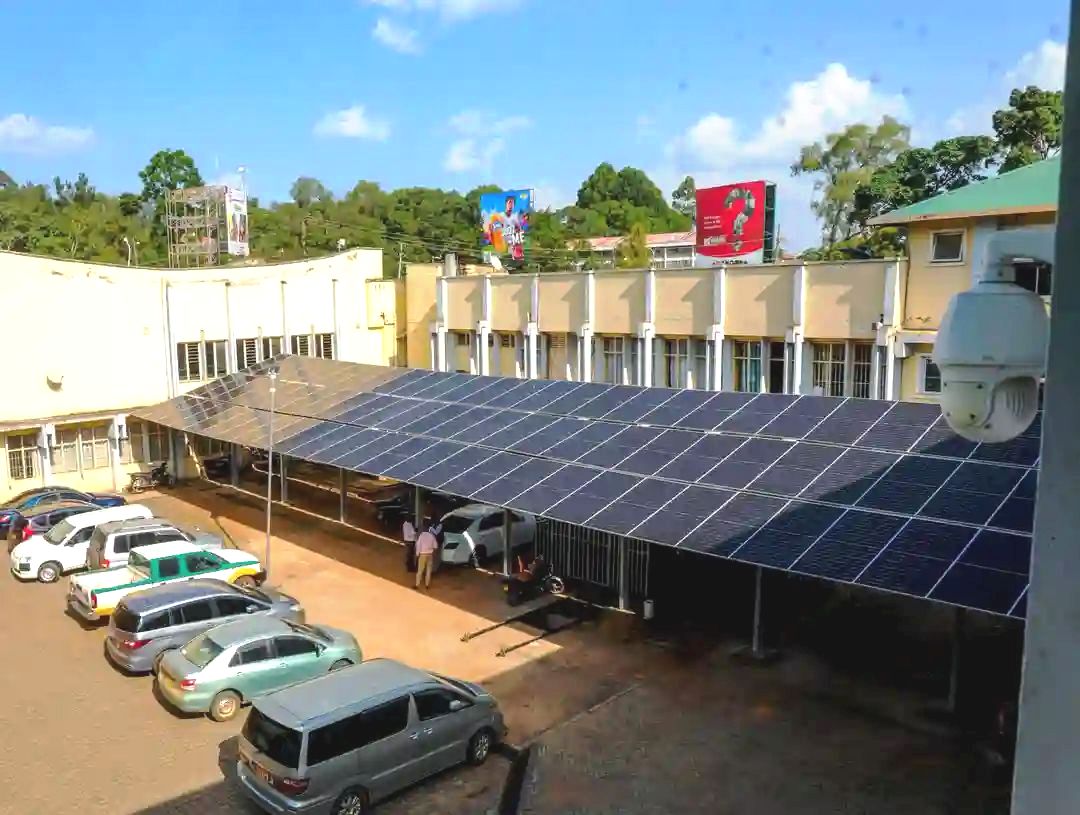
But perhaps nowhere does this transition carry greater symbolism than in Kakamega County. For decades, county headquarters across Kenya have depended almost entirely on the national electricity grid. Today, the Kakamega County Headquarters stands as a visible symbol of a changing era.
Its newly completed Sh16.8 million solar power project has transformed the administrative nerve centre into a clean-energy facility capable of significantly reducing electricity costs while ensuring uninterrupted public service delivery. The project is expected to slash electricity expenditure by more than 90 percent, providing reliable power for offices, critical climate monitoring servers, and essential county services.
The initiative was funded under the Financing Locally-Led Climate Action (FLLoCA) Programme and involved the installation of 80 solar panels by Bullfinch Holdings Limited.
Governor Fernandes Barasa says the county’s vision extends far beyond reducing electricity bills. “Electricity costs are high, and that is why we initiated this project. Beyond lowering costs, we are investing in reliable energy that will strengthen weather monitoring, improve security, and support uninterrupted public services,” he says.
The county now plans to extend solar power to health facilities, beginning with Kakamega County General Hospital and Matete Level IV Hospital, where uninterrupted electricity can mean the difference between life and death.
Chief Officer for Climate Change, Water and Sanitation Mariam Were says operating theatres, Intensive Care Units, laboratories, and diagnostic equipment often rely on unstable electricity supplies. “Frequent outages can delay treatment, interrupt critical procedures, and put patients at risk,” she notes.
By embracing solar energy, the county hopes to ensure that healthcare workers spend less time worrying about power interruptions and more time saving lives.
The benefits will stretch beyond hospitals. Solar-powered streetlights are expected to improve security, allowing traders to keep businesses open longer and creating safer urban centres after dark. The county also plans to power weather stations in Likuyani, Matungu, and Malava using solar energy, ensuring uninterrupted climate data collection that helps farmers prepare for changing weather patterns.
As Kenya grapples with climate change, unpredictable weather, and increasing pressure on public finances, solar energy is emerging as more than just an alternative source of power—it is becoming a development strategy. For thousands of farmers whose livelihoods depend on accurate rainfall forecasts, reliable climate information is becoming just as important as fertiliser and quality seed.
The transition may reduce Kenya Power’s revenues as more public institutions migrate to self-generated electricity, but for county governments, the calculation is straightforward: every shilling saved on electricity can be redirected to classrooms, hospitals, roads, water projects, and agricultural programmes.
Across Kenya, rooftops once exposed only to the blazing afternoon sun are quietly becoming miniature power stations. And as solar panels spread from county headquarters to hospitals, markets, boreholes, and villages, they are illuminating more than buildings—they are lighting the path toward a future where development is powered not by rising electricity bills, but by the limitless energy shining overhead every single day.