
|
Getting your Trinity Audio player ready...
|
By Melisa Mong’ina
Mombasa, Kenya: Earning a school certificate is frequently much easier for young people than securing employment afterward. Graduates often find that their acquired skills are misaligned with contemporary job market demands, while numerous employers strictly require prior experience.
In an effort to address this disparity, the Mombasa County Future of Work Report has been introduced by Mizizi Elimu Afrika, in partnership with the County Government of Mombasa, SwahiliPot Hub Foundation, and the Global Development Incubator (GDI). This extensive study examines the evolving labour market, focusing on youth employment trends, employer demands, and essential skills.
The report found that 38.8% of young people are unemployed and actively looking for work, while 35.2% are self-employed and only 19.4% are in wage employment, highlighting the limited availability of formal jobs and the need for multiple pathways into decent work.
It also found that employers were willing to support pathways into work, despite limited immediate vacancies. Out of the surveyed 1,821 employers, 52.3% expressed interest in recruitment support, while 9.2% were willing to offer internships or work-based learning opportunities, and only 1.9% reported having current vacancies.
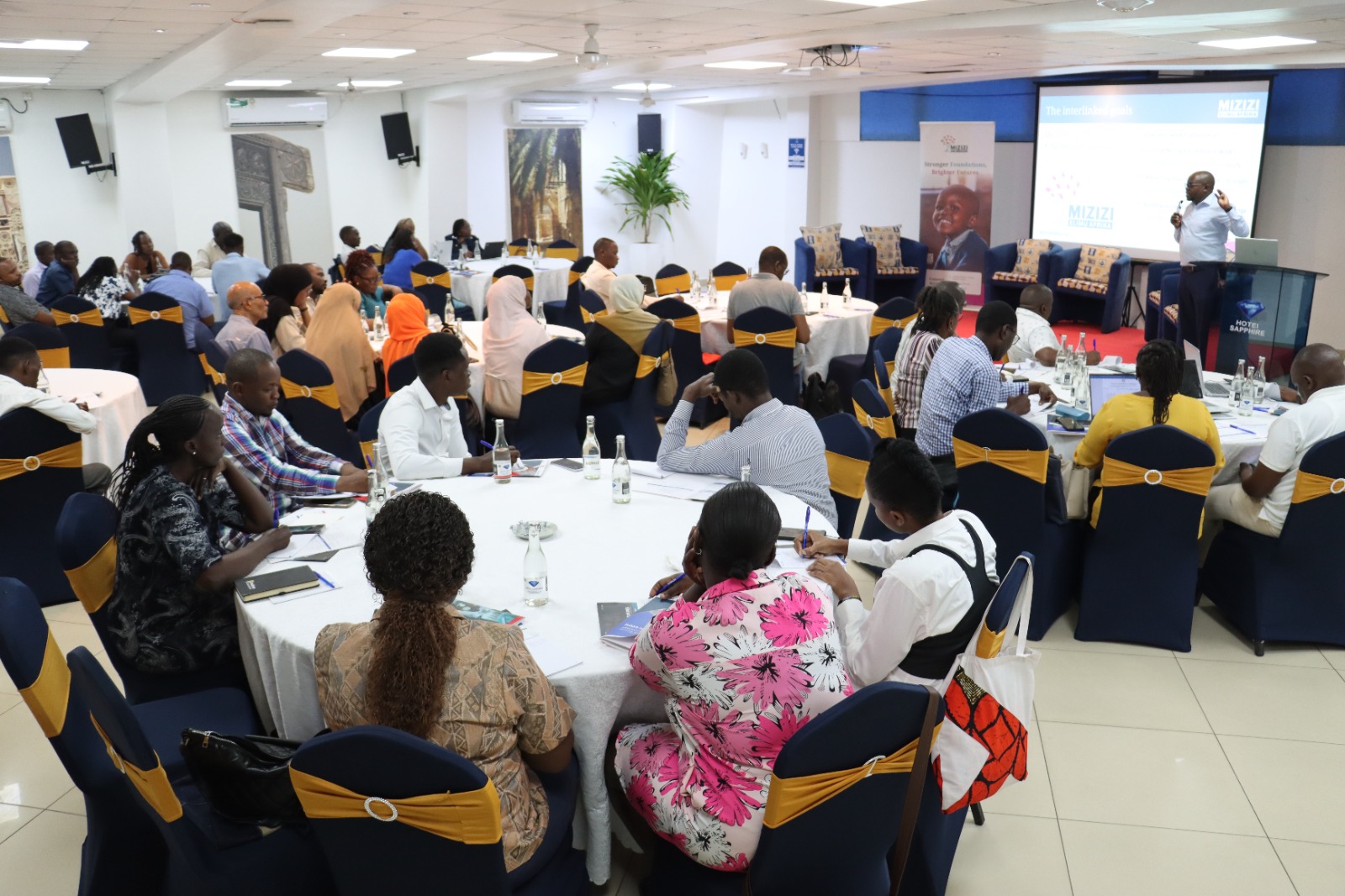
Speaking during the launch, Dr. Maurice Mutisya, Research Director at Mizizi Elimu Afrika, said the study revealed that many graduates enter the labour market with skills that no longer match employers’ needs by the time they complete their training. He added that employers should give young people employment opportunities for them to secure their first jobs and experiences.
“One of the findings we identified was the skills mismatch,” Dr. Mutisya said. “You join college and graduate, but by the time you transition, the demand and skills the employer wants differs from what you already have.”
He emphasized that young people must understand their interests, strengths and career aspirations, commending the Competency-Based Education (CBE) system for encouraging learners to begin identifying their interests while still in junior school. Dr. Mutisya also noted that parents, teachers, mentors and other stakeholders should provide continuous support and guidance to young people.
“We often see youth go into training not because they are interested but simply because that is what is available,” he said. “They have young minds; they still need our support and guidance to be matched with the right opportunities.”

According to Ibrahim Khamis, Mombasa County Executive Committee Member (CECM) for Blue Economy, Cooperatives, Agriculture, and Livestock, one of the biggest challenges facing young people is the skills gap, which is partly caused by inadequate practical training.
“In the Blue Economy sector, particularly in cruise ship operations, young people cannot access opportunities without hands-on experience and practical skills,” he said.
To bridge this gap, the county is strengthening vocational education through institutions such as Mtongwe Vocational Training College, which equips young people with current fishing techniques, marine and swimming skills, preparing them for careers within the Blue Economy and increasing their chances of employment.
“Mombasa is well known for our port and many ships come here. It will be ironic if our young people are unable to work on these ships,” Khamisi added.
Atrash Ali, Chief Operating Officer at SwahiliPot Hub Foundation said decision-makers often develop policies that do not fully align with young people’s needs because they lack comprehensive data to inform effective interventions.
He highlighted that challenges affecting youth participation in employment should be addressed through interventions such as psychosocial support, which can help young people strengthen their motivation, develop positive behaviours and improve their ability to remain engaged in employment and other opportunities.
Ali stressed that collecting data is critical in designing and improving youth development programmes, noting that evidence gathered through such interventions helps inform policies and programmes that better support young people.