|
Getting your Trinity Audio player ready...
|
By Shaban Makokha
Kakamega– A dark cloud of political violence is once again hanging over Kenya, stirring painful memories of a past when political competition too often descended into confrontation, destruction, and bloodshed.
Against this worrying backdrop, the Supreme Council of Kenya Muslims (SUPKEM) has broken its silence, issuing a powerful call for justice, restraint, and the protection of Kenya’s democratic space.
Reacting to the violence witnessed in Homa Bay, SUPKEM National Youth Leader Ibrahim Muchelule delivered a message that went beyond condemnation—it was both a warning and an appeal to political actors.
Two people, including a police officer, were killed, and scores injured during the chaos in Homa Bay last Sunday, when gangs of youth disrupted the Linda Mwananchi rally. Police sources said the officer, attached to Nyando Police Command, was driving at high speed when he was struck by a flying stone. A woman of Ugandan origin was run over by another speeding vehicle during the melee.
Others injured suffered gunshot wounds during attacks on members of the Linda Mwananchi team as they made their way into Homa Bay Town from Sindo in Suba South. Several victims also sustained deep panga cuts on various parts of their bodies. They were taken to Homa Bay County Teaching and Referral Hospital for first aid before being transferred to private facilities for further treatment.
The violence left a trail of destruction, with at least six vehicles torched. Among them were a vehicle belonging to the Trans Nzoia county government and another owned by Mediamax Network Limited, which was targeted as journalists covering the rally came under attack; their equipment was vandalised or stolen.
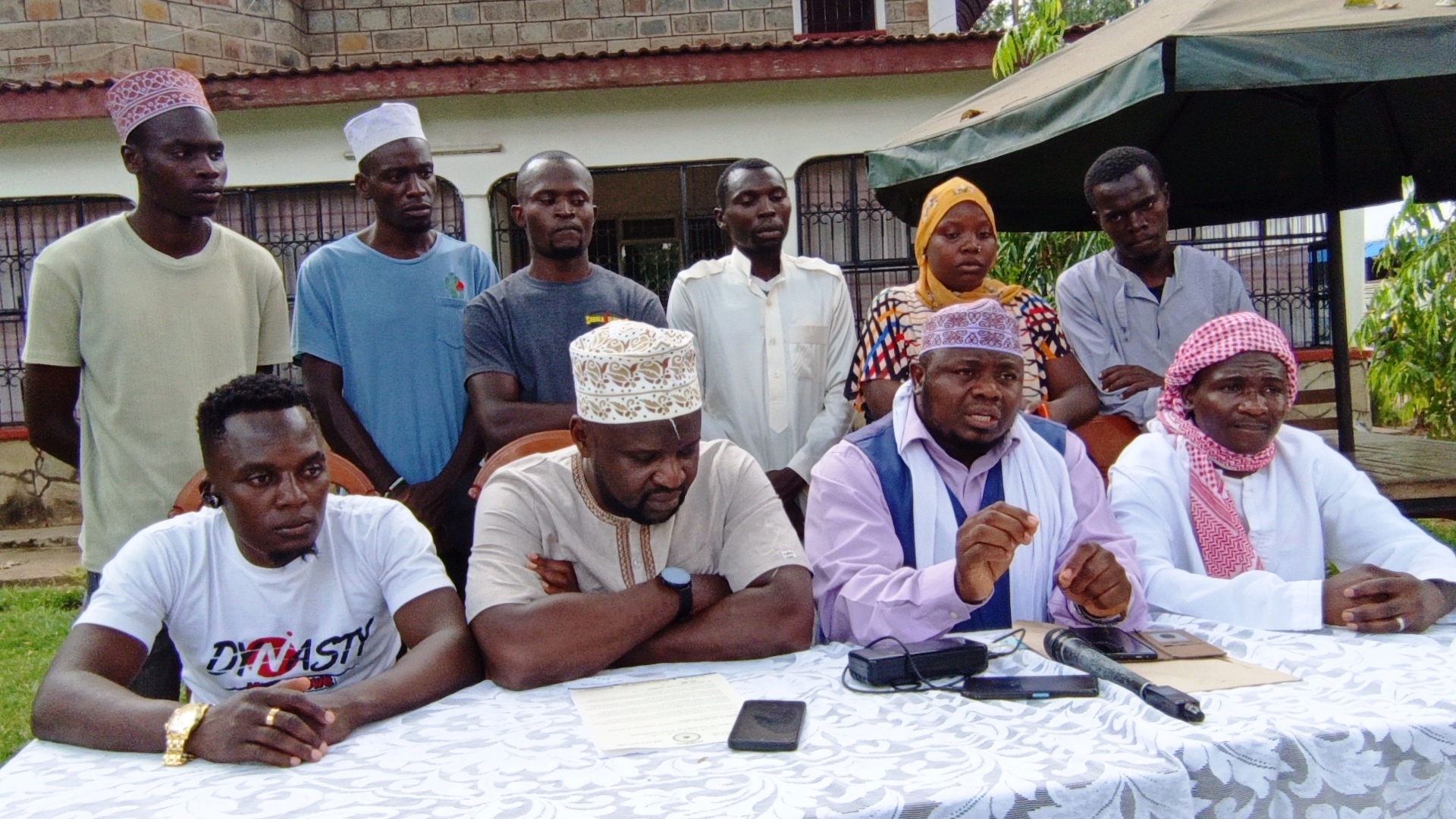
Addressing the press in Mumias town, Muchelule condemned the violence in the strongest terms, saying intimidation, destruction of property, and political confrontation had no place in a country governed by the rule of law.
Perhaps most importantly, his message was a plea to Kenya’s young people not to allow themselves to become weapons in the hands of power-seeking politicians.
“Violence, intimidation, and destruction of property only serve to undermine peace, social cohesion, and the fundamental rights of citizens,” he said.
His words come at a time when political temperatures are rising and the country is slowly entering another fiercely contested electoral period, raising fears that political disagreements could once again spill into violence.
For millions of Kenyans, memories of previous election-related violence remain painfully alive. Families have lost loved ones. Businesses have been destroyed. Communities have been divided. Young people have been left with scars that cannot easily be erased.
Muchelule’s concern, therefore, is not merely about what happened in Homa Bay—it is about what could happen tomorrow if the country allows political violence to become normalised.
At the heart of his message is a simple but powerful principle: Kenya’s democratic and political space must remain open, peaceful, and safe for every citizen.
He challenged the government and political actors to ensure opposition voices are protected and that political competition does not become a contest of intimidation. A democracy, he warned, cannot thrive where citizens fear attending political meetings, expressing their views, or supporting leaders of their choice.
“Political disagreement should never become a licence for violence,” he warned. “Neither should political affiliation become a shield against prosecution.”
Muchelule called on the National Police Service and the National Cohesion and Integration Commission (NCIC) to move swiftly to establish what happened in Homa Bay and Nakuru counties over the weekend, identify those responsible, and ensure justice is served. He insisted that investigations must be impartial, transparent, and firmly anchored on evidence.
No individual, he argued, should be above the law because of political connections, social standing, or affiliation. That message carries particular weight in a country where accusations of political protection and selective justice have repeatedly fuelled public frustration.
“The police should act without fear or favour whenever individuals cross the line, and political connections should not shield perpetrators from the law,” he warned.
Perhaps the most disturbing aspect of the current political environment is the growing concern over the use of young people to intimidate opponents, disrupt political activities, or create fear. Muchelule’s warning against the deployment of goons strikes at the heart of a dangerous political culture.
Young people—who should be at the centre of Kenya’s development—are sometimes reduced to instruments of political confrontation. They are mobilised to shout, fight, and defend political personalities. Yet when violence erupts, it is often ordinary young people who pay the heaviest price. Some end up injured, others arrested, and some lose their livelihoods, leaving families to pick up the pieces. Political leaders, meanwhile, often move on to the next contest.
Muchelule wants young Kenyans to see through this cycle. He has urged them to reject attempts to turn them into instruments of violence and instead use their energy to promote peace, justice, and democratic participation. For Kenya’s youth, this is perhaps one of the most important messages emerging from the SUPKEM statement.
The country’s young people constitute a significant force in politics and society. They have the numbers, energy, and ability to influence the nation’s direction. But that power can either build Kenya or destroy it.
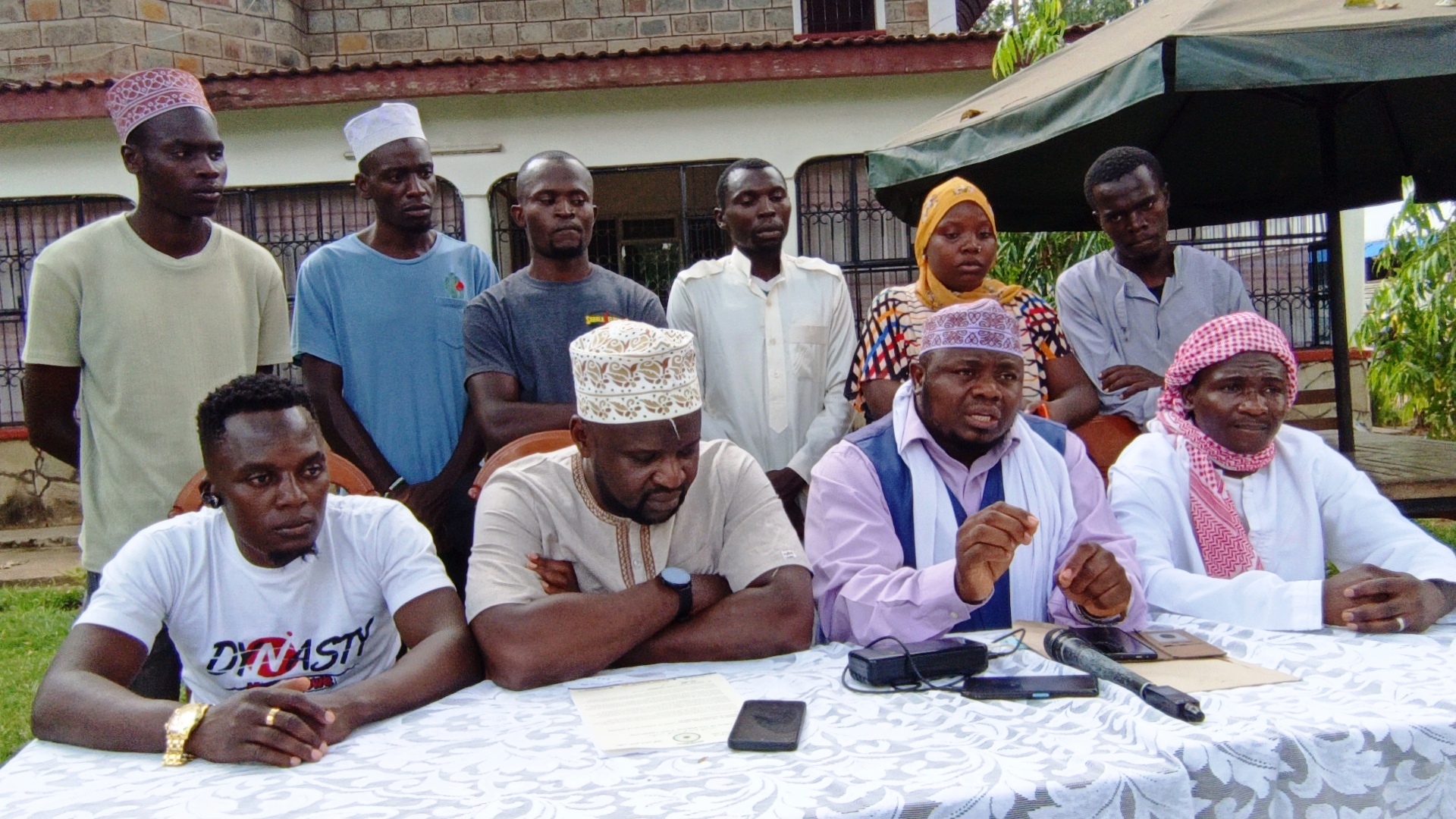
Mumias West sub-county SUPKEM chairman Abbas Abdul-Aziz also urged young people to choose construction over destruction, dialogue over confrontation, and the ballot over the stone, panga, or machete. He also called on youths to refuse every politician who tries to convince them that violence is the price of political loyalty.
The warning is particularly significant as political mobilisation gathers momentum ahead of the next electoral contest. History has demonstrated that political violence rarely begins with the first stone thrown. It begins much earlier—with inflammatory rhetoric, insults, political intolerance, ethnic suspicion, misinformation, and the deliberate creation of fear. By the time violence erupts on the streets, the foundations have already been laid.
That is why SUPKEM is calling for restraint now, before political temperatures become uncontrollable.
“Why should people from the same community, who attend the same church or mosque, fight and injure or kill one another because they were incited by politicians? Politics is like a hotel—you enter the one you want and eat what you want. You can even enter the same hotel but choose to eat different food. This should not culminate in hatred and violence,” he warned.
Muchelule also wants security agencies to investigate the Homa Bay incidents and ensure that anyone found culpable faces the full force of the law. The call is significant because failure to hold perpetrators accountable can create a dangerous cycle. When people commit violence and walk away without consequences, others may conclude that violence is an acceptable political tool. That is how impunity grows, fear spreads, and a democratic society slowly loses its moral compass.
For Muchelule, the answer must be different—the law must speak louder than political power, and justice must be blind to party colours.
Muchelule has also placed responsibility squarely on the shoulders of political leaders, calling on them to restrain their supporters and reject confrontation that threatens lives, property, and national cohesion. Political leaders have enormous influence over their supporters. A single statement can calm thousands, but a reckless one can ignite anger across entire communities.
“Leaders therefore have a responsibility to understand the weight of their words,” Muchelule noted. “They must not preach peace in public while quietly encouraging confrontation behind the scenes. They must not condemn violence when it affects their supporters and celebrate it when directed at their opponents. Kenya deserves better.”
In the past, Kenya has paid a heavy price for political violence. Every generation has inherited stories of families displaced, businesses destroyed, and communities divided because political competition was allowed to become a battle for survival. A young person pushed into violence may carry the consequences for the rest of their life.
This is why the warning from SUPKEM comes at a critical moment. It is a reminder that elections should be about ideas, policies, and leadership—not intimidation, fists, and destruction.
Muchelule’s appeal ultimately goes beyond the Muslim community. It is a message to every Kenyan—regardless of political party, ethnicity, religion, region, or social standing.
“Kenya belongs to all its citizens. The democratic space belongs to everyone. And the right to disagree peacefully is one of the most important freedoms in a democracy,” he added.
SUPKEM, he said, remains committed to peace, justice, constitutionalism, and peaceful coexistence among Kenyans.
And as political temperatures rise, Muchelule’s message is unmistakable: The country must not wait for another tragedy before it chooses peace.