
By Mercy Kachenge
Nairobi-At 2 a.m., a woman arrived at a health facility needing emergency maternity care. Her blood group presented an immediate challenge: the facility had only one unit of the blood she needed, yet approximately five units were required. She also needed to be taken to theatre.
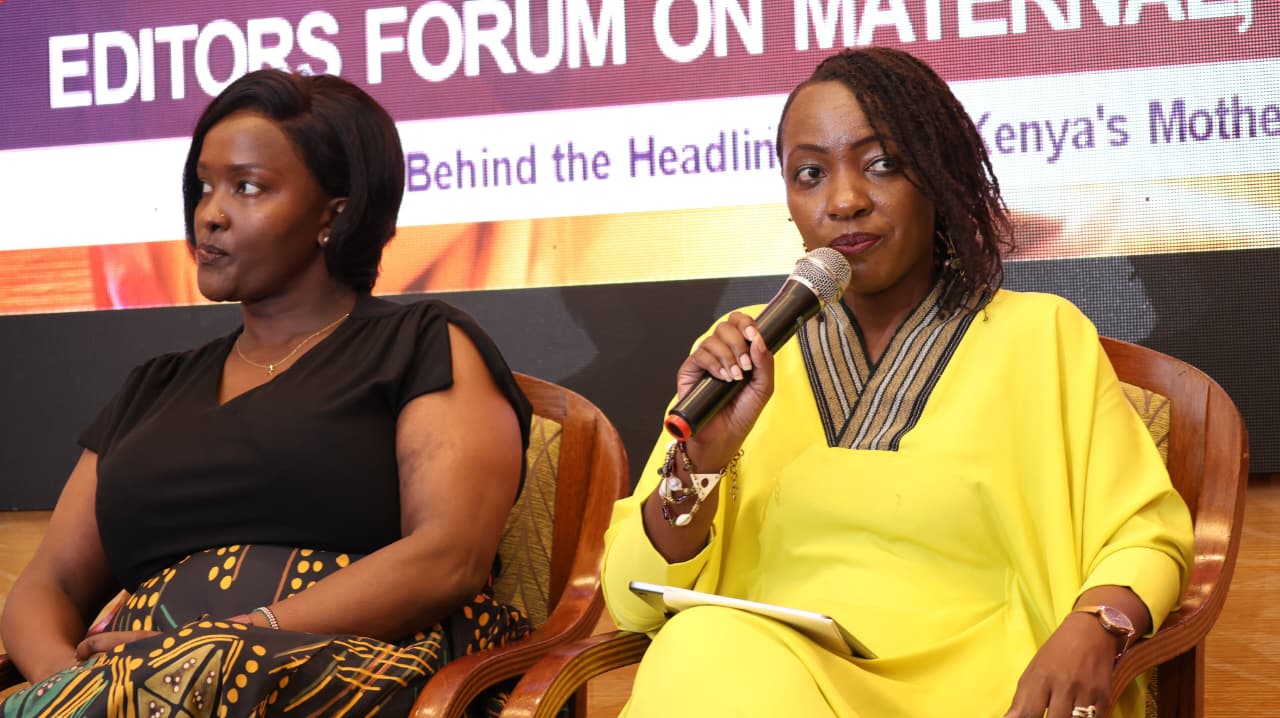
For Dr Mary Maina, Chair of the Inter-County Maternal and Perinatal Death Surveillance and Response (MPDSR) Committee, the emergency became a test not only of clinical expertise but of everything surrounding the care a patient receives.
She had a rare blood group.
From 2 a.m. until 9 a.m., the medical team searched for additional blood. Health workers made calls, reaching out to people who could help locate the required supply. By the time further blood support was found, seven hours had passed. Maina recalled that none of the team had slept.
The account, shared during a discussion on maternal and newborn health, exposed a difficult question about Kenya’s progress in preventing maternal deaths: what happens when a woman reaches a hospital, but the resources needed to treat her are not immediately available?
It is a question that shifts the conversation beyond whether pregnant women can access health facilities. It asks whether those facilities are ready to provide the right care, with the right personnel, medicines, equipment, and support, at the moment an emergency occurs.
For Maina, the incident also illustrates why maternal and newborn deaths cannot be understood simply by identifying an individual health worker who may have failed to act. A clinician can be present, trained and willing to provide care, but still be constrained by shortages and weaknesses beyond their control.
“Before you say that the doctors and the nurses failed that woman or that newborn, please try to understand the environment in which this health worker works,” she told the gathering.
Her concern is that frontline workers are frequently held responsible for outcomes without sufficient examination of the conditions in which they provide care. The distinction matters because maternal death reviews are intended to identify where the health system failed and what must change, not merely to assign blame.
The MPDSR process is designed to review maternal and perinatal deaths, identify contributing factors, and guide improvements in the quality of care. Yet Maina argued that recommendations emerging from these reviews must translate into funded interventions. Repeatedly identifying the same weaknesses without providing the resources to address them risks leaving facilities exposed to similar emergencies.
Her account of the seven-hour search for blood is therefore more than an isolated clinical experience. It raises questions about blood availability, emergency preparedness, referral arrangements, and whether facilities can access critical resources without depending on urgent personal networks.
The wider problem is also visible in how emergencies develop. Maina used the Swiss cheese model of patient safety to explain how a maternal death can result from several missed opportunities rather than one isolated mistake.
In her illustration, a pregnant woman with high blood pressure may pass through several points of care without receiving the appropriate response. A reading may be recorded but not acted upon. At another facility, treatment may be initiated without the correct follow-up. Later, an overstretched maternity ward may fail to monitor the patient’s condition as frequently as required.
Each weakness creates another opportunity for the situation to deteriorate. When the safeguards that should protect the patient fail at different stages, the consequences can become severe.
The lesson is that preventing maternal deaths requires more than training an individual health worker. It requires systems that allow clinical knowledge to translate into timely action.
That includes adequate staffing, essential medicines, functional equipment, effective referrals, reliable blood supplies, and leadership that responds to problems identified at facility level. It also requires accountability beyond the person providing care at the bedside.
Maina’s account is particularly significant because it challenges the assumption that the presence of a health facility automatically means a woman is receiving safe and effective care.
Kenya has made efforts to improve access to maternity services, including the introduction of free maternity services and the Linda Mama programme in 2013. But Dr Wangui Muthigani, a public health specialist and medical doctor who has worked in Kenya’s health sector and policy development, said expanding access did not automatically resolve the quality-of-care challenges facing mothers.
The initial objective was to reduce the financial barriers that prevented women from seeking maternity services. More women were expected to reach health facilities, but maternal and neonatal deaths remained a concern. This forced health authorities to examine what happened before, during and after a woman arrived for care.
Muthigani explained the three-delay model: delays in deciding to seek care, delays in reaching a health facility, and delays in receiving appropriate treatment after arrival.
While the first two delays remain important, the third exposes the responsibilities of the health system itself. A woman may recognize danger signs and arrive at a hospital in time, but still encounter inadequate staffing, missing commodities or inconsistent clinical care.
She said some women also reach antenatal services late, while others do not receive the full package of care or the follow-up required to identify complications early.
For Muthigani, the challenge is therefore not simply to have policies but to implement them consistently across facilities. A policy that works in one hospital but is not translated into practice elsewhere cannot guarantee equal protection for women.
The quality of maternity care also extends beyond clinical interventions. Women’s experiences, including how they are treated by health workers, whether their privacy is respected and whether facilities provide clean toilets and appropriate spaces, influence how they experience the health system.
Muthigani said women have raised concerns about communication, privacy, the availability of curtains, pain management and the support provided after complications or the loss of a baby. These experiences, she argued, should inform policy and the delivery of respectful and dignified maternity care.
The point is important because a health system cannot measure its performance only through the number of women who attend facilities or the number of deliveries conducted. It must also examine whether women receive the care they need and whether their dignity is protected.
The scale of the challenge is reflected in Kenya’s 2025–26 Kenya Mini-Demographic and Health Survey. The survey estimates the maternal mortality ratio at 263 deaths per 100,000 live births for the seven-year period preceding the survey. It separately estimates the pregnancy-related mortality ratio at 287 deaths per 100,000 live births. The two measures are different and should not be treated as interchangeable.
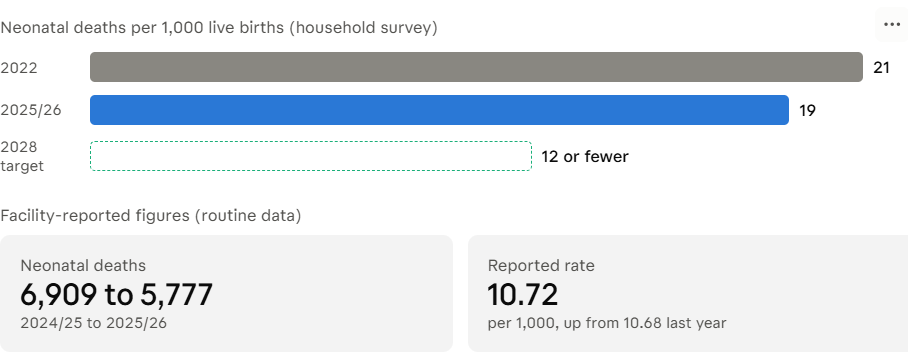
Although these figures provide an important national picture, they do not explain every weakness that contributes to maternal deaths. That requires examining the people, resources and decisions behind the delivery of care.
For Dr Ouma Oluga, Principal Secretary for Medical Services, the availability and use of data are central to identifying where the system is failing. He described efforts to consolidate more than 70 Ministry of Health systems so that information from different platforms can communicate with one another.
According to Oluga, the government receives daily facility information covering mothers seen, maternal deaths, births, child deaths, and stillbirths. He said the information is transmitted to national leadership and used to strengthen oversight, particularly in 26 counties identified as having a high burden of maternal and neonatal deaths.
The intention is to move beyond collecting information and use it to guide decisions. If a facility records repeated maternal deaths, for instance, the information should prompt questions about the resources, staffing, and quality of care available there.
But data cannot replace the services it is supposed to improve. A dashboard may identify a shortage, yet the information will have limited value if the necessary medicines, equipment or personnel do not reach the facility.
Oluga pointed to infrastructure and equipment challenges he had encountered during his own experience working in a rural facility in Vihiga. He recalled that the theatre he knew in 2013–2014 was still in use, with ageing machines and equipment that were no longer functional.
He also described the pressure placed on referral hospitals when lower-level facilities cannot provide the services patients require. He cited surgical backlogs of approximately four months at Jaramogi Oginga Odinga Teaching and Referral Hospital and three months at Kakamega. Although these examples were not specific to maternity services, they illustrate the wider consequences of inadequate infrastructure and limited capacity across the health system.
For women experiencing obstetric emergencies, the ability of facilities to provide timely interventions and refer patients appropriately can be critical. A system that concentrates too many services at a small number of referral hospitals risks increasing pressure on facilities and delaying access to treatment.
Oluga also outlined a government adolescent health package targeting vulnerable groups, including refugees and adolescents without parents or guardians. He said the government had allocated KSh1 billion for the programme, with approximately KSh635 million remaining at the time of the discussion. Eligible adolescents are supported through payment of premiums to the Social Health Authority, with coverage intended to include both mother and baby up to the age of 19.
The package is part of wider efforts to address adolescent health challenges, including teenage pregnancy, sexual and gender-based violence and new HIV infections among young people. Its implementation, however, depends on identifying and registering eligible adolescents and ensuring that county governments and health facilities can deliver the intended services.
Beyond infrastructure and data, the health workforce remains another pressure point.
Prof Francis Wafula, an Associate Professor of Health Systems and Policy, argued that Kenya’s challenge is not simply the number of health workers it produces but whether the right cadres are available in the places where they are needed.
He cited an estimated health workforce of about 200,000 and a need-based staffing gap of nearly 24 per cent. These figures require examination against the underlying workforce assessment, but his broader argument concerns the mismatch between workforce production, distribution and actual service needs.
Some areas may have an oversupply of particular cadres while other facilities struggle to secure enough personnel. Without effective planning and mechanisms for sharing resources across facilities and between public and private providers, the existence of a large national workforce does not necessarily translate into adequate staffing where mothers need care.
Wafula also raised concerns about the welfare of health workers. He referred to research involving more than 10,000 health workers, examining measures including emotional exhaustion and depersonalization. He said nurses recorded high levels of emotional exhaustion, while doctors showed concerning levels of detachment from patients.
The findings point to a dimension of maternal healthcare that is often overlooked: the condition of the people expected to provide care. A health worker operating under sustained pressure, with inadequate staffing and limited resources, may struggle to deliver consistent services.
This does not remove the responsibility to provide safe care. Rather, it broadens the question of accountability to include the institutions responsible for staffing, working conditions, equipment and support.
The challenge becomes even more complicated when resources are spread across different government programmes and development partners.
Dr Matiko Riro of Savannah Global Health Institute said multiple partners were supporting health interventions, but their plans and activities were not always sufficiently aligned. Different organizations can work in the same counties while operating separate plans, creating the risk of duplication in some areas and leaving other needs inadequately addressed.
Riro said the government was working towards a more coordinated approach based on one plan, one budget, and one monitoring and evaluation framework. This would bring national and county priorities together while ensuring that development partners align their resources with government plans.
He also described efforts to link financial data with health data through digital public infrastructure. The objective is to follow resources from allocation to the services they are expected to deliver, making it easier to identify duplication, assess efficiency and determine whether vulnerable populations are benefiting.
For maternal health, the value of such coordination lies in whether resources translate into practical improvements at facilities. Funding, equipment and programmes should not be judged only by the amounts committed or the number of activities conducted. Their impact should be visible in the availability of services when women need them.
The same question of coordination applies to medicines and health technologies.
Dr David Mukanga of the Gates Foundation emphasized that having a product available does not necessarily mean it is safe, effective or ready for use. He argued that regulatory systems must ensure that products meet the required standards before they become part of routine healthcare.
Mukanga described work with Kenya’s Pharmacy and Poisons Board (KPPB)to strengthen the country’s regulatory capacity, including efforts towards World Health Organization (WHO) maturity level three. But regulation, he said, must extend beyond product registration.
Medicines and health technologies must also be incorporated into clinical guidelines and essential medicines lists, supported by appropriate procurement arrangements and distributed through functioning supply chains. Without these systems, a product may be approved but still fail to reach the patient who needs it.
His contribution adds another layer to the maternal health debate. A hospital’s readiness is not determined only by the presence of doctors and nurses. It also depends on whether the medicines and technologies required for safe care are quality-assured, available, and properly integrated into service delivery.
The discussions point to a central weakness in how maternal health progress is sometimes assessed: the different parts of the health system are often examined separately, even though a mother’s survival depends on their ability to function together.
A health worker cannot administer a medicine that is unavailable. A referral hospital cannot respond effectively to every emergency if lower-level facilities lack the capacity to manage complications. Data cannot improve outcomes unless it leads to decisions and funded action. Development partners cannot maximize their contribution if their programmes operate without alignment. And regulatory approval cannot protect patients if procurement and distribution systems fail.
For Maina, the response must include making accountability visible at every level, from the facility to county and national leadership. She also called for comprehensive emergency maternity services to be decentralized so that women do not have to travel long distances to access critical interventions.
She pointed to Kiambu County as an example of how local data can inform targeted action. After identifying Postpartum Haemorrhage (PPH) as a major contributor to maternal deaths at the county referral hospital, the county deployed a gynaecologist to each of its seven Level Four facilities and established arrangements for blood to be moved from the Level Five facility to lower-level hospitals.
Maina said the intervention had reduced public-sector maternal deaths attributed to postpartum haemorrhage, with one death reported in the year discussed compared with approximately 15 to 20 previously. The figures and comparison period require confirmation from county records, but the example illustrates the importance of translating evidence into local service changes.
For Riro, the media also has a role in following whether government and partner commitments are reflected in county plans, budgets and actual services. Reporting on allocations and policy announcements is not enough if journalists do not examine whether facilities have the resources they were promised.
Mukanga similarly urged the media to hold both governments and development partners accountable for aligning investments with national priorities and ensuring that programmes strengthen local institutions rather than leaving when external support ends.
Ultimately, Kenya’s maternal health challenge cannot be resolved through a single intervention or another set of recommendations. It requires a system in which the workforce, medicines, equipment, financing, information, regulation and leadership reinforce one another.
The woman who arrived at 2 a.m. needed emergency care. The medical team needed blood, and the search continued for hours. Her experience exposed the distance that can exist between having a health facility and having a fully prepared health system.
Seven hours of searching for blood should not be accepted as an ordinary feature of emergency maternity care. It should prompt questions about preparedness, resource allocation, and the systems that must be strengthened before the next woman arrives.
The measure of progress will not simply be how many policies Kenya adopts, how many dashboards it builds or how much money is committed. It will be whether a woman who reaches a hospital in an emergency can receive the care she needs without depending on a midnight search for the resources that should already be available.