|
Getting your Trinity Audio player ready...
|
By Omondi Rodgers
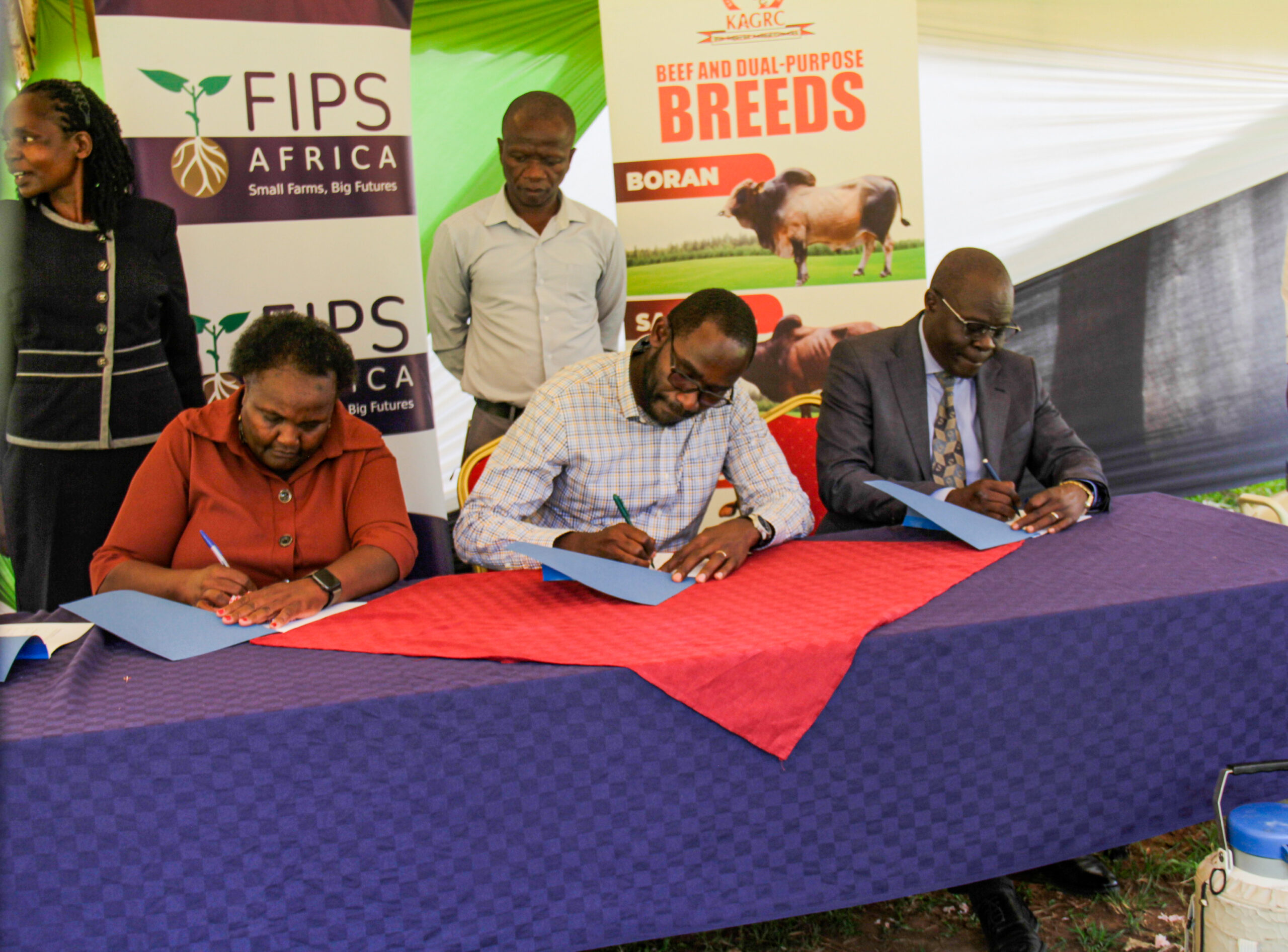
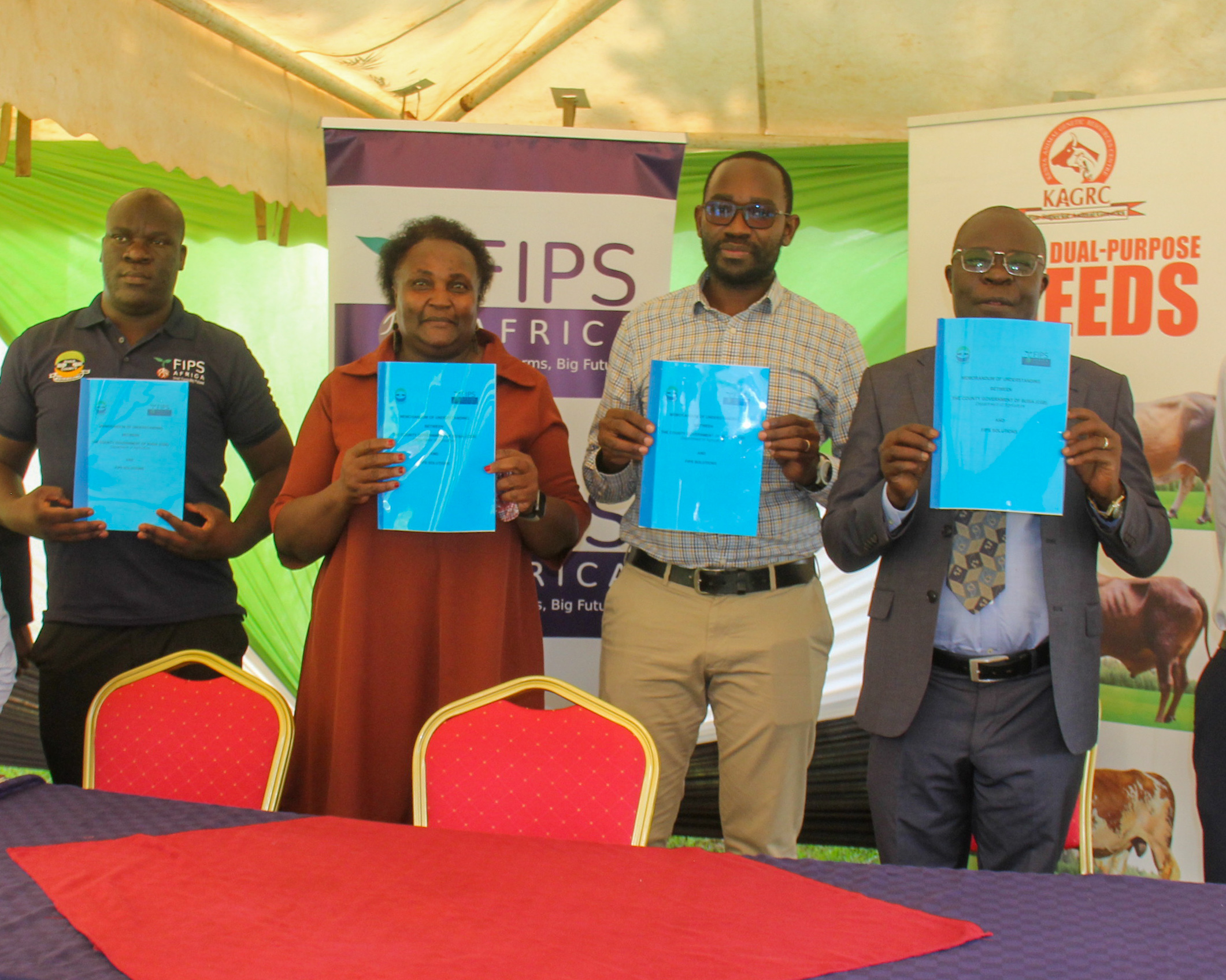
Busia, Kenya – In a major boost for local livestock farmers, the Busia County Government has joined forces with FIPS Africa and the Kenya Animal Genetic Resources Centre (KAGRC) to roll out a subsidized Artificial Insemination (AI) program. The initiative aims to build a climate-resilient dairy sector by producing disease-resistant cattle, boosting milk output, and significantly raising farmer incomes.
Speaking during the official MoU signing in Busia, County Executive Committee Member (CECM) for Agriculture, George Mukok, announced a dramatic price reduction for AI services—from KSh 2,000 down to KSh 700.
“This partnership makes quality breeding accessible to every farmer,” Mukok stated. “KAGRC will supply the high-grade semen, FIPS Africa will handle farmer training and capacity building, and our county service providers will manage the insemination process.”
Mukok stressed that the program is designed to curb the spread of diseases often associated with natural breeding, while also addressing the high failure rate of animals bought from other regions.
“We have seen many farmers suffer losses after purchasing cows that fail to adapt to Busia’s climate. Instead of importing problems, we are focusing on upgrading our local breeds—which are already well-suited to our environment,” he added.
Aiming for 5 Litres Per Cow Per Day
With land sizes shrinking, Mukok urged farmers to view dairy farming as a high-value business rather than a traditional practice.
“It is more profitable to keep one cow producing 40 litres of milk than 20 cows producing only 10 litres,” he noted. “To support this shift, we are also distributing pasture seeds to ensure farmers have access to quality animal feeds.”
FIPS Africa Partnership and Technical Manager Raymond Kojo outlined the project’s ambitious targets, revealing that the program will cover over 6,000 inseminations across Busia, Bungoma, and Kakamega counties—with at least 2,000 taking place in Busia.
“Our goal is to help farmers transition from producing just half a litre to at least five litres per cow daily. That leap could secure a minimum monthly income of KSh 10,000 per farmer and make them more competitive in the dairy sector,” Kojo explained.
KAGRC representative Lilian Naliaka highlighted that the centre will introduce sexed semen, allowing farmers to predetermine the birth of female calves—a critical advantage for expanding dairy herds.
“We want farmers to move away from traditional breeds and embrace improved stock with higher milk and meat yields,” said Naliaka. She also encouraged farmers to join SACCOs, noting that cooperative membership is key to unlocking government grants and other financial support programs.
Local farmers, led by Daniel Ayuka, expressed optimism about the program, citing past challenges with poor semen quality and broken cold-chain storage that often led to failed conceptions.
“Many of our cows failed to conceive because the semen wasn’t properly preserved. This new initiative guarantees access to quality semen and reliable AI services,” Ayuka said.
He added: “I currently produce about 70 litres from nine cows, but the demand in Busia remains high. With improved breeds through AI, we can significantly increase production and meet that demand.”
The partnership marks a significant step toward modernizing Busia’s dairy industry, promising higher yields, better animal health, and a more secure future for the county’s farmers.