|
Getting your Trinity Audio player ready...
|
By Joyce Kimani
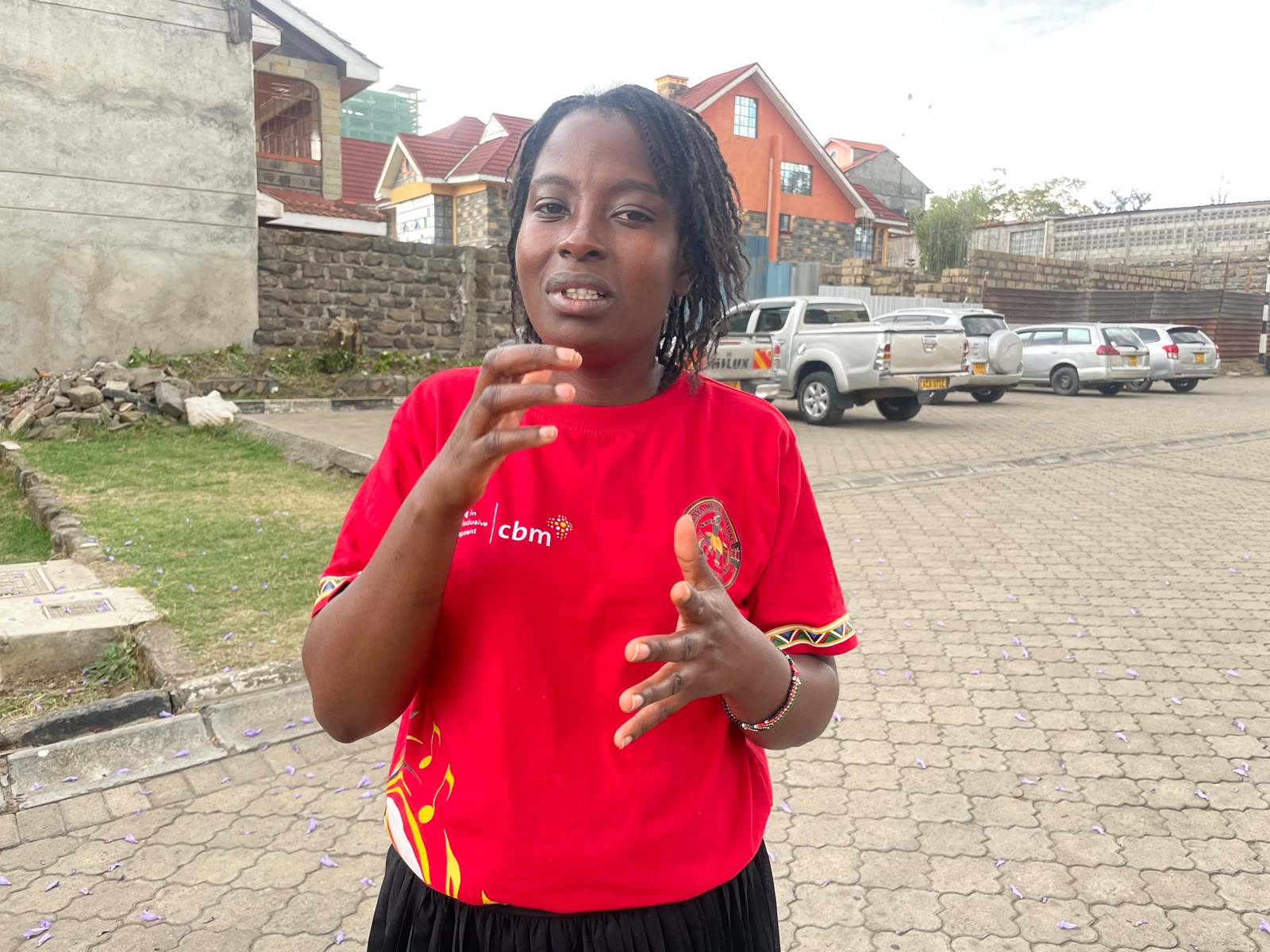
Nairobi-For Irene Waithera, a deaf mother of two, accessing medical care is often difficult.
When she visits a pharmacy to buy medication, she has to rely on an interpreter or write down her questions, which she says is tedious. Important information is also lost in translation.
“Our sentence structure is different, and sometimes the pharmacists struggle to understand what we mean,” she explains.
As a result, she now turns to AI chatbots for health information.
“I normally take a photo of what is ailing me, for example, a wound or boil, then upload it on the internet and ask for a diagnosis. Then I decide if it is serious enough for me to take it to the hospital or self-medicate. I point out the symptoms, and it tells me what is wrong,” she says.
Relying on chatbots for medical advice carries risk. A study published in Nature Medicine examined the reliability of large language models (LLMs), such as ChatGPT, as medical assistants for the general public, and highlights the limitations of relying on AI tools for medical decisions.
But for Irene, who learnt about AI from messages on WhatsApp and Facebook, the chatbots offer a way to overcome communication barriers and access information more independently.
She says that many deaf people communicate primarily through sign language and English, making it difficult to follow medical instructions communicated in Kiswahili. She uses Google Translate or ChatGPT to translate medical terms from Kiswahili to English.
Limited digital literacy
Risper Bosibori, a deaf foster mother of 20, most of whom are deaf teen mothers and survivors of sexual and gender-based violence, takes a more cautious approach.
Her technology training is limited to a two-week basic computer course she attended a decade ago. Fear of being hacked or falling victim to online scams makes her cautious about exploring digital platforms.
“I cannot even open something because I do not know what is genuine and what is not. No one has trained me on that. I have seen deaf people losing their money after being told they have won huge amounts of money. I avoid technology. It is hard to deal with something I do not understand, and I want to protect the children from this,” she says.
When she can’t access a Kenyan Sign Language (KSL) interpreter, Risper relies on voice-to-text apps as an alternative, but she says they’re often inaccurate when processing Kenyan English, Sheng, and people’s names. She adds that the absence of captions on videos shared on social media makes it difficult to access information, forcing her to skip the content altogether.
Risper and Irene are among Kenyans with hearing disabilities who face communication barriers in everyday life.
According to the 2019 census, people with hearing disabilities accounted for nearly 17 per cent of the recorded disability categories. Overall, persons with disabilities accounted for approximately two per cent of the population, with women making up 57 per cent of persons with disabilities.
Improving access to information
Digital tools with accessibility features, some of which are AI-enabled, can help deaf people overcome communication barriers.
A Kenya-based study on mobile phones as assistive technology by the Global Disability Innovation Hub and University College London examined how smartphones and accessibility features could improve access to information and everyday services.
Among deaf and hard-of-hearing participants, 82 per cent rated Google’s Live Transcribe, which converts speech to text, as helpful, while 73 per cent reported using it in real-world situations, including conversations with doctors. The study also documented participants using AI apps to obtain simplified explanations of unfamiliar words.
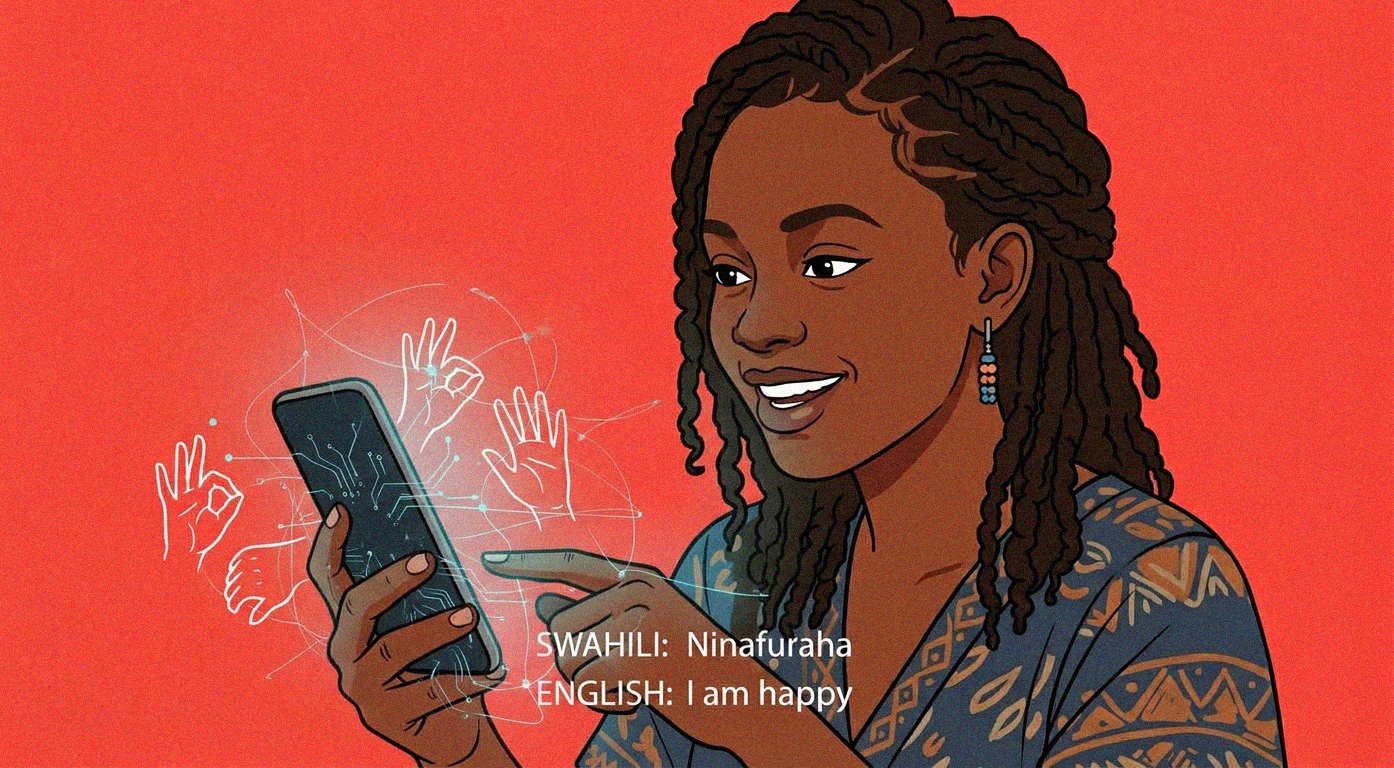
Risper says deaf people need training to understand and use technology, including AI, safely.
“Deaf people learn at gatherings and one-on-one engagements. Otherwise, we are left out when it comes to a whole new world of technology, and it is hard for us to explore it,” she says.
Kenya’s Joint Disability Inclusion Strategy 2025-2027 identifies several barriers to digital inclusion for persons with disabilities, including limited access to technology and digital tools, inadequate digital skills, and limited access to assistive technology. The strategy also points out persistent gaps in community outreach, inaccessible public and private digital infrastructure, and a shortage of professionals trained in digital accessibility.
Researchers in the mobile as assistive technology study documented improvements in digital skills among participants after they received smartphones, data bundles, and training on digital skills and accessibility features such as Live Transcribe, Live Captions, and Sound Amplifier.
Digital exclusion
Beyond skills, lack of phones is another barrier.
Diana Grace Kwendo, a sign language interpreter and deaf rights advocate, says access to devices and information is particularly challenging for deaf women.
“In so many cases, deaf couples use one phone as partners, and it is mostly with the men. They control the gadget,” she says.
The 2023/24 Kenya Housing Survey by the Kenya National Bureau of Statistics (KNBS) found that people with hearing disabilities had among the lowest rates of phone ownership among persons with disabilities, at 36 per cent for both women and men. They also recorded the highest rates of mobile phone sharing, with 16 per cent of women with hearing disabilities using shared phones.
The survey also found that only 16 per cent of people with hearing disabilities used the internet, and usage was lower among women, at 14 per cent, compared with 18 per cent of men.
“We’ve seen cases where they tell their wives that the information they are asking for is not important, or even the man saying that they do not have data bundles to allow them to read what is being talked about. This limits them from exploring technology,” says Diana.
This limited exposure is a double-edged sword. Lack of access and fear limit some deaf women from exploring technology, and the lack of digital skills hinders their ability to engage in digital spaces safely.
Diana recalls an incident during an exercise to translate the Bible into Kenyan Sign Language (KSL), when a participant received a phishing link.
One participant clicked the link and was subsequently contacted by a scammer claiming she had won money. The woman handed her phone to Diana, who recognised the fraud and intervened before she could share her financial details.
“She was saved by the fact that she could not speak to give them her bank details and M-Pesa PIN. She was lucky. We have had instances where many have lost their cash to such con games,” she adds.
Diana says deaf people are often excluded by digital literacy campaigns because they don’t accommodate their communication needs.
“There should be targeted campaigns that can reach them, and they should be in KSL and on different platforms. WhatsApp is their main mode of communication. Training them on what AI can do would improve their knowledge and prevent them from being victims of a very fast-developing technology,” she says.
AI has opened up ways to find information, but it has not removed the communication barriers Irene encounters in everyday life, including when she needs healthcare. Limited digital skills, concerns about online safety, and unequal access to devices also pose a challenge.
This article was produced as part of the Gender+AI Reporting Fellowship, with support from the Africa Women’s Journalism Project (AWJP) in partnership with DW Akademie. The journalist used AI-assisted research tools to review and summarise relevant policy and research documents, identify patterns, surface data points for independent verification, and extract key statistics. All reporting, analysis, editorial decisions, fact-checking, and final wording were done by the reporter, in line with Talk Africa’s editorial standards.