
|
Getting your Trinity Audio player ready...
|
By Halima Gongo
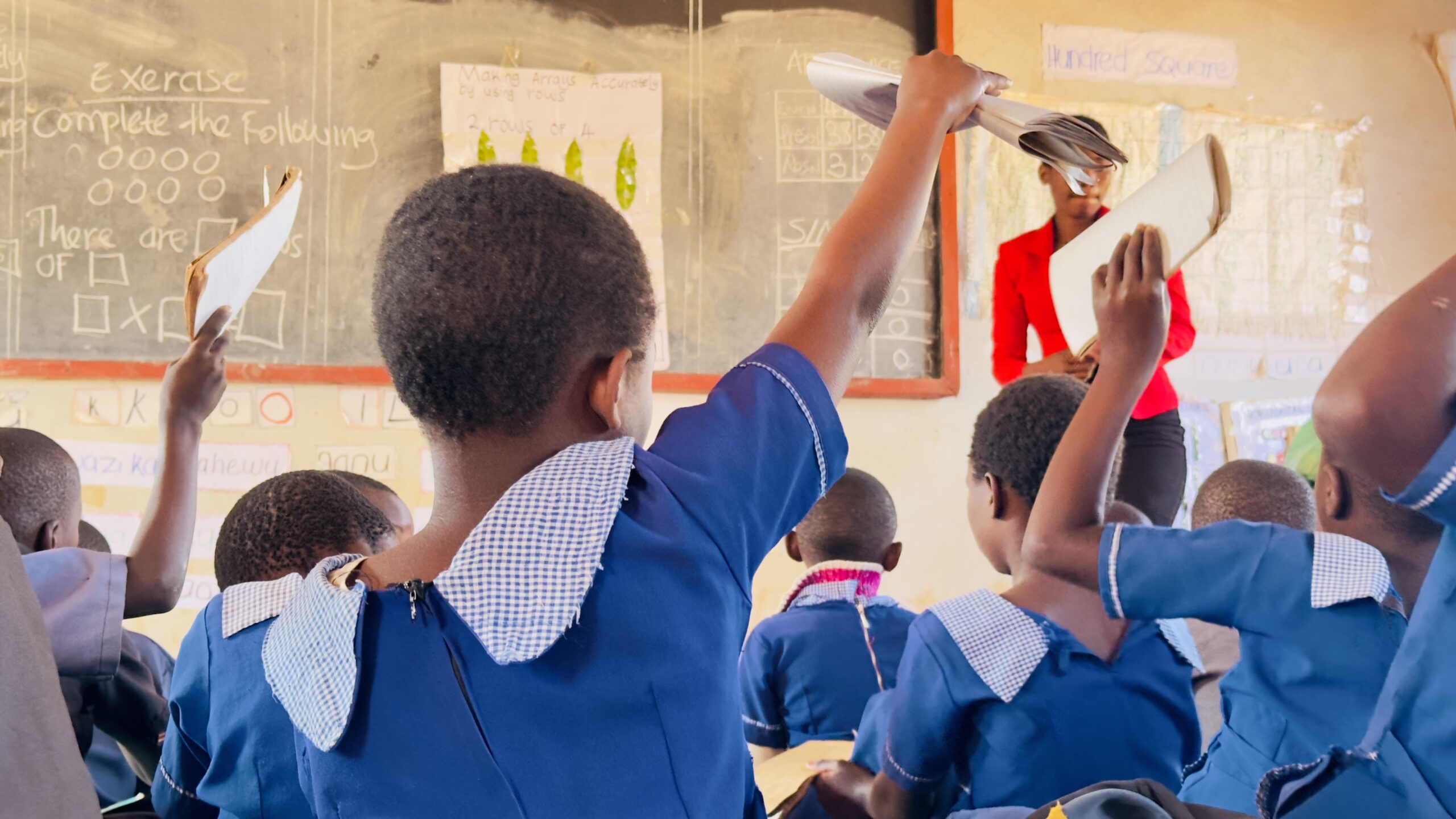
Lilongwe, Malawi: The first thing you notice when you enter Kakule Community Primary School in Lilongwe, Malawi, is the energy of the children.
On a chilly morning, Grade One learners sit closely together on a concrete floor, following their lesson with curiosity. Despite limited resources, the classroom is alive. Children answer questions, read aloud and compete eagerly for a chance to participate.
For many observers, the scene raises a bigger question: what allows children to remain engaged in learning despite the challenges many African classrooms continue to face?
Margaret Malunde, a teacher at Kakule Primary School, says the answer lies partly in making learning more connected to children’s everyday experiences, through familiar languages, use of supportive teaching methods and technology.
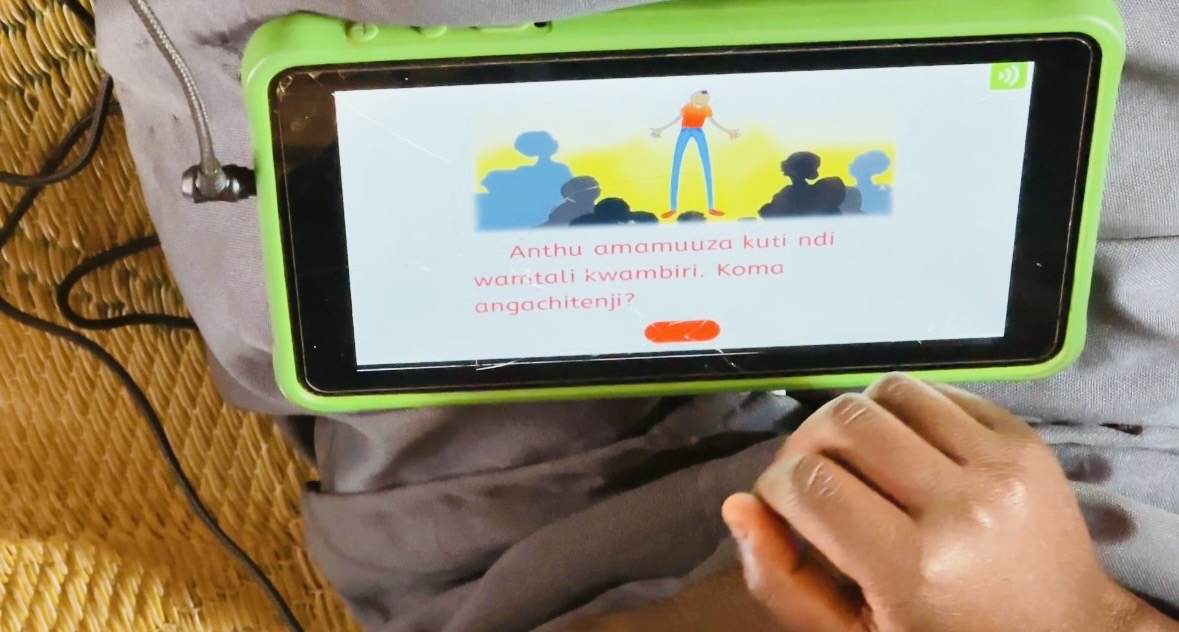
“Using Chichewa as a mother tongue language has helped because learners remember almost everything when we switch code. They also remember what they see on the tablet because they connect the lessons from the tablet with what we teach in class,” says Margaret
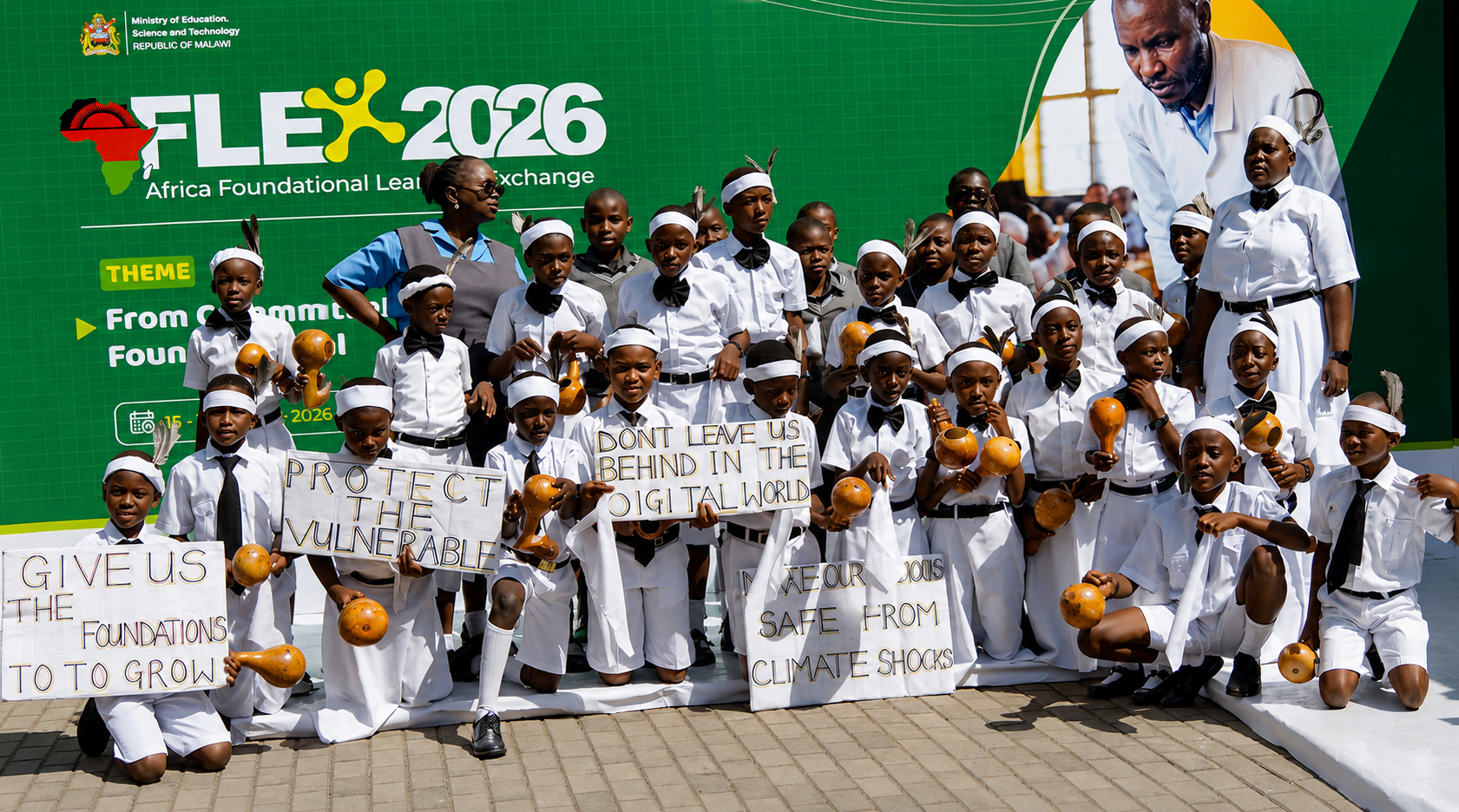
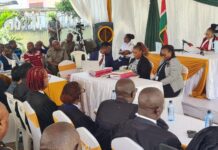
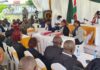
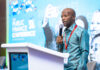
The experience at Kakule reflects some of the solutions discussed at the Africa Foundational Learning Exchange (FLEX) 2026, held in Lilongwe, where education leaders, policymakers, researchers and development partners from across Africa gathered to address one of the continent’s most urgent education questions. How to ensure children not only attend school, but actually acquire the foundational skills they need.
Held under the theme “From Commitments to Results: Delivering Foundational Learning at Scale,” FLEX 2026 focused on how countries can move beyond policies and commitments to implement approaches that improve learning outcomes inside classrooms.
One of the central discussions focused on a question facing many African education systems: what language should children learn in?
Evidence presented during the exchange showed that language plays a critical role in early literacy. Drawing on research synthesised by the Global Education Evidence Advisory Panel (GEEAP), experts highlighted findings from Effective Reading Instruction in Low- and Middle-Income Countries – What the Evidence Shows, a review of more than 150 studies across multiple languages.
The evidence showed that children learn to read more effectively when they begin in a language they already understand.
But researchers also emphasised that language alone is not enough. Strong literacy outcomes require structured teaching approaches that develop oral language, phonics, reading fluency, comprehension and writing skills.
Dr. Clement Abas Apaak, Ghana’s Deputy Minister of Education, said many children across low- and middle-income countries face a major disadvantage when they begin their education in languages they do not fully understand.
“Many children are taught to read in languages they do not speak or fully understand. This creates a major barrier because children are often trying to learn both a new language and the basics of reading at the same time,” he said.
To demonstrate the difference between recognising words and understanding them, GEEAP member and Gates Foundation Global Education Program Director Dr. Benjamin Piper asked delegates to read a short passage filled with unfamiliar, invented words.
Although participants could pronounce many of the words, most struggled to understand the meaning of the passage. And when the same story was rewritten using familiar words, comprehension became immediate.
The exercise demonstrated that besides decoding sounds, reading is also about understanding meaning.
However, translating this evidence into policy remains complicated.
Across Africa, countries must balance the language children speak at home, the languages used in classrooms, national identity and the practical demands of education systems operating in increasingly connected economies.
Kenya illustrates the complexity.
The country’s education policy encourages the use of the language of the learner’s immediate environment during early years of education, while introducing Kiswahili and English as learners progress.
But education experts say the challenge lies in implementation.
Virginia Wanjiru, Director in charge of Foundational Skills at Mizizi Elimu Africa, says the goal is not simply choosing one language over another, but ensuring children learn in a language that reflects their community realities.
“Kenya’s policy talks about the language of instruction, recommending the use of the common language within a community. For example, in a predominantly Maasai community, learners could be taught using Maa. But in a cosmopolitan area like Nairobi, the common language children share may be Kiswahili.”
She says many schools still face challenges, including limited learning materials, teacher preparation and assessment systems that support local language instruction.
“If you are going to use Maa(Maasai language) as a language of instruction, then you need teachers who can teach in Maa. But our teacher deployment systems have not always been designed with language in mind,” she explains.
While Kenya continues to navigate multilingual classrooms, Tanzania presents a different experience.
The country has built much of its education system around Kiswahili, a widely spoken African language that serves as the national language and a major medium of communication.
Musa Swila, Coordinator for Early Childhood Education at Tanzania’s Ministry of Education, Science and Technology, says this has reduced one of the barriers faced by many education systems where children must first learn a new language before learning basic concepts.
“For us, language has not been one of the biggest barriers because children learn through Kiswahili, a language widely understood across the country. Our challenges are more about teaching methods, learning approaches and other aspects of education,” he says.
Tanzania is now focusing on different ways of making children learn. Through the BOOST project, the country has trained thousands of teachers on play-based learning approaches designed to strengthen foundational literacy and numeracy.
The approach encourages interactive activities, learning corners and games as part of teaching and assessment.
Swila says play allows teachers to understand children beyond traditional tests.
“When children play, they become more natural, and you can see their abilities more clearly. Instead of giving a child a piece of paper and asking questions, play allows you to see whether a child can communicate, recognise themselves, control their emotions and interact with others.”
Across the continent, countries are testing different approaches to the same challenge.
In Senegal, policymakers have developed the National Harmonized Mother Tongue-Based Bilingual Education Model, known as MOHEBS, which combines national languages with French through a gradual transition approach.
Uganda has expanded programmes that support early grade learning in local languages. They have the UCatchUp programme, which uses the Learning to Read, Reading to Learn Across Languages (L2F2) model. L2F2 is the Language Learning from Familiar to Formal. Uganda has more than 40 local languages, in addition to many refugee languages. National policy requires children to learn in their mother tongue during Grades 1 to 3, before transitioning to English in Grade 4 and full English instruction from Grade 5 onwards.
Nigeria has also experimented with structured literacy and numeracy instruction in Kanuri through the Kanuri Arithmetic and Reading Initiative (KARI), supporting children who previously entered classrooms speaking a language different from the one used for instruction. Officials say the programme expanded from over 5,100 learners in 2019 to more than 55,000 learners by 2025.
These examples show that there is no single solution for Africa’s learning crisis.
Countries are taking different paths based on their histories, languages and education systems.
Since its launch in Sierra Leone in 2024, FLEX has become a continental platform where governments, researchers and educators share evidence, challenges and practical solutions for improving foundational learning.
The discussions continued in Rwanda in 2025 and, in 2026, moved to Malawi with a focus on turning commitments into measurable results. The conversation will continue in Abidjan, Côte d’Ivoire, in 2027, as African education leaders build on lessons from previous exchanges and continue searching for approaches that can deliver foundational learning at scale.
But the message emerging from FLEX 2026 was clear: Africa does not lack ideas
Across the continent, governments and education partners are generating evidence, testing approaches and developing solutions that respond to local realities.
The challenge is ensuring these solutions do not remain limited to pilot projects or individual programmes, but become part of education systems capable of reaching every child.
And perhaps that is what was unfolding inside Kakule Community Primary School.
The laughter, confidence and curiosity of those Grade One learners showed that the problem is not a lack of potential. Children are ready to learn. Communities have solutions. Teachers know what works.
The challenge is whether education systems can move fast enough to make those solutions the norm, not the exception.
Because Africa does not need to discover the answers, in many places, they are already being tested, proven, and lived every day inside classrooms.
The question is no longer whether Africa knows what works.









Great article! Thank you for highlighting our work with UCatchUp in Uganda. Just wanted to make a small correction: L2F2 is “Language Learning from Familiar to Formal.
Thank you Joanna, this is well noted and captured correctly in the story.
Comments are closed.