|
Getting your Trinity Audio player ready...
|
By Winnie Kamau
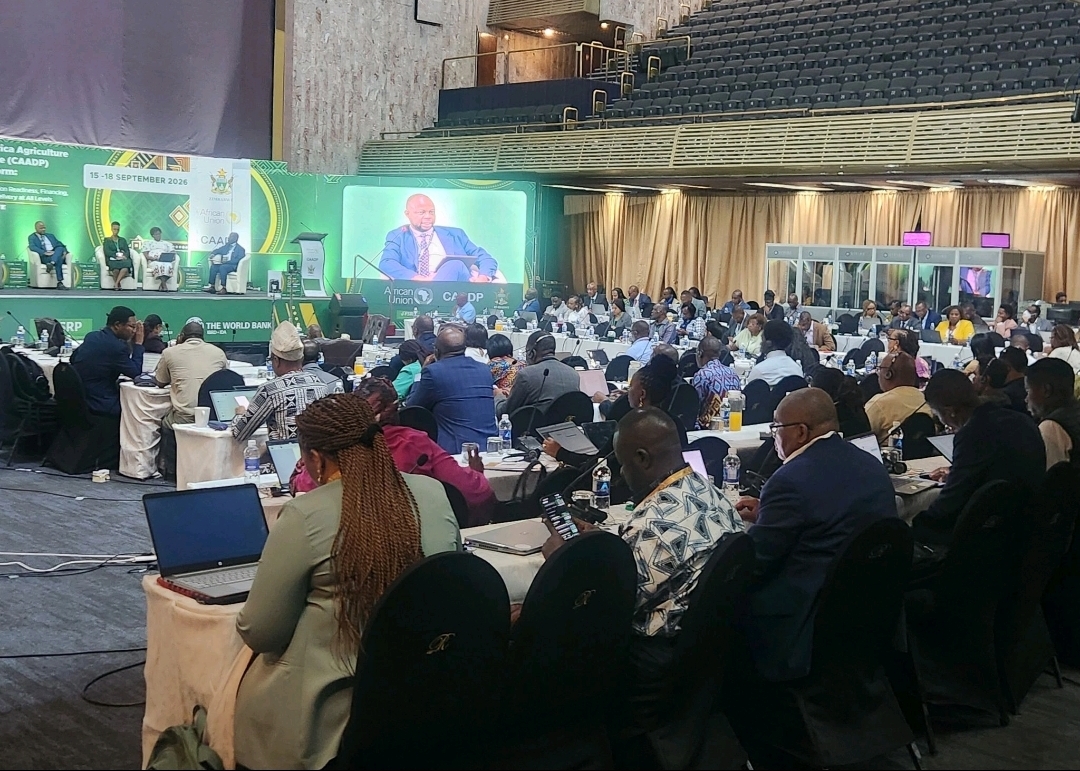
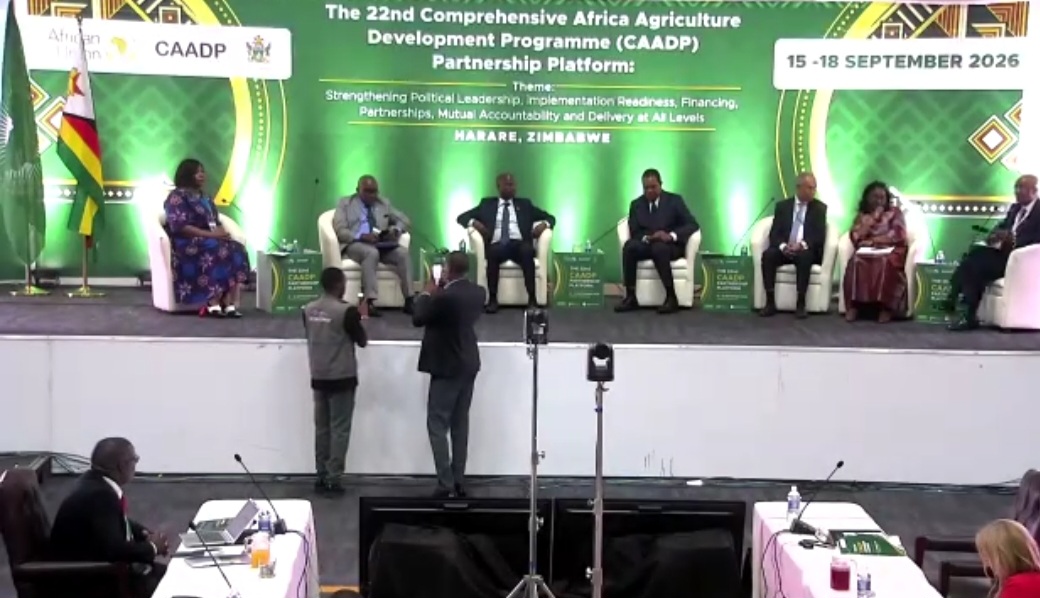
Harare, Zimbabwe: During a panel session at the 22nd Annual CAADP Partnership Platform (CAADP-PP) in Harare, representatives from the African Union, AUDA-NEPAD, the World Bank, FAO, the African Food Systems Parliamentary Network, and agriculture ministers from Zimbabwe and Eswatini convened to explore strategies for implementing the CAADP Kampala Declaration.
While panel discussions centered on technical requirements like financing, data, and institutional coordination, the conversation took a sharp turn when floor delegates delivered direct interventions.
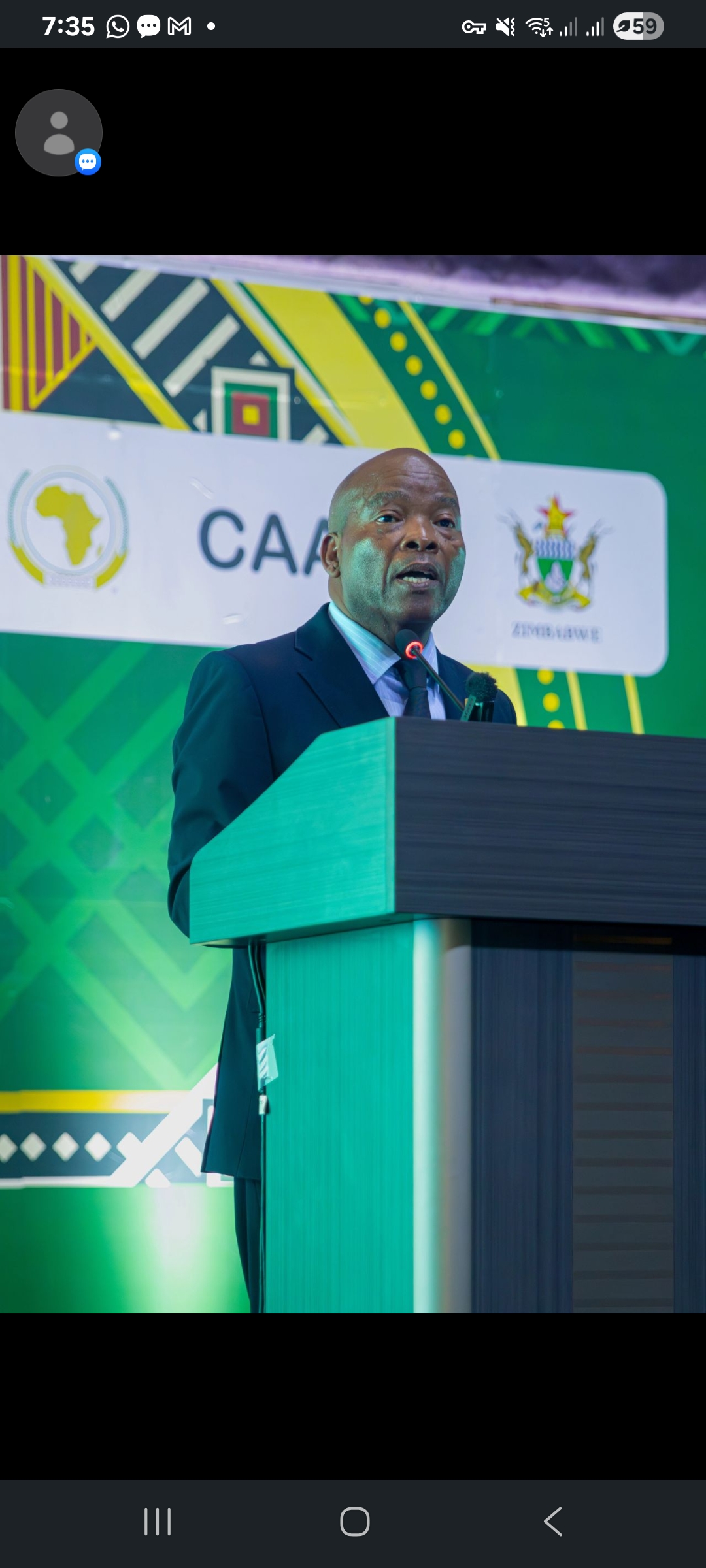
In his address, H.E. Moses Vilakati, AU Commissioner for Agriculture, Rural Development, Blue Economy, and Sustainable Environment, pointed out that Africa’s $100 billion yearly food import bill reflects a major lost economic opportunity. He called for curbing these imports by bolstering local agricultural production, enhancing processing capacity, and expanding intra-African trade.
Vilakati highlighted five key targets for the new decade: increasing agrifood output by 45%, reducing post-harvest losses by 50%, tripling intra-African agrifood trade, enhancing local value addition, and mobilizing US$100 billion in investment.
“Achieving these goals requires moving beyond declarations to concrete actions in irrigation, digital agriculture, and climate resilience, ensuring that policies translate into tangible results for farmers, youth, and women-led enterprises.” he said
The Technical Case: Coordination, Data, Financing
AUDA-NEPAD’s Esther Otabong outlined a four-part CAADP Kampala readiness programme based on Malabo lessons. Key elements include engaging permanent secretaries, consulting non-state actors, completing readiness missions in 15 member states, and establishing domestication guidelines.
From those consultations, she said, four cross-cutting issues kept surfacing: coordination across six ministries at once, policy alignment between agriculture and climate, trade, infrastructure and industrial policy, weak national data systems, and financing particularly the near-total absence of data on private sector contributions to CAADP implementation.
“We cannot take a cookie-cutter approach to domestication. Member states are at different levels, and the political economy of these countries is also different” said Esther Otabong, AUDA-NEPAD
Dr. Animesh Shrivastava is the Lead Agriculture Economist at the World Bank said the Bank is aligning its own portfolio including the Food Systems Resilience Program and a new AgriConnect initiative with the Kampala targets, stressing a shift toward seed and crop tolerance research over physical infrastructure that can be overwhelmed by extreme weather.
Dr. Patrice Talla Takoukam of FAO Southern Africa described a shift from national agricultural investment plans to national food system investment plans, intended to pull in sectors beyond agriculture ministries and closed by tying the entire technical agenda back to a simple standard: whether there is food on the table in every household, every day.
The Ministers: Climate and Data as the Next Bottleneck
When questioned regarding the primary impediment to delivery aside from financial constraints, Eswatini’s Agriculture Minister Mandla Tshawuku highlighted climate instability.
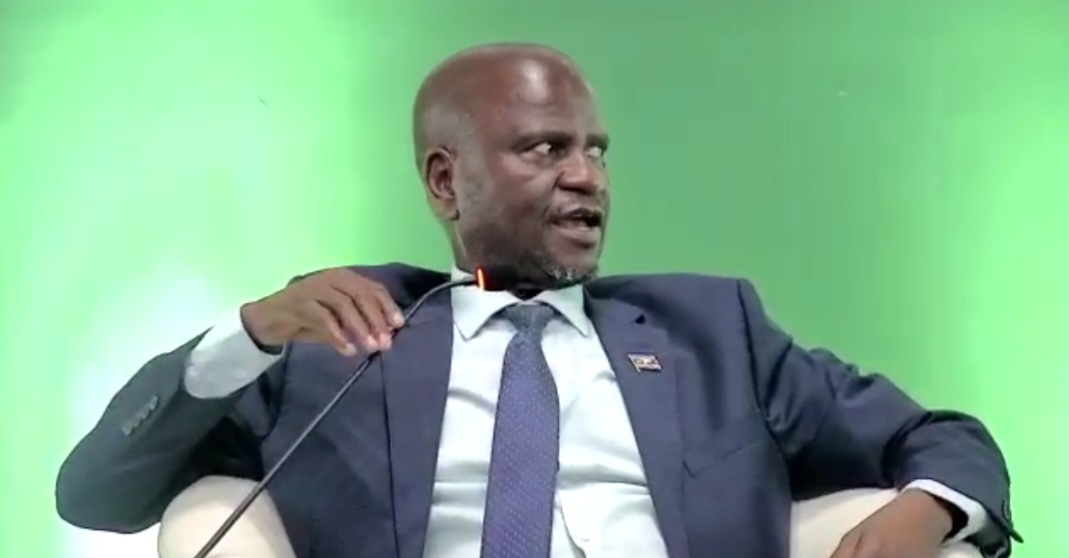
“Climate change is a reality and it’s here. It’s hitting us every day. We need to build resilience to that” noted Hon. Mandla Tshawuku, Minister of Agriculture, Eswatini.
He pointed to Eswatini’s Woman Farmer Project which he noted now had expanded to include youth which provides protected farming infrastructure such as tunnels, shade nets and greenhouses for high-value crops, alongside irrigation investment, as the country’s answer to a climate reality where, in his words,
“The days of planting a seed on the ground and looking at the sun are gone” urged Mandla.
Dr. Anxious Masuka, Zimbabwe’s Minister of Agriculture, Mechanisation and Water Resources Development, pointed instead to a data problem: he argued the continent is systematically underreporting its own agricultural progress, and pushed back directly on the most recent Biennial Review, which had flagged Zimbabwe as having declined.
“I actually said no… you guys didn’t report the right numbers. I even think our economies are bigger than what is reflected by our GDP, simply because our data collection is too narrow” noted Dr. Anxious
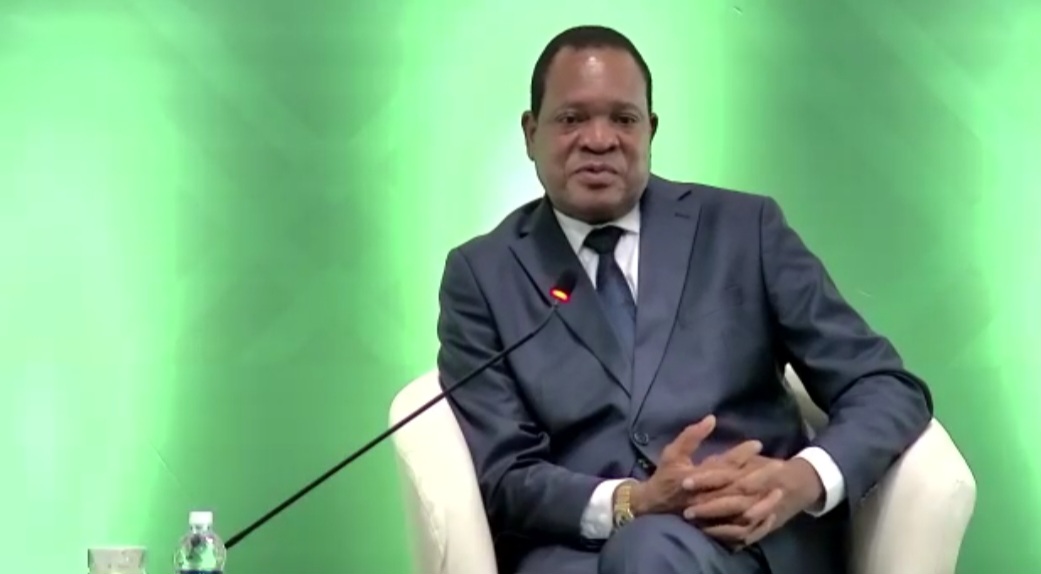
Taken together, the two ministers’ answers point to a pattern that recurs throughout the session: the people closest to a problem whether a flooded field or a misreported harvest are often the last to be asked, or the hardest to hear from, in a process built around continental targets and national investment plans.
Then the Floor Spoke
With time running short before lunch, the moderator opened the floor for brief interventions, not questions for the panel, but observations about what accelerating CAADP delivery would actually require. What followed was, in effect, a rapid audit of who the formal panel had not represented.
“Faith groups are one of the largest institutions spread across Africa, particularly in rural areas, and can play a very important role in changing the mindset around food systems” Tafara of SANESA
A delegate from Zimbabwe challenged the arithmetic behind the AU’s $100 billion continental investment target, noting that divided across 55 member states it likely understates what real transformation will cost. His proposed fix was structural: mobilise Africa’s own mineral wealth and institutional investors rather than relying on donor capital.
“If we can’t finance this program by ourselves, then that program is non-bankable. We should just realise that. We welcome donors, but I think they should be in the backseat” said the delegate.
Women, Financing and the Ecosystem Approach
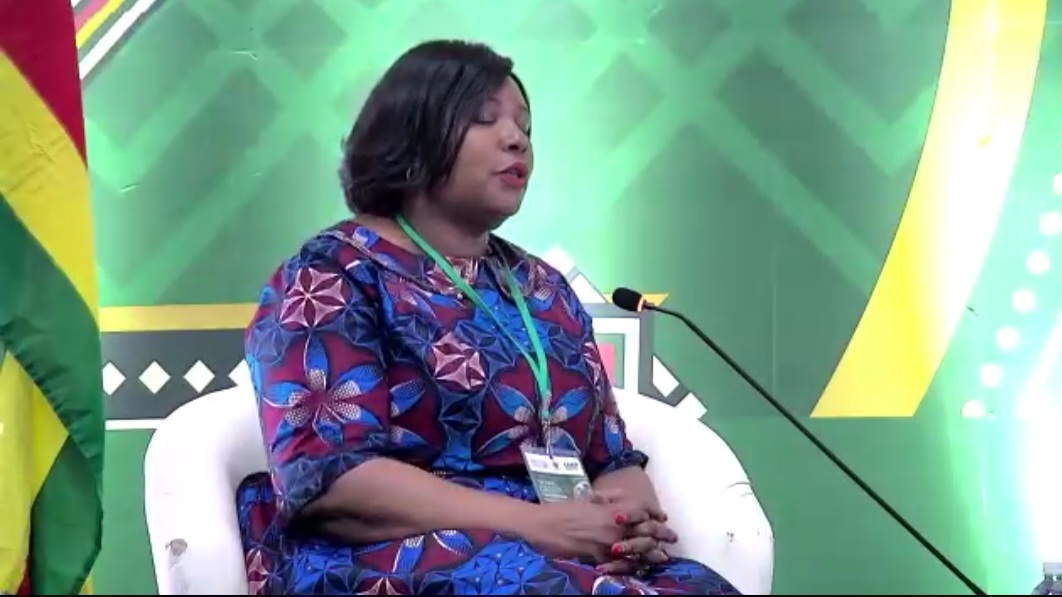
Amanda Munyoro of Women in Farming and Entrepreneurship, (WiFE) based in Zimbabwe argued that food systems financing is too often framed narrowly as a dollar figure, when what is actually needed is an ecosystem approach connecting government, farmers and the private sector.
Citing WiFE’s own pilot, in which an import-substitution crop project is funded directly by private investors. She pointed to Financial Inclusion Week (5–8 October) as a global platform largely unknown to the agriculture sector in the room.
“We need to make rural women bankable by investing in them as an ecosystem, with all stakeholders moving together” noted Amanda Munyoro.
Addressing Post-Harvest challenges Sizolo Mazolo, founder of the Women in Food Processing Network, raised critical post-harvest questions
“Maybe we don’t only have a production problem, or a planting problem, maybe we also have a preservation problem. How do we move from only talking about production to talking about how we preserve, going forward?” urged Sizolo Mazolo, Founder, Women in Food Processing Network
Voices the Panel Itself Admitted Were Missing
Beyond the floor interventions, two of the panel speakers pointed to gaps in the process that had only recently been addressed or still haven’t been.
Esther Otabong said that in ten years of Malabo implementation, one critical actor inside every ministry had never been actively engaged: permanent secretaries, who hold the budget and administrative levers that ministers themselves often do not. AUDA-NEPAD’s readiness programme deliberately brought them in for the first time, alongside a parallel effort to reconsider the role of farmer organisations not just as beneficiaries, but as a possible substitute for a shrinking corps of government extension workers.
Dr. Dora Siliya, a former Zambian Minister of Agriculture and MP who serves as a member and Communications Advisor for the African Food Systems Parliamentary Network (AFSPaN), highlighted an even longer history of marginalization. She noted that parliamentarians had been relegated to observers rather than active leaders of CAADP since the initial Maputo Declaration in 2003.
Formal recognition of the network as a key stakeholder was only secured in the declaration text at the 2025 Kampala summit, a milestone she attributed directly to lawmakers’ distinct authority over legislative oversight and national budget allocations.
She also raised a gap that runs through the whole implementation debate: public visibility. If CAADP is genuinely a flagship continental programme, she argued, it should be part of ordinary political conversation not confined to platforms like this one.
“When was the last time in your own country that you heard CAADP being talked about on the news, on the radio, on a podcast? Where is the visibility of this flagship programme?” urged Dr. Dora, AFSPaN.
FAO’s Dr. Patrice and AUDA-NEPAD both separately flagged a related, more technical gap: the private sector’s actual contribution to CAADP implementation has gone almost entirely unmeasured, meaning the last decade’s Biennial Review reporting cannot say with any confidence what private investment achieved or where it fell short.