By Victoria Musimbi
Nairobi, Kenya: To address Kenya’s rising debt burden while freeing up resources for essential public services and development, key strategies centered on enhancing domestic revenue generation, optimizing public expenditure, and boosting private-sector growth have been highlighted.
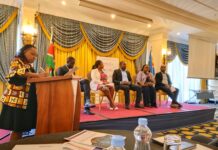
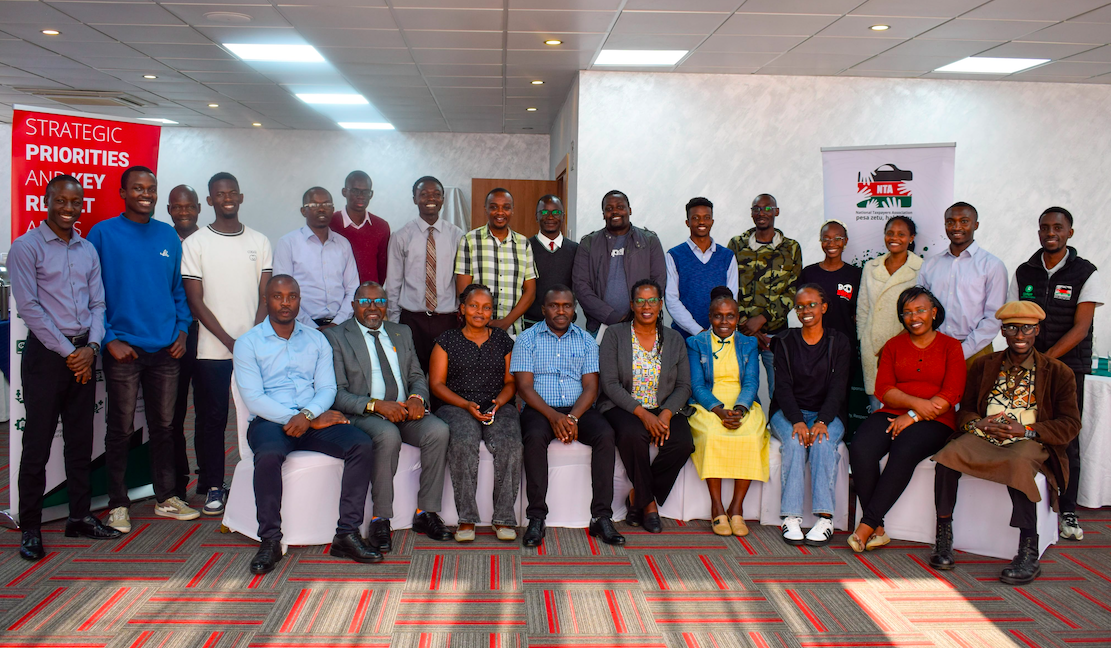
These insights were put forward during a coalition meeting organized by the National Taxpayers Association (NTA) on Kenya’s national debt and domestic resource mobilization, which gathered civil society groups, policymakers, researchers, fiscal governance experts, and development partners.
Austin Cheboi, a microeconomist at the Kenya Institute for Public Policy Research and Analysis (KIPPRA), said the rapid growth of public debt and its impact on essential services stood out during the discussions.
Cheboi noted that Kenya’s public debt had risen from about KSh1.89 trillion, equivalent to 38% of GDP, in 2013 to KSh8.7 trillion, or 68% of GDP, by 2022, before reaching KSh12.8 trillion in 2025.
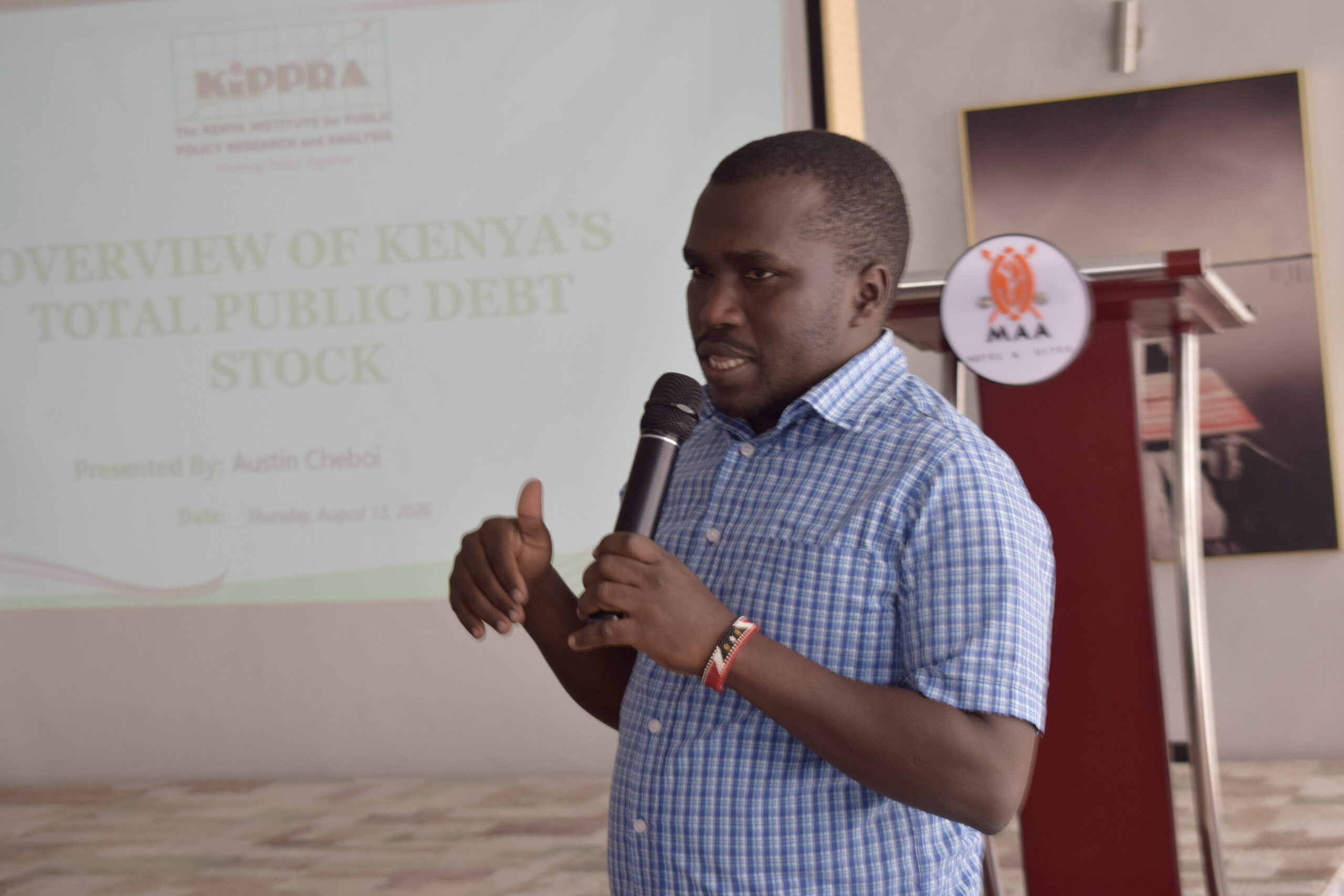
“Equally striking was the observation that domestic interest payments now exceed the national budget allocation to education,” Cheboi said, warning that debt servicing was increasingly crowding out investment in human capital and the country’s future productive capacity.
He said public debt should also be viewed as a governance and citizen-accountability issue, with greater transparency needed on why the country borrows, the cost of loans, the choice of lenders and whether borrowing is aligned with approved plans.
Cheboi also pointed to weak implementation of existing legal and institutional frameworks, pending bills estimated at KSh623 billion and the possibility of domestic borrowing limiting private-sector access to credit.
He said borrowing should be directed towards projects with clear economic and social returns rather than simply increasing the amount of debt.
“Emphasis should be placed on growing the tax base sustainably rather than introducing new taxes or borrowing more,” he said, calling for improved taxpayer compliance, digitalisation of tax administration and greater use of non-tax revenue from natural resources.
NTA Calls for Stronger Accountability and Productive Investment
Patrick Nyangweso, CEO of the National Taxpayers Association (NTA), said Kenya needed a candid national dialogue on debt, domestic resource mobilisation and the country’s economic priorities.
As of the end of FY2025/26, Kenya’s public and publicly guaranteed debt stood at approximately KSh13.013 trillion, equivalent to a debt-to-GDP ratio of about 68.5%. Domestic debt accounted for approximately KSh7.329 trillion, while external debt stood at KSh5.685 trillion.
Nyangweso said the debt increased from approximately KSh11.814 trillion to KSh13.013 trillion during the financial year, with domestic borrowing accounting for about 84% of the increase.
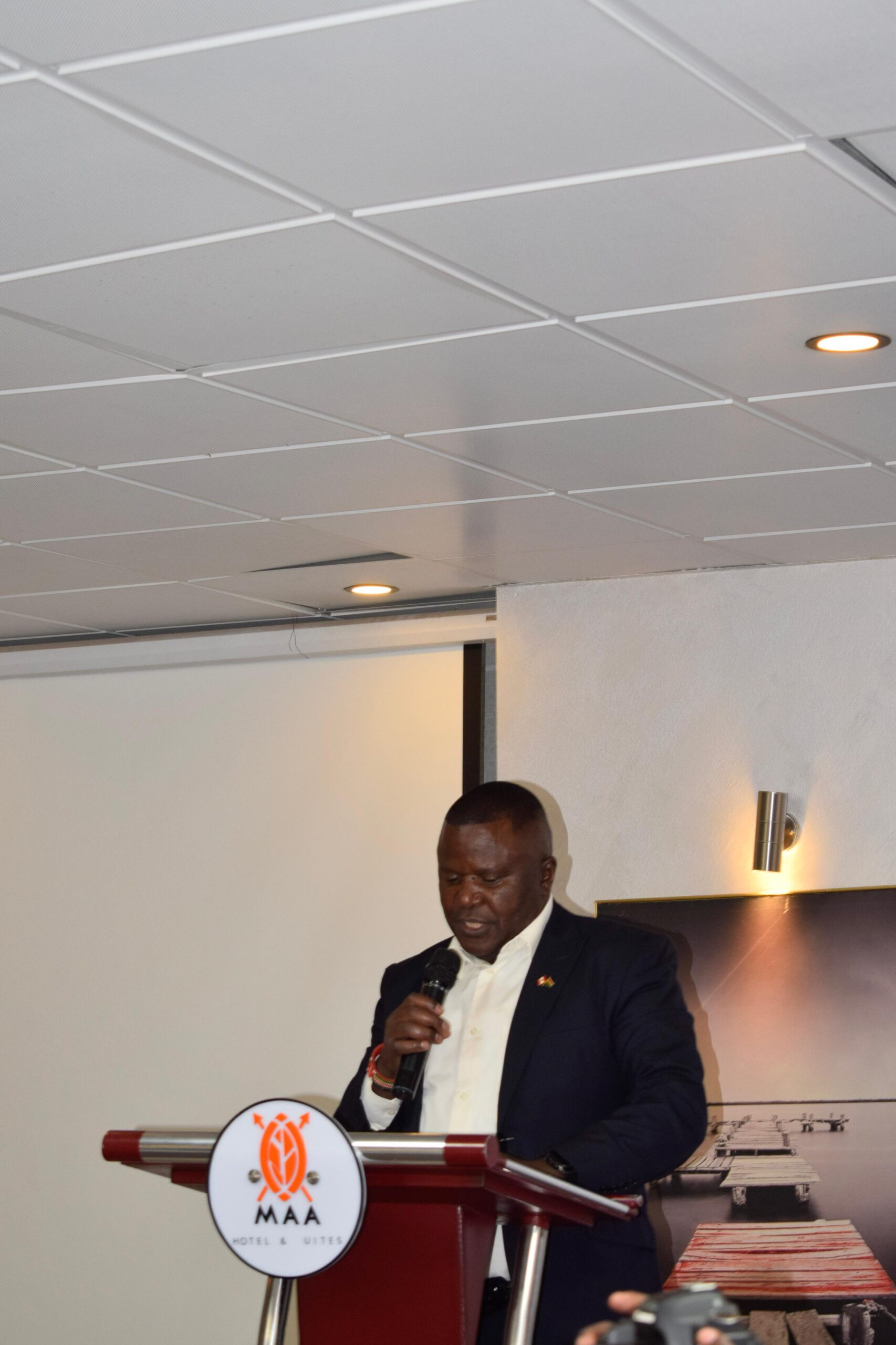
He said the situation was worrying because a large share of government revenue was being committed to debt servicing, leaving fewer resources for development and essential services.
In FY2024/25, Kenya spent approximately KSh1.722 trillion on public debt service, equivalent to about 71.2% of ordinary revenue, while interest payments alone amounted to approximately KSh987.5 billion, or 40.8% of ordinary revenue.
“The issue is, whatever we borrow, does it really count for development? Do citizens really feel it?” Nyangweso said, calling for greater accountability in the use of both borrowed and collected public resources.
He acknowledged efforts by the Kenya Revenue Authority to increase revenue collection but said stronger public financial management was necessary to address corruption, leakages, illicit financial flows and wasteful expenditure.
Nyangweso said the solution also lay in building a stronger private-sector-driven economy by protecting local industries, creating a conducive business environment and encouraging taxpayers to comply with their obligations.
He warned that heavy domestic borrowing could make credit more difficult and expensive for businesses, particularly SMEs, limiting their ability to invest, expand operations and create jobs.
“If private sectors are shying away from investing in this country and they want to go to invest in other countries, I tell you, we’ll keep on borrowing,” he said.
Nyangweso called for an export-driven economy that could create employment, expand the tax base, attract investment and reduce dependence on borrowing.
He also urged the government to ensure major infrastructure investments generate wider economic opportunities. Citing the Standard Gauge Railway corridor between Naivasha and Malaba, he said businesses and economic activities should be deliberately developed along such infrastructure corridors to create jobs and stimulate trade.
“We should not just focus on expanding the Standard Gauge Railway. Between Naivasha and Malaba, what are the business entities?” he asked.
He further called for greater support for agricultural production and small-scale farmers, particularly as climate change threatens food security, alongside measures to reduce post-harvest losses.
Nyangweso said the government alone could not absorb the thousands of young people entering the labour market each year, making SMEs and the wider private sector critical to employment creation.
“All this can only be achieved if wastage is addressed and if priorities are planned together,” he said.
Both speakers emphasised that addressing the debt challenge would require stronger accountability, transparency and public participation, alongside increased production, investment and exports.
Cheboi said citizens should have a greater voice in borrowing and spending decisions because they ultimately repay public debt through taxes.
Nyangweso said the country could not rely on taxation or borrowing alone to address the debt burden.
“Kenya can not tax its way out of debt without reforming how it borrows and spends. Equally, it cannot sustainably reduce borrowing without strengthening a fair, productive and trusted domestic revenue system,” he said.