
|
Getting your Trinity Audio player ready...
|
By Victoria Musimbi
Nairobi, Kenya: Kenya is seeking to expand its export base by equipping businesses with the skills, market knowledge and linkages needed to compete in international markets, as 21 exporters prepare to participate in a three-week market-linkage programme in Germany.
The exporters, drawn from the tea, avocado, herbs and spices, horticulture, agro-processing and craft sectors, will undertake training, business-to-business engagements and cooperation-proposal development with German counterparts in Mannheim.
The programme, implemented by the Kenya Export Promotion and Branding Agency (KEPROBA) and the Deutsche Gesellschaft für Internationale Zusammenarbeit (GIZ) GmbH, is designed to help export-ready Kenyan companies establish lasting business partnerships in Germany.
Building Export-Ready Businesses
Grace Ngugi, CEO of Karukuta Fresh Produce, noted that strengthening export-readiness programmes is critical to increasing the number of Kenyan exporters and expanding the country’s export base.
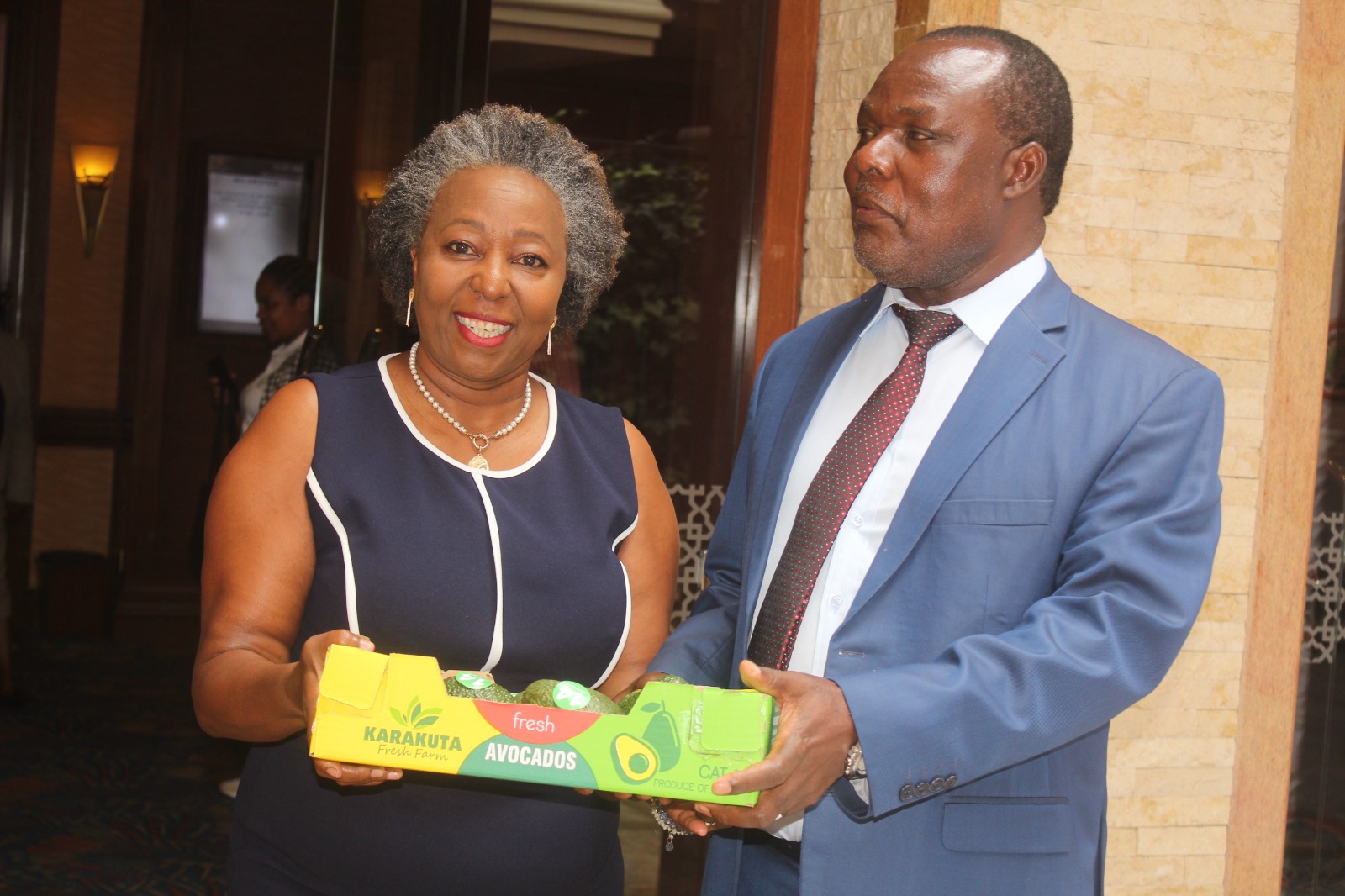
“Export growth is not only about increasing volumes and values, but also the number of exporters. How do we increase the number of exporters? Through capacity building and making them export-ready.”
According to Ngugi, the agency has made exporter capacity building a core area through its Exporters Readiness Awareness Programme, which brings together exporters and other players in the export trade to strengthen their capacity.
She explained that it also runs the Product Development Cycle, which equips exporters with knowledge on consumer tastes and preferences, target markets, international trade terms and available trade opportunities.
“This gives exporters the right tools to engage effectively in international markets.”
Ngugi pointed to the training programme undertaken in partnership with GIZ and AHP International in Germany as one example of such initiatives, while similar support is provided through the Product Development Cycle.
For exporters facing specific challenges, the agency also offers business counselling through its Trade Advisory Services, providing guidance based on their areas of need.
On whether market access or market knowledge presents a bigger challenge, Ngugi observed that the two are closely linked, noting that effective access requires adequate knowledge of the target market.
“You can only effectively access a market when you have the knowledge required to enter and compete in it. Market research is therefore very important before entering a market.”
She emphasised that exporters need to understand market requirements, standards, preferential treatment, culture and language, as well as consumer tastes and preferences, including packaging and product presentation.
“All these aspects are interconnected,” she added.
Using Market Linkages to Grow Exports
Floice Mukabana, CEO of KEPROBA, highlighted Kenya’s avocado industry as an area with significant growth and export potential, with the country ranked among the world’s leading producers.

“Kenya is the fifth-largest producer of avocados globally, and we have been competing year on year to reach number three. Sometimes we move back to number five, but we are generally positioned between third and fifth globally,” Mukabana explained.
Kenya’s location along the equator gives the country two production seasons, she noted, making it an increasingly attractive source of quality avocados.
Mukabana pointed out that fruits have overtaken vegetables among agricultural exports to Europe and are now second only to flowers in terms of revenue generated for the country.
In 2025, Kenya exported avocados worth KSh8 billion to Germany and KSh5 billion to Spain, according to Mukabana.
Germany, she added, is particularly strategic because of its strong focus on sustainable agriculture.
“Most of our avocados are produced by smallholder farmers, who have played a major role in putting Kenya on the global avocado map,” Mukabana stated.
The benefits extend beyond export earnings to job creation, environmental sustainability and improved livelihoods for smallholder farmers, with avocado production spreading to counties including Uasin Gishu and Kajiado.
Strengthening Kenya-Germany Trade Partnerships
Speaking on behalf of the Ambassador of Germany to Kenya, Maren Kneller, noted that Kenya’s inclusion in the programme was a testament to the country’s strong entrepreneurship and reputation.
She described the programme as being designed around a clear vision that provides a win-win for small and medium-sized enterprises and German business partners.
The 21 exporters will spend three weeks in Mannheim, where they will undertake cluster-based training, business-to-business engagements and finalise cooperation proposals with German counterparts.
Between 2016 and 2025, Kenya’s exports to Germany fluctuated from USD110.2 million in 2018 to a decade high of USD164.8 million in 2025. Coffee was Kenya’s leading export to Germany in 2025, valued at USD51.6 million.
The programme aims to translate market access into measurable outcomes, including cooperation agreements, repeat orders and sustained export revenue.
From Raw Produce to Value-Added Products
Dr. Juma Mukhwana, Principal Secretary, State Department for Industry, explained that the exporters would spend 21 days understanding the German market, including its dynamics, culture and consumer preferences, with support from the German government, GIZ and the German Embassy in Nairobi.
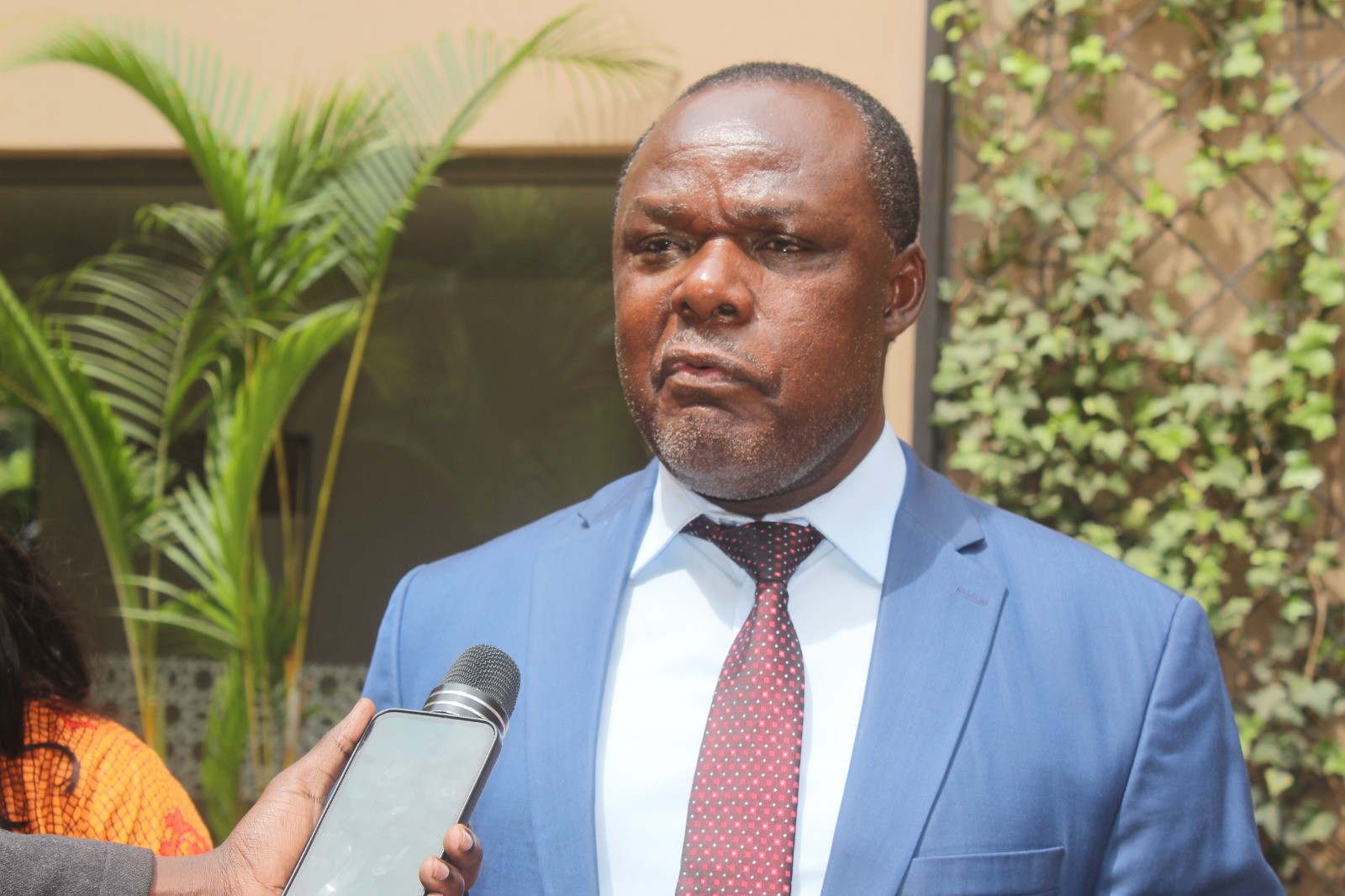
“When you are selling food, food is part of the culture of the people,” Mukhwana observed, emphasising the need for exporters to understand the language and culture of their target markets.
He urged exporters to ensure their products are appropriately packaged and labelled for specific markets.
“If you want to sell to Germany, try to label your products in the German language because it is easier for that market to relate to your product. If you want to sell to any other market, then use the language of that country,” he advised.
Mukhwana also encouraged exporters to move beyond raw produce and explore value addition, including coffee roasting, packaging and branding.
He explained that county aggregation and industrial parks would help businesses access processing facilities without the high cost of establishing their own factories. The facilities provide warehouses, infrastructure and common-use machinery for activities such as coffee roasting, avocado packaging, tomato processing, macadamia vacuum packing and banana processing.
“You do not have to buy land and build your own factory. The government is providing warehouses, electricity, water and roads. Yours is to plug and play,” Mukhwana said.
He encouraged exporters to use the facilities to produce value-added products such as avocado oil and roasted coffee.
On European food standards, Mukhwana noted that Kenyan exporters already have considerable experience supplying European markets and understand their quality requirements and regulations. However, he identified limited volumes of quality produce as a challenge.

“What we have is a volume issue. Sometimes we do not have enough good-quality produce to supply. We go out there, take orders and then struggle to meet those orders because of limited supply,” he pointed out.
He called for increased production of crops such as coffee and avocado, supported by irrigation, suitable varieties and improved quality.
Mukhwana further urged exporters to make greater use of produce that does not meet fresh-export standards by processing it into products such as oil.
“We have a lot of opportunities. We can sell fresh produce where it meets the quality requirements and process what does not meet the standards into oil. In that way, we have zero waste,” he said.
He also called for research into converting avocado waste into fertilizer and manure, which could reduce waste and support a more sustainable value chain.