

|
Getting your Trinity Audio player ready...
|
By Victoria Musimbi
Nairobi, Kenya: For women entrepreneurs managing micro and small enterprises, owning a smartphone and accessing the internet offers benefits far beyond basic communication. When paired with essential digital competencies, online tools empower women to expand their customer base, streamline financial management, secure their funds, and minimize reliance on intermediaries.
Although Kenya’s rapid digital growth has broadened access to financial services, healthcare, education, and commerce, significant disparities persist. Women, especially those residing in rural areas and underserved communities that continue to face obstacles in tapping into these benefits. Indeed, daily internet usage reflects a stark divide: while 56% of urban residents use the internet daily, the figure drops to just 25% among rural populations.
To address this disparity, the CARE-supported EmpowerHer initiative aims to build women’s technical capabilities and confidence, enabling them to leverage modern technology to enhance their business operations and secure sustainable livelihoods.
Bridging the Digital Skills Gap
Namarome Elizabeth, Nairobi County Coordinator for EmpowerHer, first encountered KICTANet while at university when she joined the organisation as a gender and communications intern through her service-based learning programme.

The experience introduced her to ICT policy, data protection and spaces she had not imagined entering, including summits and policy discussions.
“I learned that technology is not only about computers or the technical part. There are also issues around policy. Through KICTANet, that is how I came to know about ICT policy,” she says.
This year, Namarome returned as the Nairobi County Coordinator for EmpowerHer. She says many people have access to the internet but lack the skills and confidence to use it to improve their livelihoods.
“Sometimes you have the awareness and the knowledge, but you lack the skills. That is the gap we are really trying to close,” she says.
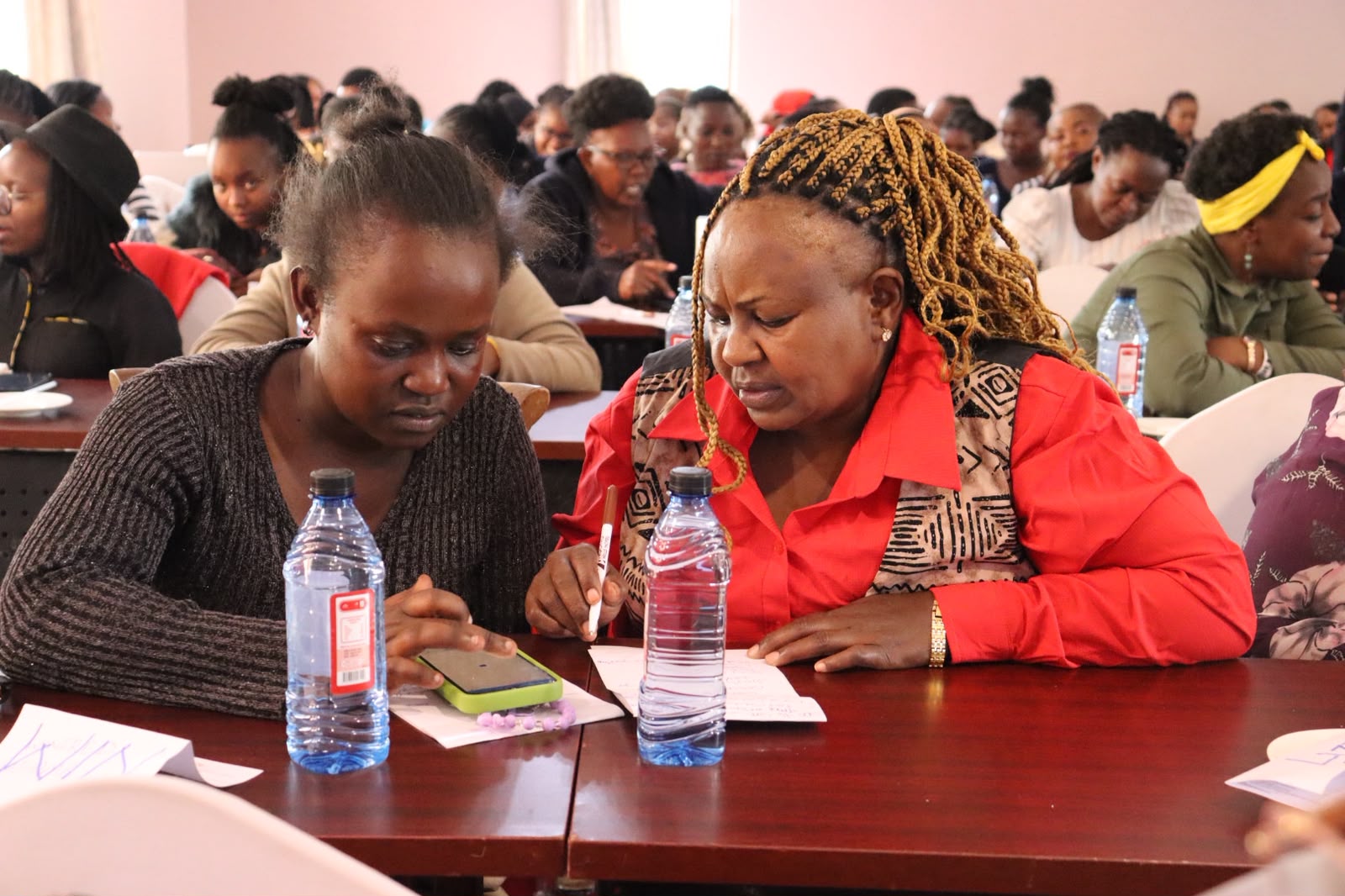
The training covers digital resilience, entrepreneurship, financial literacy, social media marketing, cyber hygiene and protection against technology-facilitated gender-based violence.
The programme is currently training 100 Trainer of Trainers (ToTs) in Nairobi, who will cascade the curriculum to women micro-entrepreneurs in their communities. Each trainer is expected to reach 50 women, creating a target of 5,000 women in Nairobi. The ToTs will also be certified as Women Digital Champions.
The workshop uses participatory methods, hands-on exercises and local languages such as Kiswahili. It also seeks to accommodate women with limited access to smartphones.
“One of the first things we had to consider was that some people do not have smartphones. So how do you advance digital skills while accommodating those realities?” she asks.
Namarome says cultural attitudes can also discourage women from using technology for economic activities. A woman selling vegetables, for example, may expand her market by selling online but face the perception that spending time on her phone is not “real work.”
Although women are the primary beneficiaries, men can also participate as trainers and allies.
“If men want to become trainers, that should be a plus because it shows that men also want to advance this project. It is about digital skills, mainly tailored to empower women, but men can be our allies,” she says.
Taking Digital Skills to the Grassroots
Florence Awino, Programme Advisor for Gender and Digital Accessibility for Persons with Disabilities, said the Women’s Digitalisation Programme focuses on women who face additional barriers to accessing economic opportunities, including persons with disabilities, widows, single women heading families, farmers and fishmongers.
Awino said the programme was developed after identifying challenges women face in business, including exploitation by middlemen and sexual exploitation.
“Many women were trying to do business, but they were losing their profits to middlemen. There was also an element of sexual exploitation, particularly among women fishmongers,” she said.
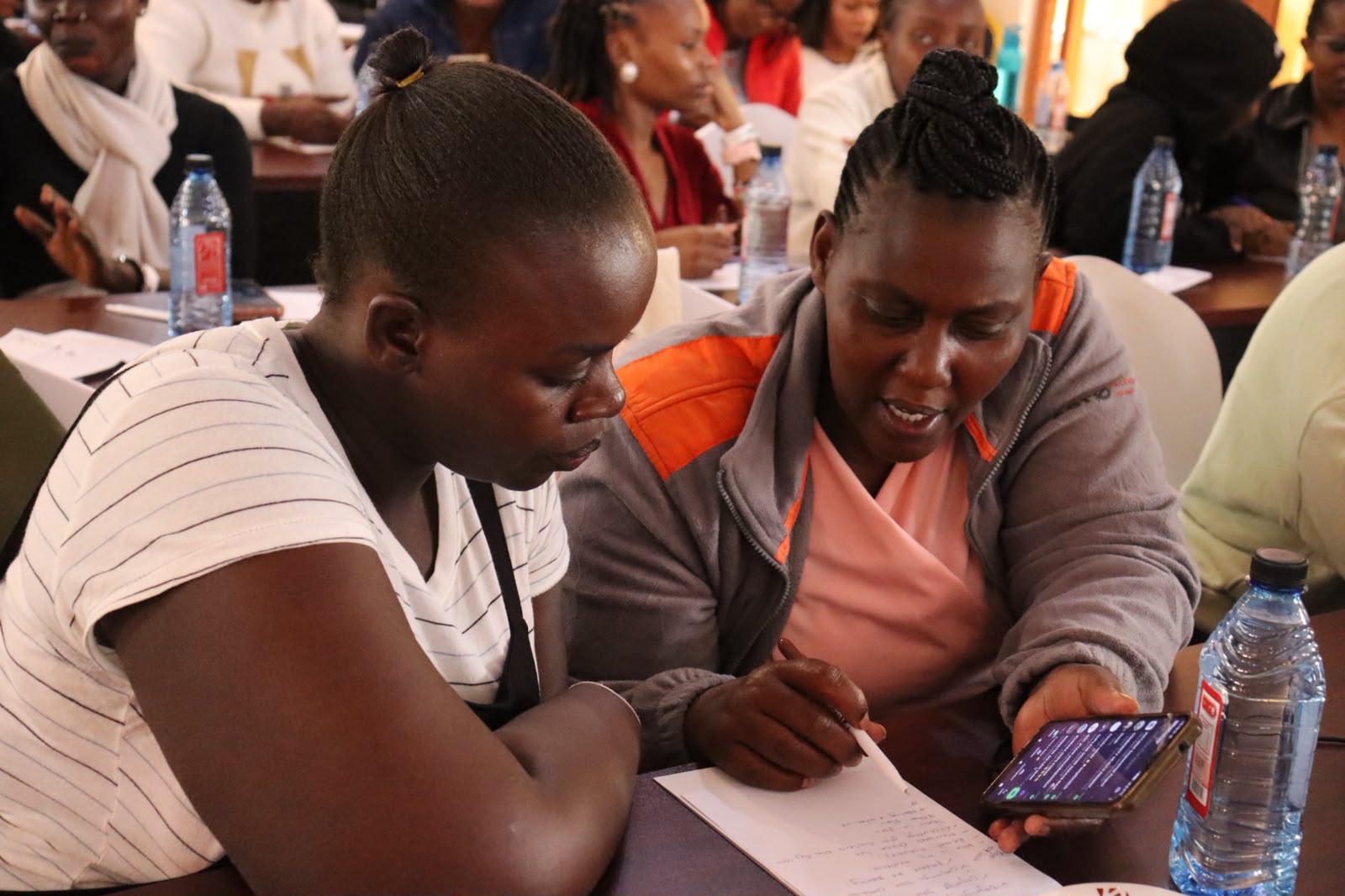
The training simplifies digital concepts and teaches women how to use technology for business, covering basic digital skills, online safety and artificial intelligence business tools.
Awino said connecting women directly to markets can help them increase their earnings and reduce dependence on middlemen.
She cited an avocado farmer in Nyandarua who could sell an avocado for Sh20 while it is eventually sold for Sh60 in Nairobi, saying digital tools can help farmers connect directly with markets and retain more of the value from their produce.
The initiative also addresses cybercrime, including SIM-swap fraud and mobile-money scams, by teaching women how to protect their phones, secure passwords and safeguard their finances.
“We want women to become confident in using technology,” Awino said.
Making Digital Spaces Safer
Cherie Oyier, Women Digital Rights Program Lead at KICTANet, said digital inclusion must also ensure that women can participate safely and meaningfully online.
“We work around women’s digital rights on online platforms, from online safety to ensuring that women are on these platforms and are able to use them for economic empowerment, while also ensuring that they are safe while doing it,” Oyier said.
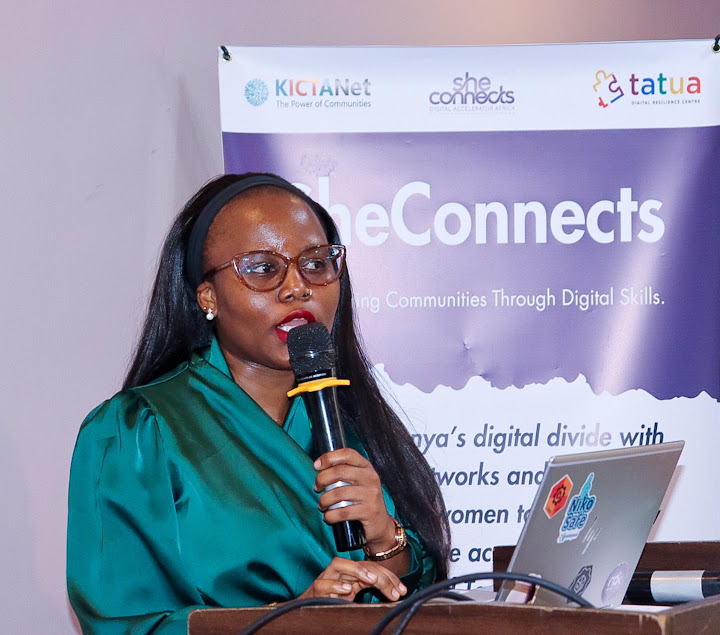
The organisation has conducted research on technology-facilitated gender-based violence in Kenya, examining the roles of law enforcement officers, mental health professionals, lawyers, magistrates, judges and the media.
The research identified gaps in addressing technology-facilitated gender-based violence in law and journalism training. The organisation is therefore working to build the capacity of institutions including the Judiciary, law enforcement agencies and the Office of the Director of Public Prosecutions.
Oyier said social media and other online tools can also help women market their businesses, save time and work more efficiently.
Turning Digital Skills into Stronger Businesses
Grace Githaiga, CEO of KICTANet, said the She Connects programme is using digital skills to improve women’s businesses, financial management and online safety.
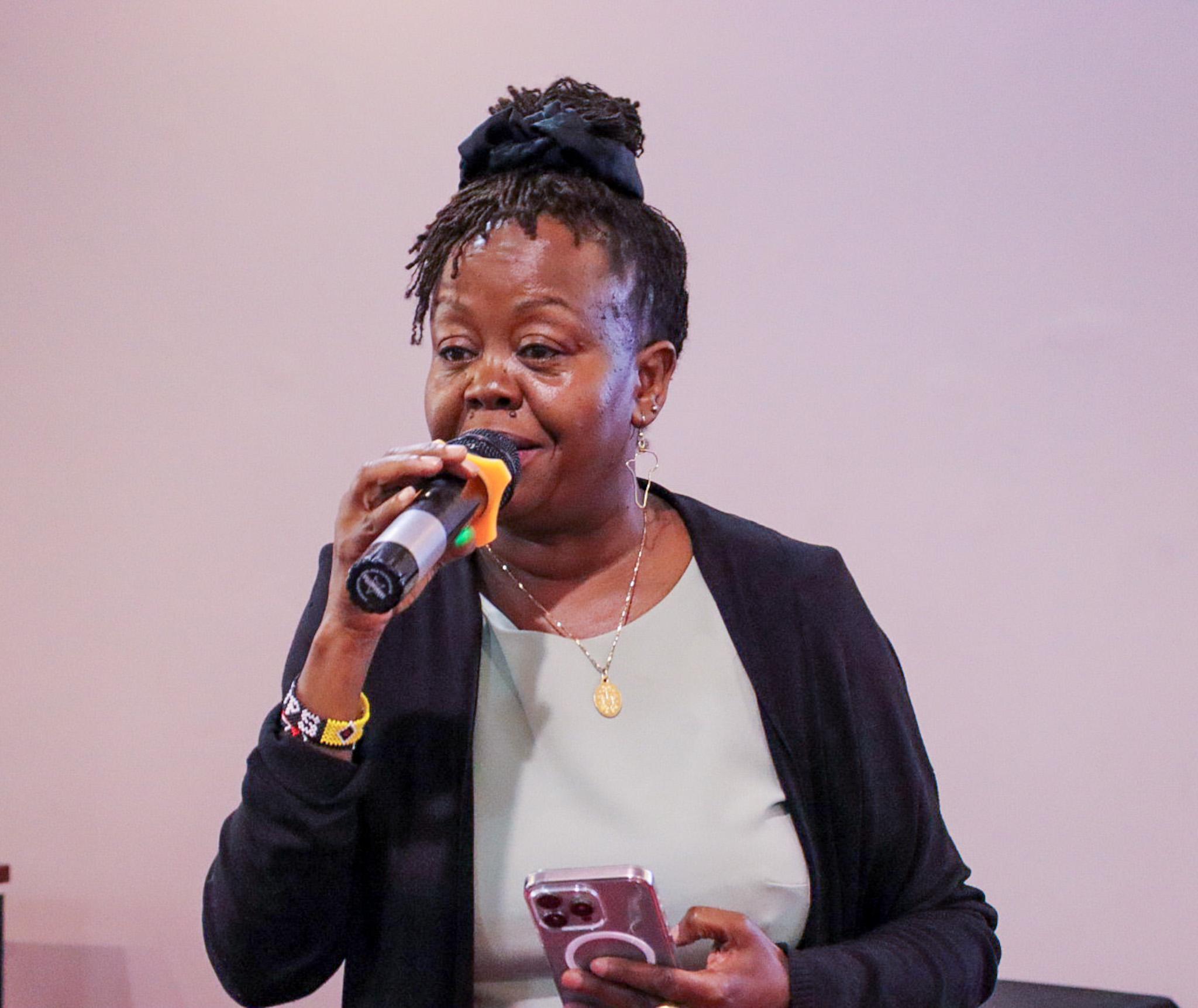
The programme aims to reach 15,000 women across Nairobi, Tana River and Nyandarua counties, with 5,000 women specifically targeted in Nairobi.
The initiative is particularly focused on women running small businesses selling clothes, food and farm produce. Digital platforms can provide affordable marketing opportunities without requiring women to have physical shops, while also creating opportunities for others in the value chain.
“For example, somebody identifies a boda boda rider who they trust, and that rider can actually do the deliveries once they are ordered. Through that, the rider also earns,” Githaiga said.
The programme is also helping women separate business finances from household finances so they can track capital, sales and profits.
“We are telling women it is very important to separate personal finances from the business so that you always know your capital outlay for the month, how much you have sold and what your profit is,” she said.
Women are encouraged to use profits strategically and pay themselves a salary rather than taking money directly from business capital.
Githaiga said fear of digital fraud remains a barrier. During a visit to women selling farm produce, some were reluctant to use digital financial services because they feared losing their money. Others reported being asked to reverse mobile-money transactions, which can expose them to fraud.
“We could tell some of them were afraid. There was also a lack of understanding,” she said, adding that the women were shown how to use Pochi la Biashara in a demonstration that took less than five minutes.
Githaiga said the initiative was initially planned for 10 counties with USAID funding, but implementation was disrupted by a stop-work order.
Building Sustainable Livelihoods
The current pilot is testing approaches that can help more women acquire practical digital skills and use technology to strengthen their businesses and livelihoods.
By combining digital training with financial literacy, online safety, market access and community support, the initiative seeks to move women beyond simply having access to technology towards using it confidently to build safer and more sustainable livelihoods.
For the women targeted by the programme, the goal is not simply to become more comfortable with smartphones or online platforms, but to turn digital skills into better businesses, stronger financial decisions and greater control over the opportunities technology can provide.












The training was so helpful.
Thank you Beth for this great feedback.
Comments are closed.