|
Getting your Trinity Audio player ready...
|
By Victoria Musimbi
Nairobi, Kenya: Inadequate housing for millions of Kenyans extends far beyond lacking a physical roof; it heightens disease vulnerability, curtails economic prospects, and exposes families to severe climate impacts. In response to these overlapping difficulties, Habitat for Humanity introduced its international “Let’s Open the Door” campaign within Kenya.
This rollout features two primary initiatives designed to leverage enhanced housing to upgrade health outcomes, empower women, and establish resilient community structures.
The profound effects of obtaining a decent home are illustrated by Mary Kanini, a widow in her 70s residing in Machakos County. Managing persistent health issues that necessitate continuous medical supervision, she additionally serves as the primary guardian for her grandchildren, offering them affection and stability despite navigating very constrained resources.
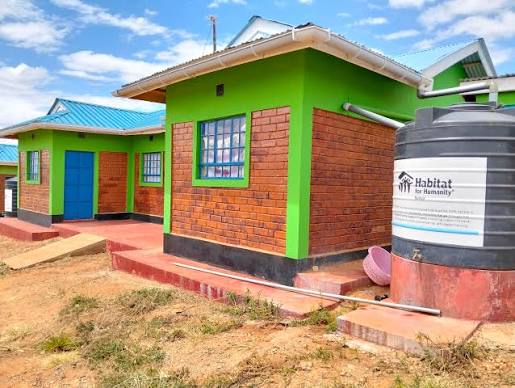
Her family previously endured significant distress during the rainy season, as water consistently poured through the roof of their cramped mud dwelling. Substandard ventilation paired with damp surroundings caused regular sickness, and individual storms constantly raised doubts regarding whether their residence would endure until morning.
These persistent anxieties have recently transitioned into optimism following a collaborative effort between Habitat for Humanity and the Machakos County Government, which provided her with a secure, well-ventilated residence.
“The first night I slept there, I slept like a baby. I kept asking myself, ‘Is this really my home?’ It was something I never thought would happen in this lifetime,” Kanini shared.
For years, the rainy season filled her family with anxiety as water leaked through the roof of their small mud house. Poor ventilation and damp living conditions meant frequent illness, while every storm left them wondering whether their home would withstand another night.
Today, those fears have been replaced with hope after Habitat for Humanity, in partnership with the Machakos County Government, built her a safe, well-ventilated home.
“The first night I slept there, I slept like a baby. I kept asking myself, ‘Is this really my home?’ It was something I never thought would happen in this lifetime,” Kanini recalled.
She said owning a decent house had once seemed impossible. Having only admired permanent houses from a distance, she never imagined she would one day have a home with a concrete floor, strong walls and a secure roof.
The impact has gone far beyond improved shelter
“Since moving into my new home, my health has improved. I no longer fall sick as often, and I now sleep in a safe, comfortable and well-ventilated environment.”
Kanini said her previous living conditions had contributed to frequent illness, reinforcing the link between poor housing and poor health.
“I have learned that poverty can make people sick. The house I lived in before contributed to our illnesses, but today I am healthy, safe and deeply thankful.”
Kanini’s experience reflects the impact Habitat for Humanity hopes to replicate through its Let’s Open the Door campaign, demonstrating how decent housing can improve health, restore dignity and create opportunities for vulnerable families.
Building Homes That Solve Multiple Challenges
The campaign is anchored on two flagship initiatives designed to tackle some of Kenya’s most pressing housing challenges.
The first, Women Building Resilient Manyattas, supports Maasai women to improve traditional manyattas using climate-resilient construction techniques and locally appropriate materials. The initiative preserves Maasai cultural heritage while creating stronger, healthier and better-ventilated homes that reduce dependence on timber, improve indoor air quality and make communities more resilient to climate change.
The second initiative, Jigger-Free Homes, aims to improve 10,000 household floors in jigger-endemic communities over the next five years by replacing unsafe earthen floors with durable, healthier flooring. Habitat for Humanity estimates the programme will directly benefit about 50,000 people by reducing jigger infestation, improving health, increasing school attendance and boosting productivity among vulnerable households.
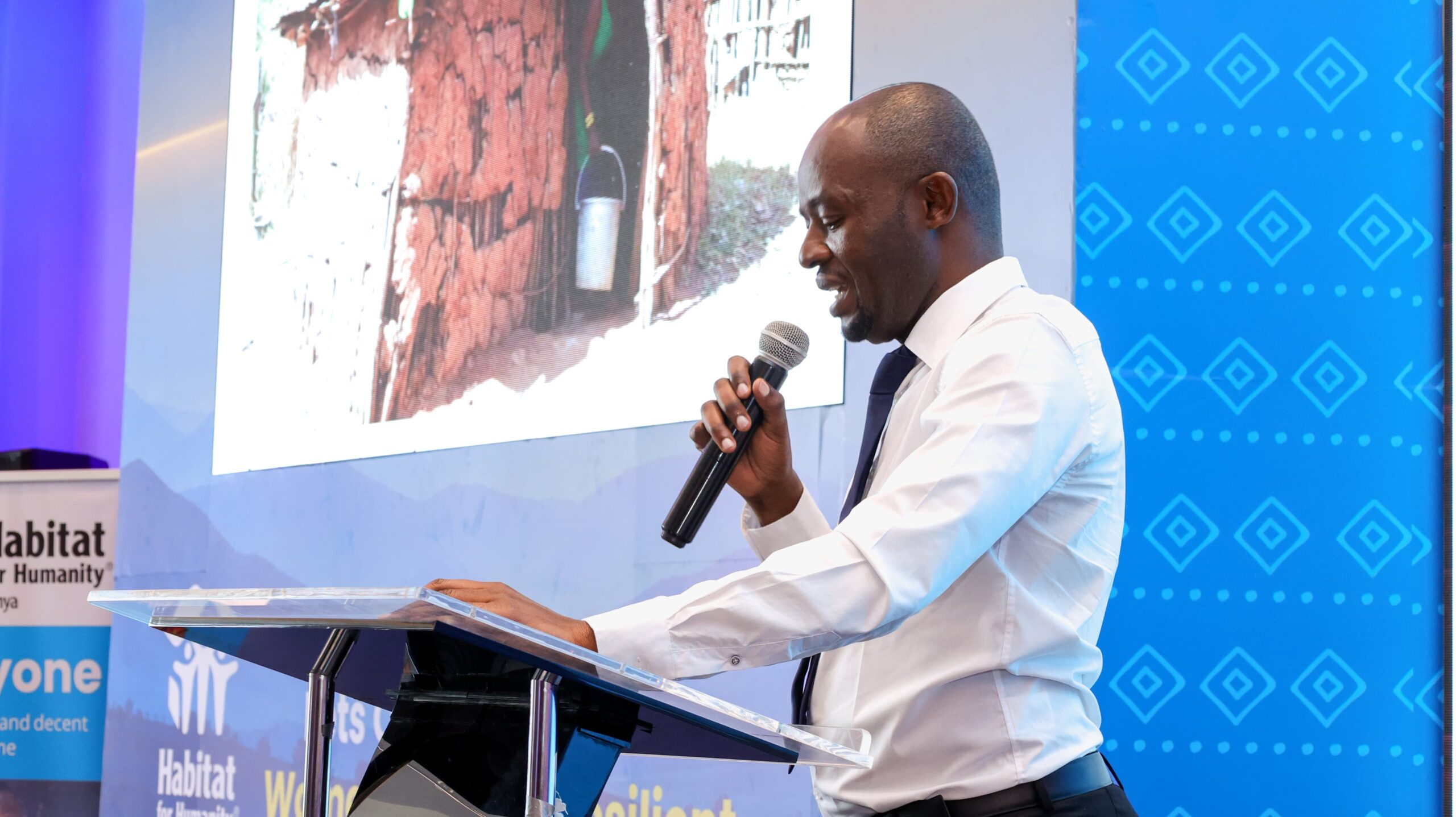
According to Dr. Wycliff Omondi, Assistant Director of Medical Parasitology and Head of the Vector-Borne and Neglected Tropical Diseases Division at the Kenya National Public Health Institute, better housing is one of the most effective public health interventions available.
“Housing is a fundamental determinant of health and plays a critical role in preventing many diseases,” he said.
Omondi explained that many neglected tropical diseases remain closely linked to poverty, poor sanitation and inadequate housing. Cracked walls, unscreened windows and earthen floors expose families to disease-carrying insects and parasites, while poor environmental sanitation increases the spread of infections.
Drawing from his own childhood, he recalled growing up in a grass-thatched house with mud walls and earthen floors and revealed that he personally experienced jigger infestation.
“Housing influences exposure to vectors of disease. Thoughtful housing design contributes to healthier and safer communities.”
He said improving housing, alongside better access to water and sanitation, could significantly reduce diseases such as jiggers and trachoma while lowering treatment costs for families and government alike.Women Leading the Change
For Kajiado County First Lady Edna Lenku, improving rural housing is a mission shaped by personal experience.
Growing up in a Maasai community, she watched her mother build and maintain the family home. When she got married, she expected her educated husband would build her a permanent house. Instead, she was asked to join other women in constructing her own traditional manyatta.
“I thought that because my husband was educated, he would build me a permanent concrete house. But that was not the case. When I arrived at my new home, he told me to join my sisters-in-law and other women in the community to build my own house.”
She recalled spending days walking long distances in search of suitable trees before building a four-room manyatta where her family lived for 15 years.
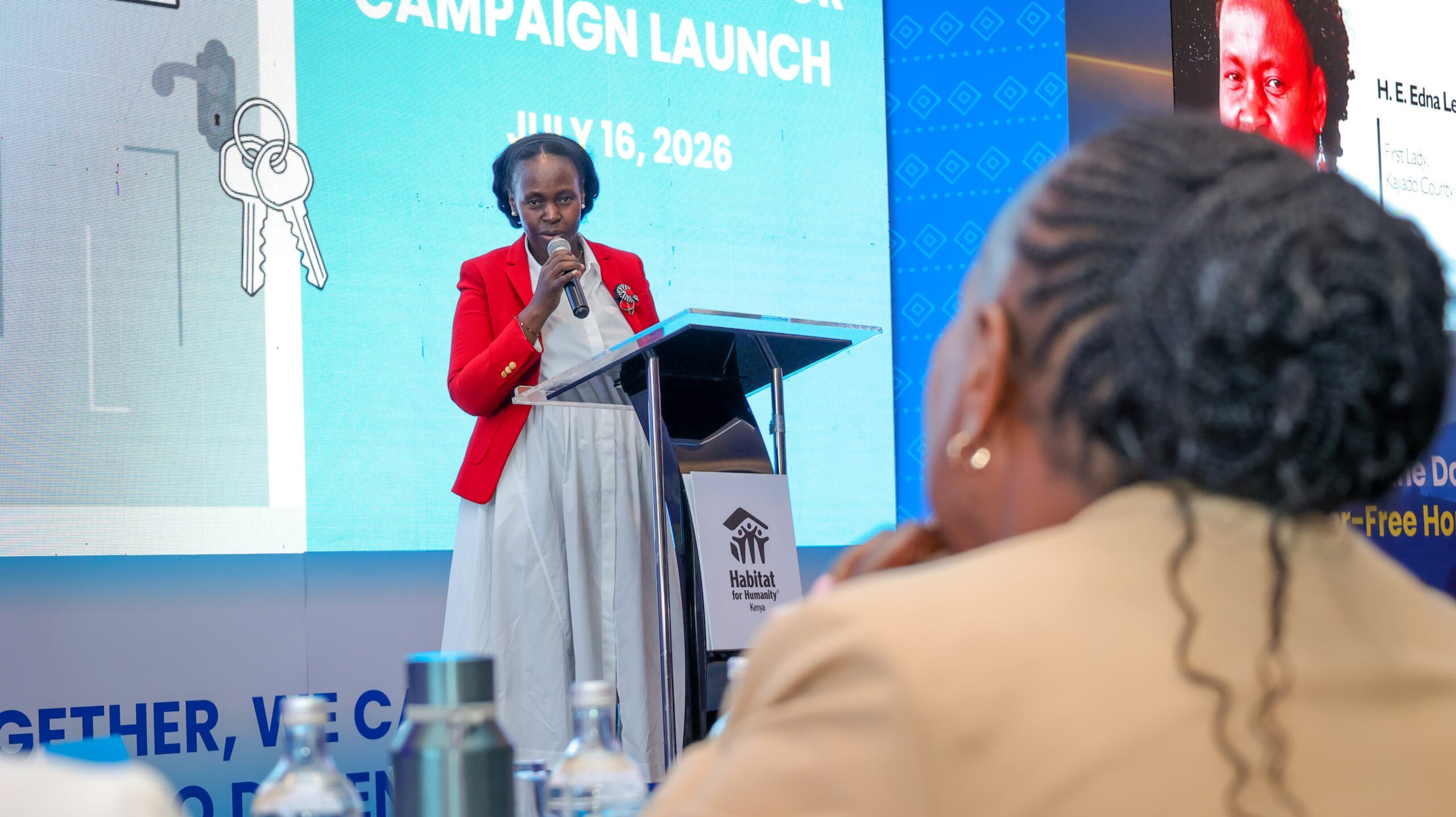
As she travelled across Kajiado County, Lenku listened to women describe the dangers they faced maintaining traditional homes. Many dreaded the rainy season because they had to replace grass roofs every year, while poorly ventilated houses exposed families to smoke and other health risks. Cracked walls also allowed snakes and other pests into homes, putting children at risk.
“Many women dreaded the rainy season because they had to reroof their grass-thatched houses every year. One woman lost her life after she was accidentally struck by a spear while roofing her house. That tragedy made me ask myself what my purpose in life was and how I could help women in my community.”
Those experiences inspired a partnership between Habitat for Humanity, the Kajiado County Government and other development partners to introduce Eco Manyattas built using interlocking blocks.
“These homes are stronger, better ventilated and more environmentally friendly because they reduce the need to cut down trees.”
Lenku said the initiative preserves Maasai culture while giving women and their families safer, healthier and more climate-resilient homes.
Partnerships Expanding the Impact
Machakos Governor Wavinya Ndeti said the partnership with Habitat for Humanity has demonstrated that decent housing can transform entire communities.
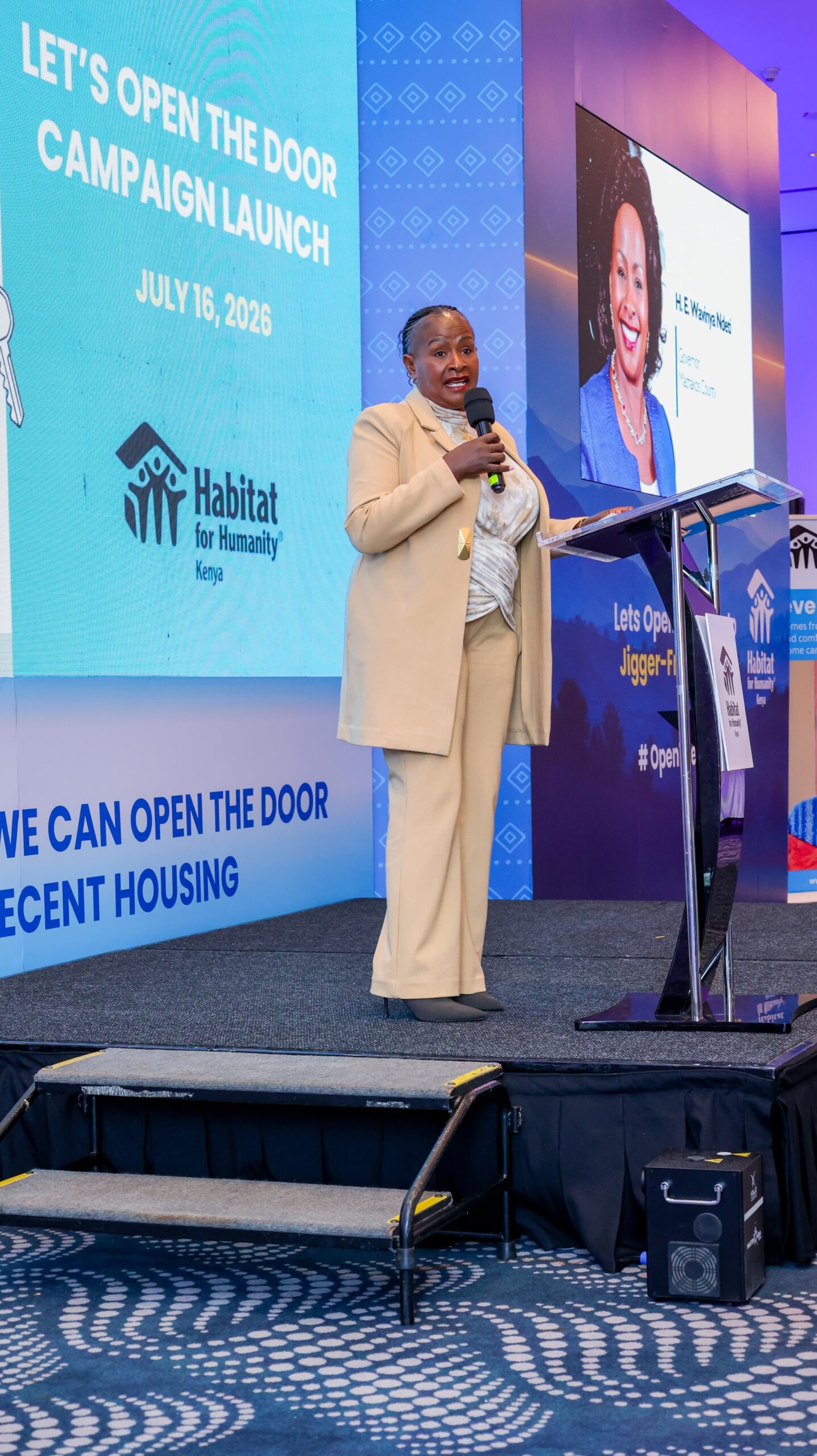
She said families in Matungulu, Masinga and Mwala sub-counties who once lived in vulnerable conditions now enjoy safer homes, improved sanitation and better access to clean water.
“Families who once lived in despair now live in decent, secure housing. Children who faced constant health risks now enjoy safe sanitation. You did not just build structures; you restored hope.”
Beyond housing, Ndeti said the partnership has sunk boreholes, expanded water infrastructure and supported digital learning by donating computers to public schools, creating new opportunities for women, young people and learners.
She urged development partners and the private sector to expand investments in housing, saying the results already achieved demonstrate that the approach works and can reach many more vulnerable families.
Habitat for Humanity Africa Area Vice President Abi Riak said the launch builds on more than four decades of the organisation’s work in Kenya, where it has partnered with national and county governments, communities and development partners to improve access to decent housing for vulnerable families.
She said the organisation’s work extends beyond constructing houses to creating healthier homes, strengthening climate resilience, improving access to water and sanitation, supporting safer living environments and helping communities build sustainable livelihoods.
“Housing matters because a home is the foundation upon which people build their lives, communities build resilience and countries build prosperity.”
Let’s Open the Door campaign
Riak said the Let’s Open the Door campaign, being launched in more than 60 countries as Habitat for Humanity marks its 50th anniversary, seeks to mobilise greater collaboration, innovation and investment in housing solutions that can improve health, empower women and create economic opportunities for millions of families.
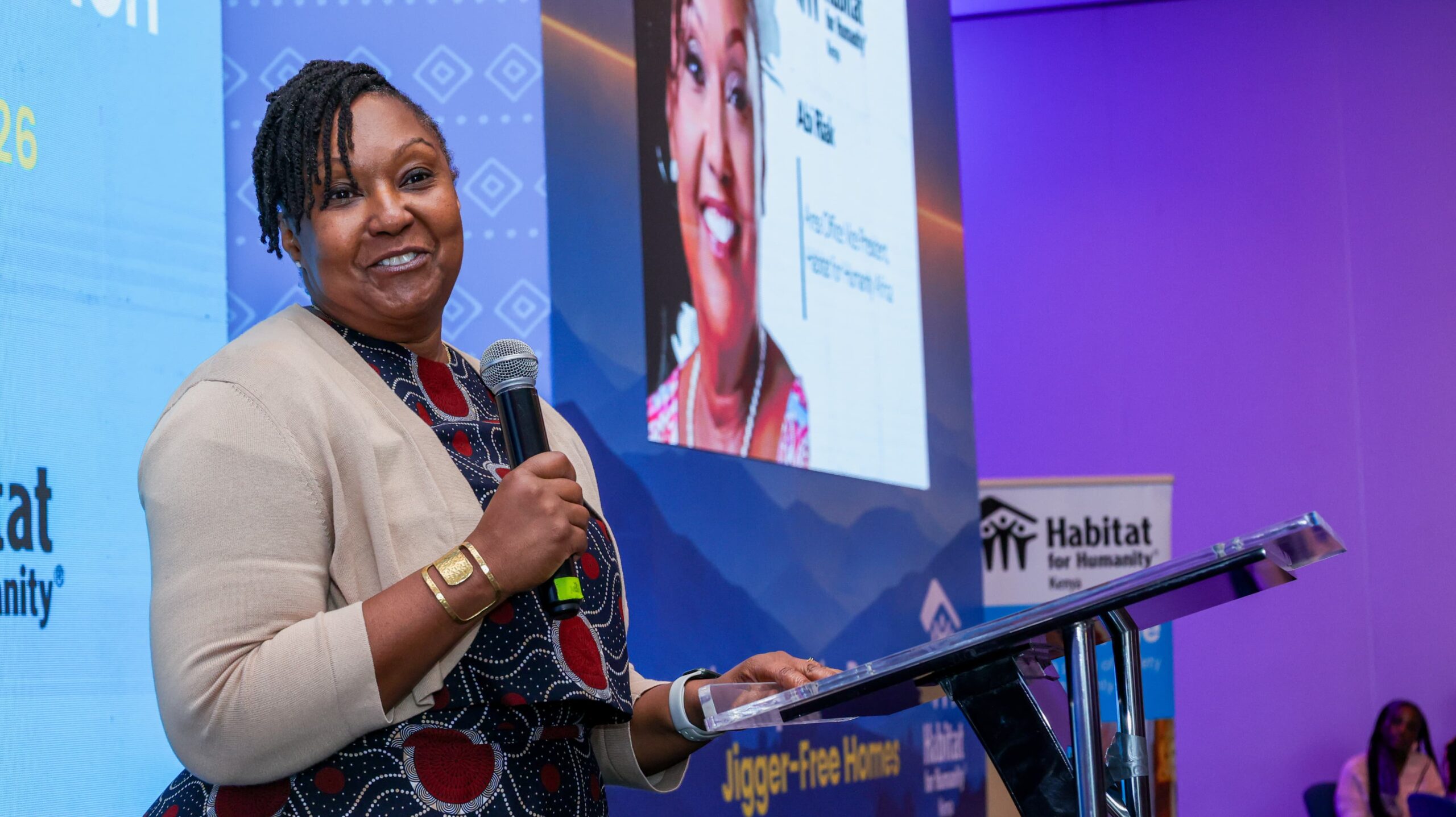
She said the stories shared during the Kenya launch from women embracing climate-resilient manyattas to families living in healthier, jigger-free homes demonstrate that investing in decent housing creates lasting social, economic and health benefits.
For Mary Kanini, those benefits are already evident.
The fear that once accompanied every rainy season has been replaced by the comfort of a secure home where she can sleep peacefully without worrying about leaking roofs or illness. Her story demonstrates how decent housing can improve health, restore dignity and give vulnerable families hope for the future.
As Kenya continues to grapple with a growing housing deficit and the effects of climate change, the Women Building Resilient Manyattas and Jigger-Free Homes initiatives show how housing can become a practical solution to some of the country’s most pressing challenges.
By improving homes, protecting health and empowering communities, Habitat for Humanity is demonstrating that investing in decent housing is about far more than building walls and roofs; it is about creating lasting opportunities for families to thrive.