|
Getting your Trinity Audio player ready...
|
By Jane Mugambi
Kirinyaga County, Kenya: Smallholder farmers in Kirinyaga County are leading a quiet agricultural revolution—transitioning from unreliable rain-fed farming to reliable, community-managed irrigation systems that are transforming livelihoods, creating employment, and bolstering food security.
At the Kandeki Irrigation Project, a Sh91 million initiative funded through government support and farmer contributions, residents who once battled erratic rainfall and high production costs are now diversifying into high-value crops and livestock enterprises. The project demonstrates how access to reliable water is not just improving harvests but reshaping rural economies.
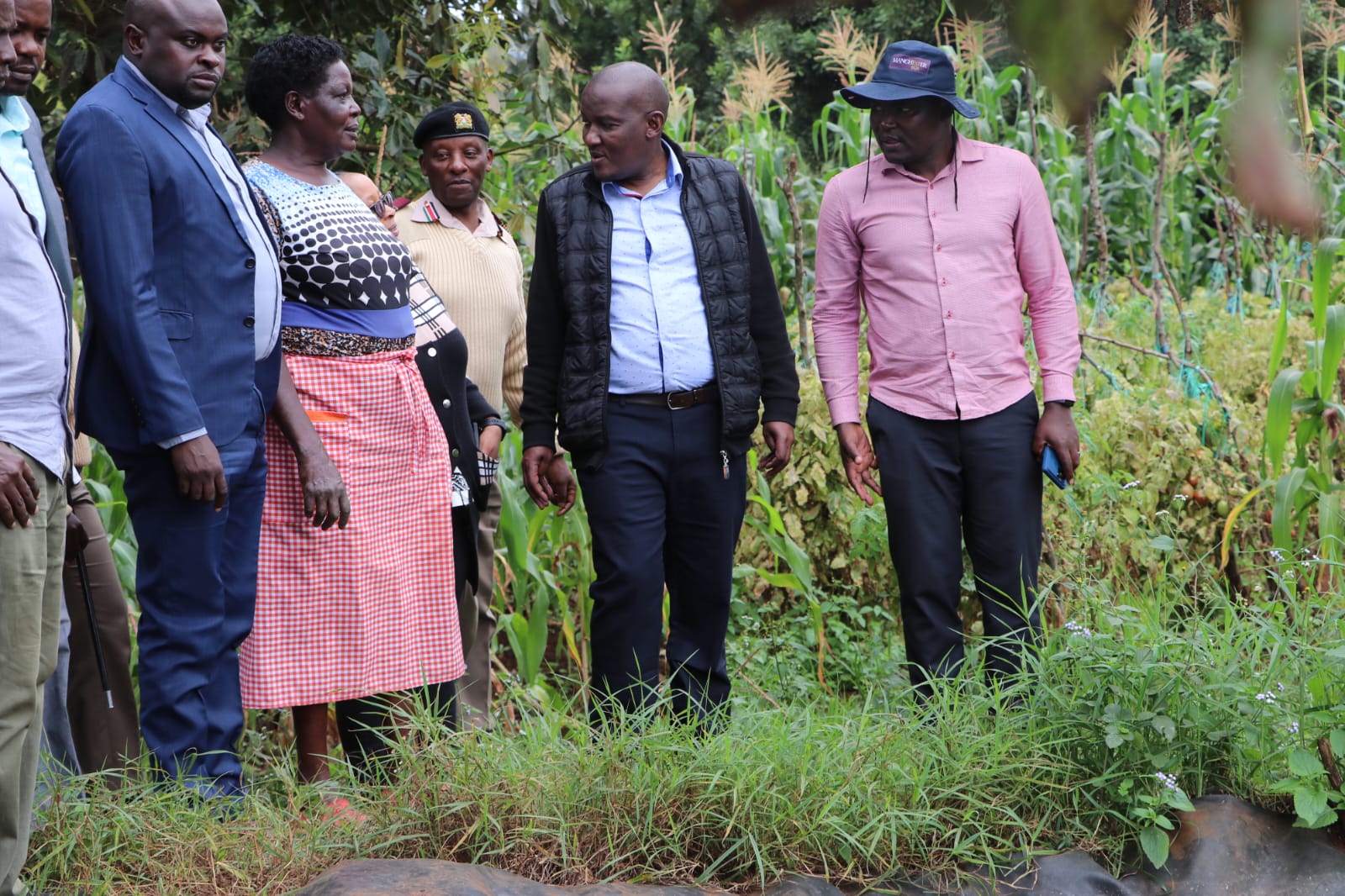
For Jane Wairimu, a farmer at Kandeki, the shift to irrigation has been life-changing. She says overdependence on expensive petrol pumps has significantly reduced, freeing up capital for other investments. With water now stored in a lined pond, the pump she once relied on is no longer necessary.
“Reliable water supply has reduced my production costs and enabled me to diversify from conventional crop farming into dairy farming, fish production, avocados, French beans, maize, and macadamia,” Wairimu said. “This project has changed my farming completely. I no longer worry about water shortages, and I can now invest in different enterprises that generate income throughout the year.”
However, Wairimu urged the government to strengthen market linkages for farmers, noting that stable and predictable markets would encourage increased production and improve returns.
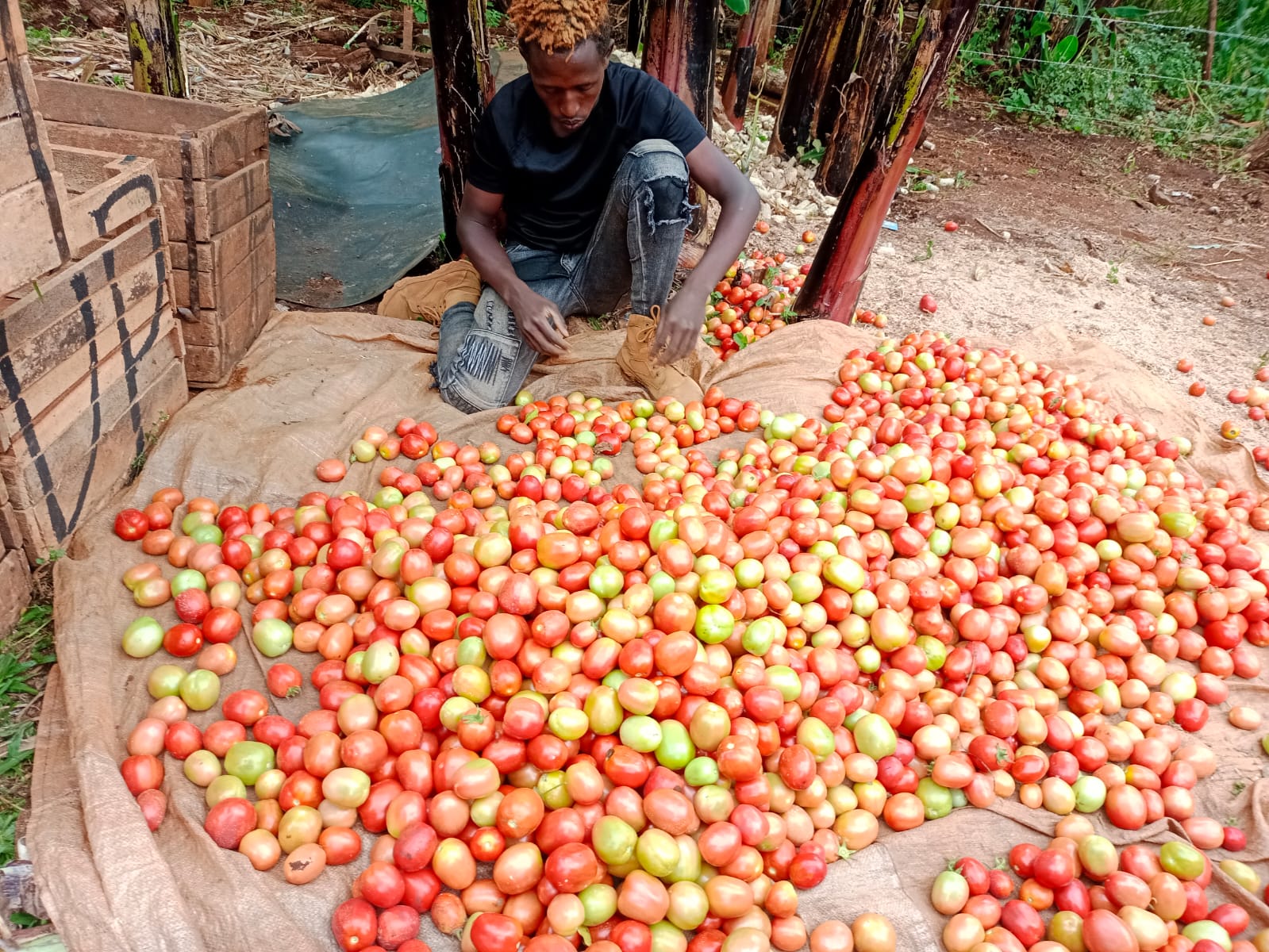
The irrigation project has also opened doors for young people seeking alternative livelihoods. Erick Mwendia, a Community Health diploma graduate who failed to secure formal employment, said irrigation enabled him to venture into farming as his main source of income.
“Reliable water has made farming profitable and challenged the perception that agriculture is only for those with limited career options,” Mwendia said.
He called on the government to expand irrigation programmes targeting young people, saying such initiatives have the potential to create employment while reducing rural poverty and crime. He also appealed for subsidized farm inputs, particularly pesticides and crop protection chemicals, to lower production costs for smallholder farmers.
Henry Kariuki, Chairman of the Kandeki Water Project, said the initiative has completely transformed agriculture in the area by enabling farmers to produce year-round instead of relying on unpredictable rainfall.
“Before this project, most farmers depended entirely on rainfall and harvested only once or twice a season. This project has restored hope to many families,” said Kariuki.
He added that the project is also providing water for domestic use while strengthening community ownership through farmer-managed operation and maintenance.
Government Scaling Up Irrigation Nationwide
The transformation witnessed at Kandeki reflects the government’s broader strategy of promoting farmer-led irrigation schemes as a pathway to agricultural growth.
During an inspection of the project, Principal Secretary for Irrigation Ephantus Kimotho said the government is investing in sustainable irrigation infrastructure to increase agricultural productivity, improve labour efficiency, and strengthen food security.
“Our goal is to ensure farmers have reliable water throughout the year so they can increase production, improve their incomes, and contribute to national food security. Irrigation is no longer an option; it is the future of climate-smart agriculture in Kenya,” said Kimotho.
He noted that irrigation projects are implemented after thorough hydrological assessments to ensure adequate water availability and are supported by public participation, county governments, and extension officers to guarantee long-term sustainability.
“We are encouraging farmers to organize themselves into cooperatives and Irrigation Water Users Associations because this makes it easier for them to access affordable credit, quality farm inputs, extension services, and reliable markets,” he added.
Kimotho revealed that the irrigation model has already supported 19 projects across the Mt. Kenya region, with approximately 95 per cent of participating farmers reporting improved productivity and higher incomes.
Building on this success, the government has secured approximately KSh3 billion to expand similar irrigation projects to Western Kenya, while also investing in water harvesting infrastructure in arid and semi-arid areas (ASALs) to support food production in drought-prone regions.
The initiatives form part of the national target of expanding Kenya’s irrigated land from the current approximately 600,000 acres to 2.5 million acres—a move seen as critical for building climate-resilient agriculture and improving national food security amid increasingly unpredictable weather patterns.
According to the Kenya National Bureau of Statistics (KNBS), agriculture contributes about 33 per cent of Kenya’s Gross Domestic Product (GDP) and employs over 40 per cent of the population. However, only about 5 per cent of Kenya’s arable land is currently under irrigation, leaving the vast majority dependent on rain-fed agriculture—a precarious situation given the increasing frequency of droughts linked to climate change.
Experts argue that scaling up irrigation is essential not only for food security but also for reducing post-harvest losses and stabilizing prices by ensuring steady supply throughout the year. With initiatives like Kandeki proving successful, there is growing optimism that Kenya can significantly reduce its reliance on rain-fed agriculture and build a more resilient agricultural sector.