|
Getting your Trinity Audio player ready...
|
By Winnie Kamau
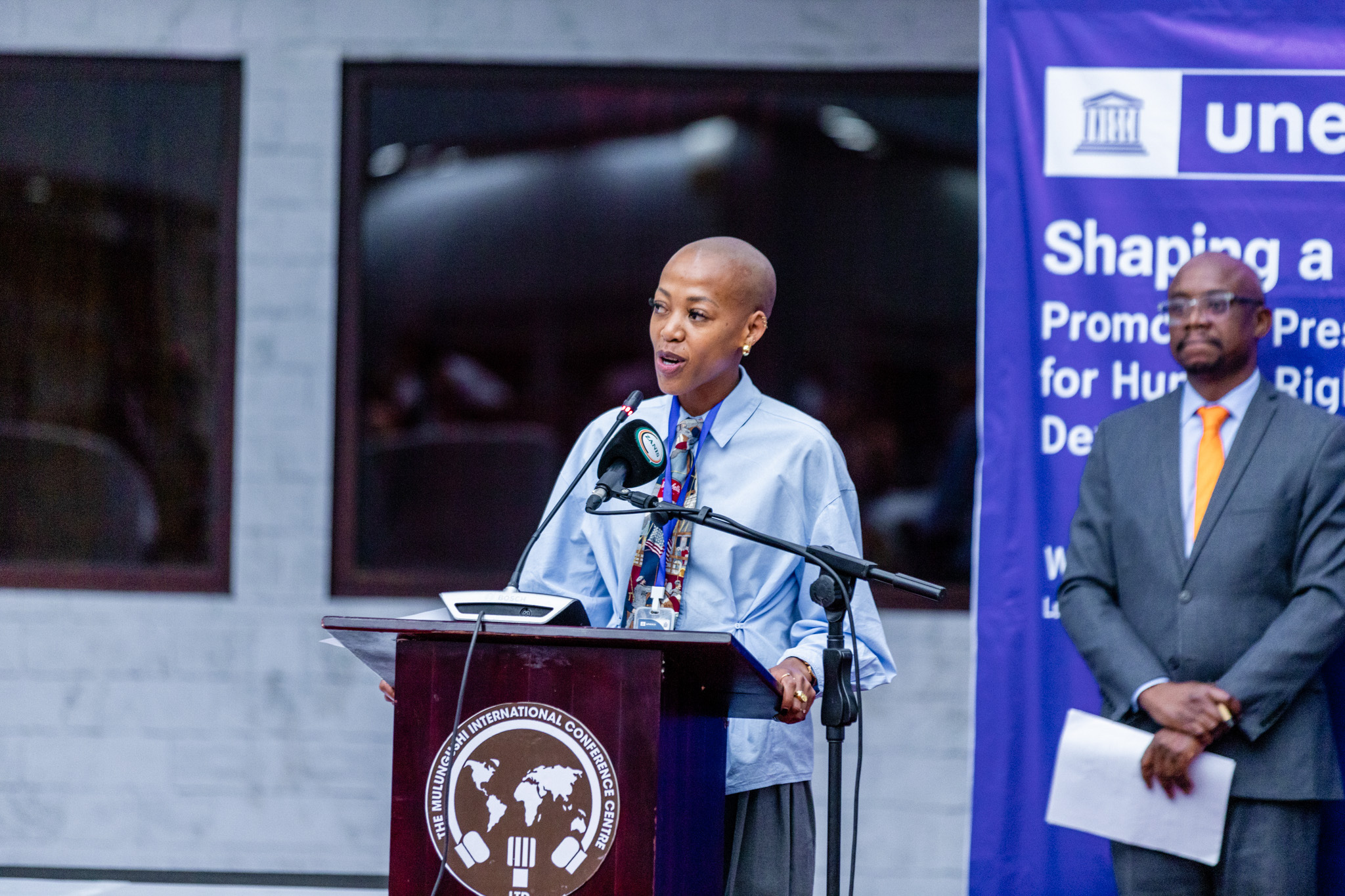
Lusaka, Zambia: On 4th of May, Amahle-Imvelo Jaxa, an International Relations graduate and South African content creator known to millions as Jaxx, addressed the World Press Freedom Day event at the Mulungushi International Conference Centre in Lusaka, Zambia.
The atmosphere at the Mulungushi was unusually vibrant for a press freedom summit as Jaxx, a GenZ and prominent political commentator with a following exceeding one million, stepped up to pour out her heart during this year’s World Press Freedom Day festivities.
She did not come to defend traditional media, also known as legacy media. She came to explain why so many young people have stopped listening to it and what she believes has stepped into the silence. Listening to Jaxx makes you wonder what the future holds for the media ecosystem.
“People are not avoiding the news,” Jaxx told the room of editors, press freedom advocates, and media practitioners drawn from across the continent’s media ecosystem. “They are avoiding the way it is usually done.”
It was a line that reframed the entire conversation happening inside the conference centre that day away from the familiar anxieties about misinformation and pluralism of platforms disruption, and toward a sharper, more uncomfortable question: what if the problem isn’t that young audiences don’t care about public life, but that traditional media has made caring feel inaccessible?
From Family Arguments to a Vocation
Jaxx’s path into political content creation did not begin with a media strategy. It began with frustration inside her own home.
“After all the fights with my brother about why voting is important, I realised that the younger generation had completely switched off from politics and current affairs,” she said. “And this is not because they do not care, but because politics and current affairs often feels distant, inaccessible, and not waiting for them. That frustration is part of why I went back to school for a degree in International Relations.”
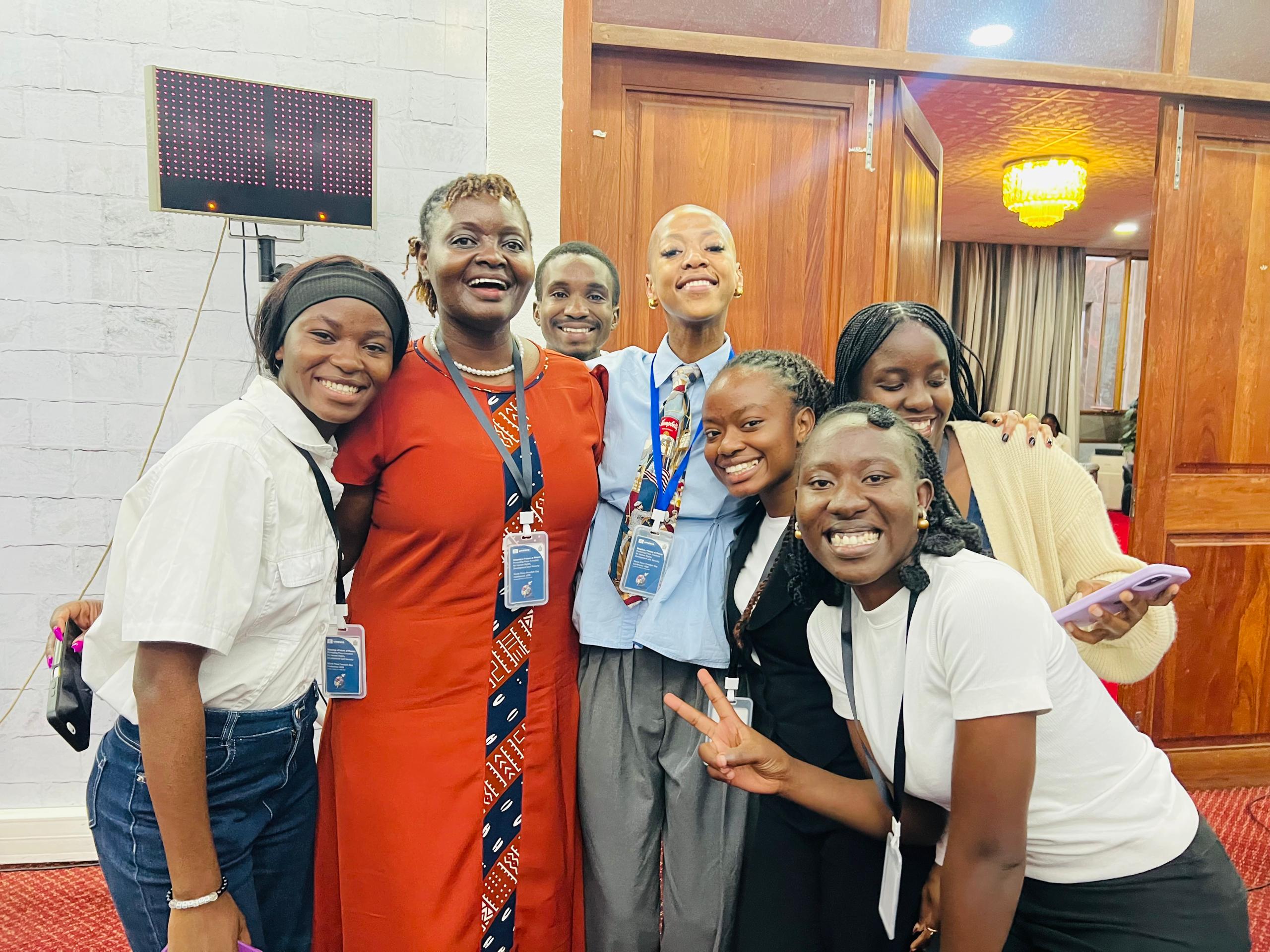
That academic grounding shaped a conviction that has guided her work since: that access to information is itself a form of power, and that the format in which information is delivered determines who gets to hold it. Just talking to Jaxx and seeing her interactions with her fellow GenZs it gives the vibe of good energy in GenZ speak.
“If narratives are power, then keeping people away from politics and current affairs is more than just propaganda; it is closing the door on participation in public life,” she explained. “That realization is what pushes me to start telling people about the news in a way that is easy to understand. Taking topics that the media often assume people understand, and asking: how does this affect you? And if something should be done, what can you do about it?”
The Video That Changed Everything
Jaxx is candid that her rise into political commentary was not the result of careful planning. It was, in her words, luck paired with timing.
“When I started, there wasn’t some grand strategy of how I was going to do it,” she said. “I was unemployed and watching the news when I saw reports about the diplomatic tension between South Africa and Rwanda over the DRC peace commission.”
What she made next was a piece of satire layered over substance jokes about South African and Rwandan military reputations, wrapped around a serious explanation of why South African troops were deployed in the Democratic Republic of Congo in the first place, and what the mission actually meant.
The video reached 1.4 million people.
“What shocked me was not that it was viral, but how so many people had this discussion in public,” she recalled. “So many responses from South Africans said they had no idea we were even in the DRC, or how many of our soldiers had lost their lives.”
She believes the video worked because it did two things simultaneously: it entertained, and it informed, without asking the viewer to choose between the two.
The future of journalism depends on traditional media learning to share the room says Jaxx
The momentum did not stop there. A follow-up video addressing Donald Trump’s false claims of a “white genocide” in South Africa reached 1.9 million people. From there, Jaxx’s following grew into a community of hundreds of thousands large enough, she noted, that she has since found herself in dialogue with a former South African ambassador to the United States.
We Break Down Elections. We Explain Budgets
Jaxx says she has pushed back firmly against any suggestion that her work is a lesser or more frivolous version of journalism. Which really resounds with resilience and consistency, something missing among the young generations.
“We are here to discuss media viability, pluralism, and inclusion, among other things,” she said. “We break down elections, explain budgets, unpack court rulings, and translate formal statements into everyday language. We answer questions and stay with the story long after the headline has gone.”
The deeper diagnosis she offered was structural, not generational. Traditional media, she argued, has struggled to keep pace with how audiences now actually consume information and that struggle has bred distrust.
“Many young people see traditional media as too close to political or corporate power,” she said. “They see it as inaccessible paywalled, centralised in big cities, speaking in a language and format that many people cannot access. Those gaps, and that perception of capture, have created a vacuum. And creators like myself have stepped in.”
But she was careful not to frame this as a takeover. “I want to stress: creators like myself cannot do this without you, the traditional media,” she told the room. “This is not an us versus them kind of speech. It is more that somewhere between the front page and the For You page, my generation has started looking for help to make sense of all that is happening and content creators have put their hand up.”
The Comments Section as Evidence
Some of the most striking material in Jaxx’s address came not from her own analysis, but from the words of her audience comments she reads, she said, every single day.
“I love how you are always politically interested and easy to understand,” one person wrote. Another: “If you were my teacher in school, I would be the president by now.” A third, simply: “You explain so well.”
One comment, she said, captured something close to gratitude mixed with guilt: “Thank you for the information you’re giving us for free. You articulate everything perfectly for all kinds of human interests.”
But it was a different comment one laced with dark humour that Jaxx returned to as the heart of her argument. “I was the happiest person alive until I stopped following your page and came to this,” a viewer had written, half-joking about the emotional toll of being politically informed. Beneath the joke, Jaxx said, was someone choosing to carry that stress home “because for the first time, the news feels like it includes them.”
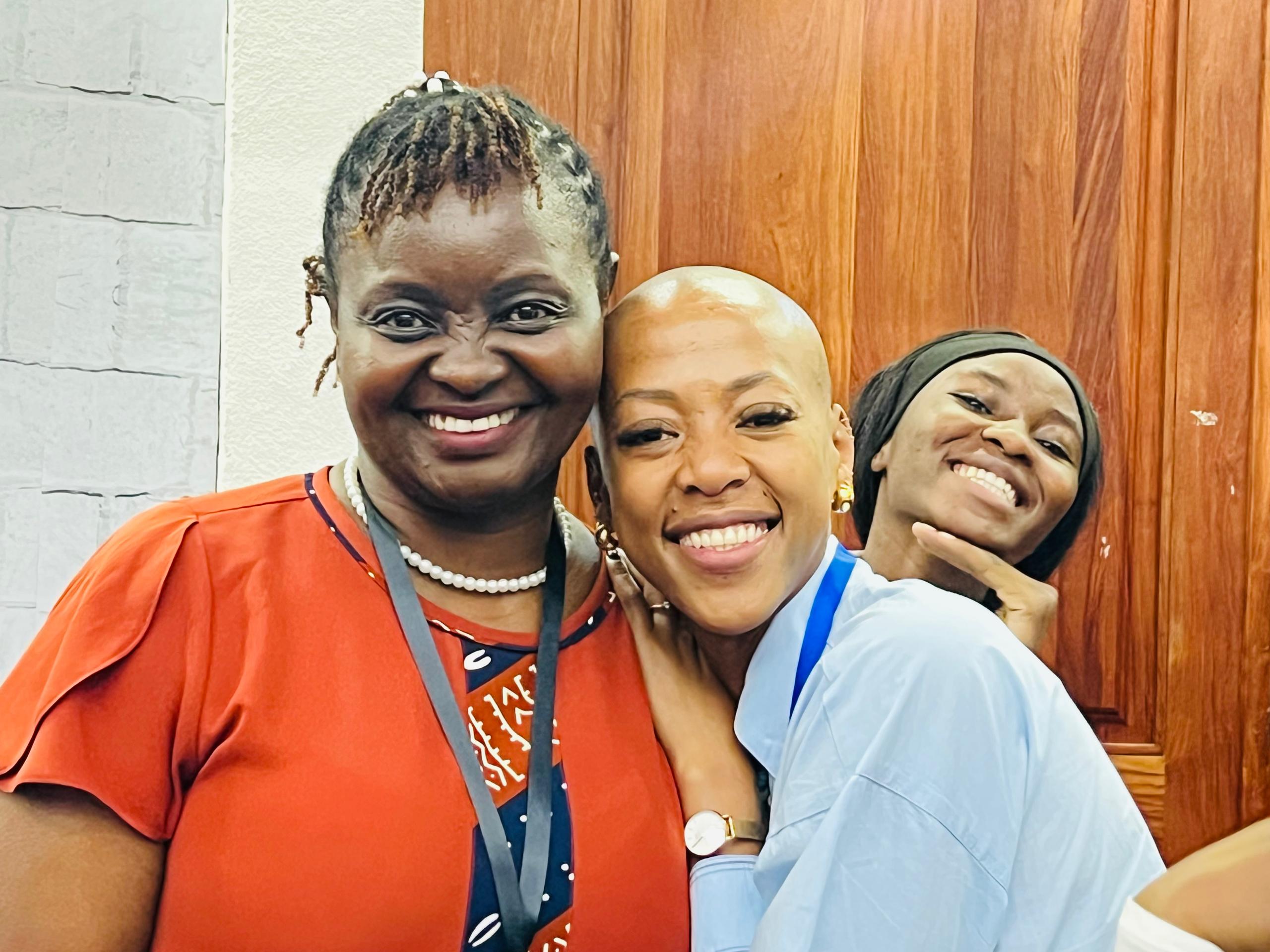
Another comment described checking her content for a different reason entirely: “I usually put some updates out so I have something to say to my boss at work.” Jaxx called this “news as social capital” information valuable not only for what it explains, but for the ticket it provides to participate in conversation, at home, at work, in relationships.
“These comments point to something,” she said. “People do not come to the news just to know things. They come to say things. They come to say something that matters.”
Building the Ecosystem, Not Replacing It
Jaxx was equally direct about the risks embedded in her own success. The same accessibility and intimacy that makes creator-led media powerful, she acknowledged, is also what makes it vulnerable to misinformation, to manipulation, to the absence of the editorial guardrails that traditional newsrooms have spent decades building.
Her proposed solution was not less collaboration between creators and institutions, but more of it formalised, intentional, and mutual. Traditional media organisations, she argued, should be training creators in verification and safety, while in turn recognising and respecting the platforms and formats where young audiences already live.
“If media systems are serious about pluralism, they must acknowledge the diversity of platforms, formats, and voices as just as important as diversity within the institution itself,” she said. “Young creators are not waiting to be invited to the conversation. We are ready.”
She tied this directly to the conference’s core theme. “This is ultimately about viability,” she said. “A media ecosystem cannot be viable if it fails to connect with its future audience. And that future audience is already online, already engaged, and already forming relationships with us the creators.”
Jaxx ended not with a declaration, but with a challenge aimed squarely at the institutions in the room with her.
“So, to avoid ourselves becoming adversaries creators versus journalists perhaps the question is this,” she said. “How do we build an ecosystem where truth, trust, and creativity can coexist institutions and individuals together?”
Her final line, delivered to a room that had grown notably quiet, became the phrase most repeated as delegates filed out of the Mulungushi International Conference Centre that afternoon.
“The future of media will not be defined by one or the other,” Jaxx said. “It will be defined by how well we are all together.”