|
Getting your Trinity Audio player ready...
|
By Scovian Lillian
Nairobi, Kenya: 10:00 am on a Saturday, Chacha is on TikTok live selling thrift clothes, a pay bill number taped on her forehead. She lifts one item after another to the camera, responding in real time as comments flood in. A buyer takes a screenshot of an item and sends it via WhatsApp. She tags it, sets it aside for dispatch, and moves on without pause. She started selling online in 2024 and has not stopped since.
She is one of hundreds. On any given day, Kenyan women can be found running live selling sessions online for hours on end, turning their phones into storefronts, their faces into brands, and their time into income.
Nypha (not her real name) took a different route. After going viral on TikTok in 2023, she used the visibility to start a thrift business selling bags and second-hand women’s clothing. Her following grew fast, reaching over 120,000.
But that visibility has proven fragile. Over time, she has lost four accounts, each shutdown wiping out the audience she had built, forcing her to start over. TikTok cited community guidelines violations, though Nypha has never fully understood what she did wrong. People have mocked her business online, and she says customers do not take her seriously.
The frustration has become public. In one video, she broke down in tears. “I really don’t understand why everyone sells on live peacefully, but my accounts get banned when I do. The TikTok help service is not helping me either. Whenever I reach out, I am left to speak to a robot instead of a real human being. It’s so frustrating,” she lamented. “I am so tired, honestly, because I have really been trying; this business is now stressing me,” she added.
Her experience points to something larger. For informal women sellers operating without verified creator status or institutional backing, platform algorithms and moderation systems offer little transparency and even less recourse. When an account disappears, so does everything built on it.
“When violations occur, enforcement action may include warnings, temporary restrictions, or account suspension, depending on the severity or repeated nature of the violations. Users can appeal enforcement decisions directly through the app. Community guidelines apply to all users regardless of account size or verification status and are communicated through the in-app resources. TikTok does not allow trading, marketing, or providing access to regulated, prohibited, counterfeit, or high-risk goods and services”, a TikTok spokesperson stated.
From an expert’s perspective, the pattern Nypha describes is not accidental. Betty Okero, Executive Director of the CSO Network, says the community guidelines argument does not hold up. “There is nothing that she is doing that is different from other people,” she says. The real problem, she argues, is competition. Rivals on the platform can file complaints regardless of whether they are founded, and by the time an investigation concludes, the account is already gone. “They complain, and then after that they investigate. But by that time, your account has been shut down.” For informal women sellers with no institutional backing and no legal recourse, that cycle is devastating. Every shutdown means starting over, rebuilding followers, trust, and income, while competitors who triggered the complaint continue selling uninterrupted.
Across Kenya, women are increasingly turning to the digital economy, selling products on social media, freelancing on global platforms, and building small online businesses, as a way to earn a living in a constrained job market.
According to a UNESCO’s report on Girls in ICT Day 2025, women in Kenya hold fewer than 30 percent of ICT roles, and only about 35 percent use mobile internet, compared to roughly half of men.
These figures point to deeper structural barriers that extend beyond access to devices. They reflect inequalities tied to education, income, digital skills, and long-standing social expectations that continue to shape women’s participation in the digital economy.
Dan Bazira, UN Women Deputy Country Representative to Kenya, says, “A key manifestation of this inequality is sectoral segregation, where digital platforms often channel women into lower-value, ‘pink-collar’ work such as online care services, housekeeping, virtual assistance, and small-scale e-commerce. In contrast, men are more likely to dominate higher-paying and more technical segments of the platform economy.”
“Although digital platforms are often promoted as offering flexibility and new pathways into employment, many women engage with these opportunities from a position of constraint rather than genuine choice,” he adds.
For many women, this shift is not simply about opportunity. It is about necessity.
For 39-year-old Esther Zinalo, entry into the digital economy was not planned. A trained pharmaceutical technologist and nurse aide, she began selling makeup, jewelry, and sandals after the birth of her second child.
“I thought I would do it while nursing my baby, then later go back to employment, but since it picked up so well, I decided to go the business way,” she says.
Her work is now fully digital. Using her phone, internet, TikTok, and WhatsApp, she runs online live sales while coordinating customers and deliveries in real time.
But stability is not guaranteed.
“When my Wi-Fi is off, or I have fewer bundles, I am out of sales for that day,” she says. Since mid-2024, she has noticed another shift: fewer views on TikTok, which means fewer sales. She has 7,000 followers, an audience she built steadily, but the platform’s algorithm determines how many of them actually see her. On some days, it shows her content to almost no one.
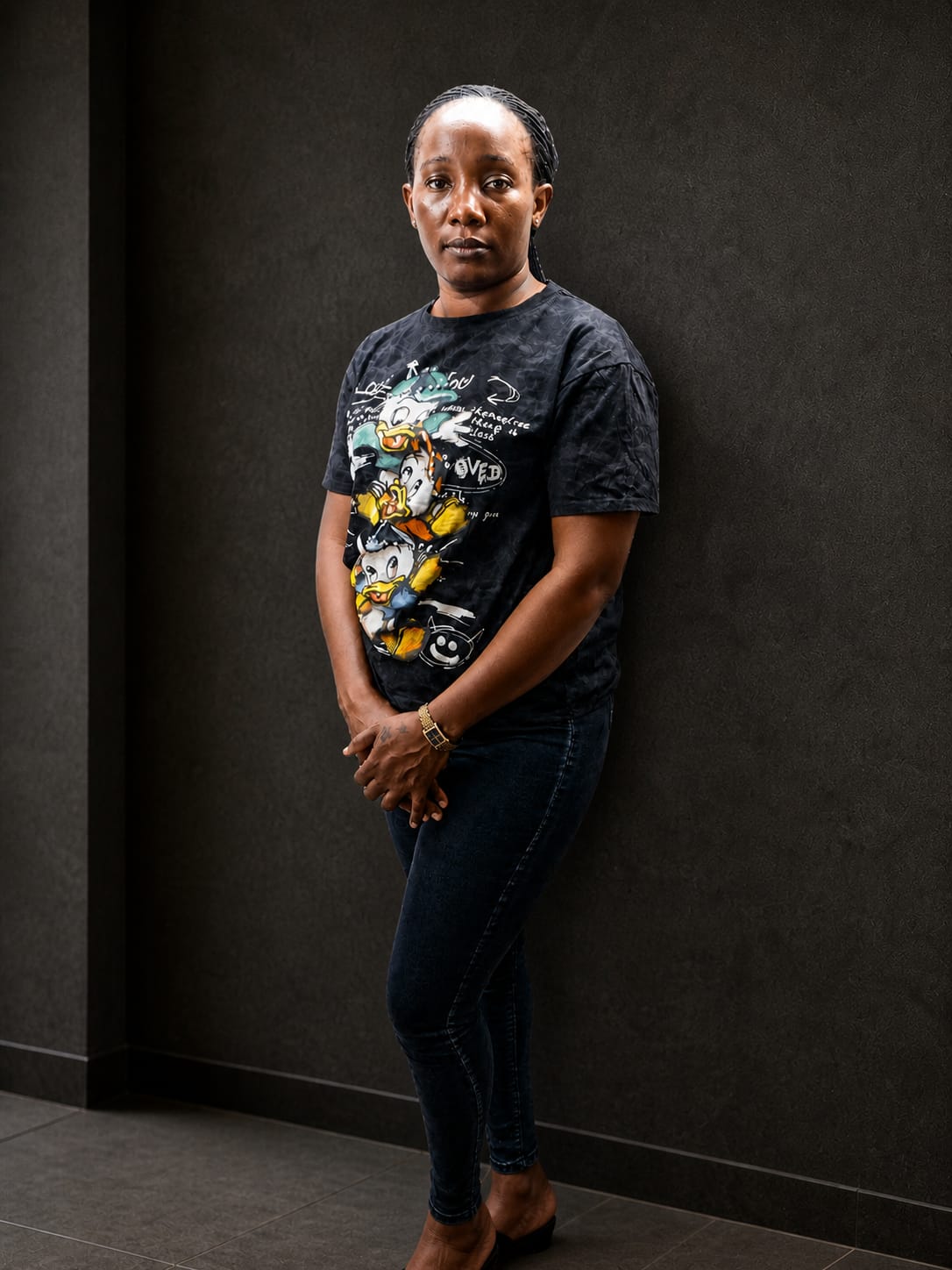
Income is unpredictable. “There’s no guarantee of a sale. I can miss sales even for a week.” At one point, she lost 12,000 shillings after delivering clothes to a client who refused to pay. The client kept promising that they would pay on a particular date, but that never happened.
The risks extend beyond money. “Men will come into your live and try to seduce you. Working online and giving one’s location exposes us a lot,” she says. She also notes that some people assume women selling online are involved in sex work.
Still, she continues. “It’s good as a woman to have your own money. We keep on pushing.”
For Maureen Odira, known to her customers as “Fish Mama,” the shift to digital work took a different path. With a background in mass communication and experience as a sub-editor at The Standard and People Daily, she left formal journalism to build a fish supply business that sources fresh tilapia, sardines, and Nile perch from Lake Victoria for homes and offices in Nairobi and beyond.
Her day starts at 5 a.m. She checks stock, confirms orders, coordinates deliveries, and ensures corporate lunch packages are ready by 11. Evenings are for marketing and content creation. It is a long day, and her phone is at the centre of all of it, with WhatsApp, Facebook, and Instagram handling orders, and M-Pesa processing payments.
The work is not without risk. Clients have taken goods on credit and disappeared. A phone crash once cost her hours of sales during a peak order day. First-time customers are often reluctant to pay for fish they have not seen. “There is little legal protection for online vendors,” she says. Income is seasonal, peaking in December and thinning out in January.

What keeps her going is clearer than the challenges: she is building something her son can be proud of, and she knows what needs to change. “Support the informal sector. Give us proper infrastructure, digital training, and protect us from online fraud.”
For women like Esther and Maureen, the digital economy offers both opportunity and uncertainty. Income is inconsistent, competition is high, and visibility online can change overnight. Still, many persist, driven by necessity and the pursuit of independence.
The broader implications go beyond individual stories. International frameworks such as the Convention on the Elimination of All Forms of Discrimination Against Women and Article 23 of the Universal Declaration of Human Rights affirm women’s right to work under fair and favorable conditions. In practice, however, the realities of digital labour reveal a gap between rights and lived experience.
Okero points to a deeper vulnerability that is rarely acknowledged. In the digital economy, she argues, women cannot easily separate their personal identity from their business. “When people come for you, they come for both you and your business. Sometimes they come for you, but because we associate you with your business, both of them are destroyed in the process.” The policy environment makes this worse. “We have a policy that is trying to control,” she says, “not one that is trying to protect.” Without legal frameworks that recognise and safeguard informal digital work, women operating in this space remain exposed, not just to market forces, but to the platforms themselves.
As Kenya’s digital economy expands, the question is no longer whether women are participating, but whether they are doing so on equal and secure terms.
For now, many remain active online, building livelihoods in a space that continues to evolve around them. Their presence is growing, but their challenges remain largely invisible.
In Kenya’s digital economy, women like Chacha, Nypha, Esther, and Maureen continue to run their digital businesses—opening new bales of second-hand clothes, going live on TikTok, fulfilling orders through WhatsApp groups and social media status updates, and rebuilding what is lost when accounts fall, or sales fail. Their work has become permanent, even as the systems around it remain uncertain.
What their experiences reveal is not just the rise of women in the digital economy, but the gap between participation and protection, where work is visible, income is real, but the safeguards that should support it remain fragile.