|
Getting your Trinity Audio player ready...
|
By Mary Mwendwa
VOI, KENYA – In Kenya’s Taita Taveta County, energy-saving cookstoves at Mazola Primary School have cut firewood use by 70%, reduced harmful smoke emissions by over 60%, and brought an asthmatic cook back to work.
For years, the kitchen at Mazola Primary School was a place of punishment. Thick, acrid smoke curled from three stones cradling a blackened pot. The cook, Clementina, already battling asthma, would light the fire and immediately flee outside, gasping for clean air. Lunch was always late—often very late. And every single week, parents trudged into the nearby Chawia Forest, axes over their shoulders, to harvest firewood just to keep the school’s feeding program alive.
It was a cycle that choked the forest, sickened the cook, and left young learners eating half-cooked meals—or nothing at all.
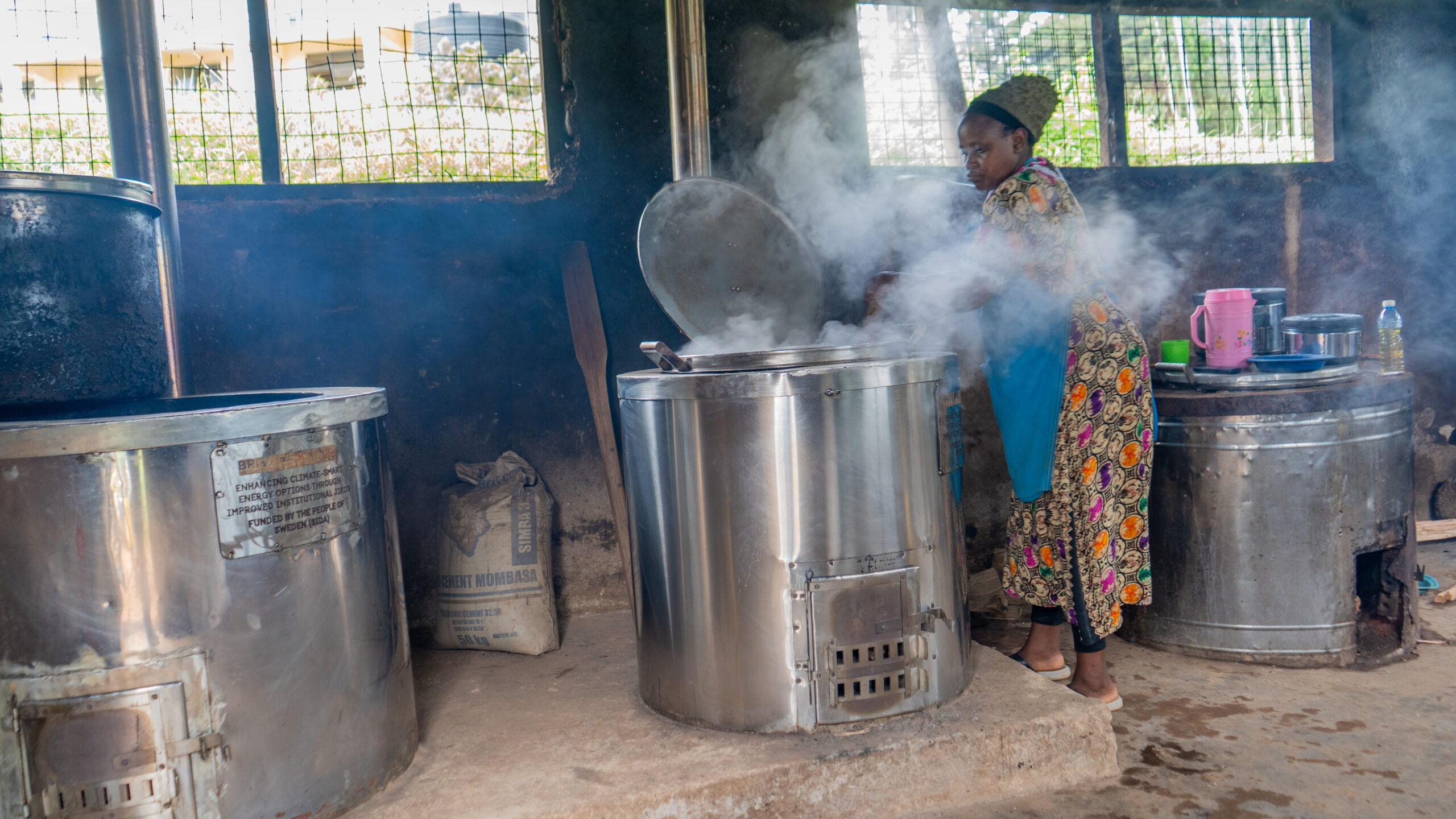
Today, that same kitchen tells a radically different story. The air is clear. The food is ready before noon. And the cook is back at work, standing comfortably over two raised, energy-saving cookstoves that have fundamentally reshaped life at this rural school in Taita Taveta County.
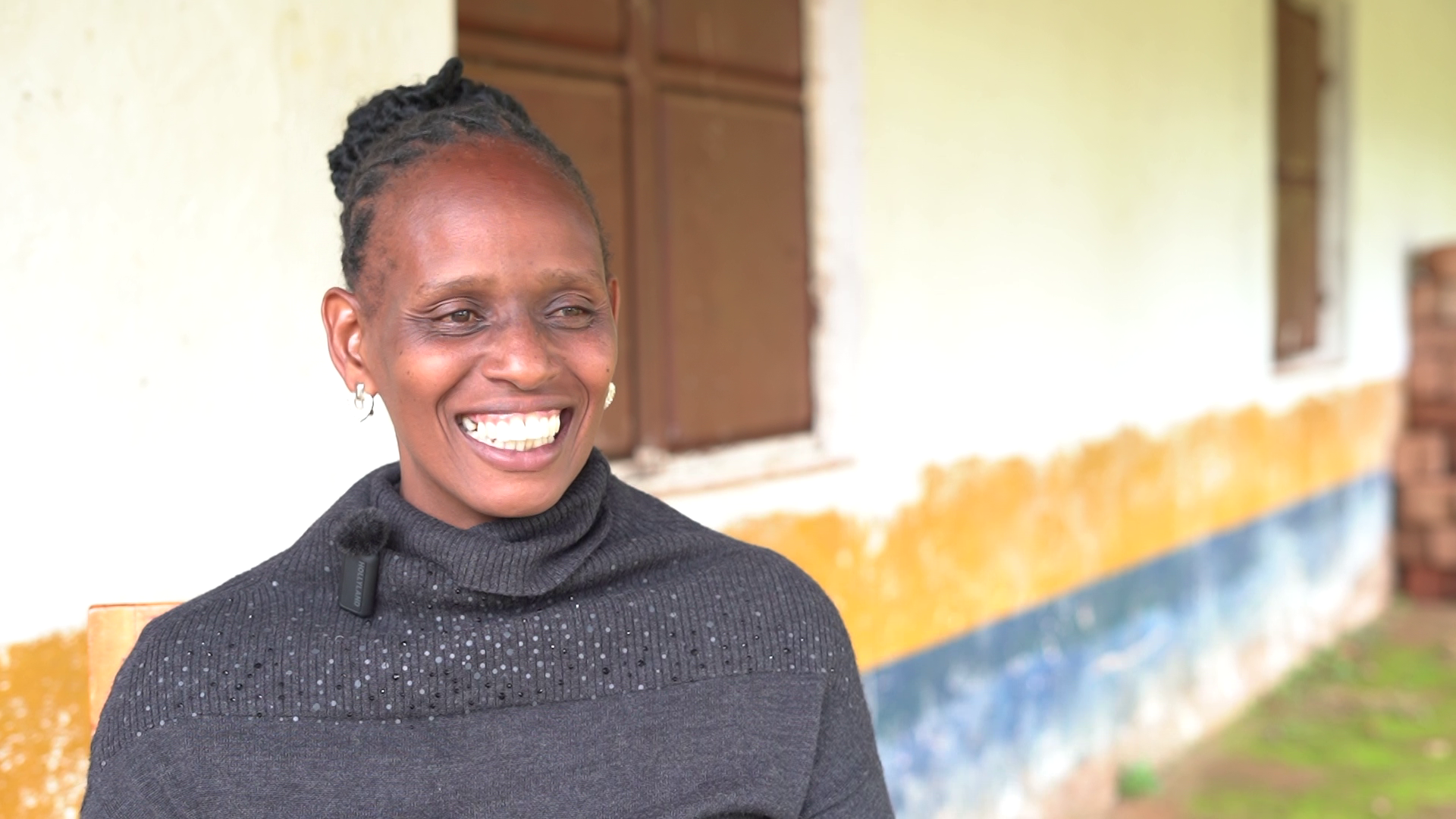
“The meals are sweet now,” says Emily Kituri, the headmistress of Mazola Comprehensive School, her voice carrying a quiet triumph. “The children come back for more. There is no wastage.”
The Hidden Crisis of Traditional Cooking
Globally, the numbers are staggering. According to the World Health Organization (WHO), nearly 2.4 billion people still cook using open fires or inefficient stoves fueled by kerosene, biomass, or coal. This practice leads to approximately 3.2 million premature deaths annually from household air pollution—more than malaria and tuberculosis combined. In Kenya, over 70 percent of rural households rely on solid biomass, primarily firewood, for cooking. Schools are among the heaviest consumers.
Traditional three-stone stoves, like the ones Mazola Primary once used, operate at only 10 to 15 percent thermal efficiency. This means more than 85 percent of the firewood’s energy is lost as wasted heat and harmful smoke. Each meal requires excessive fuel, and each cooking session releases dangerous levels of fine particulate matter (PM2.5), carbon monoxide, and volatile organic compounds—directly into the lungs of cooks and nearby children.
A Forest Under Siege
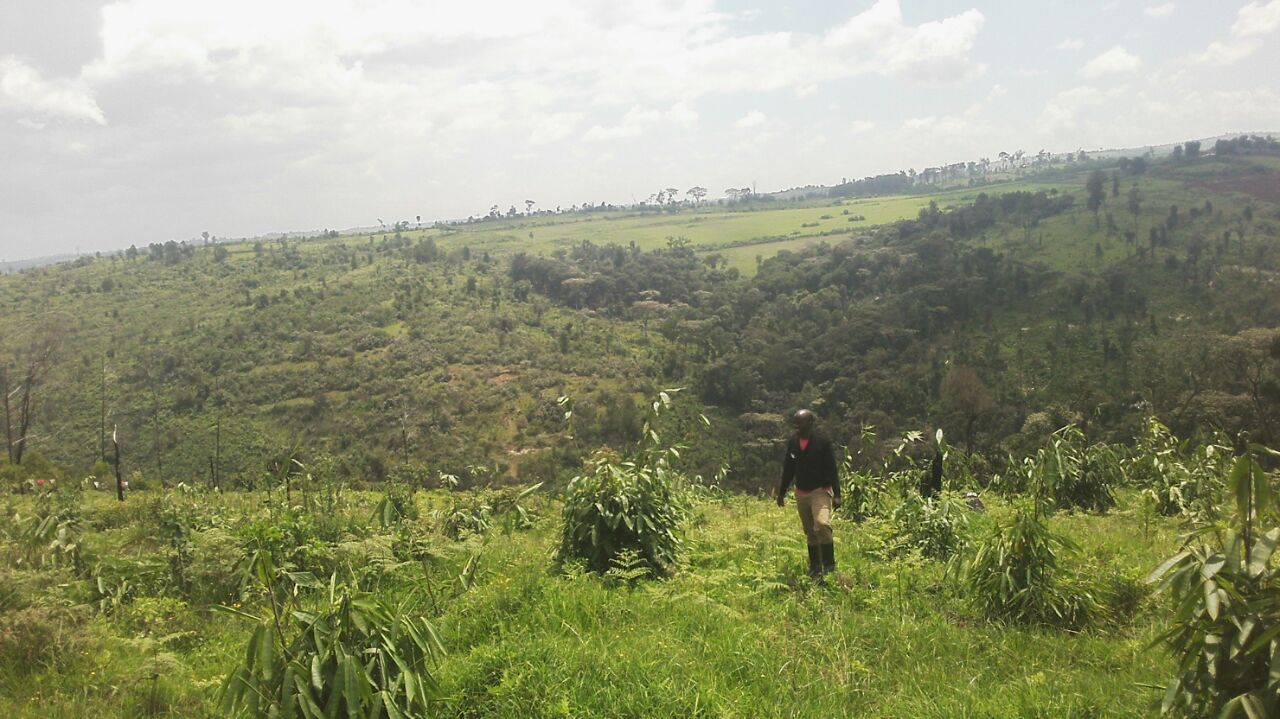
Mazola Primary School sits on the edge of Chawia Forest, a critical water catchment area and a vital habitat for wildlife in the greater Tsavo-Mkomazi landscape. But Chawia is under severe threat. The primary driver of its degradation is not commercial logging or charcoal production—it is the daily, desperate need for firewood. And schools are among the biggest consumers.
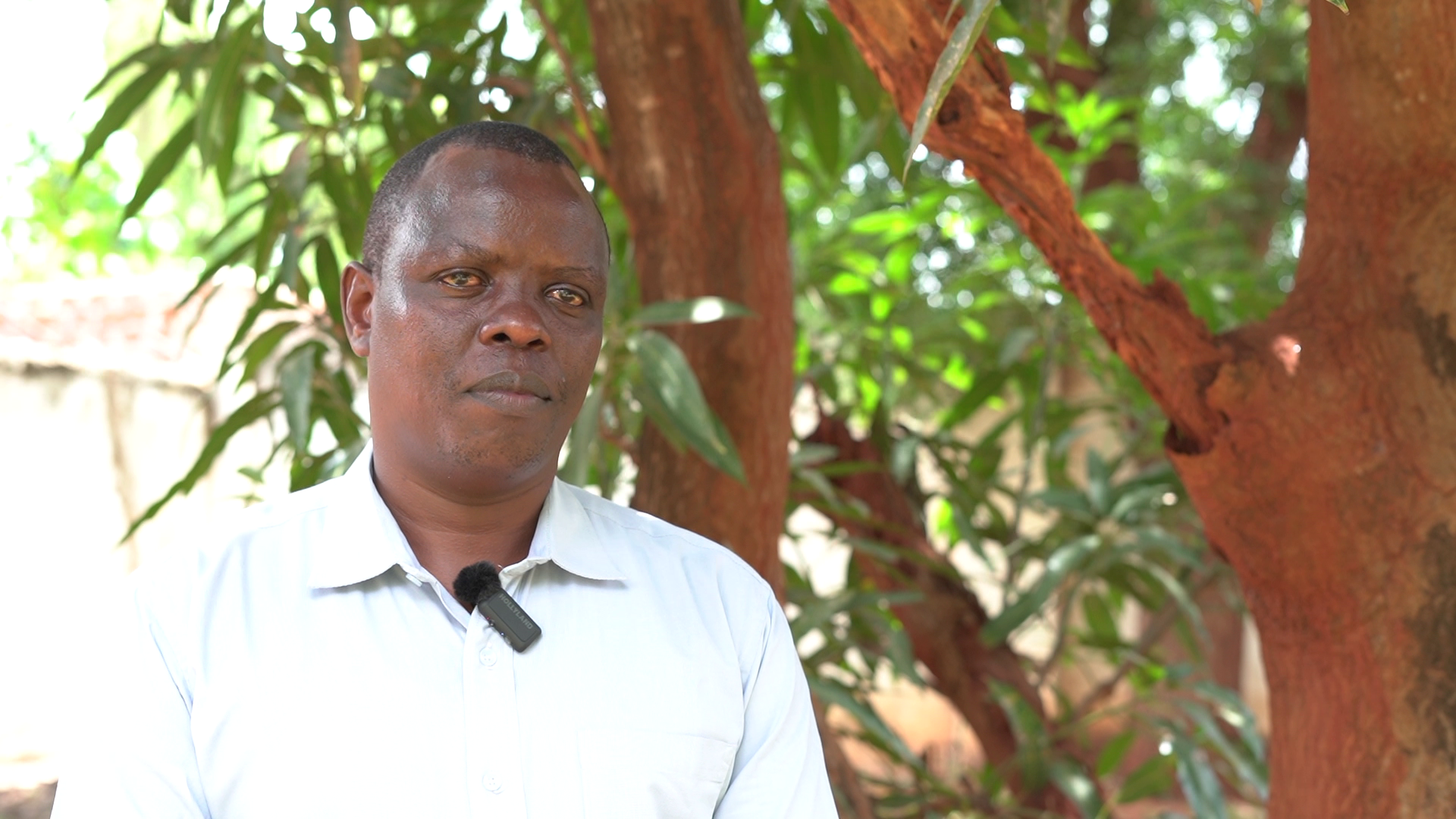
Kimetei Kenneth, the Landscape Manager for the African Wildlife Foundation (AWF) in the Tsavo-Mkomazi landscape, saw the problem clearly. “One of the challenges that Chawia Forest is facing is degradation driven by firewood collection,” he explains. “Schools within Taita Taveta use firewood for cooking. For us to conserve that forest, we had to stop the drivers of degradation.”
Working with the Chawia Community Forest Association and with financial support from the Swedish Embassy in Kenya, AWF chose Mazola as a pilot site.
The Technology That Made the Difference
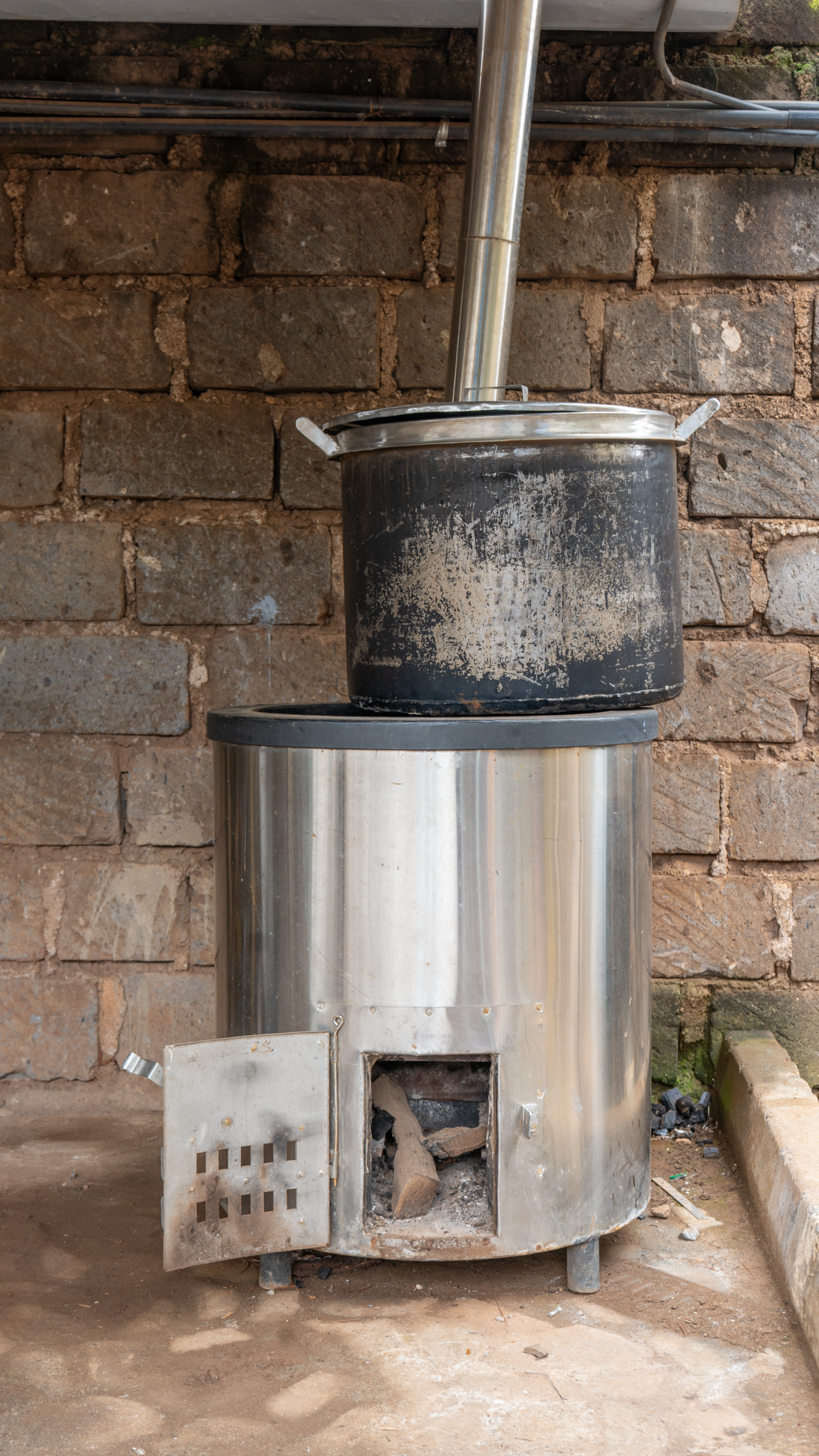
The intervention was simple but powerful: improved institutional cookstoves, designed specifically for schools. Unlike traditional three-stone fireplaces, these energy-saving stoves feature several key innovations:
- Insulated combustion chambers that retain heat and direct it efficiently to the cooking pot.
- Raised platforms that prevent water damage and improve airflow, extending the stove’s lifespan to up to 10 years.
- Optimized fuel-to-air ratios that ensure more complete combustion, reducing firewood consumption by 50 to 70 percent.
- Chimney systems that vent smoke outside dramatically lower indoor air pollution.
According to the Global Alliance for Clean Cookstoves, improved cookstoves can reduce fuel use by 30 to 60 percent and cut harmful emissions by 50 to 80 percent compared to open fires. At Mazola, the results exceeded even those benchmarks.
Firewood consumption dropped by 70 percent—from an estimated 420 kilograms per week to just 126 kilograms. Emissions of fine particulate matter, the primary cause of respiratory illness, fell by an estimated 65 percent, based on standard clean cookstove performance data.
Before the new stoves, Mazola ran a parent-led “Umoja” (unity) program where families took turns supplying firewood. Parents were required to come twice a week just to keep the kitchen running—a grueling schedule that consumed valuable time and accelerated deforestation.
“Now, with the new stoves, parents come once every two weeks,” says Madam Kituri. “The firewood lasts much longer.”
That reduction means fewer trips into Chawia Forest. Fewer trees felled. Less habitat destroyed. And for the parents—most of whom are struggling smallholder farmers—less time spent gathering wood means more time for farming, for earning income, and for caring for their own children.
The most poignant transformation, however, is not measured in firewood or forest hectares. It is measured in breath.
Before the new stoves, Mazola’s kitchen was a health hazard. The old three-stone fire pit produced smoke concentrations that often exceeded the WHO safe limits by more than 20 times. The school’s longtime cook—a man suffering from asthma—was forced to retire. “He could not stay in the kitchen,” Kimetei recalls. “He would put the firewood on and run away.”
Since the installation of the energy-saving stoves, particulate levels have dropped to within safe thresholds. The kitchen is no longer a place to flee. It is a place to work.
“The cook is consistent now,” says Kituri. “There is no time when he comes to me saying he is feeling sick. The environment is not as smoky as it used to be.” The school no longer scrambles for a replacement cook every other day. Occupational health—a rare luxury in rural Kenyan school kitchens—has finally arrived.
More Time to Learn, More Reason to Stay
The ripple effects extend far beyond the kitchen walls. With cooking time reduced by nearly two hours per day, lunch is now served on time, meaning afternoon lessons are no longer delayed. Children who used to walk home hungry during lunch break—often vulnerable to accidents or exploitation—now stay on school grounds. They are safe, fed, and ready to learn.
“Most of them do not come from well-to-do families,” the headmistress explains. “When they leave home, many have not had a full breakfast. But they know that at lunch, they will get a heavy meal that will take them through the afternoon.”
Teachers get their full 35-minute lessons. Students get remedial classes while the food cooks. Academic performance is quietly but steadily improving. And the school has noticed another telling detail: food wastage has completely disappeared.
“Initially, we used to see a lot of food thrown away,” Kimitei notes. “Now, because the food tastes good, the children come back for more.”
The Technology That Made the Difference
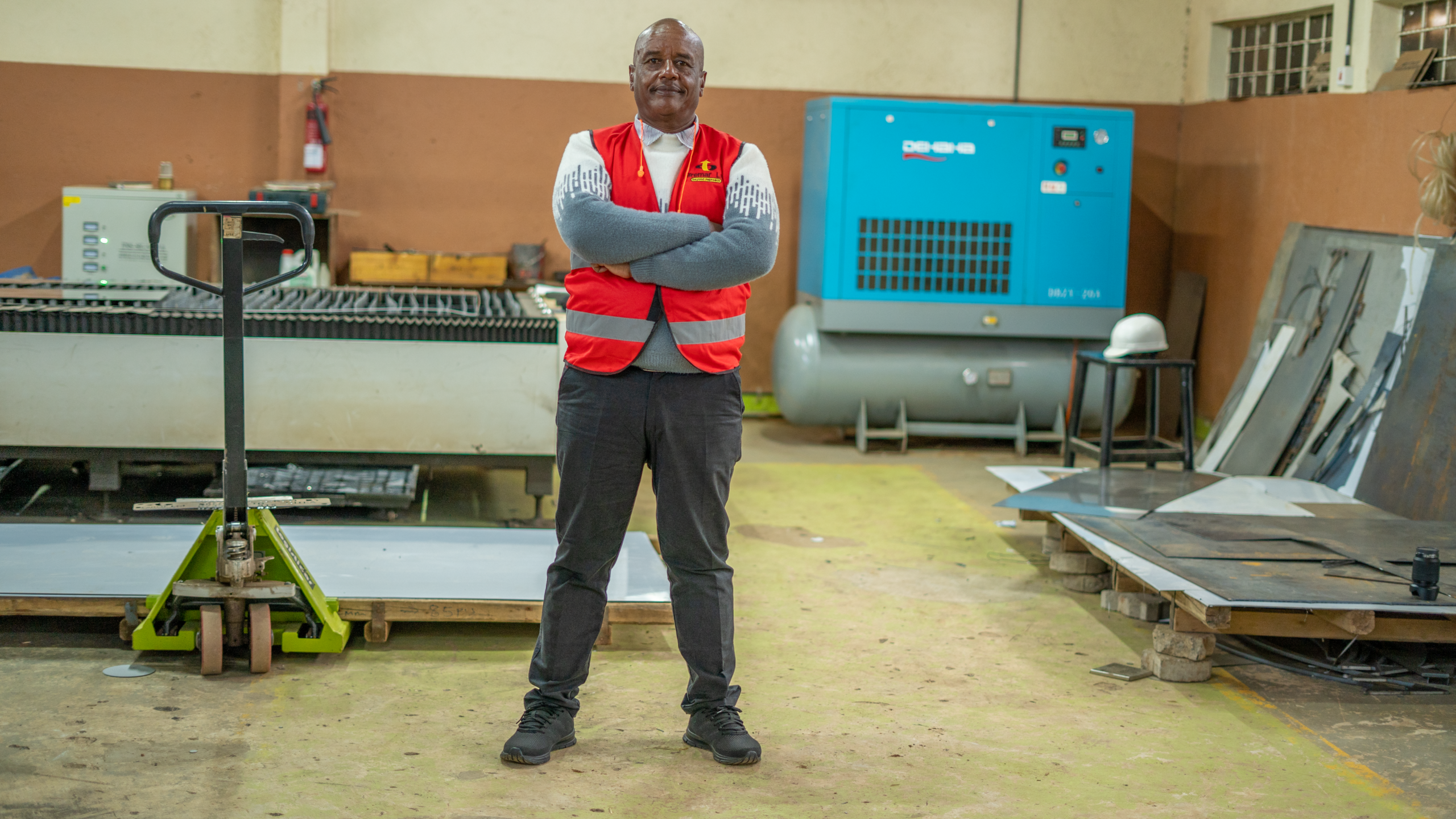
The intervention was simple but powerful: improved institutional cookstoves, designed specifically for schools and manufactured by Bremar Ltd, a Kenyan company that has specialized in energy conservation for nearly three decades.
“We have done a lot of research into finding solutions that continue conserving by using less, by also reducing emissions,” explains Ng’ang’a Njau, founding director of Bremar Ltd. “We make sure that the equipment we make gives value to clients in terms of long periods of use and very, very minimal maintenance.”
Unlike traditional three-stone fireplaces, these energy-saving stoves feature several key innovations: insulated combustion chambers that retain heat, raised platforms that prevent water damage and improve airflow, stainless steel construction for hygiene and durability, and optimized fuel-to-air ratios that ensure more complete combustion. “Our core material is stainless steel,” Njau says. “The choice of stainless steel is because it is long-lasting and also very easy to maintain.”
According to Bremar’s technical data, the stoves achieve fuel savings of between 80 and 90 percent compared to open fires—even higher than typical industry benchmarks. “Most of the schools were using open fire, which meant they were very, very inefficient in terms of emissions and the use of a lot of firewood,” Njau notes. At Mazola, firewood consumption dropped by 70 percent, aligning with the manufacturer’s projected savings range.
A Blueprint for Clean Cooking Across Africa
For AWF, Mazola is not an isolated charity project. It is a cornerstone of a larger strategy called the Conservation Education Initiative, which mentors children aged 5 to 17 to become environmental champions. The school is now a living classroom. Children see firsthand that using less firewood means a healthier forest, cleaner air, and better food.
And the model is spreading. AWF has already supported 12 other schools in Taita Taveta with similar stoves. The savings from reduced firewood purchases—estimated at nearly 70 percent of the school’s previous fuel budget—are being channeled into maintenance, making the project sustainable without ongoing donor funding.
According to the International Energy Agency (IEA), achieving universal access to clean cooking by 2030 would require an annual investment of approximately $8 billion. But the returns are immense: reduced deforestation, improved health outcomes, saved time for women and children, and lower greenhouse gas emissions. Mazola Primary School offers a small-scale proof of concept that works.
“The project is successful, if I may say so,” Kimetei says with understatement. “We are now planning to scale up to other schools. The conflict between the forest association and the school is gone. They now live in harmony.”
Back at Mazola, as the lunch hour approaches and the aroma of a well-cooked meal drifts through the classrooms, Madam Kituri offers a final thought.
“I would like this program to be in every school,” she says. “The efficiency of the worker, the safety of the learners, the peace of mind for the parents—everything has improved. Because of these energy-saving stoves.”
In the race to save Africa’s wild lands, protect human health, and feed its future generation, sometimes the most powerful tool is not a policy or a patrol. Sometimes, it is simply a better stove—70 percent more efficient, 65 percent cleaner, and 100 percent transformative.