|
Getting your Trinity Audio player ready...
|
By SHABAN MAKOKHA
Kakamega, Kenya: Thousands of residents in Kakamega County, including Margaret Maloba from Khwisero, depended for many years on seasonal streams and unreliable water points for their water supply.
During dry spells, children frequently arrived late for school after helping their parents to fetch water before sunrise.
The rollout of solar-powered water projects across several wards in Kakamega county has dramatically reduced that burden, giving relief to women and children who bear the traditional responsibility of searching for water.
By cutting the distance, trips and time spent walking, these projects are easing daily workloads and freeing up time for education, business and rest.
Before solar-powered systems in Kakamega County, many women walked long distances to rivers, springs, or distant boreholes-often carrying heavy jerry cans and climbing hills repeatedly every day.
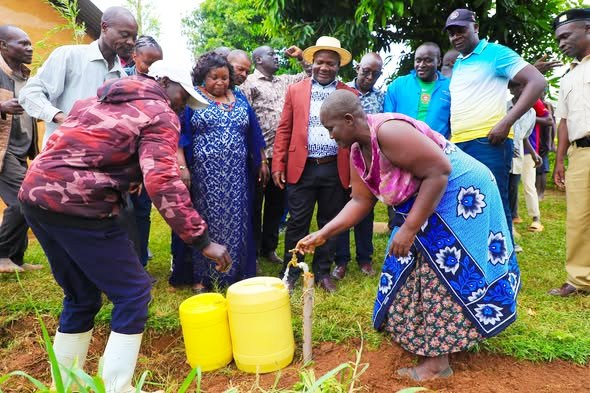
“With this connection, our mornings have changed completely,” Ms Maloba said. “My grandchildren can now start their day with dignity.”
Kakamega County is scaling up solar-powered water projects to drive the ‘Amatsi Khumuliango’ (water at the doorstep) agenda, marking a new era of reliability, sustainability and household dignity.
The county leadership has accelerated the expansion of solar-powered water projects in a bold effort to promote clean and dependable water closer to thousands of residents.
For Kakamega County, the sun is no longer just a natural resource it has become a partner in development, powering the water systems that sustain families and shape the future.
With flagship installations now operational in Shitoli, Lubanga, Koyonzo, Iranda and Misango, the county is positioning itself as a national leader in renewable-energy-driven water provision.
After years of grappling with inconsistent supply, costly pumping, and unreliable power, communities across the county are now witnessing transformative change as solar energy becomes the backbone of water distribution.
Through multimillion-shilling investments in solar infrastructure, Kakamega is reducing the cost of water production and guaranteeing uninterrupted pumping even during peak demand hours.
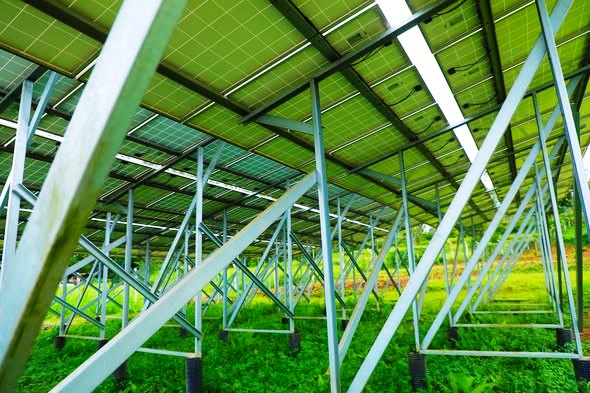
The sprawling solar fields power high-capacity borehole pumps that feed elevated storage tanks and an expanding distribution network. With solar energy slashing electricity costs, the projects are delivering water more affordably and consistently than ever before.
In villages once accustomed to dry taps, residents agree that the steady flow of water has become a symbol of progress—and a relief long overdue. Vendors say the project has breathed new life into small businesses.
At Shitoli, the crown jewel of the county’s renewable water push, a 120kW solar-powered KSh212 million water project appears as a landmark serving 45,000 residents across Ikolomani and neighbouring areas.
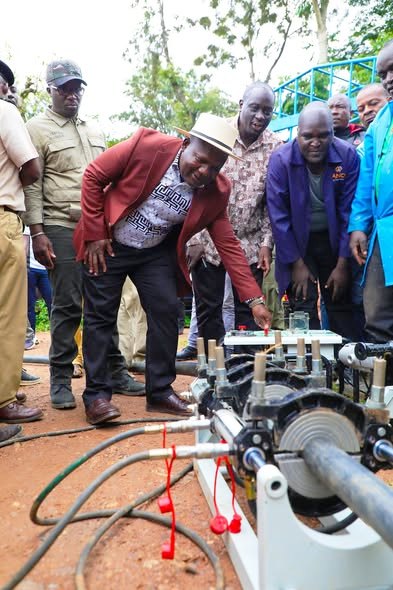
The rehabilitated project is set to provide 3.5 million litres daily, powered by solar, significantly improving water supply, reducing waterborne diseases and supporting small-scale irrigation and other economic activities.
It includes the construction of a new 18.3km distribution line serving Sigalagala, Museno, Khayega, Iguhu, Ikolomani, Musingu and Malinya.
Speaking when he was joined by President William Ruto for the groundbreaking for the solarisation and rehabilitation of the Shitoli Water Project, Kakamega Governor Fernandes Barasa expressed his optimism that the 120-kilowatt Project will expand access to clean and reliable water for the residents of Ikolomani, Shinyalu and surrounding areas.
The Misango Water Project is actively powering the last-mile household connections across Khwisero. Households that once relied on unsafe sources or spent hours fetching water are today celebrating a new chapter.
The system, driven entirely by solar energy, guarantees affordable service by lowering operational costs—savings that directly benefit residents.
Local leaders say the project is a testament to the county’s commitment to ensuring that no home is left behind under the Amatsi Khumuliango vision.
Walter Mukungu, a former chief, says residents no longer experience interruptions in their work.
“Initially, many residents, especially women and children would interrupt their work to search for water. This project has stabilized their days,” said Mr. Mukungu.
According to the administrator, women and school-going children are traditionally responsible for water collection that stand to benefit most from the new system.
“Before this project, many young girls often missed class to queue at water points.” He pointed out. “This is no longer the case as schools are getting connected to piped water.”
For many households, the simple sound of water flowing from a tap has become a moment of joy and relief with testimony to the transformative power of sustainable infrastructure.
Residents say the newfound stability in water supply is improving daily life in ways that are immediate and profound with cleaner homes, safer food preparation, healthier children, and thriving small enterprises.
For 42-year-old Margaret Maloba, the project’s impact is deeply personal. “For the first time, water flows at my doorstep,” she said. “My daughters no longer miss school, and we live with dignity. This is a development we can count on.”
Other solarised water projects are at Lubanga which was commissioned to serve Matungu sub-county with a capacity of 44800 litres daily, Iranda in a project in Butere sub-county designed to serve over 2,500 households and solar-powered shallow wells implemented in Kholera and Koyonzo to provide reliable, sustainable water for local consumption and small-scale irrigation.
The project taps into renewable energy through an advanced array of solar panels that power high-capacity borehole pumps. This technology allows water to be pumped efficiently throughout the day without reliance on expensive electricity or diesel generators.
Engineers involved in the rollout say the strategic shift is reshaping how rural water systems operate.
“Solar power ensures efficiency, reliability, and sustainability, three things that used to be difficult to guarantee using grid electricity alone,” said Kakamega County Water and Sanitation Company managing director, Eng Michael Ogol. “It is the future of community water supply.”
Today, the solar-powered pumping system provides a reliable and continuous supply, supporting homes, local health facilities, schools, and small-scale farmers.
Local health facilities also report improvements in hygiene standards, particularly in maternal and child health units, where reliable water is essential.
County officials have highlighted several advantages of the solar-driven approach including lower operational costs compared to grid power or diesel pumps, environmental sustainability through clean energy, reliable, uninterrupted water supply, extended lifespan of water infrastructure through modernised systems and improved household and community health.
Governor Barasa said the benefits justify the county’s deliberate investment in solarisation as the foundation of future water expansion.
“Our last-mile water connectivity program is gaining strong momentum. More solar-powered schemes are already under development, with a long-term goal of achieving universal clean water access across all wards,” said the County Boss.
Small businesses such as eateries, barber shops, laundry services, and vegetable vendors who are also projected to flourish as water becomes readily accessible.
Local youth groups are being trained to support maintenance, ensuring that the benefits of the project stretch across generations. Farmers, too, are optimistic that access to water will boost kitchen gardens, livestock health, and food security.