|
Getting your Trinity Audio player ready...
|
By Cynthia Nekesa Nabiswa
Embu, Kenya: Gripping a caregiver’s hand for support, a young child enters prison gates for the first time. They are met by a daunting environment defined by locked doors, high walls, and uniformed personnel, a setting they cannot truly grasp despite knowing they are there to visit a loved one.
The encounter with a parent behind bars quickly becomes an overwhelming emotional ordeal. As tears fall and questions go unresolved, the child is left to process a heavy mix of sadness, fear, and confusion.
While much attention is often given to the individual serving a prison sentence, far less is said about the invisible emotional burden carried by the families left outside, especially children. Yet incarceration rarely affects only one person; it reverberates through entire families, leaving emotional wounds that often go unnoticed and untreated.
In Kenya, thousands of families navigate the painful reality of having a loved one in prison. Kenya’s daily average prison population is approximately 60,740 inmates, with nearly half (about 40% to 48%, or around 24,462 to 29,000 unconvicted individuals) held in remand awaiting trial. This severe pre-trial detention rate pushes the prison occupancy level to roughly 176% of its standard holding capacity.
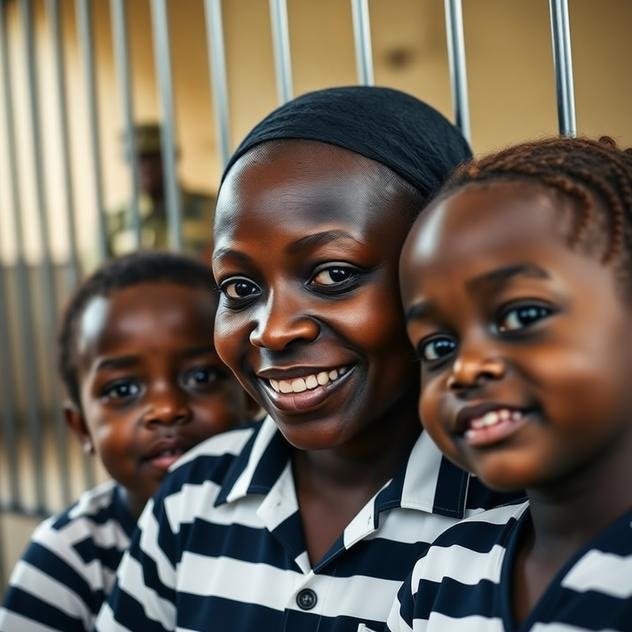
For many, prison visits are among the few opportunities to maintain connection, preserve family bonds, and reassure children that a parent has not disappeared forever. Yet these visits can also be emotionally overwhelming.
Children may struggle to understand why their parents are in prison, internalizing feelings of guilt, abandonment, shame, or even responsibility for what has happened. Caregivers, too, often face the difficult task of explaining imprisonment while managing their own grief, social stigma, and financial stress. Without proper emotional preparation, what should be a moment of connection can instead become a source of trauma.
This raises an urgent but often overlooked question: why are families not being prepared emotionally before prison visits? Why do we expect children to walk into correctional facilities and process such intense experiences without guidance or support?
Kenya has made commendable progress in advancing conversations around mental health, trauma-informed care, and child protection. The Kenya Prisons Service has also taken important steps toward rehabilitation and humane correctional practices. Yet one significant gap remains—family-centred psychosocial support for those affected by incarceration.
Introducing pre-visit counselling for inmates’ families, particularly before a child’s first prison visit, could be a simple but transformative intervention. Pre-visit counselling would offer families a brief opportunity to prepare emotionally and mentally before entering the prison environment.
Children could be helped to understand what they are about to see, what emotions they might experience, and that their feelings whether fear, sadness, confusion, or anger are valid. Caregivers could receive support on how to communicate honestly and sensitively, using language that is age-appropriate and reassuring.
Counsellors could also identify children and families who may need continued psychological support beyond the prison visit itself. Sometimes, just ten to twenty minutes of preparation can make the difference between emotional trauma and emotional resilience. The importance of such an intervention goes beyond immediate emotional comfort.
Research and lived experience continue to show that maintaining healthy family connections during incarceration can improve outcomes for everyone involved.
For children, it can protect emotional wellbeing and reduce long-term psychological distress. For incarcerated parents, meaningful family contact can strengthen motivation for rehabilitation and successful reintegration into society.
Supporting families is not separate from correctional reform. It is central to the noble objective. If rehabilitation is truly about restoring lives, then it must also include those whose lives have been disrupted by another person’s imprisonment.