|
Getting your Trinity Audio player ready...
|
By Victoria Musimbi
Nairobi, Kenya: Graduates of the African Food Fellowship are driving a new wave of food systems leadership across the continent, demonstrating that sustainable agricultural transformation starts by tackling foundational challenges.
By focusing on practical, community-driven initiatives, such as enhancing agricultural finance, boosting horticulture, advancing the blue economy, and empowering women to own tractors, this new generation of leaders is building more resilient, inclusive, and sustainable food systems.
One of those leaders is Quinta Onditi, Head of Partnerships at Hello Tractor and a graduate of the African Food Fellowship Cohort 5, whose Food Systems Action is helping more women overcome one of agriculture’s biggest barriers to access to mechanization.
Working with Hello Tractor, an agri-tech company that serves smallholder farmers across Africa through a pay-as-you-go tractor financing model, Onditi noticed that although women consistently outperformed men among tractor owners, many could not afford the initial down payment required to purchase a machine.
Rather than accepting the challenge as inevitable, she used the Fellowship to develop a solution that removes financial barriers and enables more women to own tractors.
“When I joined Hello Tractor, I saw women repeatedly proving they could succeed, yet many were locked out of ownership because they couldn’t afford the initial down payment. That inspired me to ask, ‘How do we remove that barrier?’ Through the Fellowship, I refined that idea into a practical solution, secured funding from the Mulago Foundation, and today we’re helping women move from renting tractors to owning them. It’s proof that when women are given the right opportunities, they don’t just participate, they lead,” Onditi said.
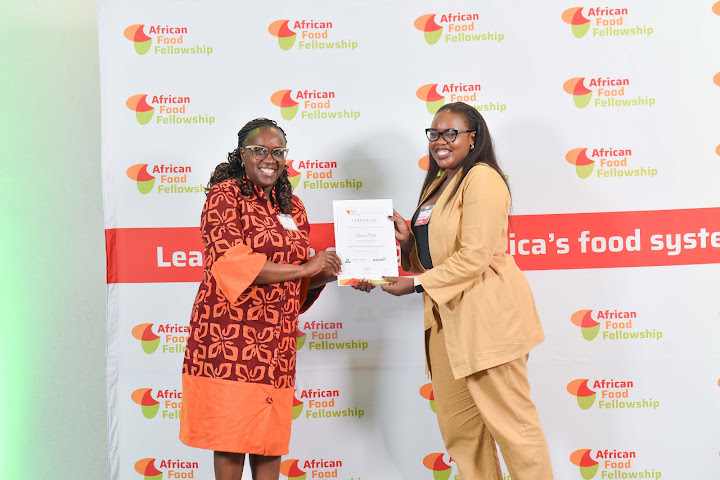
Her initiative, implemented through partnerships with the Hello Tractor PAYG team, the Mulago Foundation, tractor dealers and the National Transport and Safety Authority (NTSA), is supporting 50 women entrepreneurs with down-payment assistance, entrepreneurship training, licensing and phased tractor handovers. The first 12 women have already benefited, with the remaining participants expected to join the programme in the coming months.
Beyond increasing access to farm machinery, the initiative is improving productivity, boosting household incomes and creating business opportunities for women while reducing the burden of manual labour.
“The impact goes far beyond the tractor itself. We’ve seen women grow thriving businesses, improve their household incomes and create opportunities for other farmers in their communities. Mechanization also eases the burden of manual labour, meaning children no longer have to miss school to help on the farm. When you empower a woman with the tools to succeed, you’re not only transforming agriculture, you are changing families, livelihoods and entire communities,” she said.
The initiative reflects the Fellowship’s emphasis on addressing systemic challenges with scalable, locally driven solutions.
Developing leaders to transform food systems
African Food Fellowship Kenya Country Lead Gacoki Kipruto said the Fellowship, which operates in Kenya, Rwanda and Zambia, develops leaders capable of addressing the underlying causes of food system challenges rather than simply responding to their symptoms.
“We focus on the underlying issues behind our food system problems. Whether it’s gaps in policy implementation, exclusion from opportunities, weak incentives or limited investment, we work with leaders who can address those barriers and create lasting change,” she said.
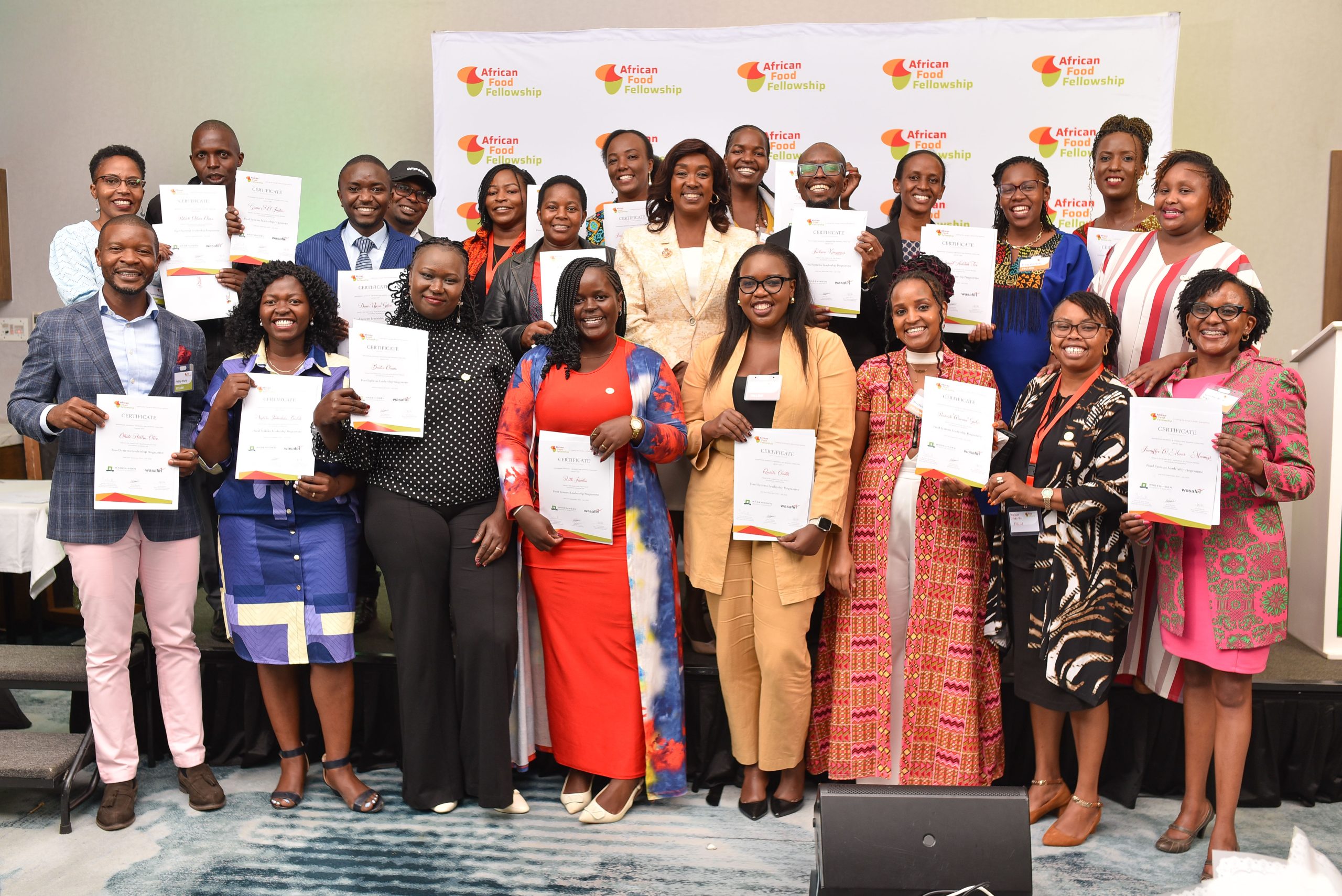
Established in 2020, the African Food Fellowship has grown to more than 300 fellows across the three countries and recently graduated 23 participants from its fifth Kenyan cohort.
Through its 10-month Food Systems Leadership Programme, delivered by Wageningen University & Research and Wasafiri Consulting, participants gain skills in systems thinking, collaboration, foresight and leadership while joining a network of changemakers from government, research, development organisations, entrepreneurship and the private sector.
Kipruto said the Fellowship focuses on three priority areas: horticulture, the blue economy and agricultural finance. Fellows develop practical solutions that improve access to quality inputs, markets, finance and research, strengthen fisheries and aquaculture, and expand financial inclusion while contributing to policies that support sustainable agriculture.
“We don’t try to solve every challenge in agriculture. We have chosen three priority areas where we believe we can make meaningful, long-term impact. Food systems transformation requires patience. You solve stubborn problems step by step, ensuring that every solution creates lasting change without introducing new challenges,” she said.
Despite the complexity of transforming agriculture, Kipruto said investing in collaborative leadership gives her confidence that Africa can build more resilient and food-secure systems.
“We are taking deliberate steps towards a more food-secure future by investing in leadership, collaboration and practical solutions that strengthen the entire food system,” she said.
Leadership Rooted in Communities
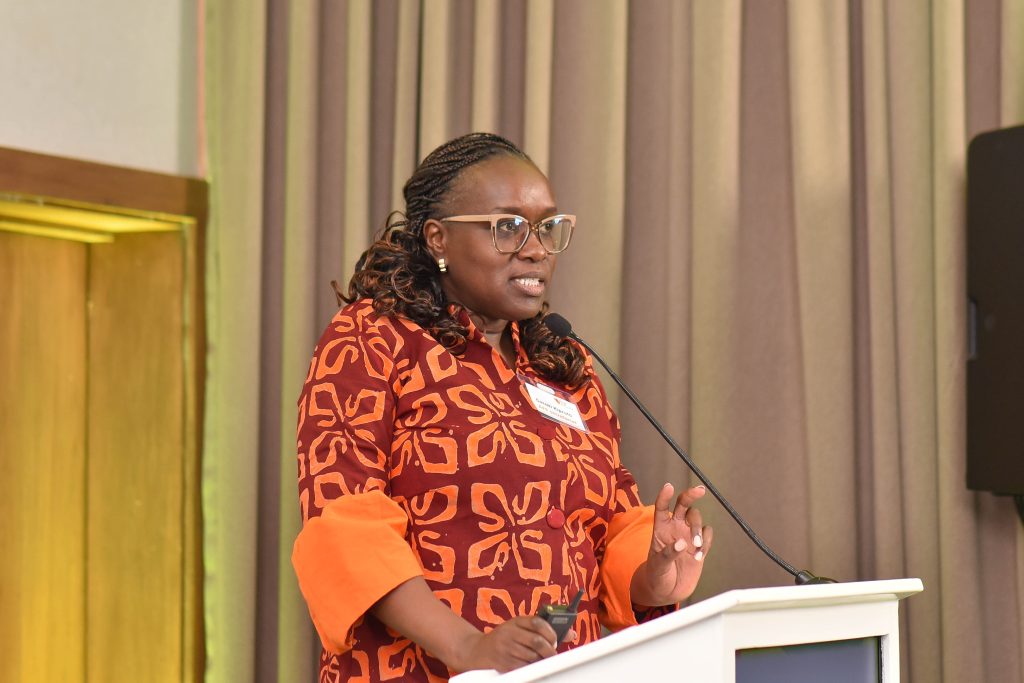
Delivering the keynote address during the graduation ceremony, Sheila Shefo Mbiru, Head of Programme at the First Lady’s Mazingira Awards (FLAMA Environment and Climate Action), challenged the graduates to become leaders who build solutions with communities rather than for them.
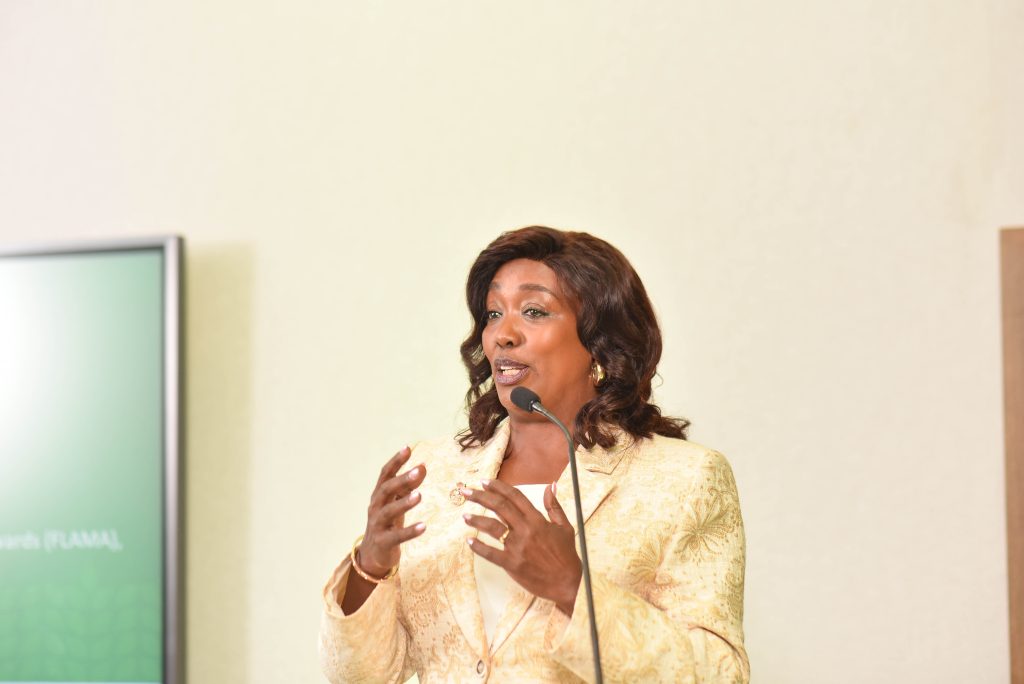
Congratulating the graduates, Mbiru said leadership is shaped not by the answers people already have but by the questions they choose to pursue. She recalled how children’s curiosity about environmental destruction inspired her to establish the Kenya Climate Change Art and Essay Competition, which later evolved into the First Lady’s Mazingira Awards.
Drawing from her leadership journey, Mbiru shared three lessons.
The first, she said, is that those closest to a problem are often best placed to solve it. She cited the Kenya Climate Change Art and Essay Competition, which engaged more than 4,300 learners from 112 Nairobi schools, as well as the success of Food4Education, whose locally rooted model has grown from serving 25 children to feeding more than 600,000 learners daily.
“I wish I had learned earlier that the people closest to the problem are already holding the solutions. Too often we look for answers far away, yet the people living with these challenges every day understand them best. Start where you are because if you are closest to the problem, you are also closest to the answer.”
Her second lesson focused on the power of partnerships. She recalled that Kenya’s Ministry of Education initially rejected her proposal for the climate competition, but the programme gained momentum after she sought the ministry’s input.
Four years later, the initiative was adopted nationally under the Office of the First Lady as the First Lady’s Mazingira Awards and today reaches more than 5,000 schools through environmental education, tree growing, school gardens and creative climate action.
“Sometimes resistance is not rejection. The ‘no’ you receive may simply be a ‘yes’ waiting for a better approach. When we stopped trying to do it alone and invited others to shape the solution, the programme became stronger and reached far more people than we ever imagined.”
For her final lesson, Mbiru urged the graduates to build a legacy that extends beyond their own careers. She reminded them that graduation marked the beginning of their leadership journey and encouraged them to keep learning, seek mentors, make their work visible and create opportunities for others.
“There is an old proverb that says, ‘Plant trees whose shade you may never sit in.’ This graduation is not a finish line; it is a commissioning. Go out, build something that will outlast you, continue learning, support others along the way and be so prepared that when opportunity comes, it finds you ready.”