|
Getting your Trinity Audio player ready...
|
By Mercy Kachenge
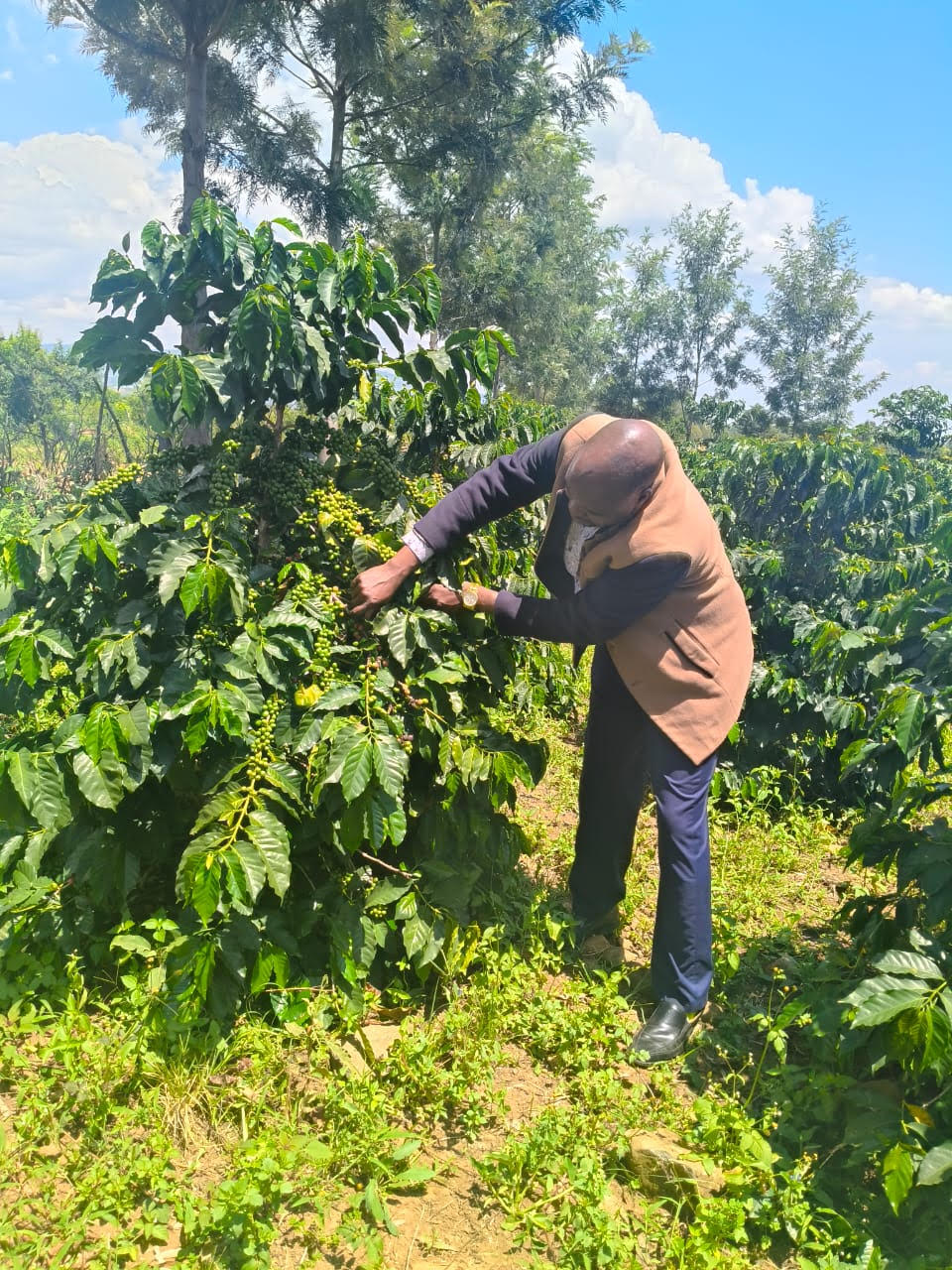
Kericho, Kenya: Festus Bett, a coffee farmer from Kericho, moves with the practiced grace of someone who has spent eight years tending his land. He bends over a line of coffee bushes, his hand brushing across the green cherries.
“This coffee takes more than six months before I can harvest it,” he says. “It’s not something you rush just like the systems that support us shouldn’t be rushed either.”
Bett, a smallholder farmer from the Kipkelion Coffee Cooperative Society, shares the apprehension of thousands of coffee farmers across Kenya as they confront the looming implementation of the government’s Direct Settlement System (DSS).
The DSS is a government introduced payment model where proceeds from coffee sales go directly from the buyer to the farmer’s account. Initially it was regarded as a way to eliminate corruption and speed up payments by bypassing marketing agents and cooperatives.
The system has ignited a fierce national debate pitting government reformists against cooperative leaders, lawmakers, and farmers.
Bett believes the DSS has been hijacked from its original intent. “When it was first introduced, it was supposed to pay farmers through societies, still giving them a voice and structure. But now they want to strip even that away,” he says.
What began as a plan to improve transparency is now, in the eyes of many, a threat to the very institutions that sustain Kenya’s coffee economy. For Bett, the issue is deeply personal.
“I depend fully on my cooperative,” he explains. “They buy farm inputs for us, distribute them, pay school fees for my children, and handle our loans and National Social Security Funds. If coffee money starts going directly into my account, where I don’t even have a dollar account, what will happen to those services?”
The DSS, introduced under the 2019 Coffee Regulations and amended in 2021, was initially met with optimism. But Bett argues that it fails to consider the complex services cooperatives provide.
“If they pay me Ksh 3,000 or $20 directly, what can I do with it? Buy fertilizer? Pay fees? The cooperative aggregates that money and uses it to help us manage the full cycle of farming.”
He also points to flaws in its rollout. “Some farmers deliver earlier because they’re in low-altitude zones, others later. If payments are processed uniformly, DSS can’t detect who actually delivered coffee. We’ve already seen cases where money goes to the wrong person.”
Bett is frustrated by the selective focus of the government. “There are eight pillars in the Coffee Regulations. DSS is only one of them. What about the others? What about European Union Deforestation Regulation compliance, extension services, production subsidies? Why are we picking one pillar and leaving the rest?”
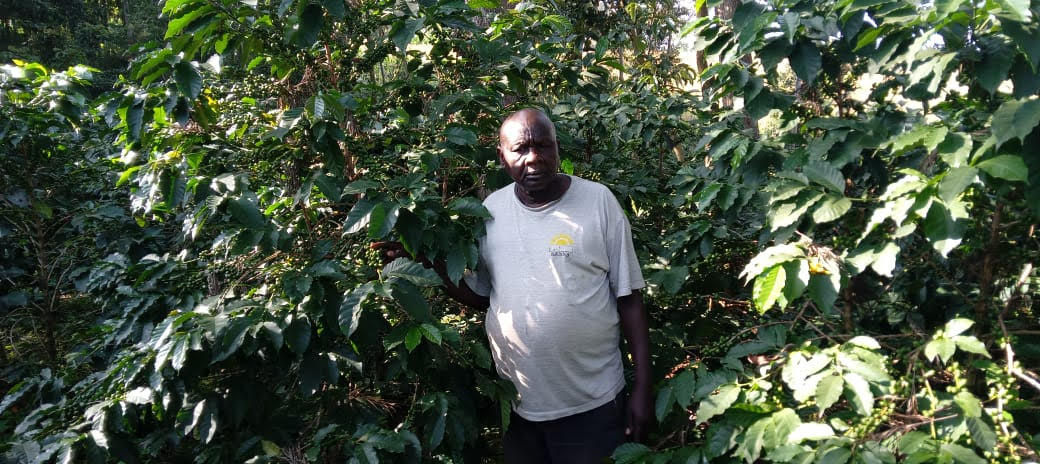 In Bungoma County, Joseph Ngomat, a coffee farmer and member of the Kapsokisio Coffee Farmers’ Cooperative Society, echoes concern over the payment system. He began growing coffee in 1995 to support his family and pay school fees.
Ngomat believes the DSS undermines the cooperative structure. “The problem with coffee farming now is that officials have turned it into a political tool,” he says. This politicization, he argues, has fueled corruption and instability in the sector.
He offers a historical perspective during colonial times, Africans were prohibited from growing cash crops like coffee because they were paid for them. After independence, cooperatives were formed to buy coffee on behalf of farmers. Yet even today, many farmers have no visibility into how their coffee is handled once it leaves the cooperative.
He describes a system riddled with cartels between the farmer and the final buyer, leaving farmers with peanuts for their hard work.
Ngomat also cites delays in payment since the DSS began. “This process was done without involving the farmer. There was no public participation for farmers to air their views,” he says. “Cooperatives are being excluded from the value chain. They are not involved in any decision-making. The farmer is just a puppet of the cooperative.”
He warns of double taxation under the new system. “When coffee proceeds come to the bank, they are already deducted through cooperative banks. Again, when you sell the money, you’re deducted which becomes double taxation for a farmer.”
Gathoni Wamuchomba, a lifelong coffee farmer and Chairperson of the Coffee Parliamentary Caucus, recalls that Parliament nullified the DSS in 2022 after public uproar.
“Now it’s being revived through a backdoor circular from the Ministry of Cooperatives. That is unconstitutional,” she declares.
Wamuchomba says she has received dozens of distress calls from farmers unsure of DSS’s implications. While she acknowledges that its original goal of ensuring accountability in payments was laudable, she warns that the new implementation is “different and dangerous.”
“Farmers are being forced to give up their cooperative structure. And for what? So one commercial bank monopolizes coffee transactions?” she asks. “Originally, three banks were listed to manage DSS. Now one has taken over, and they’ve even sued a cooperative. How do you sue your own client?”
She warns that if the system continues in its current form, “societies will collapse, factories will close, and coffee will be over for Kenya. We are telling the President to treat coffee as a national heritage crop, not a political token.”
The potential collapse of cooperatives is not theoretical for Felix Mureithi Mwai, National Chairperson of the National Cooperative Coffee Unions of Kenya (NACCU). Speaking at a recent press conference, he warned, “This is a national issue. These leaders represent over 70% of Kenya’s coffee production. The November 18 circular mandating direct payments threatens to kill our cooperatives.”
Mwai explained that coffee farming is a continuous, resource heavy process. “From flowering to milling and marketing, it’s a long journey. Cooperatives support farmers throughout that cycle whether it’s distributing inputs, negotiating with exporters, or covering school fees.”
 He fears that bypassing cooperatives will strip farmers of these vital services, saddle them with high transactional costs, and exclude vulnerable farmers particularly those without phones, bank accounts, or literacy skills from accessing their money.
“The cooperatives are embedded in these communities. They know the farmers personally. They manage risk, loans, and logistics. DSS ignores that,” Mwai says.
While acknowledging that cooperatives aren’t perfect, Bett believes the answer lies in reform, not destruction. “If there are corrupt officials in some societies, punish them. Regulate us. But don’t burn down the whole system. We’re not defending theft. We’re defending a structure. If you destroy the cooperative, you destroy coffee.”
The community is already feeling the strain. Bett recalls selling two small batches this season. “The amount was too little to cover all needs. If society wasn’t there to cushion us, my kids would have dropped out of school.”
Bett fears that pushing the payment system could drive farmers to desperation. “If the government forces this, we’ll sell our coffee on the streets. We’ll bypass everyone because no one can dictate where our money goes.”
Ngomat calls for the total cancellation of DSS’s implementation and demands meaningful public participation before any policy changes are made. “There should not be a boardroom meeting where decisions are made without the farmer,” he insists.
NACCU and farmer representatives have drafted a memorandum to present to President William Ruto, urging him to halt the DSS rollout and begin inclusive consultations.
Coffee is more than a crop in Kenya, it’s an identity, a culture and a vital economic pillar. In 2023, the country exported over $300 million worth of coffee, supporting nearly 800,000 smallholder farmers, most of whom rely on cooperative societies.
“If those societies die,” Wamuchomba warns, “you don’t just lose coffee. You lose families, schools, livelihoods, and heritage.” Her call to action is direct, “Return the money to the societies. Let those who grow the coffee decide how it’s managed.”
As the DSS debate rages, time is running out. Farmers are heading into a new harvest season with no clarity on how or whether they will be paid. Cooperatives are scrambling to stay afloat, and Parliament is under pressure to intervene.
Meanwhile, in places like Kericho, life on the coffee farms goes on, but anxiety hangs thick in the air. “Coffee doesn’t grow overnight,” Bett says. “Neither should policies that affect our future.”