|
Getting your Trinity Audio player ready...
|
By Henry Owino
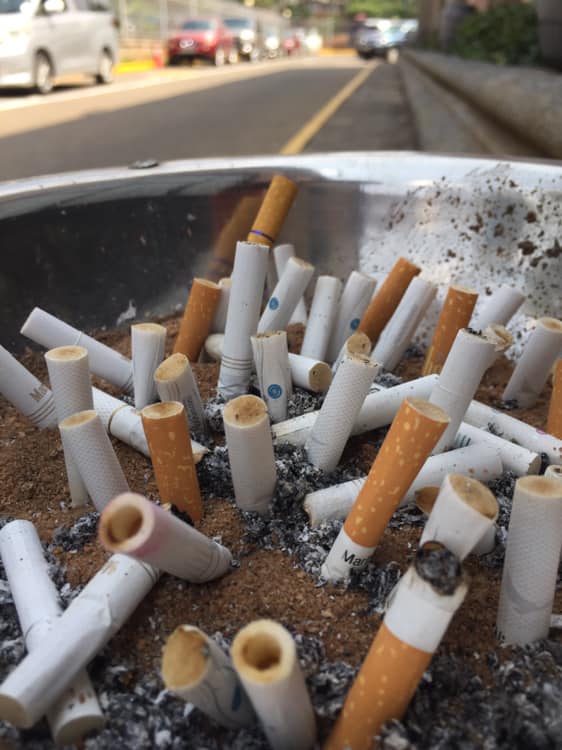
Nairobi, Kenya: The smell of cigarette smoke is the first thing that greets customers entering a small restaurant near one of Nairobi’s busiest bus parks. As people eat and commuters rush past outside, clouds of smoke drift across tables despite laws prohibiting smoking in public places.
For 28-year-old waitress Esther Nekesa, the smoke is unavoidable. Inside the restaurant where she works, customers openly light cigarettes, while outside, commuters casually enjoy their preferred tobacco products, filling the air with a haze of second-hand smoke that follows her throughout the workday.
For nearly 12 hours every day, she works just a few meters from smoking customers. She does not smoke, yet she inhales tobacco fumes throughout her shift.
“I breathe in cigarette smoke every day even though I have never smoked,” she says, pausing between bouts of coughing. “Sometimes my chest hurts, and my eyes become irritated, but nobody stops them.”
Nekesa blames the restaurant owner, who allows smoking on the premises, prioritizing profit over employees’ health. Most customers smoke, while non-smoking patrons who complain often receive negative responses from management.
She believes prolonged exposure to second-hand smoke contributed to complications that ended her pregnancy in miscarriage. Now, after two years on the job, she is considering leaving in search of a safer workplace.
“I would rather earn less in a safe and healthy environment than make more money in an unsafe workplace that puts my life at risk,” Nekesa says.
Health Risks and Public Outrage on Weak Law Enforcement
Health advocates warn that tobacco use and exposure during pregnancy are linked to increased risk of fetal death, miscarriage, stillbirth, and sudden infant death syndrome. Children exposed to tobacco smoke are also more likely to suffer from bronchitis, pneumonia, asthma, and ear infections.
Nekesa’s story is not unique. Across Kenya, tobacco smoke continues to hang heavily in bus parks, restaurants, entertainment spots, streets, and public transport despite laws designed to protect citizens.
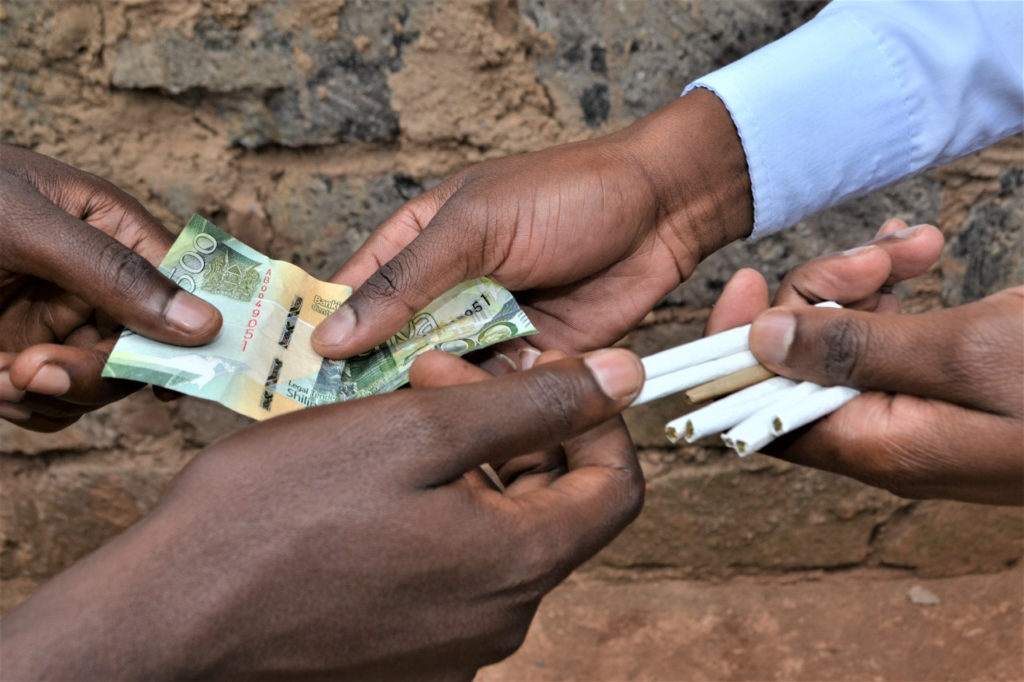
In many low-income neighborhoods, cigarettes remain cheap and widely available, often sold as single sticks in open violation of the law. Smokers light up in prohibited areas with little fear of penalties, while non-smokers, especially children and pregnant women, bear the health consequences.
Citizens have raised concerns about the weak enforcement of tobacco control laws, questioning designated smoking zones, fines for offenders, and the continued illegal sale of single cigarettes.

“I don’t understand why people smoke openly anywhere, even inside public service vehicles, yet tobacco laws prohibit it,” Albert Mutua complains. “They do it without considering the health effects of second-hand smoke on non-smokers.”
He adds that enforcement officers appear absent while commuters and customers suffer exposure in silence, calling for arrests and fines for violators.
Residents are urging both national and county governments, including Nairobi City County, to urgently enforce tobacco laws and strengthen compliance mechanisms.
Areas Where Smoking is Prohibited
In Kenya, smoking is strictly prohibited in enclosed public spaces, workplaces, and public transport. Offenders risk fines of up to KES 50,000 or imprisonment of up to six months. For instance, smoking is banned in:
- Public transport (matatus, buses, ferries, trains
- Public spaces (airports, bus stops, markets, sports venues, police stations
- Institutions (schools, universities, hospitals, recreational facilities
- Within five meters of entrances to public buildings
Shisha is also completely banned under the Public Health Act and the Control of Shisha Smoking Rules, 2017. The sale of single cigarettes is illegal, though enforcement remains weak.
Tobacco Effects
Health experts warn that secondhand smoke exposes non-smokers to asthma, lung infections, heart disease, and cancer.
“Children and pregnant women are especially vulnerable, yet enforcement officers are rarely seen inspecting public places,” health advocates note.
According to Benjamin Odhiambo of Students Campaign Against Drugs (SCAD), weak enforcement risks reversing gains made in reducing tobacco-related illnesses.
He notes that tobacco use costs Kenya over $700 million annually in healthcare and lost productivity, urging stronger inspections, public awareness, and stricter penalties.
“Without stronger enforcement, thousands of Kenyans like Nekesa and innocent children will continue to suffer from exposure to second-hand smoke they never chose to inhale,” he warns.
The Global Situation and WHO Response
Tobacco remains one of the world’s leading public health threats, killing over seven million people annually. More than one million deaths occur among non-smokers exposed to second-hand smoke.
About 80% of the world’s 1.3 billion tobacco users live in low- and middle-income countries, where tobacco use is closely linked to poverty.
To address the epidemic, countries adopted the WHO Framework Convention on Tobacco Control (WHO FCTC) in 2003. The treaty aims to reduce the demand and supply of tobacco and protect people from exposure to smoke.
According to Darence Aligula of NCD Alliance Kenya, the treaty has saved lives and reduced healthcare costs, but implementation gaps remain a major challenge.
He notes that while Kenya has laws under the Tobacco Control Act (2007), weak enforcement, limited inspections, and poor compliance have allowed public smoking to persist.
Call for Higher Tobacco Taxes
Health advocates are also calling for higher tobacco taxes to make cigarettes unaffordable, especially for young and low-income populations.
According to John Thomi of Tax Justice Network Africa (TJNA), Kenya’s tobacco tax burden remains below the WHO-recommended threshold of 70% of retail price, standing at about 40–50%.
He argues that the tiered tax system keeps cheaper cigarettes accessible and recommends a uniform tax structure across all tobacco products, including new nicotine products.
“Higher taxes would reduce smoking, improve public health, and increase government revenue for healthcare and education,” he says.
Thomi warns that without stronger taxation and enforcement, tobacco will continue to disproportionately harm poor households, children, and young people.
World No Tobacco Day is a global health campaign observed annually on May 31. It was established by the WHO in 1987, and it aims to raise awareness about the severe health, economic, and environmental risks of tobacco use, while advocating for policies to reduce global consumption. Kenya also joined the world in commemorating World No Tobacco Day 2026 under the theme “Unmasking the Appeal, Countering Nicotine and Tobacco Addiction.”