|
Getting your Trinity Audio player ready...
|
By Shaban Makokha
Matungu, Kenya: Across Western Kenya, the seasonal rhythm of local diets is fading. In times past, family cooking pots reflected the changing seasons: early rains signaled termite harvests, mushrooms flourished near anthills, and rivers produced catfish.
Women prepared groundnut and sesame pastes for wild greens, while home-ground millet and sorghum porridge nourished successive generations. These culinary traditions represented culture, wellness, collective memory, and a sustainable lifestyle.
Today, however, indigenous foods like sorghum, millet, mushrooms, traditional vegetables, and termites are rapidly vanishing from family dining tables, local markets, and youth memory throughout Matungu and surrounding areas.
In their place, ultra-processed offerings, including sugary beverages, fried snacks, refined flour goods, and salty packaged foods have expanded rapidly across roadside kiosks and trade hubs.
Faced with shifting dietary habits, environmental pressures, and rising lifestyle-related health concerns, communities are mobilizing schools, local markets, and government channels to safeguard and restore their endangered culinary heritage.
And as the traditional plate shrinks, another plate is expanding, one filled with sugary drinks, refined flour products, fried snacks, salty packaged foods and other ultra-processed foods readily available at roadside kiosks and busy trading centres.
The battle for traditional plates is therefore becoming more than a question of culture. It is increasingly a question of health, food security and the future of a generation.
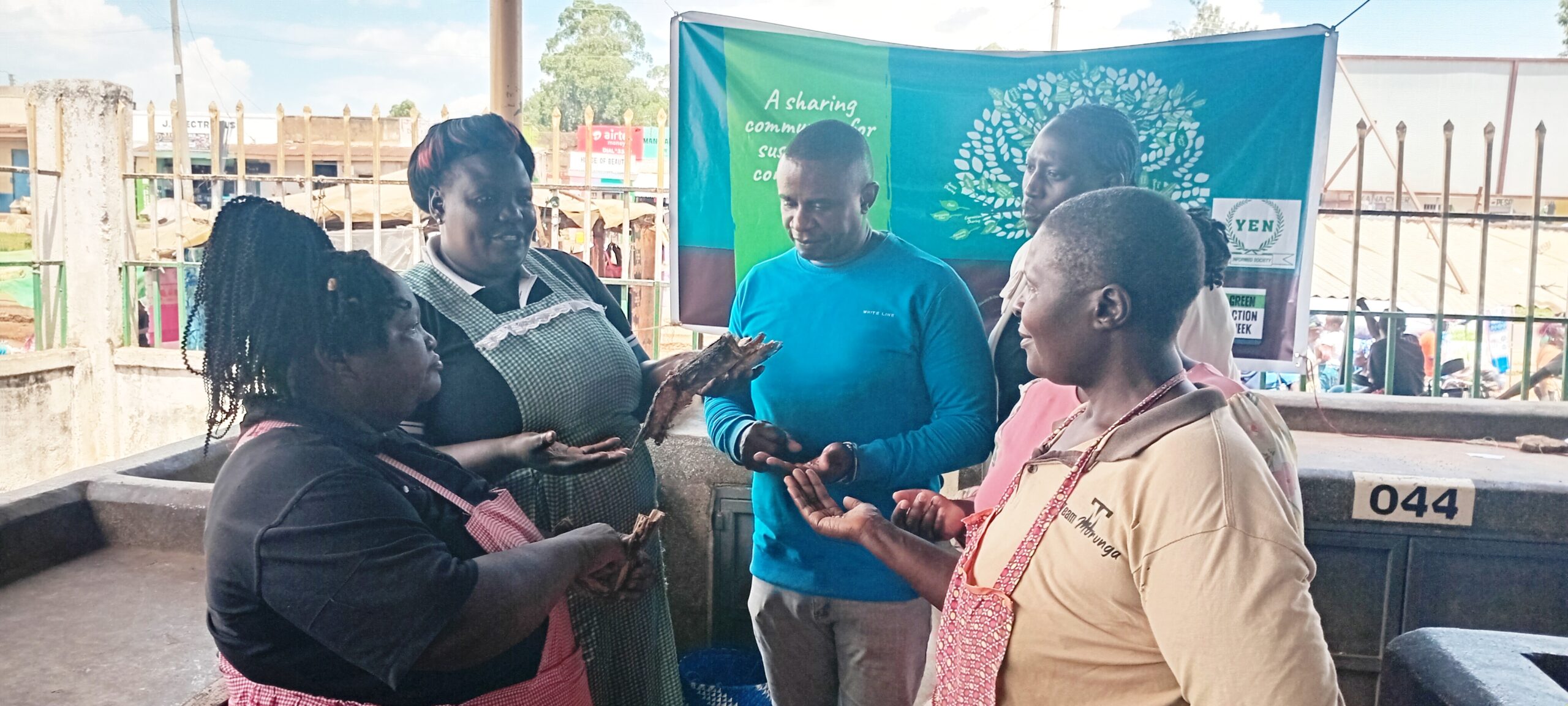
During a sensitisation session for traders in Matungu, Youth Education Network director Michael Mung’oma challenged county governments to invest deliberately in the preservation and promotion of indigenous foods.
He said county departments, particularly those responsible for culture, agriculture and health, should work together to ensure that young people understand the value of foods that were once central to local diets.
He linked changing diets to the growing burden of lifestyle-related diseases, arguing that increased consumption of oily and highly processed foods was contributing to the problem.
His message comes as the Green Action Week 2026 themed “Sharing Community for Food Sovereignty” seeks to rebuild interest in indigenous foods through storytelling, seed sharing and village markets campaigns.
The campaign is built around a simple but powerful idea: communities cannot protect what they no longer remember.
In Matungu, where more than 150,000 people live and where busy roads connect communities to neighbouring towns, the transformation of the food system is visible. Traditional crops that once occupied household gardens are increasingly competing with commercial food systems.
Climate change is altering growing seasons. Environmental degradation is reducing the natural habitats where wild foods are found. Urbanisation is changing lifestyles, while commercial foods have become increasingly accessible.
At the same time, knowledge is disappearing – an elderly woman may know which wild mushrooms are safe to eat and which should never be touched. An old farmer may know when to plant a particular indigenous grain, how to preserve its seeds and how to store the harvest for the dry months.
A fisherman may know where the river used to yield catfish. But what happens when that knowledge is not passed to the next generation? It disappears with the people who carried it.
That is the gap the Green Action Week campaign hopes to close.
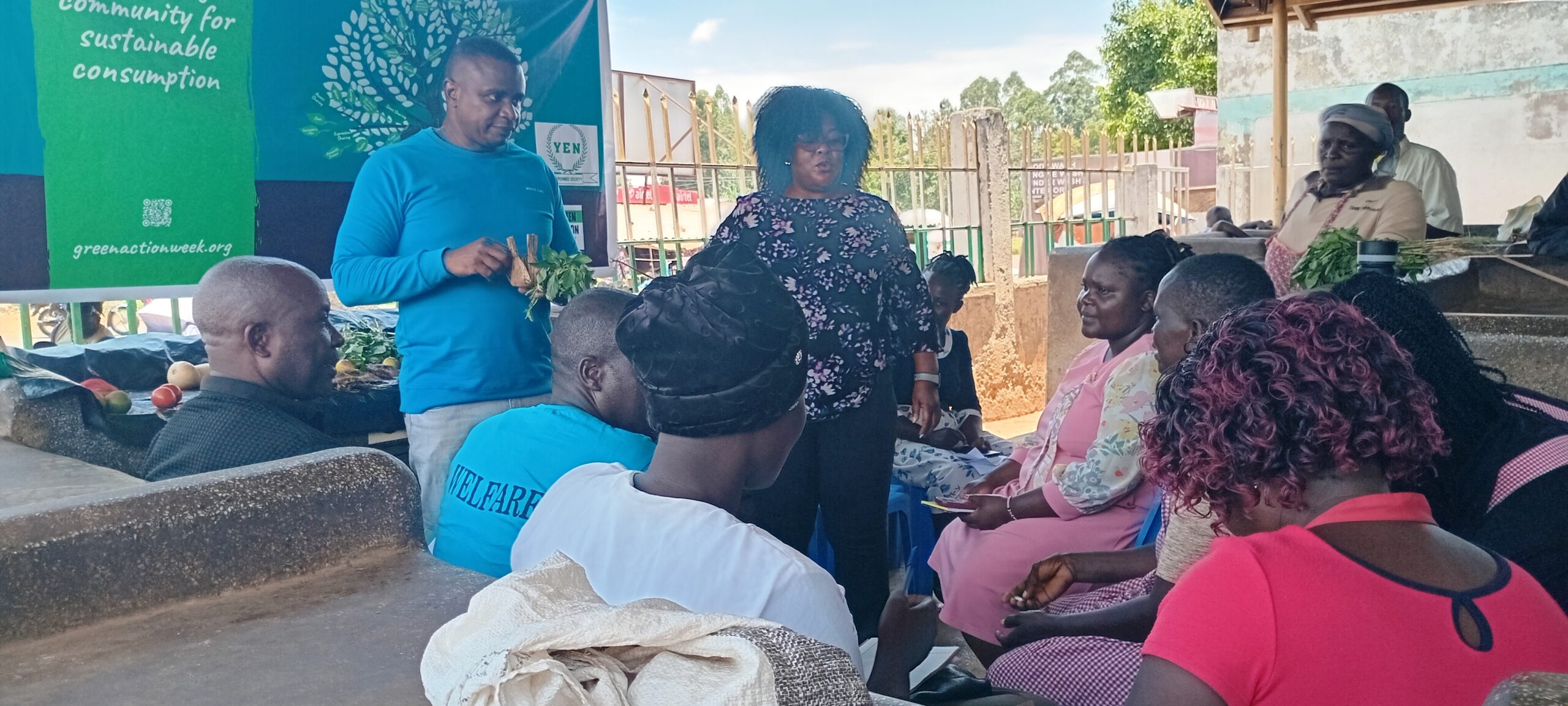
Village market forums are bringing elders, traders and consumers together to discuss indigenous foods. Women-led storytelling circles are creating spaces for those who have traditionally preserved food knowledge.
Schools are also being drawn into the conversation so that children can learn directly from community members who understand how local foods were grown, harvested, prepared and preserved.
“We ask the county governments through the Ministry of Culture to promote sensitisation about indigenous foods in schools. Children should grow up understanding the benefits of these foods,” said Mung’oma.
Behind the cultural loss lies a growing public-health concern.
When traditional foods disappear, something else inevitably fills the space – a replacement that is cheap and heavily marketed.
This replacement is processed food where a packet of crisps can be easier to find than traditional vegetables, a sugary drink may be more readily available to a school-going child than millet porridge, fried snacks can become a cheaper and quicker option than a meal prepared from locally grown foods. And the result is a profound shift in what children grow up considering normal food.
Health experts in Kenya and elsewhere have warned of the growing burden of non-communicable diseases, including obesity, type 2 diabetes and hypertension.
These illnesses are no longer associated only with older or wealthier populations.
Younger people and rural communities are also increasingly exposed to risk factors associated with diets high in sugar, salt, refined carbohydrates and unhealthy fats and low in fibre and dietary diversity.
That makes the indigenous-food campaign more than an exercise in nostalgia. It is about changing what is available, affordable and desirable.
For many young consumers, the problem is not simply that they have made poor food choices.
Their choices are shaped by what is sold around them, what their families can afford, what is advertised and what is considered fashionable.
Matungu and other parts of Western Kenya already possess many of the building blocks of a diverse diet with millet and sorghum providing a whole-grain alternative, groundnuts and sesame offer plant-based sources of protein and other nutrients while traditional vegetables can provide important micronutrients and fish can provide protein and other nutrients.
Mushrooms and other wild foods can contribute to dietary diversity when safely harvested and prepared.
Termites, long valued in some local communities, are another example of food knowledge passed from one generation to another. All of these foods are medicinal in nature.
But a diverse diet built around locally available foods can form part of a broader approach to healthier eating.
The challenge is convincing a generation that indigenous food is not a symbol of poverty. For years, some traditional foods have been dismissed as food for the poor, old-fashioned meals or relics of a bygone era.
That perception is now becoming one of the biggest obstacles to their revival.
The campaign seeks to change the narrative that indigenous food can be nutritious, culturally significant, can reduce dependence on external food systems and some of the crops are well adapted to local climatic conditions and needs to be rediscovered.
But communities cannot carry the responsibility alone. County governments have a central role to play.
Mung’oma’s call for budgetary support raises a fundamental question: if indigenous foods are important for culture, nutrition, biodiversity and local livelihoods, how much public money is being invested to protect them?
County food and nutrition programmes could deliberately incorporate indigenous crops and traditional foods. Agricultural extension officers could provide farmers with information on indigenous varieties, seed preservation and climate-resilient production. Research institutions could document traditional crops and food preparation methods before knowledge disappears while schools could incorporate indigenous foods into learning and, where feasible, school feeding programmes.
Such measures would do more than put traditional foods back on children’s plates. They could create demand for farmers and encourage communities to continue growing crops that might otherwise disappear.
At the heart of the food debate is something even smaller than a plate — the seed.
Traditional seed varieties carry genetic diversity developed and protected by farming communities over generations. But when farmers stop planting particular varieties, those seeds can disappear.
Community seed banks and responsible seed-sharing initiatives could therefore become important tools for preserving local food systems.
There is also a broader policy debate around Kenya’s seed laws and the rights of farmers to exchange and preserve traditional seed varieties.
Whatever the policy direction, the objective is clear: indigenous food cannot survive if the seeds required to produce it disappear.
Protecting biodiversity means protecting the ability to grow diverse food.
For generations, elders have been repositories of knowledge about food when to plant, when to harvest, what to preserve, what to avoid and how to prepare it.
That knowledge rarely exists in textbooks. It lives in memory and memory can disappear.
The campaign’s effort to connect schools with elders therefore carries an importance beyond food because a child learning how to identify a traditional vegetable is also learning a piece of history.
A student hearing an elder explain how seeds were preserved is learning about resilience and a young person listening to a grandmother describes how traditional foods were prepared is inheriting a cultural story.
Food policy must also confront the environment in which young people make decisions.
Healthier food choices are difficult to sustain when unhealthy products dominate the spaces around schools, markets and transport centres.
Measures such as clearer food labelling, healthier standards around schools, responsible marketing to children and fiscal measures targeting products associated with unhealthy diets are part of a wider policy conversation.
But such measures will have limited impact if healthy alternatives remain inaccessible. That is why agriculture, health, culture and education must stop working in isolation.
The revival of indigenous foods must also protect the ecosystems that produce them.
Rivers, wetlands, forests, farms and open spaces support food systems in ways that are often overlooked. If rivers become polluted, fish disappear, if natural habitats are destroyed, wild foods disappear, if land is degraded, farmers struggle to produce crops.
For Matungu, reclaiming the plate is therefore about more than bringing back an old menu. It is about reclaiming knowledge, reclaiming seeds, culture, local food systems and perhaps, most importantly, giving the next generation a healthier relationship with the food that surrounds them.