|
Getting your Trinity Audio player ready...
|
By Shaban Makokha
Mumias, Kenya: From a teacher who battled addiction to families facing domestic violence and young people exposed to illicit brews, Mumias West is confronting an alcohol problem that stakeholders say demands more than raids and arrests.
For teacher Etot, alcohol dependence was not just a battle with a bottle. It slowly began taking control of his life. The pressures he was facing pushed him deeper into alcohol use until his addiction threatened the career he had worked to build and the life he knew. Then his employer intervened.
The intervention by the Teachers Service Commission (TSC), through workplace wellness and psychosocial support services, gave him access to counselling, recovery guidance and other support.
“As a teacher, when I became an addict, it overwhelmed my life, but fortunately, my employer stepped in,” Etot said.
Today, Etot is in recovery and back at work. He now uses his experience to tell others that addiction does not have to be the end of the road — provided people can access structured support before the problem destroys their lives.
“I want to thank my employer, the TSC, for guiding me and helping me get my life back. Today, I am strong and focused. I am using my journey to emphasise prevention and show others that recovery is possible when structured support systems exist,” he said.
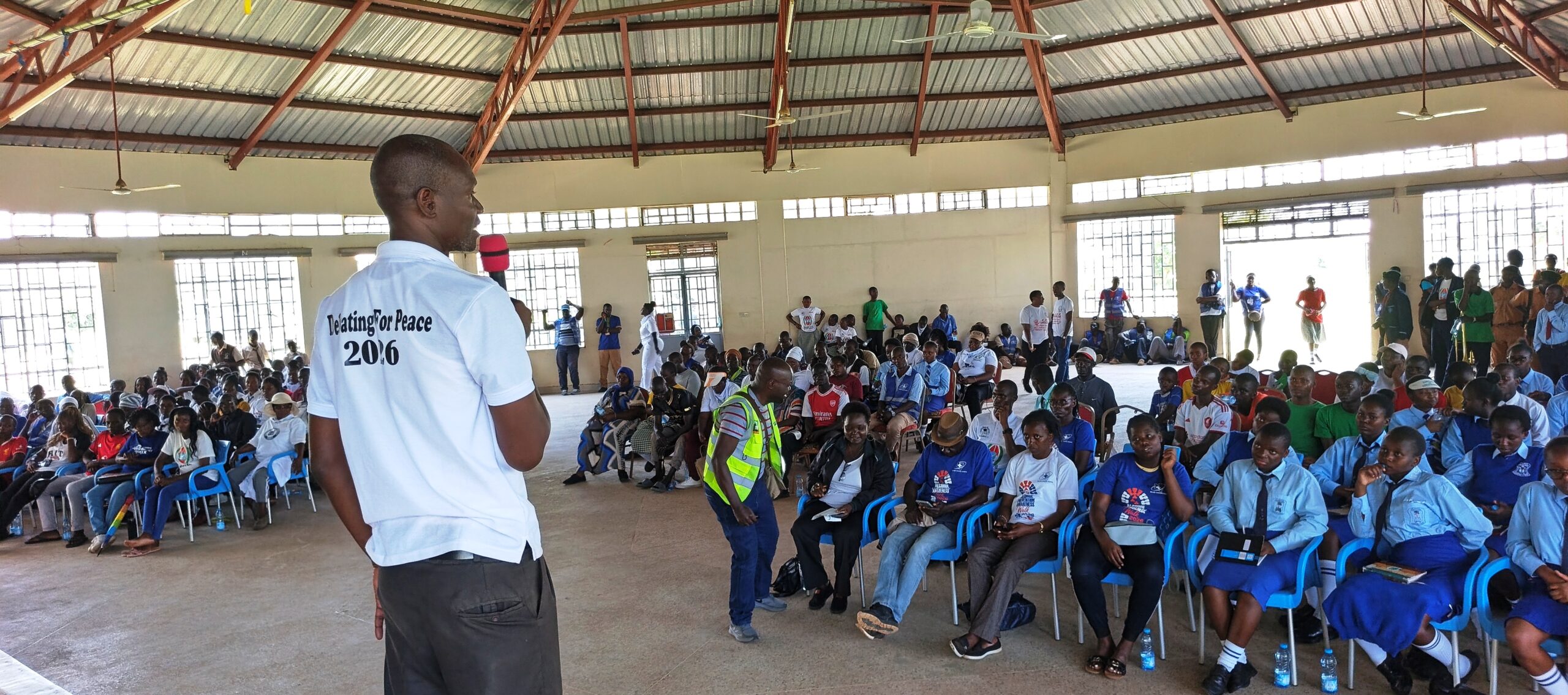
His story captures the increasingly complex alcohol challenge facing Mumias West and other parts of Western Kenya. The problem is no longer being viewed simply as an issue of illicit brews and law enforcement. Stakeholders say it reaches into homes, schools, workplaces, health facilities and the future of young people.
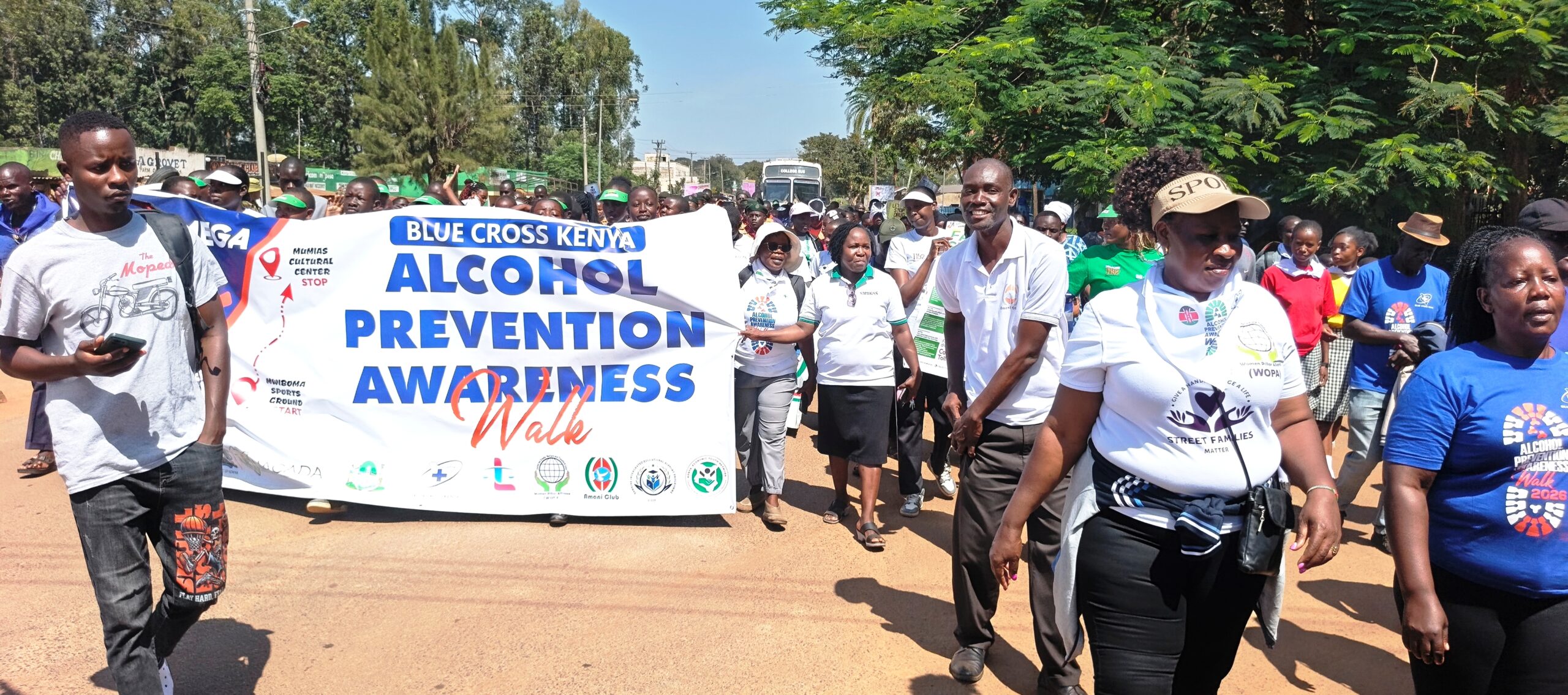
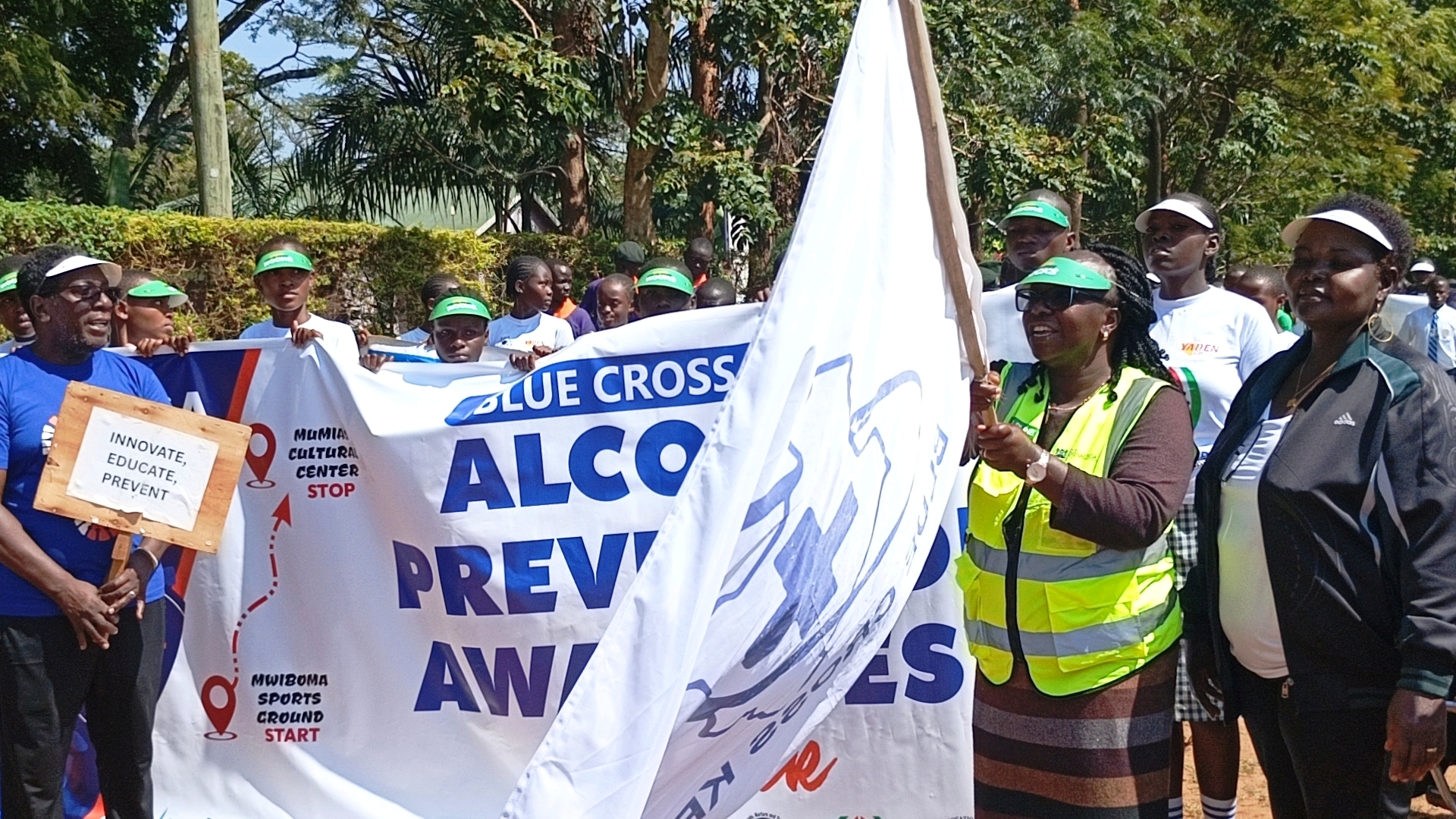
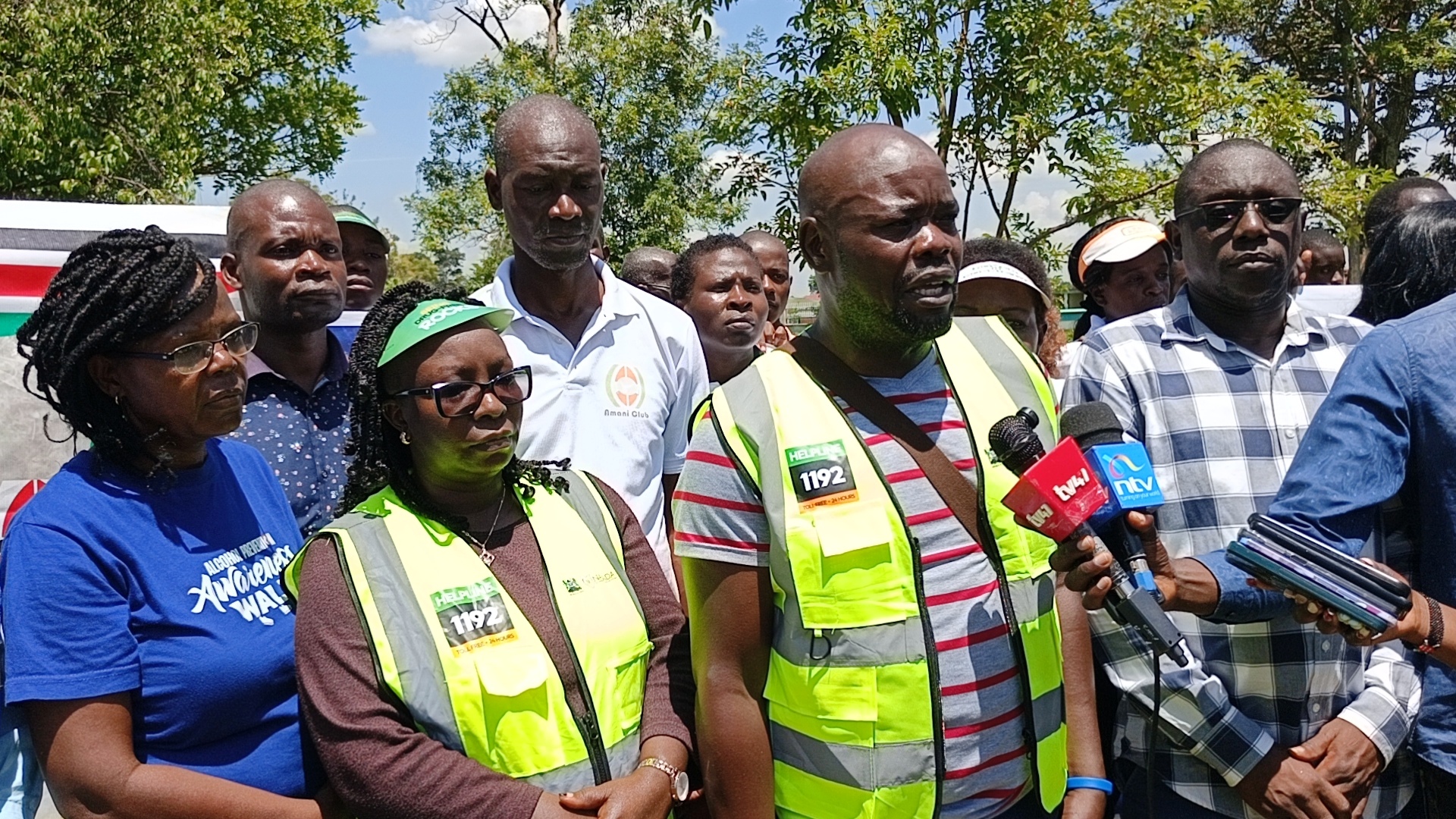
The concerns emerged during a public sensitisation walk in Mumias West that brought together residents, government agencies, civil society organisations and faith-based groups.
The campaign was organised by Blue Cross Kenya in collaboration with the Kakamega County Government, the National Authority for the Campaign Against Alcohol and Drug Abuse (NACADA), Women Pillar Alliance (WOPA) and other local organisations.
The Western region was targeted because of concerns over alcohol production, illicit brewing and substance abuse, particularly among young people.
For organisers, the message was clear: enforcement alone will not solve the problem. Communities must also invest in prevention, treatment, rehabilitation and recovery.
NACADA’s Eunice Arubia and Blue Cross Kenya director Ishmael Shem were among those who called for a broader community response, with particular attention to young people and families already affected by alcohol dependence.
The campaign is also seeking to turn public conversations into sustained grassroots action. One of the most significant developments in the response is a planned investment by the Kakamega County Government.
The county has approved Sh56 million for the construction and equipping of a dedicated Alcohol and Substance Abuse Rehabilitation Centre in Mumias West Constituency. The facility is expected to expand access to treatment for residents who require help with alcohol and substance dependence.
NACADA has also earmarked a local Level 4 health facility to serve as a rehabilitation hub and has procured specialised equipment to support local clinical care. The initiatives signal a shift towards bringing treatment closer to communities rather than leaving families to search for expensive rehabilitation services outside the region.
But officials acknowledge that the challenge is too large for the government alone.
“As a government, we cannot win this fight on our own,” said Arubia, of NACADA Kakamega County.
She said authorities were implementing the national 100-day Rapid Results Initiative (RRI) crackdown on illicit brews alongside administrative and security teams. At the same time, NACADA is engaging the county government on proposed amendments to the Kakamega Alcoholic Drinks Control Act.
One of the proposed changes would increase the required distance between liquor outlets and learning institutions from the current 100 metres to 300 metres, according to Arubia. The proposed amendment is intended to strengthen controls around schools and reduce children’s exposure to alcohol outlets.
Arubia also said NACADA was working with the Judiciary and State Counsel over court orders obtained by bar owners who fail to comply with alcohol-control regulations. The authority, she said, is using spatial measurements to support enforcement action against outlets operating too close to schools.
For communities, the proximity of alcohol outlets to learning institutions remains a particularly sensitive issue. Kennedy Kunani, National Chairman of Amani Club, which operates under the Ministry of Education, the Teachers Service Commission and the National Cohesion and Integration Commission (NCIC), warned that easy access to alcohol can expose students to substance abuse.
“We have bars operating right next to school gates, allowing students to sneak out, drink, and return to class,” Kunani said.
He called for tighter school zoning and urged Parliament to consider raising the legal drinking age from 18 to 21. Kunani argued that some secondary school students are already 18 or older and may use their legal adult status to obscure substance-abuse concerns.
He also linked substance abuse among young people to wider community risks, saying intoxicated youth can be vulnerable to recruitment into political violence during election periods.
“The consequences do not stop at the bar,” he warned “For families, alcohol dependence can mean lost income, conflict, neglect and violence.”
Violent Ombaka, executive director of Women Peace Alliance (WOPA), said her organisation encounters substance abuse repeatedly in its work on gender-based violence.
“In our daily work handling Gender-Based Violence cases, substance abuse is consistently identified as a primary trigger for severe domestic assaults and violence,” Ombaka said.
Her comments underline another dimension of the crisis: while alcohol dependence may begin with an individual, its consequences can spread through an entire household.
Children can bear the cost through disrupted schooling, insecurity at home and loss of household resources. Women can face heightened vulnerability to violence. Families can also struggle to finance treatment when addiction becomes severe. For many households, getting help can be almost as difficult as admitting there is a problem.
Shem said the cost of private inpatient rehabilitation remains beyond the reach of many families.
“Rehabilitation in private facilities is very expensive,” he said.
To bridge that gap, Blue Cross has developed an affordable community-based 12-step recovery curriculum. The organisation is training church leaders to provide recovery support within neighbourhoods, bringing assistance closer to people who may otherwise never access formal rehabilitation.
Blue Cross is marking 30 years of operations in Kenya and 125 years globally. Its approach reflects a growing recognition that recovery cannot depend exclusively on expensive residential treatment centres. Community support, counselling, family involvement and sustained follow-up can also form part of the recovery journey.
For people such as Etot, having an institution willing to intervene can make the difference between losing a career and rebuilding a life. But even as stakeholders expand prevention and rehabilitation, enforcement remains a major part of the response.
Senior Area Chief Steven Eroba said Mumias West faces particular challenges because of its proximity to the Uganda border. He said the area can become a transit route for cross-border trafficking of illicit liquor and narcotics.
“Our proximity to the Uganda border makes this area a transit point for cross-border syndicates smuggling illicit liquor and narcotics, which often evade routine police networks,” Eroba said.
He added that enforcement teams sometimes face hostility during raids on suspected illegal brewing and alcohol-selling dens.
“Despite the risks, we will not relent,” he said.
The challenge is therefore two-sided: authorities must disrupt illicit supply chains while communities work to reduce demand and help people already struggling with dependence. Elphas Were, convener of the Kenya Economic Youth Network (KEYN), said public sensitisation must continue long after the campaign walks are over.
“During our recent community forums, residents tearfully described the devastation alcohol has brought to their homes,” Were said.
He described the public walk as the beginning of continued outreach targeting both in-school and out-of-school youth. That sustained engagement may be critical.
Young people who grow up around readily available alcohol and drugs can be exposed to substance use at an early age, while those who have already developed dependency require support rather than simply condemnation. Prevention, stakeholders say, must therefore begin before addiction takes hold.
Schools, parents, religious institutions, community leaders, health workers and government agencies all have roles to play. The Mumias West campaign is unfolding across a region where authorities and civil society groups are increasingly confronting alcohol and drug abuse as a public-health and community issue.
Similar prevention activities have been held in Kakamega, Kisumu, Homa Bay and Kiambu. The emerging response combines several approaches: enforcement against illicit alcohol, regulation of outlets, public education, school-based prevention, treatment, rehabilitation and community recovery support.
The challenge is ensuring that these interventions continue after the headlines fade. But lasting change will depend on what happens afterwards — whether families receive support, whether recovering users can rebuild their lives, whether young people have alternatives and whether communities remain engaged.
Etot’s experience offers one measure of what that support can achieve. He entered a period when alcohol seemed to be taking everything from him. With structured intervention, counselling and support from his employer, he found a way back. Now he wants others to know that recovery is possible.
For Mumias West, the fight is therefore no longer simply about closing bars or destroying illicit brews.