|
Getting your Trinity Audio player ready...
|
By Shaban Makokha
Kakamega- Authorities have seized more than 30 tonnes of suspected counterfeit fertiliser in Matungu Sub-County, Kakamega County, in a multi-agency crackdown on the illegal repackaging of government-subsidised fertiliser as planting season approaches.
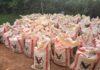
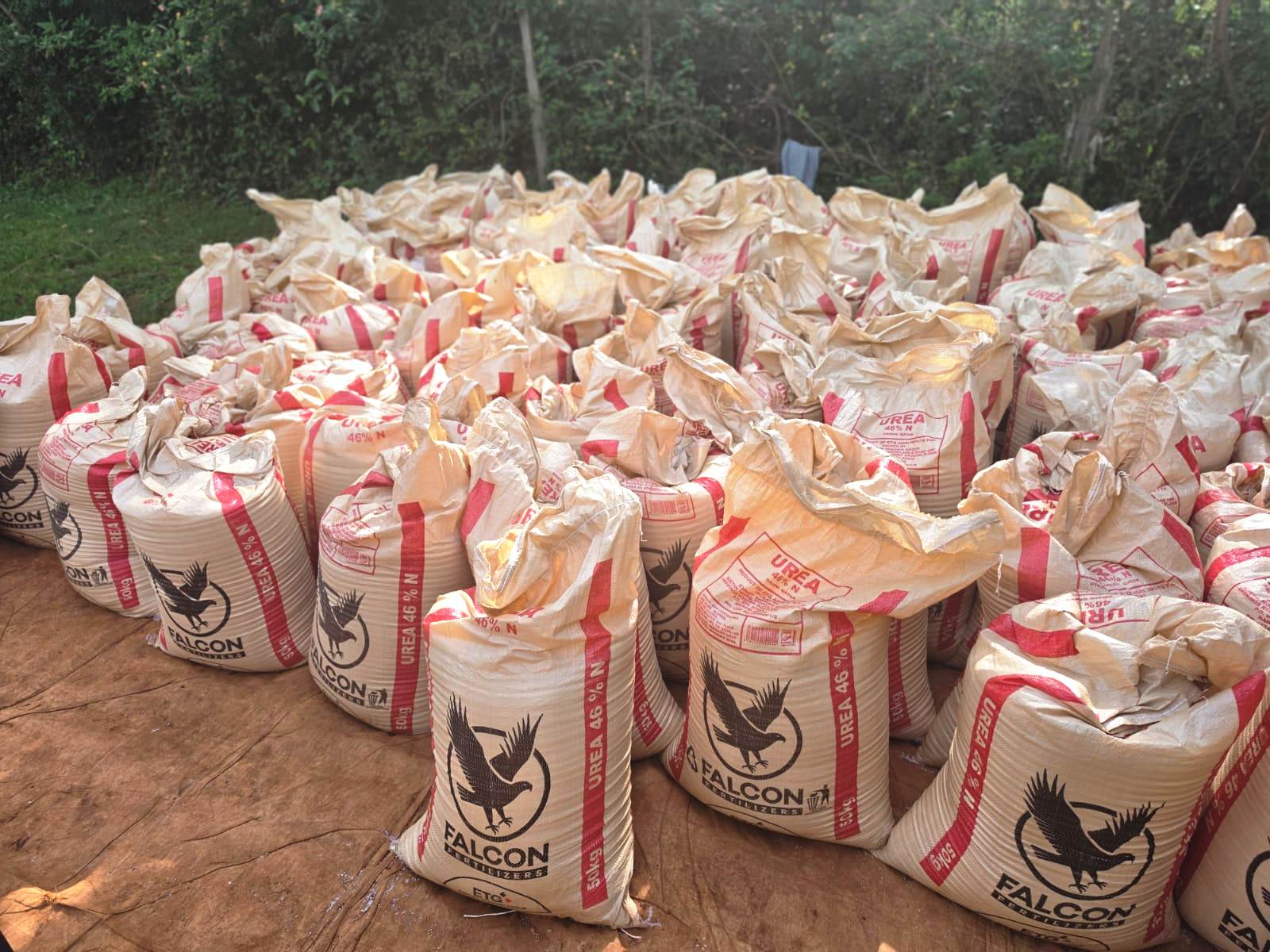
Officers allege that fertiliser marked “Not for Repackaging or Resale” was being transferred into bags bearing the Falcon Fertiliser brand, in an apparent attempt to sell subsidised inputs through unauthorised commercial channels. Several 50kg bags of the repackaged fertiliser were already stocked and awaiting distribution to points of sale.
The operation, led by Matungu Deputy County Commissioner Christine Kimaet, followed a tip-off about repackaging in Eshirumbwe A village, Koyonzo. Officers raided a compound reportedly belonging to Francis Ochieng and intercepted two lorries loaded with Ministry of Agriculture fertiliser.
“We received a tip-off that there was repackaging of fertiliser in Eshirumbwe A village, in Koyonzo, Matungu sub-county. We ambushed the village and seized two lorries that were loaded with the Ministry of Agriculture fertiliser in the home of a person identified as Francis Ochieng,” Ms Kimaet said.
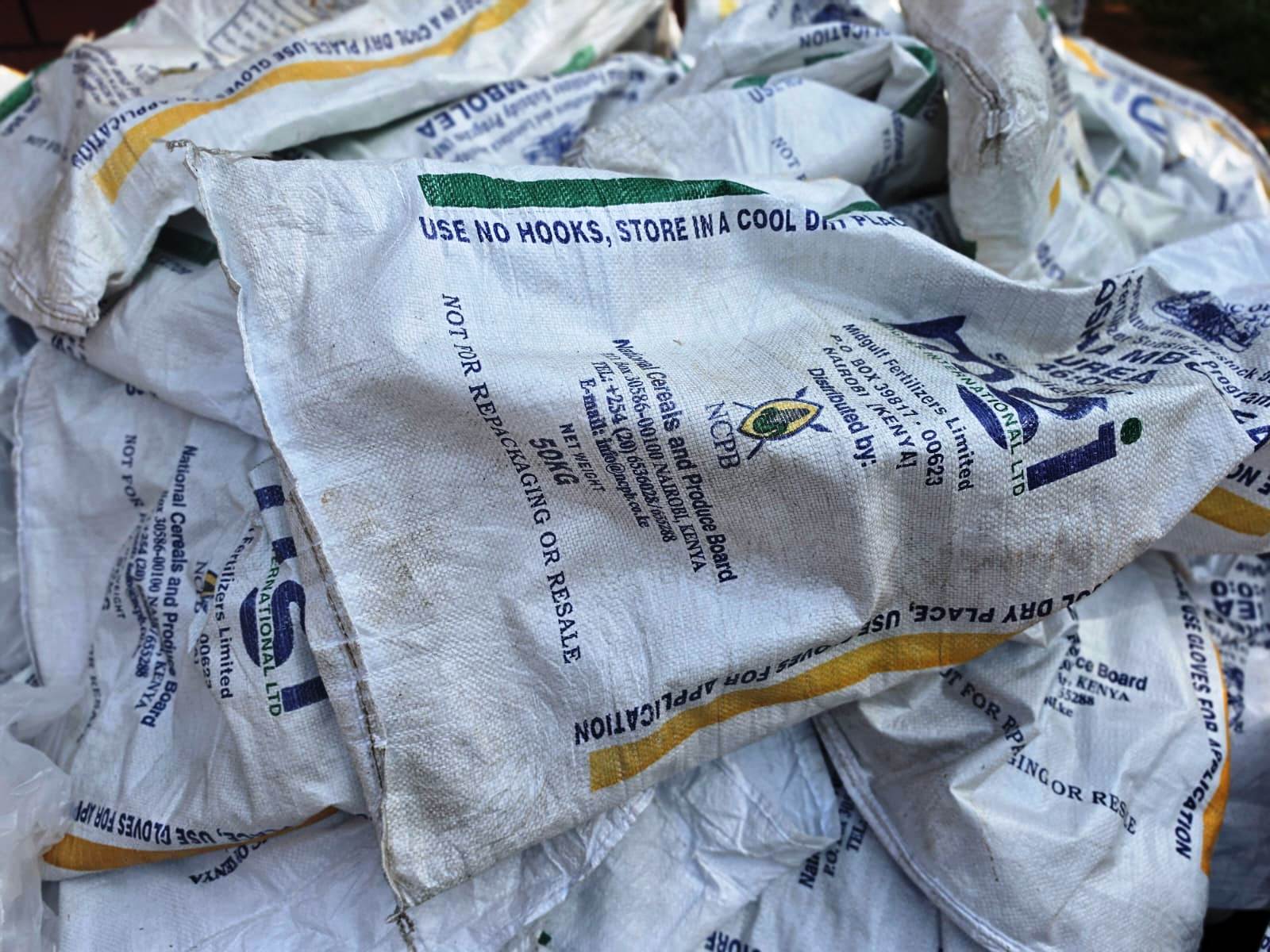
The repackaging was reportedly taking place in one of three houses in the compound, where fertiliser was being moved from National Cereals and Produce Board (NCPB) bags into Falcon Fertiliser bags. Officers found hundreds of bags of government fertiliser and numerous empty sacks bearing the Falcon and Solai Fertiliser labels. A bag-sealing machine and a labelling machine were also seized.
Two men allegedly involved in the repackaging were arrested, along with the two lorry drivers.
“The four suspects are assisting authorities with investigations as officers work to establish the origin of the fertiliser, its intended destination and the possible extent of the suspected distribution network,” Ms Kimaet said.
The lorries were handed over to the Anti-Counterfeit Authority, whose officers joined the operation. Investigators are now trying to establish whether the fertiliser was part of a wider scheme to divert, repackage and sell subsidised inputs.
The government has said subsidised fertiliser must be sold only in its original, officially branded sealed bags through authorised channels, such as the NCPB and the digital voucher registry, to stop cartels from tampering with or repackaging it.
Repackaged or counterfeit fertiliser also raises concerns about quality, soil health and crop yields, particularly where farmers cannot verify what they are buying. For farmers who have spent their savings or borrowed to prepare their land, a substandard product could mean a failed harvest and mounting debt.
Ms Kimaet condemned the alleged abuse of the subsidy programme.
“The President has made every effort to ensure Kenyans get subsidised fertiliser, but unscrupulous traders are turning it into a cash cow. We shall not let them thrive,” she said.
Authorities urged farmers to buy inputs only from authorised dealers, check packaging and labelling carefully, and report suspicious storage facilities or repackaging operations.
“We encourage the public to share credible information that could help investigators uncover other suspected illegal distribution points,” she said.