|
Getting your Trinity Audio player ready...
|
By Jane Meza
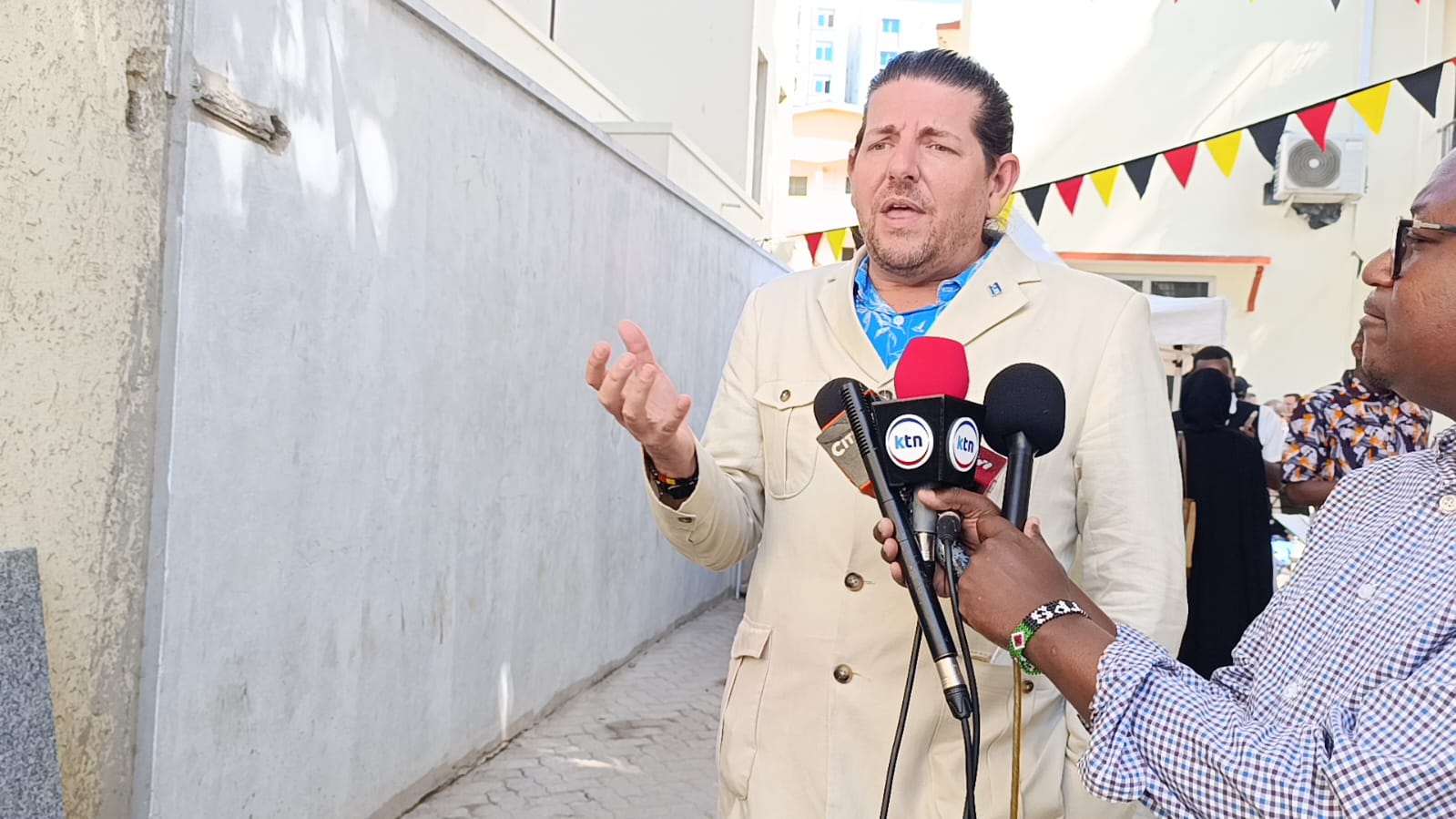
Mombasa, Kenya: Outgoing Belgian Ambassador to Kenya Peter Maddens has urged young Kenyans not to give up on their dreams, calling on them to embrace entrepreneurship, creativity and innovation as the country seeks new ways to create jobs and opportunities for its youthful population.
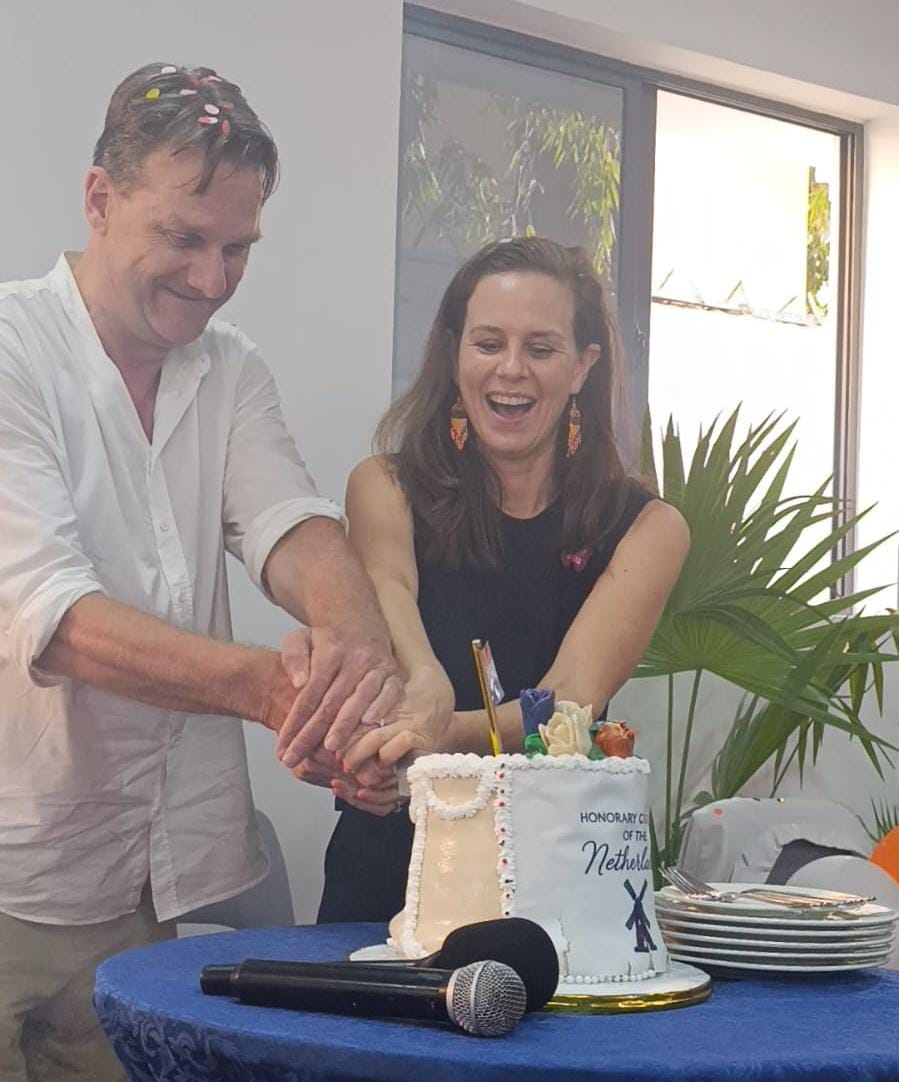
Maddens was speaking in Mombasa during celebrations marking Belgium’s National Day, an occasion that also brought together a farewell celebration for the outgoing ambassador and the soft launch of the new Close the Gap Creek Hub in Mkomani, Nyali.
The event brought together diplomats, government representatives, development partners, private sector leaders, entrepreneurs, young innovators and members of the Belgian community in Kenya, placing youth entrepreneurship and digital innovation at the Centre of conversations about Kenya’s future.
For Maddens, who is concluding his diplomatic tour of duty in Kenya, the occasion offered both an opportunity to reflect on his time in the country and to look ahead at the potential of a new generation. His message to Kenyan youth was simple: “Don’t give up on your dreams.”
Reflecting on his long association with Kenya, the outgoing ambassador said he had watched the country evolve into a more dynamic, ambitious and creative economy, with young people playing an important role in driving that transformation.
“I grew up a little bit here in Kenya, so I’ve been able to watch Kenya for the last 50 years or so,” Maddens said. “What I see is that Kenya continuously grows and becomes more dynamic, more ambitious, more creative.”
Maddens said the energy driving Kenya’s transformation had always been closely linked to its young people. “The youth in those days was the same as the youth today, ambitious and creative,” he said. “So my message to Kenyan youth is: don’t give up. Don’t give up on your dreams.”
His remarks came at a time when Kenya’s young population is entering an increasingly competitive labour market, with formal employment opportunities unable to absorb all those seeking work.
The soft launch of the Close the Gap Creek Hub therefore provided a practical backdrop to his message, showcasing a space designed to help young people turn their ideas into businesses and, eventually, create employment for others.
The hub brings together co-working spaces, digital skills training, technology, mentorship and entrepreneurship support under one roof. It includes a maker space where entrepreneurs can develop physical and technology based products, a digital classroom known as Digitrack, a computer shop offering refurbished equipment at affordable prices, and spaces where entrepreneurs can work, meet clients and collaborate.
The facility is expected to accommodate between 200 and 250 people on an average day, with more than 250 entrepreneurs expected to use the hub each week. Its event facilities can accommodate larger gatherings of up to 400 people.
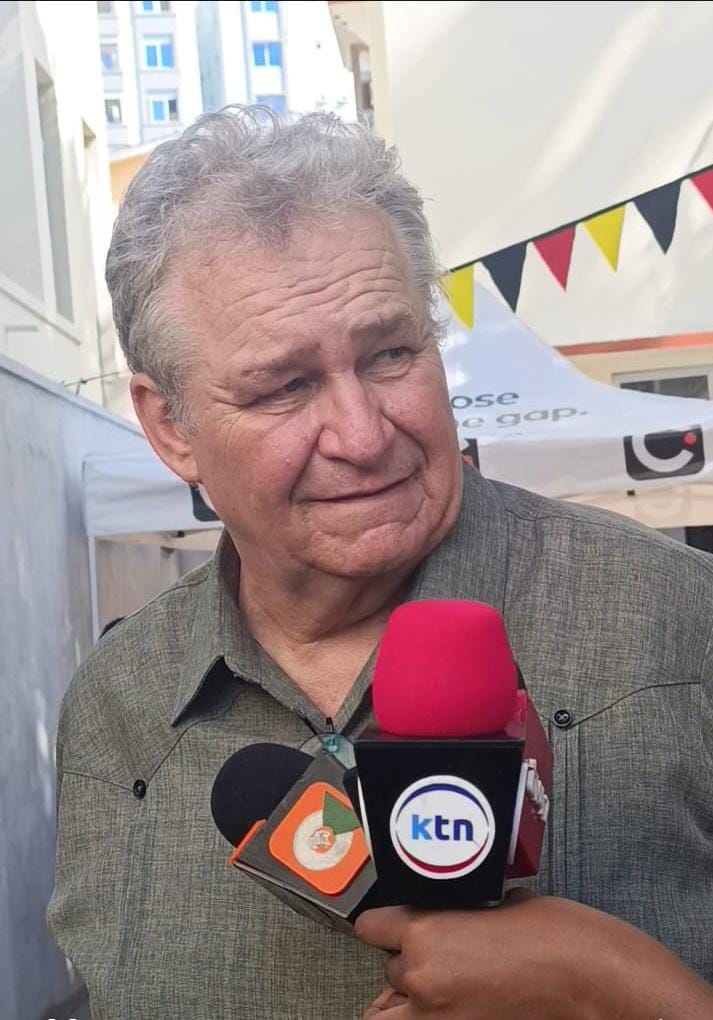
According to Close the Gap founder and CEO Olivier Vanden Eynde, the hub is about much more than providing young people with desks and internet access. “What you really need is also a kind of a support programme,” Vanden Eynde said, explaining that the organization’s Impact Accelerator Programme is designed to equip young people with skills in technology, business and entrepreneurship.
Through the programme, entrepreneurs can receive training and mentorship, develop business models and assess whether their ideas are commercially viable. Startups that already have a minimum viable product and are ready to enter the market can potentially access financing through Close the Gap’s Impact Fund, with ticket sizes ranging from $5,000 to $20,000.
Vanden Eynde said the aim was to create a complete ecosystem where young people with promising ideas could access the support they need to move from concept to market. “We really try to have a full circle,” he said, explaining that young people with “a good idea, the energy and the discipline and the desire to make it happen” should be able to find the skills, mentorship and resources they need. He urged young Kenyans not to be job seekers, but be a job creator.
For Vanden Eynde, entrepreneurship is not simply about individual financial success. It is also about creating opportunities for others and building an economy where young people can become independent while generating dignified employment.
The hub’s Business Development Associate, Isabel Kadina, said Mombasa’s young people already have the creativity and entrepreneurial spirit needed to take advantage of such opportunities pointing to young startups working in areas such as eco-printing, software development and programming as examples of the talent emerging from the Coast encouraging young people who may not yet have all the skills or resources they need to make use of the hub’s programmes.
At the Coast, the push for youth innovation is also being championed by Swahili Pot Hub Foundation CEO Mahmood Noor, whose work has focused on providing young people with access to technology, digital skills and platforms where they can develop and commercialize their ideas.
The launch of the Close the Gap Creek Hub adds to Mombasa’s growing innovation ecosystem, creating more spaces where young entrepreneurs can collaborate, access technology and connect with potential partners. ‘’The broader message from the Coast’s innovation community is that Kenya’s young people need more than encouragement; they need practical access to skills, technology, mentorship, finance and markets to turn their creativity into sustainable businesses and jobs,’’ added Swahili pot CEO.
For H.E. Henk Jan Bakker, the Dutch Ambassador to Kenya, Kenya’s young and digitally savvy population is well positioned to take advantage of the opportunities emerging from artificial intelligence and technology. “AI is seen as a threat by many, and it can be a threat, but it is also a huge opportunity,” Bakker said.
He noted that Kenya has a young population capable of understanding and adopting emerging technologies, creating opportunities for innovation and entrepreneurship. Urging young Kenyans to look beyond traditional employment and consider creating their own opportunities. “Create your own opportunities. They are there.” He said.
The conversation around innovation was also placed within Kenya’s broader digital transformation agenda by Prof. Bitange Ndemo, Kenya’s Ambassador to Belgium and the European Union, whose experience in technology and public policy has positioned him as one of the country’s prominent voices on digital transformation and innovation.
Ndemo’s involvement in the discussions highlighted the growing importance of technology, entrepreneurship and innovation in strengthening Kenya’s engagement with international partners. The conversations reflected a wider question facing Kenya and many other African countries: how can partnerships with international organizations, governments and private-sector actors translate into practical opportunities for young people?
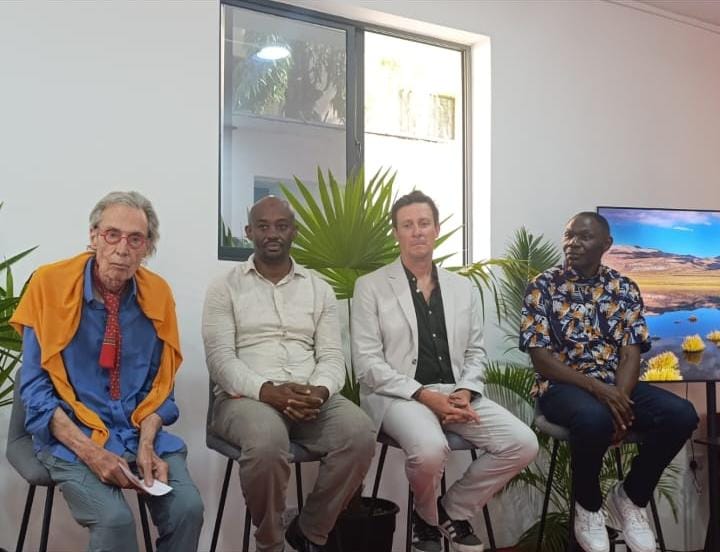
For innovation hubs and entrepreneurs, the answer lies partly in creating stronger connections between young innovators, investors, governments. Ndemo also called for greater investment in digital infrastructure and skills beyond Kenya’s major urban centers, noting that rural communities also need to benefit from the country’s digital transformation.
He highlighted the potential of digital tools to help farmers access agricultural information, improve productivity and identify markets for their produce. In education, he pointed to the potential of AI-powered personalized learning to provide students with access to educational content and learning resources.
‘’The challenge, however, is ensuring that these opportunities do not remain concentrated in major cities. In some rural areas, young people already gather around individual Wi-Fi hotspots to access the internet through their mobile phones, highlighting the continuing digital divide’’, he said.
The push for digital inclusion therefore requires more than simply encouraging young people to use technology. It requires reliable connectivity, access to devices, digital skills, affordable financing and markets where young entrepreneurs can sell their products and services.
For the young entrepreneur, the barriers are often interconnected. One may have a good idea but lack funding. Another may have a product but no market. A third may have the skills but no affordable place to work. Others may simply need mentorship to understand how to turn an idea into a sustainable business. The Close the Gap Creek Hub is attempting to bring many of these missing pieces together.
Maddens described Close the Gap as one of Belgium’s flagship initiatives in Kenya, highlighting its work in refurbishing computers and making technology more affordable while supporting young entrepreneurs.
For him, the hub represents an opportunity to connect young people’s creativity with the tools and support required to turn ideas into businesses.
As he prepares to leave Kenya, his farewell message therefore extended beyond the diplomatic sphere. It was a call to a generation facing an uncertain employment landscape to remain ambitious, resilient and willing to create new paths.
The soft launch of the Close the Gap Creek Hub, held during Belgium’s National Day celebrations and alongside the farewell to the outgoing ambassador, therefore became a moment of both reflection and renewal.
For the young entrepreneurs walking through the doors of the new Close the Gap Creek Hub, the next step is to turn that belief into action.
As Maddens bids farewell to Kenya, the message he leaves behind is one that extends beyond his diplomatic tenure: Kenya’s young people should not only wait for opportunities to come to them. They should be supported to create them for themselves and for others.