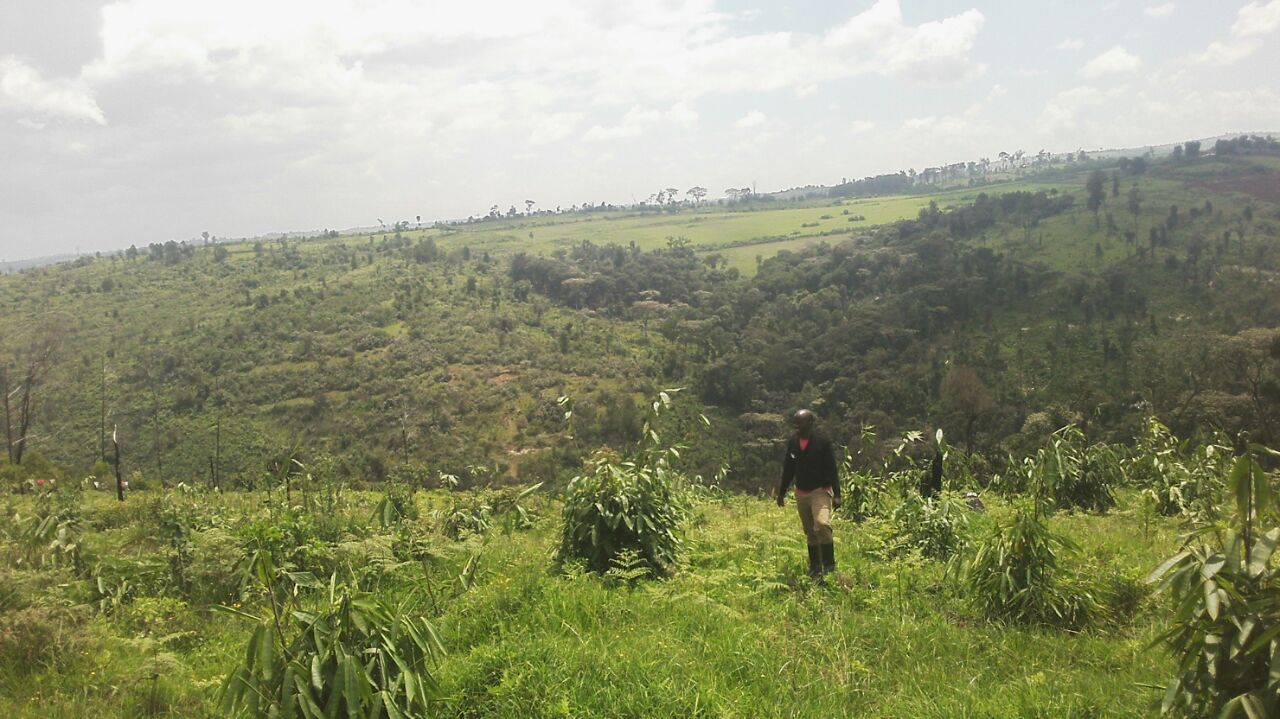
|
Getting your Trinity Audio player ready...
|
By Jane Meza
Kilifi, Kenya: Sixteen-year-old Saida Kapondo (not her real name, used to protect her privacy) had already dropped out of school after Form One while residing with her grandparents in Rabai, Kilifi County.
Hoping to fulfill her dream of becoming a pediatrician, she trusted a childhood acquaintance who pledged to sponsor her studies. However, instead of helping her return to the classroom, he impregnated her.
‘’I stay with my grandparents since at the age of eight after my mum got marriage and they moved to Lamu, I was among the top ten in my class, after class eight I was excited to join form one however things did not turn out as I wished I only study one term then got pregnant for someone closed to my grandparents. He promised me better education and a bright future. Instead he took it away immediately I started, I haven’t given up on education yet I would like to go back to school,’’ she narrated.
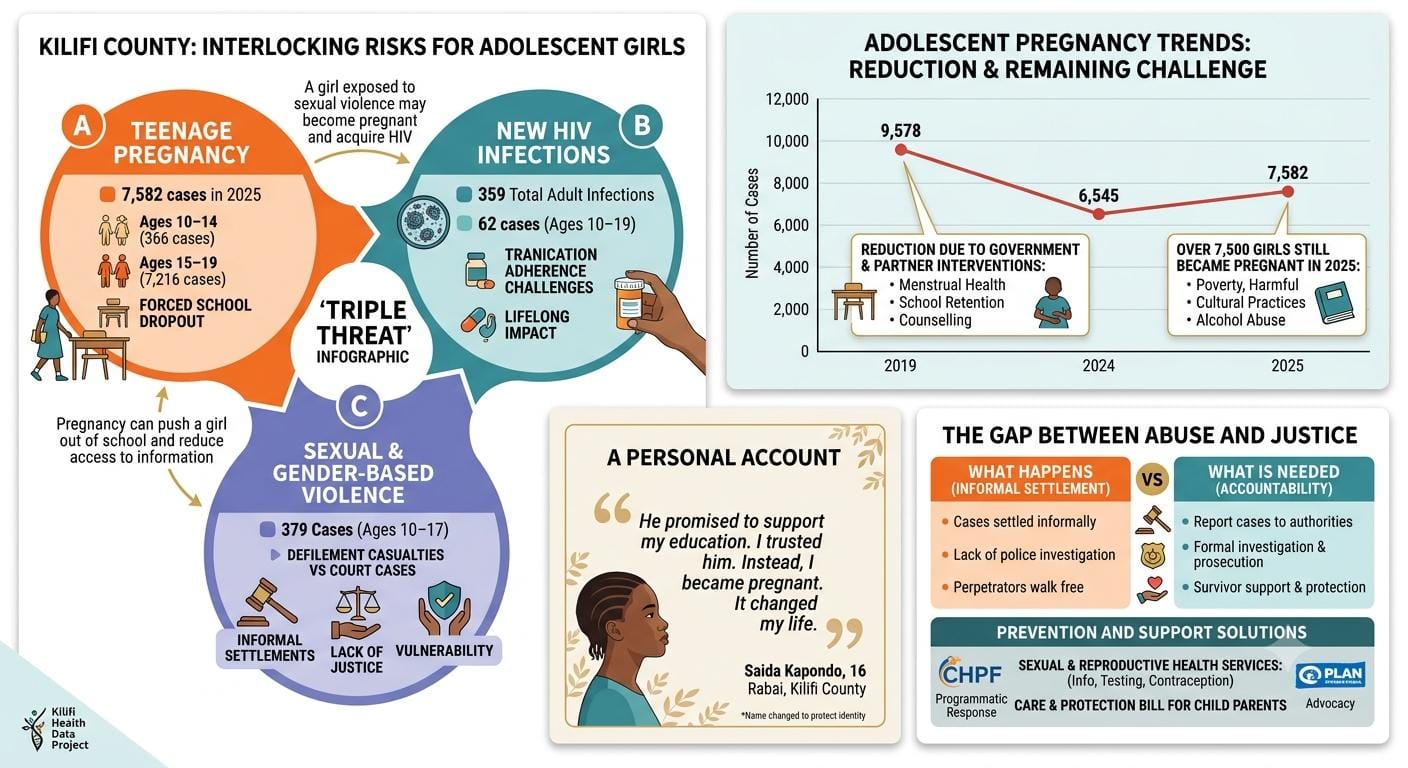
Her experience is part of a much wider problem in Kilifi, where adolescent girls face three connected threats, teenage pregnancy, HIV and sexual and gender-based violence.
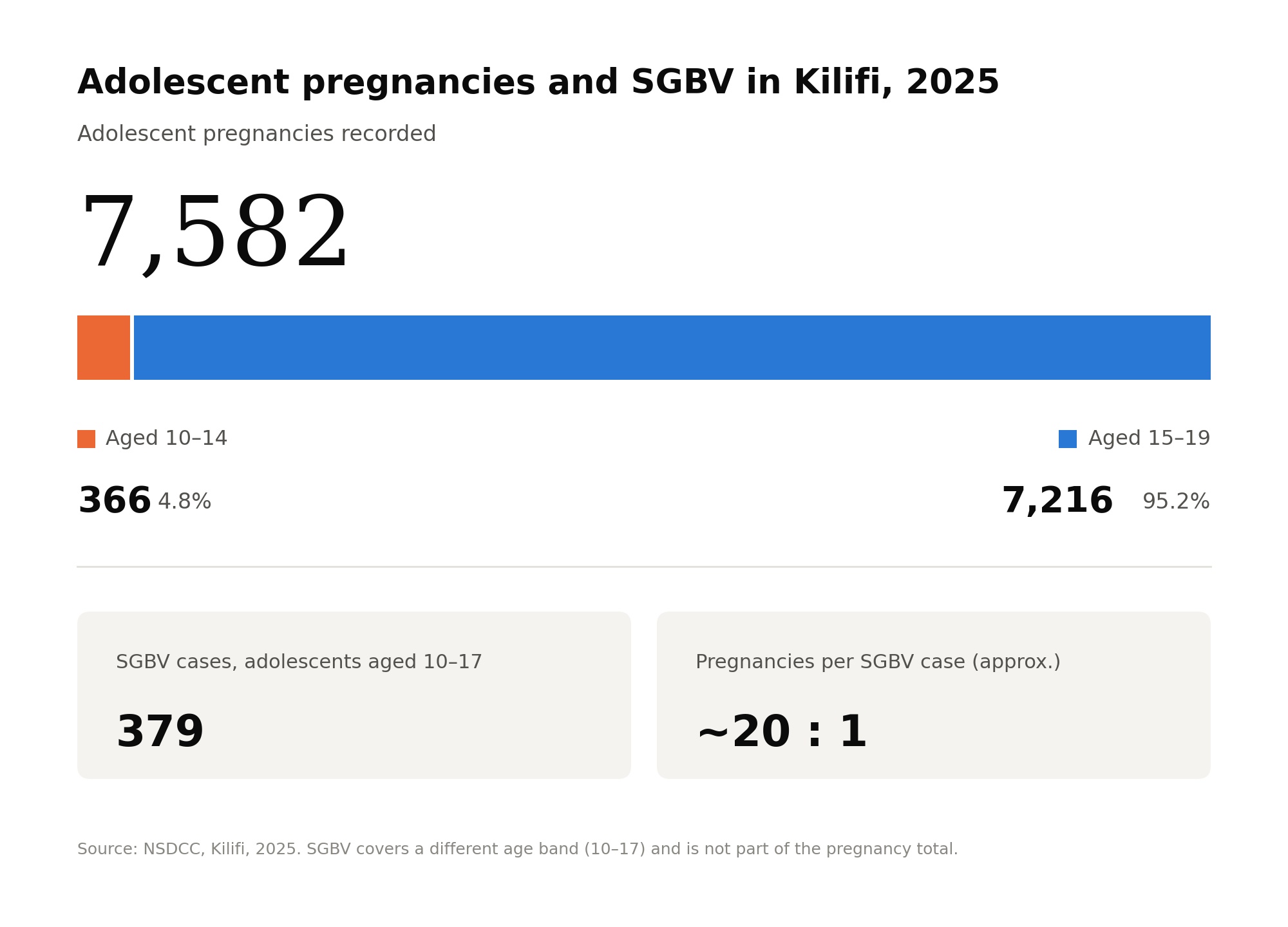
The National Syndemic Diseases Control Council (NSDCC) recorded 7,582 adolescent pregnancies in Kilifi in 2025, including 366 among girls aged 10–14 and 7,216 among those aged 15–19. The same data recorded 379 sexual and gender-based violence cases involving adolescents aged 10–17.
In Parliament in October 2025, Education Cabinet Secretary Julius Migos Ogamba said poverty was among factors pushing some school going children into work, increasing their vulnerability to early pregnancy and disrupting their education.
A girl exposed to sexual violence may become pregnant She may also be exposed to HIV, Pregnancy can push her out of school, reducing access to information, health services and the social protection that school can provide.
Pregnancy, when school stops
Kilifi has made progress in reducing teenage pregnancy. Data presented in Parliament by the National Council for Population and Development showed that teenage pregnancies fell from 9,578 in 2019 to 6,545 in 2024.
The government attributed the reduction partly to interventions by national and county governments and partners, including programmes supporting school retention, menstrual health, counselling and child protection but thousands of girls continue to become pregnant.
For Saida, the consequences are personal, leaving school means losing more than lessons. It can mean losing friendships, opportunities and a pathway to economic independence.
A parliamentary assessment identified poverty, inadequate parental guidance, negative peer pressure, alcohol and drug abuse, inadequate community awareness of sexual and gender-based violence and harmful cultural practices among factors associated with teenage pregnancy in Kilifi.
HIV: the threat beyond pregnancy, the second part of the crisis is less visible.
Jane Gakii of the National Syndemic Diseases Control Council has warned about HIV transmission among adolescents and young people, saying a large share of new adult HIV infections occurs among people below 35.
In Kilifi, NSDCC data reported 359 new HIV infections in the previous year, including 62 children aged 10–19. Gakii has also raised concern about poor adherence to HIV medication among children and young people living with the virus and for adolescents, prevention therefore cannot stop at telling girls to avoid pregnancy.
They need access to HIV testing, prevention information, condoms and other appropriate sexual and reproductive health services, as well as treatment and psychosocial support when they are living with HIV.
This is why Kenya has adopted the Triple Threat approach, linking adolescent pregnancy, new HIV infections and sexual and gender-based violence rather than addressing each problem in isolation.
Sexual violence: who protects the child
Saida’s story also raises the most difficult question, what happens when the person a child trusts becomes the source of harm? Nominated Senator Catherine Muyeka Mumma has questioned the gap between sexual abuse cases involving children and cases reaching court. “We do not have a commensurate number of defilement cases in court,” she said.
She has called for authorities to ensure that cases involving minors are reported and prosecuted rather than settled informally. The problem is not only whether a child reports, it is whether adults around that child listen, whether police investigate, whether medical evidence is collected, whether prosecutors take the case forward and whether the survivor receives support.
For girls who depend on relatives or other adults for food, shelter or education, speaking out can be especially difficult. Prevention must reach the community. Some organizations are trying to close these gaps.
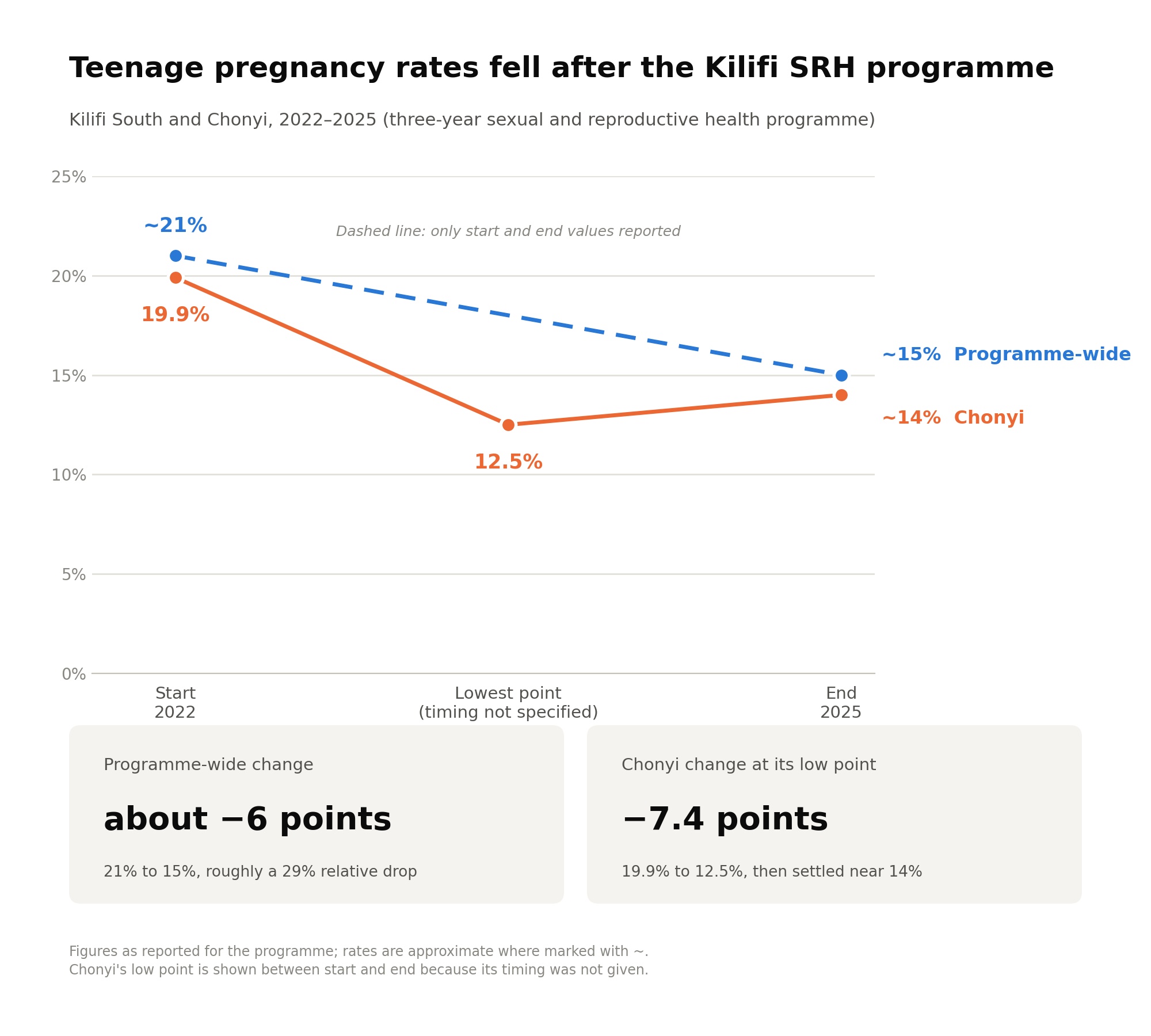
A three-year sexual and reproductive health programme implemented in Kilifi South and Chonyi between 2022 and 2025 reported a decline in teenage pregnancy rates from about 21% to around 15%. In Chonyi, the rate fell from 19.9% to 12.5% at one point before stabilizing at about 14%.
Juliana Mwaega, Project Manager at the Community Health Promotion Fund (CHPF), said the organization combines information with health services. “We are here to inform young people about sexual reproductive health, provide services such as infection testing, contraception, information sharing, and treatment of minor ailments,” she said.
Plan International is also involved in the Triple Threat response , an officer with Plan International, said the campaign would address issues affecting young people that had previously been ignored.
What happens after pregnancy?
Prevention alone is not enough for girls who are already pregnant. Nominated Senator women affair Miraj Abdillahi Abdulrahman has pushed for protection of child parents through the Care and Protection of Child Parents Bill, which seeks to support pregnant children and help child parents overcome barriers to returning to school.
For Saida, the promise of education came before the pregnancy. Whether she gets another opportunity to pursue it will depend on what happens after the statistics are recorded. Kilifi’s triple threat is therefore not only about the number of girls becoming pregnant, acquiring HIV or experiencing sexual violence.
It is about what happens between the numbers: whether a child is protected before abuse occurs, whether she receives healthcare afterwards, whether justice follows, and whether pregnancy forces her permanently out of school.
Thousands of other girls, those systems may determine whether a difficult childhood experience becomes the end of their education or a chapter they can survive and move beyond.