|
Getting your Trinity Audio player ready...
|
By Liz Anyango
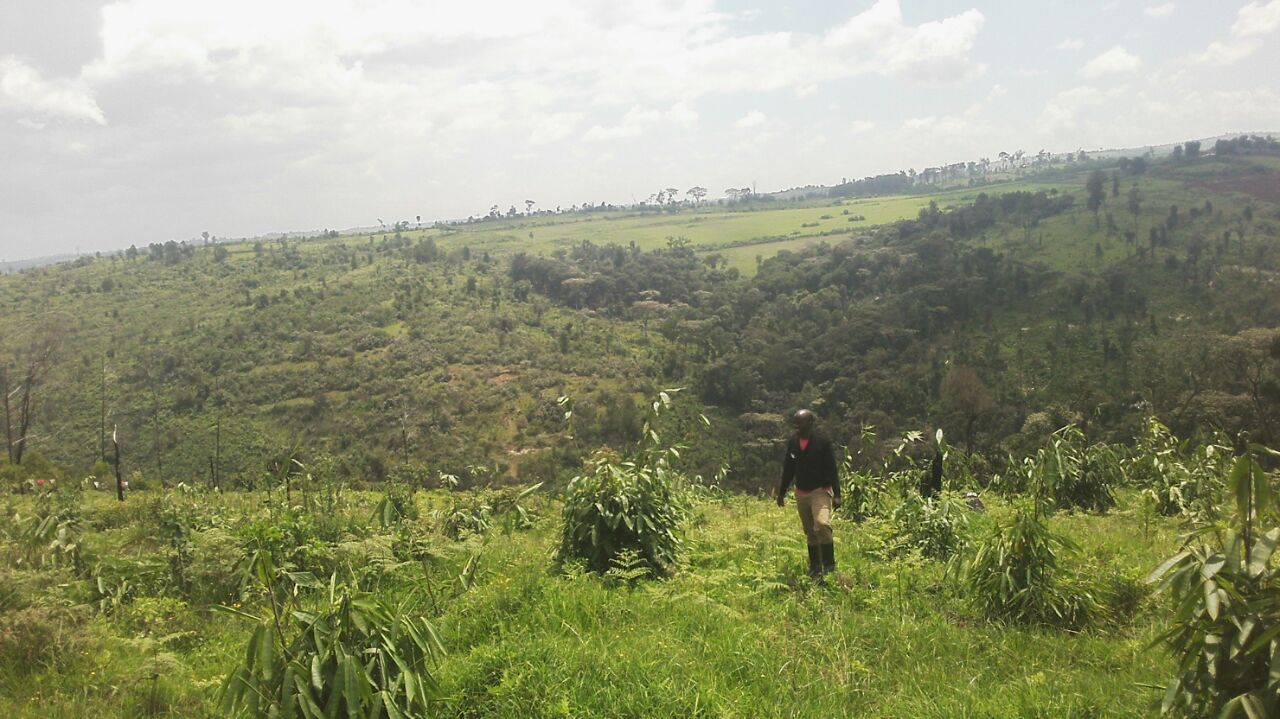
Nairobi, Kenya: For years, Kenya’s drylands have been associated with drought and the struggle to farm, but researchers now see them as central to the country’s agricultural future.
With about 84 percent of Kenya’s land classified as arid or semi-arid, according to the Ministry of Agriculture, the question is no longer whether these areas matter to the country’s food system, but how agriculture can become more productive and resilient in them.
The drylands are already home to about 80 percent of Kenya’s livestock, making their future closely tied to the country’s wider food and agricultural security.
That change, researchers and policymakers say, will require more than asking farmers to adapt to harsher conditions. It will require stronger research, better technology, skilled young people and partnerships that can turn scientific knowledge into solutions that farmers can actually use.
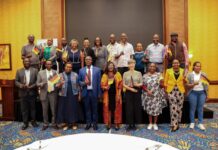
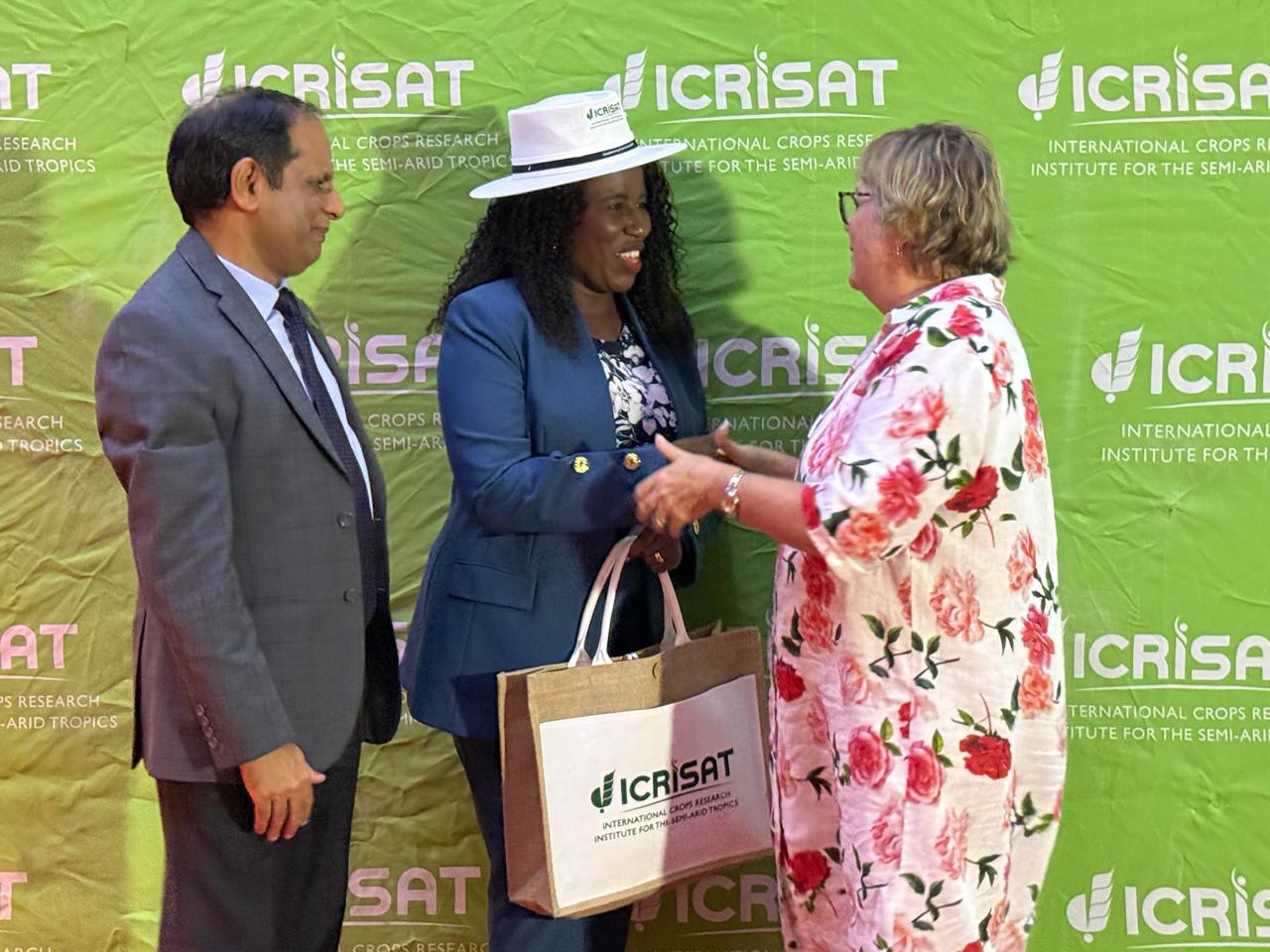
The issue came into focus this week at a partners’ dinner at the Kenyatta International Convention Centre (KICC), where ICRISAT’s Governing Board met Kenyan government officials, academic and research partners to discuss how science, higher education and stronger partnerships can help advance food and nutrition security, particularly in the country’s drylands.
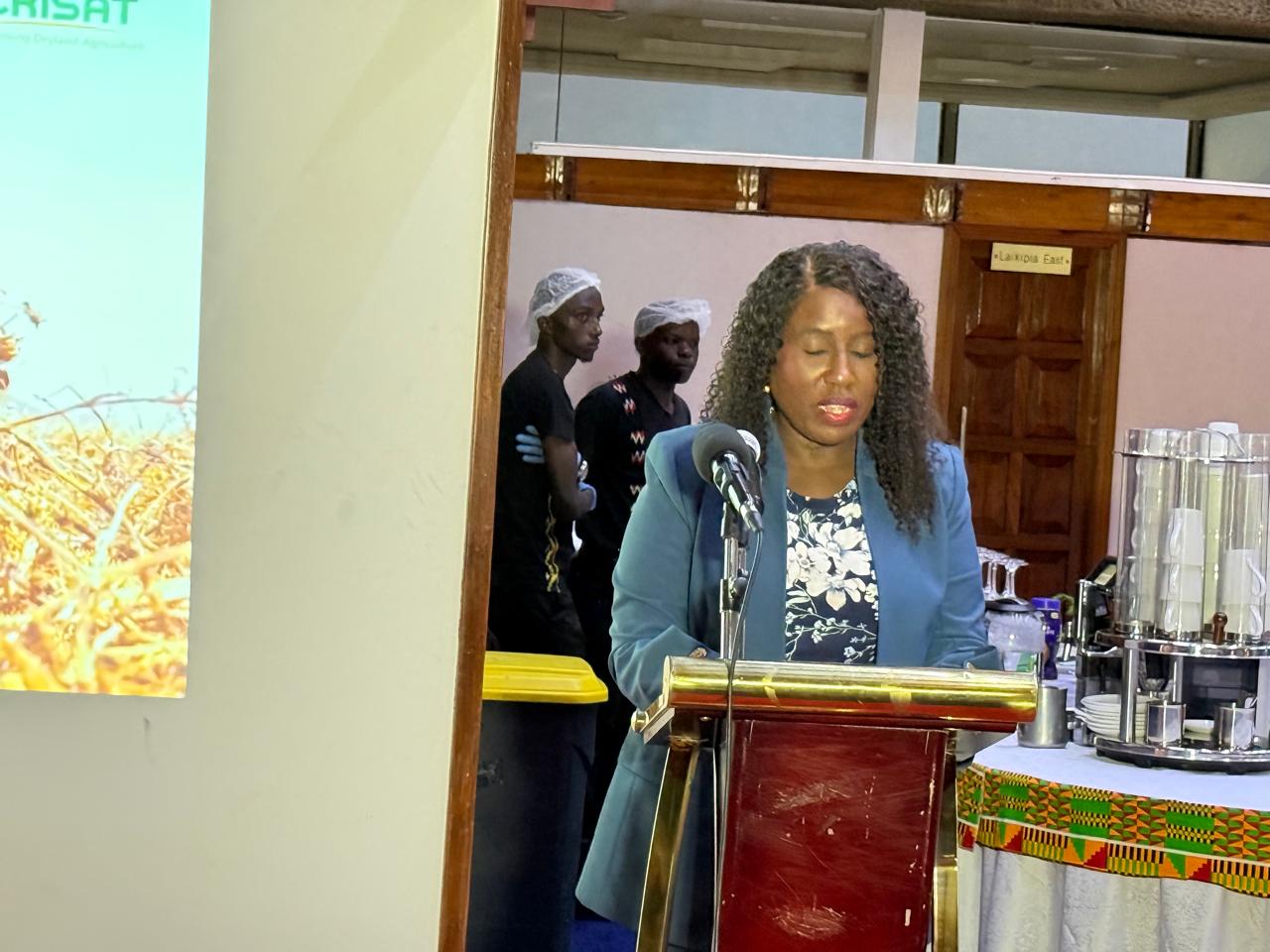
For Kenya’s State Department for Higher Education and Research, dryland agriculture can no longer be treated as a side issue.
“About 80 percent of Kenya is arid and semi-arid. For us, dryland agriculture is not agriculture at the margins; it is the agriculture of our future,” said Principal Secretary Dr Beatrice Muganda Inyangala.
That means the institutions serving these regions also have a bigger role to play.
Inyangala called for stronger links between ICRISAT, Kenyan universities and research institutions in India, particularly involving Garissa University and Tharaka University.
“These universities should not be seen simply as institutions serving remote communities. They can become centres of excellence for the agriculture of the future,” she said.
The idea is to build research around the realities of dryland communities, where unreliable rainfall, water shortages and a changing climate make farming more difficult.
ICRISAT, an international research organisation and CGIAR research centre, works on improving farming and agri-food systems in the drylands of Africa and Asia. Its work covers areas such as crop improvement, seed systems, water management, climate resilience and value addition.
But research only matters to a farmer when it moves beyond laboratories and reaches the field.
A drought-tolerant crop, for example, has little value if farmers cannot access the right seed, understand how to use it or find a market for what they produce. This is why ICRISAT says partnerships between researchers, governments, universities, businesses and farmers are essential.
ICRISAT Governing Board Chair Cathy Reade said the focus should be on making research useful to communities.
“Our commitment is to ensure that research continues to translate into practical solutions for the communities that depend on the drylands,” she said.
One area Kenya hopes to benefit from is its long-standing relationship with India.
The partnership could create more opportunities for Kenyan students and researchers through training, fellowships, exchanges and joint research, allowing them to learn from India’s experience while developing solutions suited to Kenyan conditions.
Through its Center of Excellence for South-South Cooperation in Agriculture, ICRISAT has already been supporting training and knowledge exchange across the Global South. In 2026, the initiative, together with India’s Technical and Economic Cooperation programme, supported international training in regenerative agriculture, digital agriculture, crop improvement and seed systems, with participants from 25 countries.
Kenya now wants greater access to such opportunities.
“We would like to see more opportunities for our students and researchers to learn from India’s experience, work with ICRISAT scientists and bring that knowledge back to address our own challenges,” Inyangala said.
For ICRISAT Director General Dr Himanshu Pathak, however, the goal is not simply to produce more research.
“No single institution can solve the food, climate and livelihood challenges facing the drylands,” he said. “We need partnerships that bring together science, policy, education, industry and farmers.”
That connection is important because the final test of agricultural research is what happens on the farm.
The ambition is to create a stronger pipeline from universities and research institutions to innovation, businesses and eventually farmers, so that new knowledge can lead to practical changes in how food is produced, processed and marketed in dryland areas.
This could include greater investment in drought-tolerant crops, improved seed systems, mechanisation, digital agriculture, water-efficient production, post-harvest management and value addition.
For Inyangala, investing in these areas is also an investment in the people and institutions that will shape Kenya’s agricultural future.
“When we invest in dryland agriculture, we are not investing in the margins of our economy. We are investing in its future,” she said.
That may be the bigger shift in thinking: seeing Kenya’s drylands not simply as places defined by what they lack, but as places where research and innovation could unlock new possibilities for farming.
And if that happens, the future of Kenyan agriculture may not be found only in the country’s wetter regions. It may also be shaped in the drylands, where the need for new solutions is greatest.