|
Getting your Trinity Audio player ready...
|
By Naomi Kago
Nakuru, Kenya: In the bustling corridors of Kenyan health facilities, breast cancer is almost exclusively spoken of in the feminine pronoun. October arrives annually in a wave of pink ribbons, and public health crusades aggressively champion early detection, self-examination, and regular mammograms for women.
For years, this heavily gendered narrative has successfully saved female lives by pushing the boundaries of medical awareness. However, it has over the time constructed a dangerous, invisible psychological barrier for Kenyan men creating a volatile clinical blind spot where men believe or culturally feel they are biologically immune to the disease.
As a result, an emerging public health emergency is unfolding in the shadows. While men passionately step up to protect the women in their lives, they are quietly dying from a disease they do not believe they can catch.
In the grassroots communities of Kenya, non governmental health networks and community advocates traverse rural setups to screen for reproductive cancerous growths. Elizabeth Lagat, a prominent consultant with the Cancer Community Consultant Linkage (C3 Link) in Nakuru, has spent years organizing these localized health missions. During these field campaigns, Lagat has observed a deeply heartfelt, systemic irony regarding the role men play in oncology care.

When a woman is flagged during a grassroots campaign and “marked” for intensive clinical follow-up, C3 Link assigns a protocol to ensure she strictly adheres to her treatment pipeline. More often than not, the individual driving that adherence is a man, a partner,a husband, a brother, a father, or a son.
“Men play an incredibly noble role as caregivers in our missions,” Lagat explains. “They are the ones who make sure that the marked female patients go for their checkups annually. They handle the heavy logistics, manage the financial strain, and physically escort their loved ones to regional referral facilities. They are absolute pillars in women’s treatment adherence.”
Yet, this insightful commitment to healthcare stops abruptly at their own bodies. While Kenyan men are highly effective at enforcing the clinical appointments of the women they protect, they almost never take the personal initiative to step inside a facility for their own routine checkups.
“The crusade has historically favored women,” Lagat notes openly. “Because the messaging has been exclusively pink [feminine]for decades, men don’t even stop to consider their own vulnerability. They see themselves solely as the protectors and providers, entirely detached from the risk.”
This systemic avoidance is further compounded by a devastating lack of accurate public information and a heavy layer of social stigma. In many traditional setups across Kenya, a man presenting with an ailment or swelling in his breast faces immediate communal ridicule, a perceived loss of masculinity, or deep isolation.
“Most men simply do not speak out for fear of stigma,” Lagat explains. “They keep quiet, hide their symptoms, and suffer in absolute isolation because they do not have the proper information. They genuinely do not know that male biology includes breast tissue that can mutate into aggressive cancerous growths.”
Compelled by this widening information gap, C3 Link is completely shifting its advocacy pattern. Next year, for the first time ever since its inception, the organization will roll out a dedicated, specialized campaign which will target both men and women in the society. The objective is to aggressively break down generational stigma, distribute localized biological data, and challenge men across Kenya’s grassroot communities to learn their health status and commit to annual checkups without fail.
When a man finally breaks through the social barrier of stigma and walks into an oncology unit, the clinical picture is rarely straightforward. Because men do not actively scan their chests for anomalies, the symptoms of male breast cancer (MBC) are routinely misread by the patients themselves.
“Just recently, a male patient walked into the Nakuru Teaching and Referral Hospital [NAKURU LEVEL 6 HOSPITAL],” Elizabeth Lagat shares, highlighting the profound confusion surrounding the disease.
“He came in specifically seeking a checkup because he thought he was suffering from a severe, stubborn case of pneumonia. He had chest pains and breathing discomfort. When the medical team ran a full clinical examination, they discovered it wasn’t pneumonia at all. It was breast cancer.”

This clinical misunderstanding is heavily tied to how men prioritize different areas of their health. Nationally, when men think of gender-specific oncological threats, their focus is singularly dominated by another condition.
“The vast majority of men only take the serious matter of prostate cancer into consideration,” Lagat points out.
“Prostate cancer has received significant awareness as a male disease, so men are naturally more hyper-aware of it. Breast cancer doesn’t even register on their radar of possibilities.”
To mathematically map this clinical reality, Dr. Peula Wanjiru King’ori, an oncologist at the Nakuru Teaching and Referral Hospital, conducted a landmark academic investigation titled the “IMANI KNH” Study (Insights into Male breast cancer Investigations at Kenyatta National Hospital). Her retrospective cohort thesis precisely tracked the profile of tissue based features, and survival metrics of male breast cancer patients treated at Kenya’s leading tertiary referral facility over a multi year period.
Dr. King’ori’s research evaluated a sample of 37 confirmed male breast cancer cases. The clinical data she uncovered exposes how dangerously deceptive the disease can be in men.
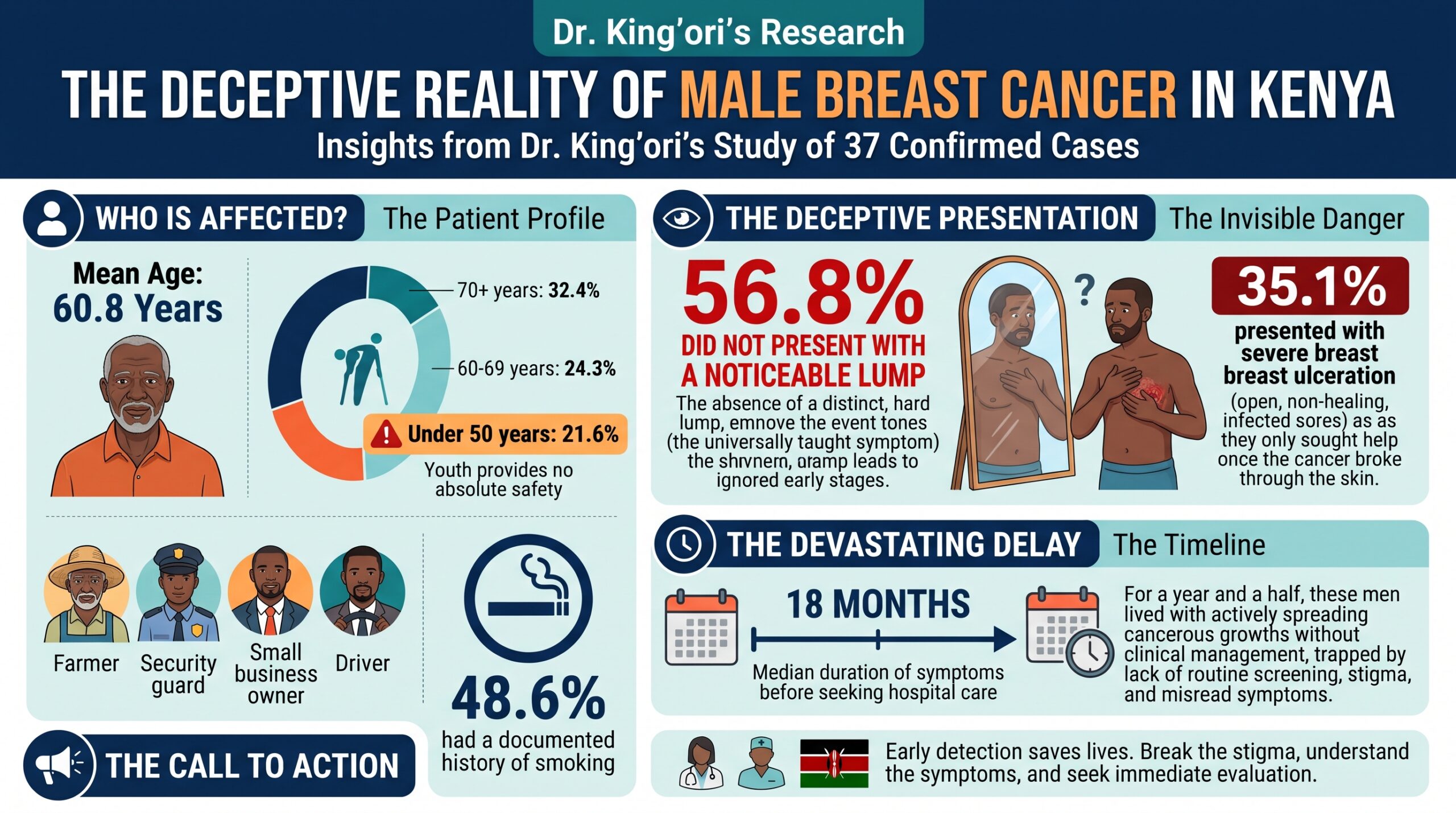
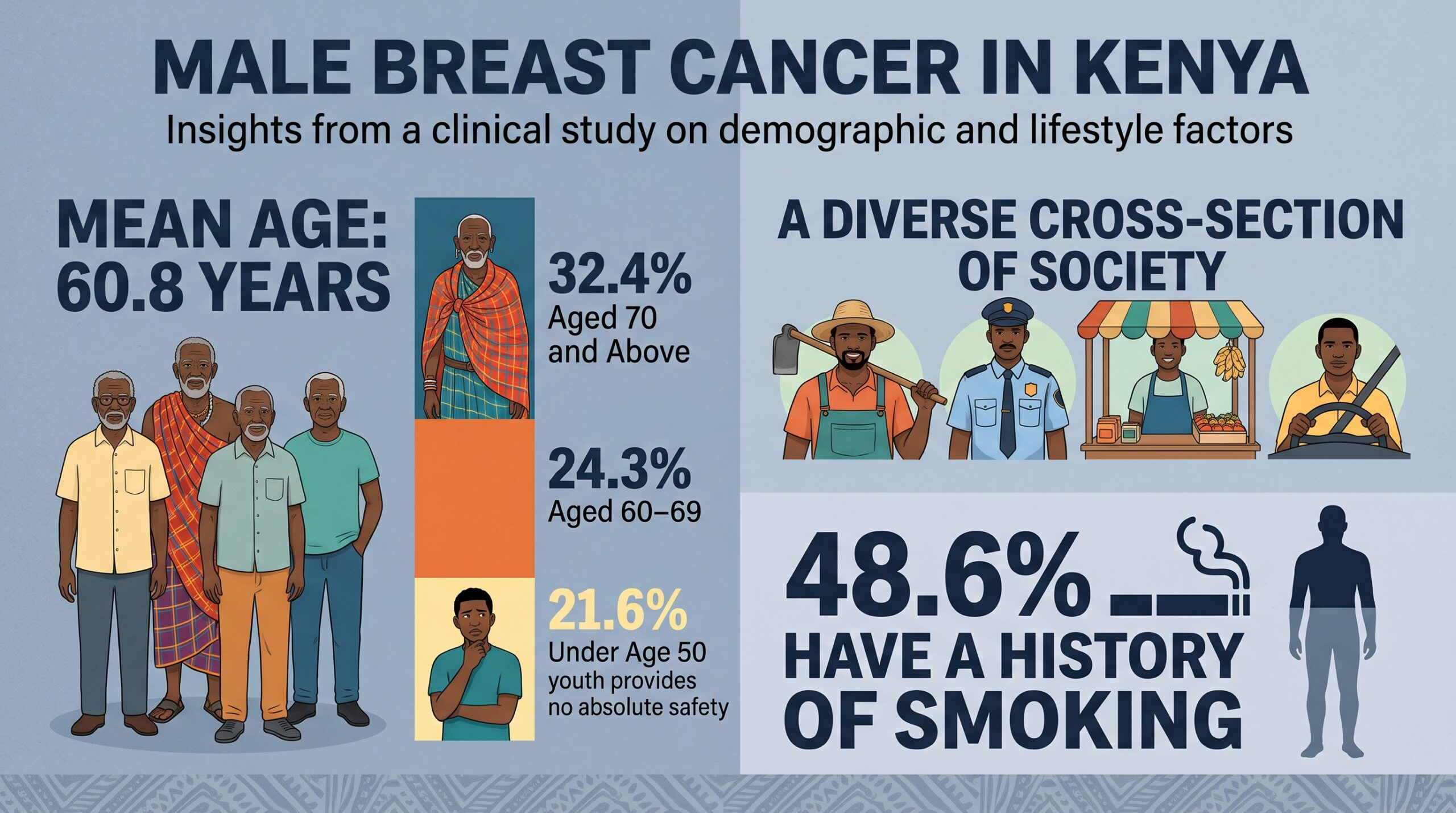
According to the study, the mean age of male patients presenting with breast cancer was 60.8 years. The disease heavily clusters in older demographics: 32.4% of the patients were aged 70 and above, and 24.3% were between 60 and 69 years old. Yet, the study also proved that youth provides no absolute safety, as 21.6% of diagnosed men were under the age of 50. The patients represented a diverse cross- section of Kenyan society spanning farmers, security guards, small business owners, and drivers with nearly half (48.6%) having a documented history of smoking.
The most alarming revelation from the IMANI-KNH data regarded the physical presentation of the tumors: 56.8% of the men did not present with a noticeable breast lump.
In standard public health campaigns, the presence of a hard, distinct lump is universally taught as the classic warning sign of breast cancer. Because more than half of these men did not feel a lump, they completely ignored the early stages of their illness. Instead, they only sought medical evaluation when the cancer dramatically compromised the skin surface; 35.1% of the patients presented with severe breast ulceration meaning the tumor had already grown outward, forming open, non-healing, infected sores across their chest wall.
Because men lack routine screening and remain trapped by stigma and misread symptoms, the timeline between the first cellular mutation and actual medical intervention is devastating. Dr. Kingori’s study established that the median duration of symptoms before a patient formalizes a hospital visit was an astonishing 18 months. For a year and a half, these men lived with actively spreading cancerous growths without receiving any clinical management.
An 18-month diagnostic delay severely compromises outcomes, granting the malignancy a substantial window for systemic progression. According to findings from Dr. Kingori’s study, 40.6% of male patients presented with Stage IV distant metastatic disease at the time of their initial diagnosis.
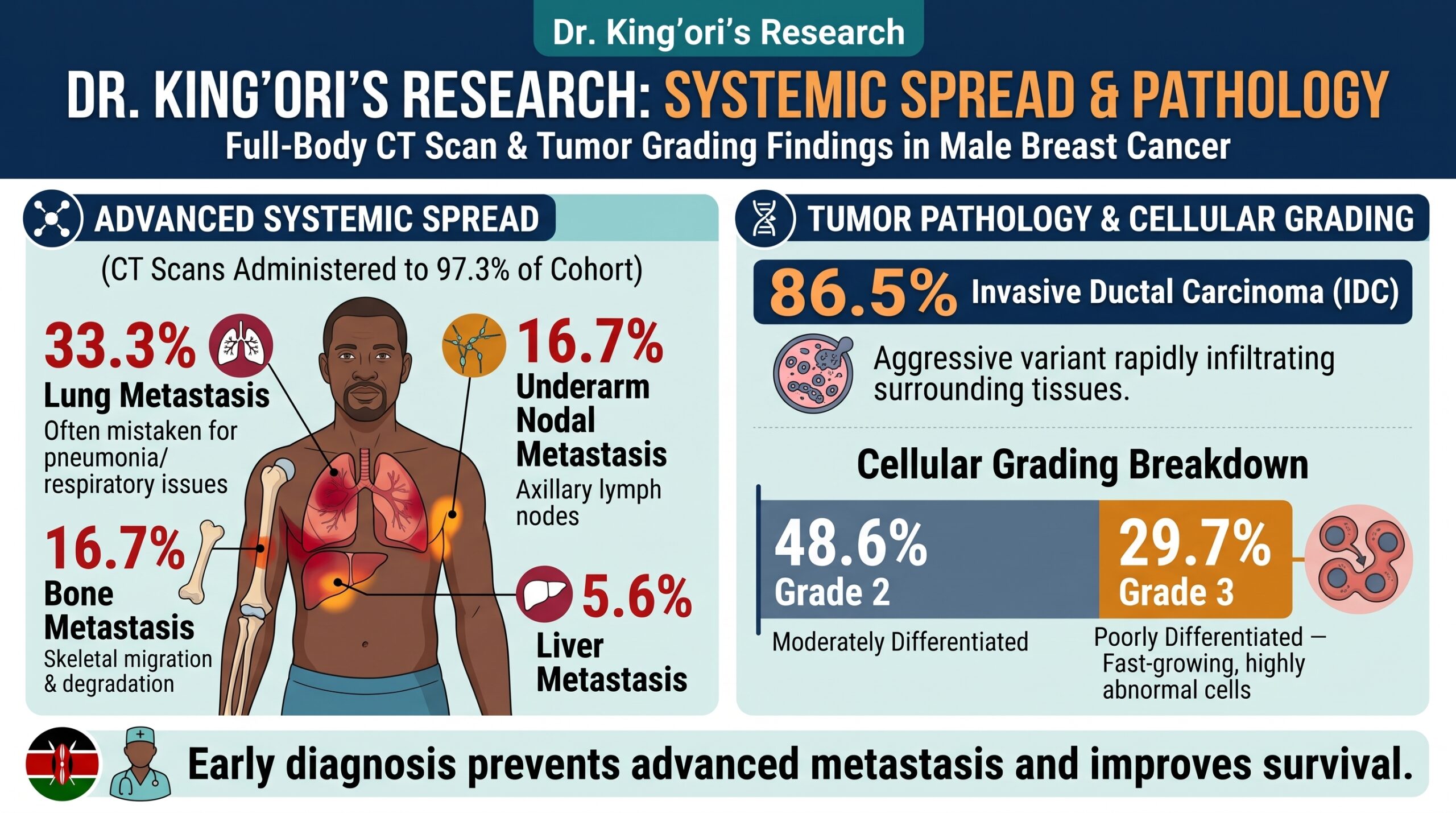
Comprehensive diagnostic evaluation via full-body CT scans—conducted in 97.3% of the patient cohort—revealed extensive metastatic dissemination across multiple anatomical sites:
- Pulmonary Metastasis (33.3%): Extensive pulmonary involvement was identified, clarifying why individuals—such as the case noted by Lagat—frequently misattribute initial manifestations to respiratory conditions like pneumonia.
- Skeletal Metastasis (16.7%): Aggressive osseous migration led to marked structural degradation of the skeleton.
- Axillary Nodal Metastasis (16.7%): Metastatic spread was observed within the regional underarm lymph nodes.
- Hepatic Metastasis (5.6%): Hepatic lesions were documented among affected patients.
- Pathologically, 86.5% of the cases were identified as Invasive Ductal Carcinoma (IDC), an aggressive variant that rapidly infiltrates surrounding tissues.
In terms of cellular grading, 48.6% of the tumors were classified as Grade 2 (moderately differentiated), while nearly a third (29.7%) had progressed to Grade 3—signifying highly abnormal, fast-growing, poorly differentiated cancer cells that behave with extreme biological aggression.
The true tragedy of the IMANI-KNH study lies in its survival analysis, which mathematically demonstrates that male breast cancer is highly treatable if caught early, yet devastatingly lethal if delayed.
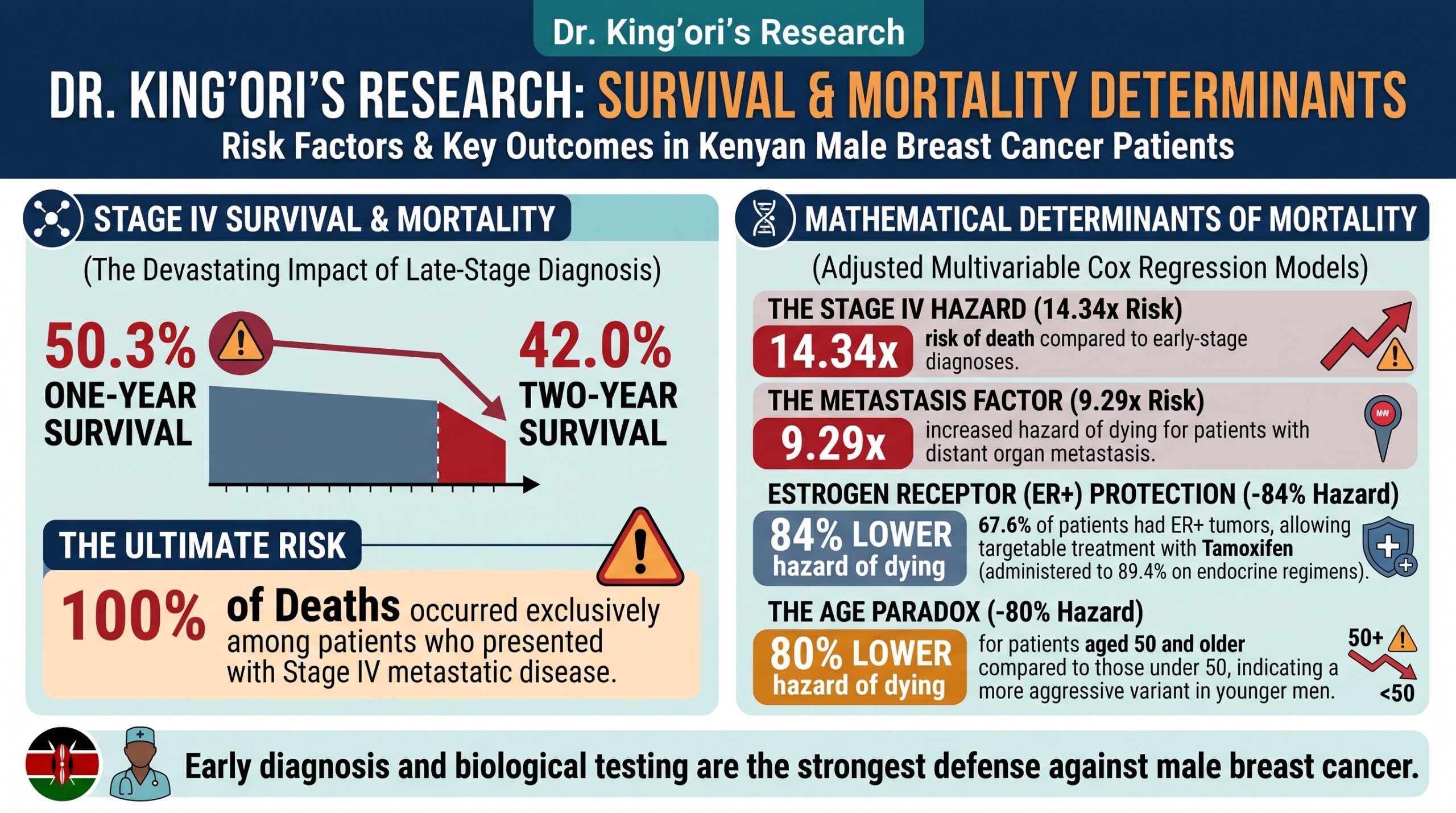
For the combined cohort of 37 men, the overall survival rate was 79.5% at one year, which dropped to 74.8% by year two. However, when Dr. Kingori stratified these numbers by the clinical stage at presentation, a stark divide emerged: patients diagnosed at Stage II and Stage III achieved a flawless 100% overall survival rate at both one and two years. When the disease was caught before distant metastasis occurred, local surgical interventions (such as mastectomies), targeted chemotherapy cycles, and chest wall radiation were entirely successful at preserving life.
In sharp contrast, for the men who arrived at the hospital at Stage IV, the one-year survival probability plummeted to 50.3%, and dropped even lower to 42% by year two. Remarkably, every single death recorded during the entire multi-year study occurred exclusively among patients who presented with Stage IV metastatic disease.
Using adjusted multivariable Cox proportional hazards regression models, Dr. Kingori’s research isolated the exact mathematical determinants of mortality among Kenyan men:
- The Stage IV Hazard: Arriving at the hospital at Stage IV multiplied a man’s risk of death by an incredible 14.34 times compared to those diagnosed at early stages.
- The Metastasis Factor: The physical presence of distant organ metastasis increased the immediate hazard of dying by 9.29 times.
- The Estrogen Receptor Silver Lining: On a positive note, 67.6% of the patients exhibited Estrogen Receptor-positive (ER+) tumors. The regression models proved that ER+ status provided massive biological protection, giving these patients an 84% lower hazard of dying. This is because ER+ tumors can be targeted with accessible hormone therapies like Tamoxifen, which was successfully administered to 89.4% of the men on endocrine regimens.
- The Age Paradox: Surprisingly, younger men faced a more aggressive biological trajectory; patients aged 50 and older experienced an 80% lower hazard of dying compared to those under 50, indicating that when breast cancer strikes younger Kenyan men, it manifests as a faster-moving, more lethal variant.
The geographical data from the National Cancer Registry [NCR] underscores that the burden of breast cancer is heavily concentrated in major healthcare hubs like Nairobi County (550 cases) and Nakuru County (398 cases), while remote border regions like Wajir County register as few as 1 case due to severe diagnostic gaps. This means that in major referral networks like the Nakuru Teaching and Referral Hospital, clinicians are perfectly positioned to catch these cases if only men would walk through the doors.
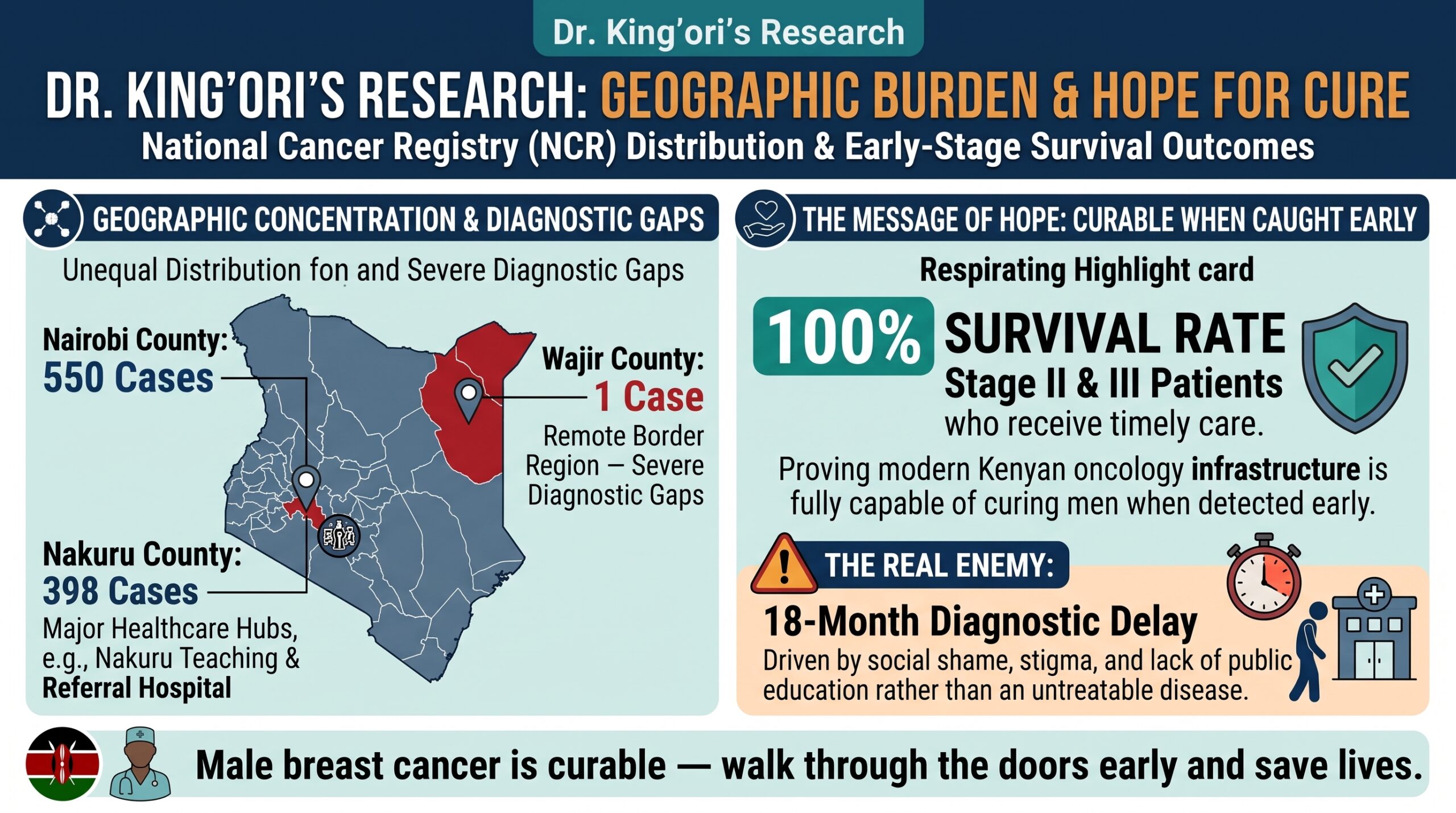
The data from Dr. Kingori’s study sends an undeniable message to the nation: male breast cancer is not an unresolvable death sentence. The 100% survival rate among Stage II and III patients proves that modern Kenyan oncology infrastructure is fully capable of curing men. The high mortality rates are driven entirely by the 18-month diagnostic delay rooted in social shame and a lack of public education.
Elizabeth Lagat’s call to action is a critical blueprint for the future of health advocacy in Kenya. Men have already proven themselves to be deeply compassionate, reliable partners in ensuring the health and survival of the women in their communities. Now, the public health ecosystem must empower these same men to step out of the shadow of the caregiving role, discard the paralyzing burden of stigma, and take immediate control of their own survival.
Kenyan men must listen to the message seriously, actively seek out proper information, and ensure they check their health status from time to time. Early detection does not just save a woman’s life, it is the only thing that will save a man’s.