
|
Getting your Trinity Audio player ready...
|
By Winnie Kamau
Nairobi, Kenya: At the International Telecommunication Union’s Plenipotentiary Conference (PP-26) in Doha, gathering governments face a choice with broad implications. The Internet Society notes that delegates will decide whether ITU resolutions preserve the multistakeholder framework of internet governance or expand intergovernmental control over the internet’s core architecture.
ISOC says this conference comes under a year after governments reaffirmed their commitment to multistakeholder governance and made the Internet Governance Forum (IGF) permanent through the UN General Assembly’s WSIS+20 review. Out of more than 200 proposals submitted by Member States for the 9–27 November event, key decisions will determine whether ITU policies align with that commitment or extend state authority over how the network is built, secured, and administered.
“The International Telecommunication Union (ITU) Plenipotentiary Conference (PP-26) takes place less than a year after governments, through the United Nations General Assembly’s World Summit on the Information Society (WSIS)+20 review, reaffirmed their commitment to the multistakeholder model of Internet governance and made the Internet Governance Forum (IGF) permanent” states the ISOC statement.
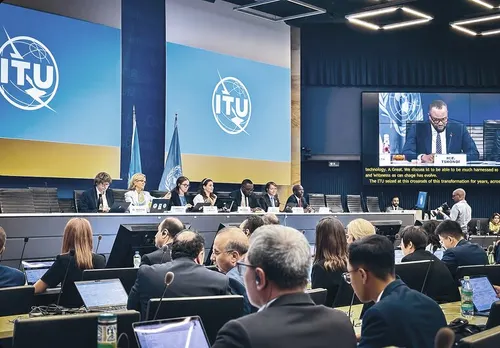
Actively challenging proposals that threaten technical foundations, risk network fragmentation, or hinder access, the Internet Society emphasizes that although governments hold the primary decision-making power, the outcomes in Doha will ultimately affect everyone.
A Renewed Commitment, Now Tested
The timing of PP-26 is significant, convening less than a year after the UN General Assembly’s WSIS review, where governments reaffirmed their support for the multistakeholder framework and established the Internet Governance Forum as a permanent entity.
That review established a clear benchmark. The Internet Society highlights that “Upcoming decisions in Doha will demonstrate whether ITU resolutions uphold this commitment to multistakeholder governance or extend intergovernmental control over how the internet is designed, secured, and managed” the ISOC report states.
Adding “A central goal for the Internet Society at PP-26 is safeguarding the existing multistakeholder model where governments, technical experts, civil society, academia, and the private sector collaborate according to their respective roles rather than allowing the ITU to expand its authority into domains handled by other ecosystem bodies. This collaborative approach has been foundational to the internet’s success” it says.
To protect this structure, the Internet Society is actively opposing proposals that risk altering the internet’s technical architecture, increasing network fragmentation, or undermining connectivity for remote, unserved, and underserved populations. Given the rapid advancements in artificial intelligence and space technologies, closing the digital divide is an urgent priority: bringing connectivity to the 2.2 billion offline individuals including women, girls, refugees, and Indigenous communities and ensuring online safety must remain paramount.
Where The Pushback Is Aimed
The organisation says protecting the current governance model is a central priority at PP-26. Its stated aim, set out in an August background paper, is to ensure the conference “upholds the existing multistakeholder model of Internet governance.”
In practice, that means contesting two kinds of proposals:
- Technical architecture and fragmentation. Submissions that could affect the internet’s underlying technical architecture or increase the risk of the network splintering.
- Connectivity. Measures that could affect access, particularly for remote, underserved and unserved communities.
Visualization by Gemini
Why It Matters Beyond Doha
Most decisions will be made by governments, yet the Internet Society emphasizes that “everyone will be affected by what happens in Doha.”
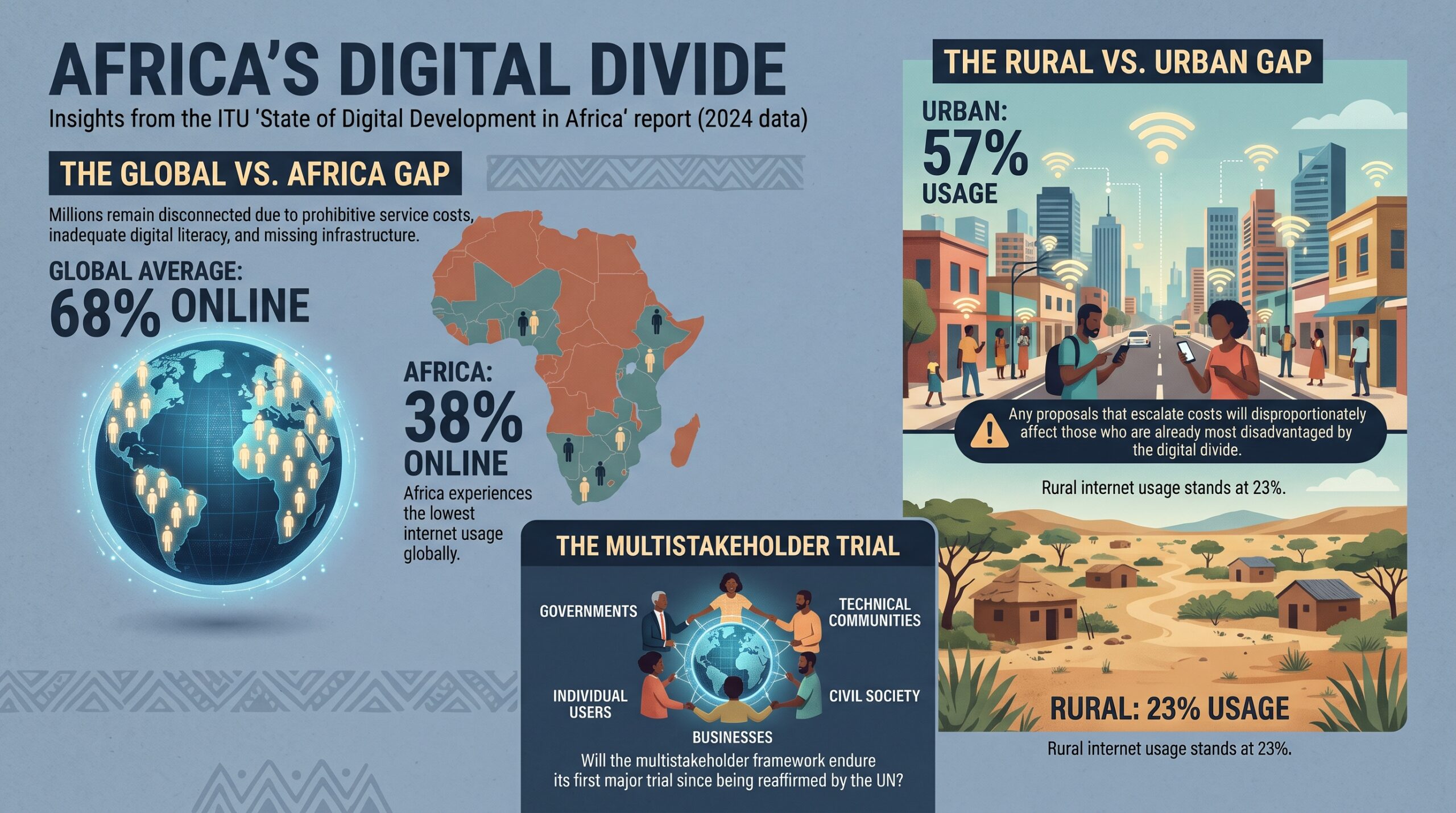
These implications are particularly significant for Africa. According to ITU figures, rural internet usage stands at 23% compared to 57% in urban areas. Consequently, any proposals that escalate costs or hinder connectivity for remote areas will disproportionately affect those who are already most disadvantaged by the digital divide.
This outcome will ultimately test whether the multistakeholder framework—which unites governments, technical communities, civil society, businesses, and individual users—can endure its first major trial since being reaffirmed by the UN.
Data from the ITU highlights that Africa experiences the lowest internet usage globally, with only 38% of its population online in 2024 against a 68% global average.
Published in the State of Digital Development in Africa report, these ITU findings underscore a persistent digital divide across the continent, even as demand for connectivity continues to grow. While adoption has expanded, the report notes that millions remain disconnected due to prohibitive service costs, inadequate digital literacy, and missing infrastructure, particularly in rural regions.